


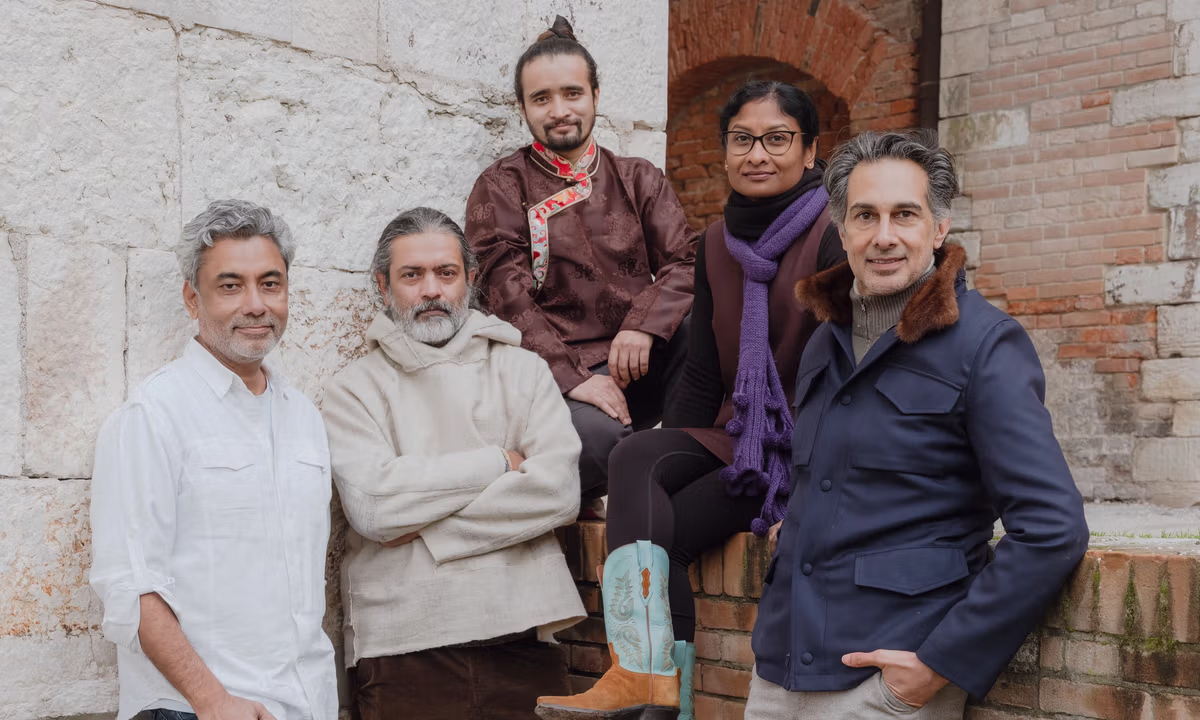
India is returning to the Venice Biennale after a seven-year hiatus with a pavilion presentation in the Arsenale this year featuring five artists (9 May-22 November). The Venice exhibition, curated by the Rwanda-born Indian scholar Amin Jaffer, is entitled Geographies of Distance: Remembering Home, evoking the pull of the homeland for Indians as they travel and build connections worldwide.
“All five participating Indian artists—Alwar Balasubramaniam (Bala), Sumakshi Singh, Ranjani Shettar, Asim Waqif and Skarma Sonam Tashi—draw on the material culture traditions that span millennia to evoke an emotional connection to the idea of home,” a project statement says. “Despite the artists’ different geographic origins, experience and practice, all are united in their use of organic materials traditional to India in the creation and presentation of their work,” Jaffer says.
Bala is based in rural Tamil Nadu and has had “a sustained and ever-deepening relationship with the natural world” according to Talwar gallery, which represents the artist. Singh is a New Delhi-based artist who creates installations from embroidered thread while Waqif, a trained architect, focuses on issues around sustainability.
Tashi uses recycled materials to create works that “showcase the fragility of the natural world” the project statement adds. Karnataka-based Shettar “approaches the social and ecological consequences of India’s rapid urbanisation from the vantage of non-figurative art”, according to Frieze.
Jaffer was previously a senior curator at the Victoria and Albert Museum in London. He has close links to Qatar as the director of the Al Thani Collection, which belongs to Sheikh Hamad bin Abdullah, a cousin of the Emir, whose collection has been on display at a dedicated museum space at the Hôtel de la Marine in Paris since late 2021.
He tells The Art Newspaper: “My presentation will express how, for those whose lives are shaped by change or distance, home becomes less a fixed place and more a portable condition. The subject is particularly relevant in India today, where sustained economic and demographic growth mean that cities, towns and countryside change at a rapid rate.
“Living partly in Venice, I avidly follow the rhythm of the Biennale programme and have always hoped that India, the world’s most populous nation, would have permanent representation in what remains the most important contemporary art platform today.”
The Indian pavilion is backed by the country’s ministry of culture and two high-profile cultural institutions—the Nita Mukesh Ambani Cultural Centre and Serendipity Arts Foundation.
The Nita Mukesh Ambani Cultural Centre, an arts centre in Mumbai, was co-founded by the Indian philanthropist Isha Ambani who was recently in the spotlight as co-host of the Pink Ball fundraising gala at the British Museum in London. Serendipity Arts Foundation, a New Delhi-based non-profit body, is described online as “an organisation that facilitates pluralistic cultural expressions, sparking conversations around the arts across the South Asian region”.
India’s presence at the Venice Biennale has been patchy. The country’s national participation has been scarce and inconsistent: just two India pavilions have been staged in the Biennale’s 131-year history, the first in 2011 and the second in 2019. Nonetheless curator Adriano Pedrosa’s international exhibition in 2024, Foreigners Everywhere, included 12 Indian artists—an all-time record, and quadruple the amount of the previous Biennale.
