





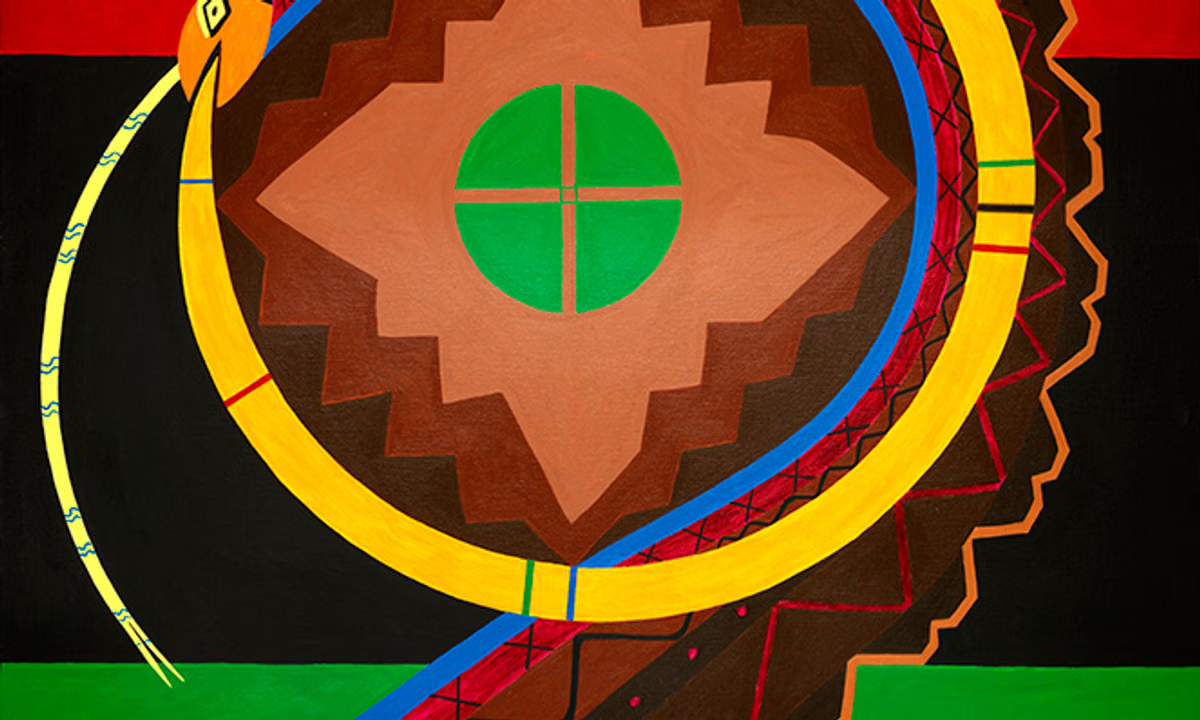
The influence of Pan-Africanism on the visual arts throughout the 20th century and into the 21st—as well as the impact of artists on the movement itself—is being explored in an exhibition at the Barbican Art Gallery in London this summer. Project a Black Planet: The Art and Culture of Panafrica features around 300 works including paintings, sculptures, video works and installations, as well as pamphlets, journals and other archival materials. The show debuted at the Institute of Chicago in 2024 before touring to the Museu d’Art Contemporani de Barcelona (Macba) last year and will next travel to the Kanal-Centre Pompidou in Brussels.
According to the exhibition’s press release, Pan-Africanism “can be understood as an umbrella term for political and philosophical movements advocating for self-determination, anti-colonial resistance, and transnational solidarity among peoples of African descent.” Here, two of the show’s co-curators, the Macba director Elvira Dyangani Ose and Adom Getachew from the University of Chicago, have selected five key books to help us better understand the relationship between Pan-Africanism and art.
The Practice of Diaspora: Literature, Translation, and the Rise of Black Internationalism (2003) by Brent Hayes Edwards
“This is a comparative study of the intellectual and literary stories connecting the Francophone and Anglophone movements of Black internationalism in the early 20th century. Brent Hayes Edwards argues that diaspora is articulated not through a unified identity but through the productive tensions and shifts of meaning generated by cultural translation.” E.D.O.

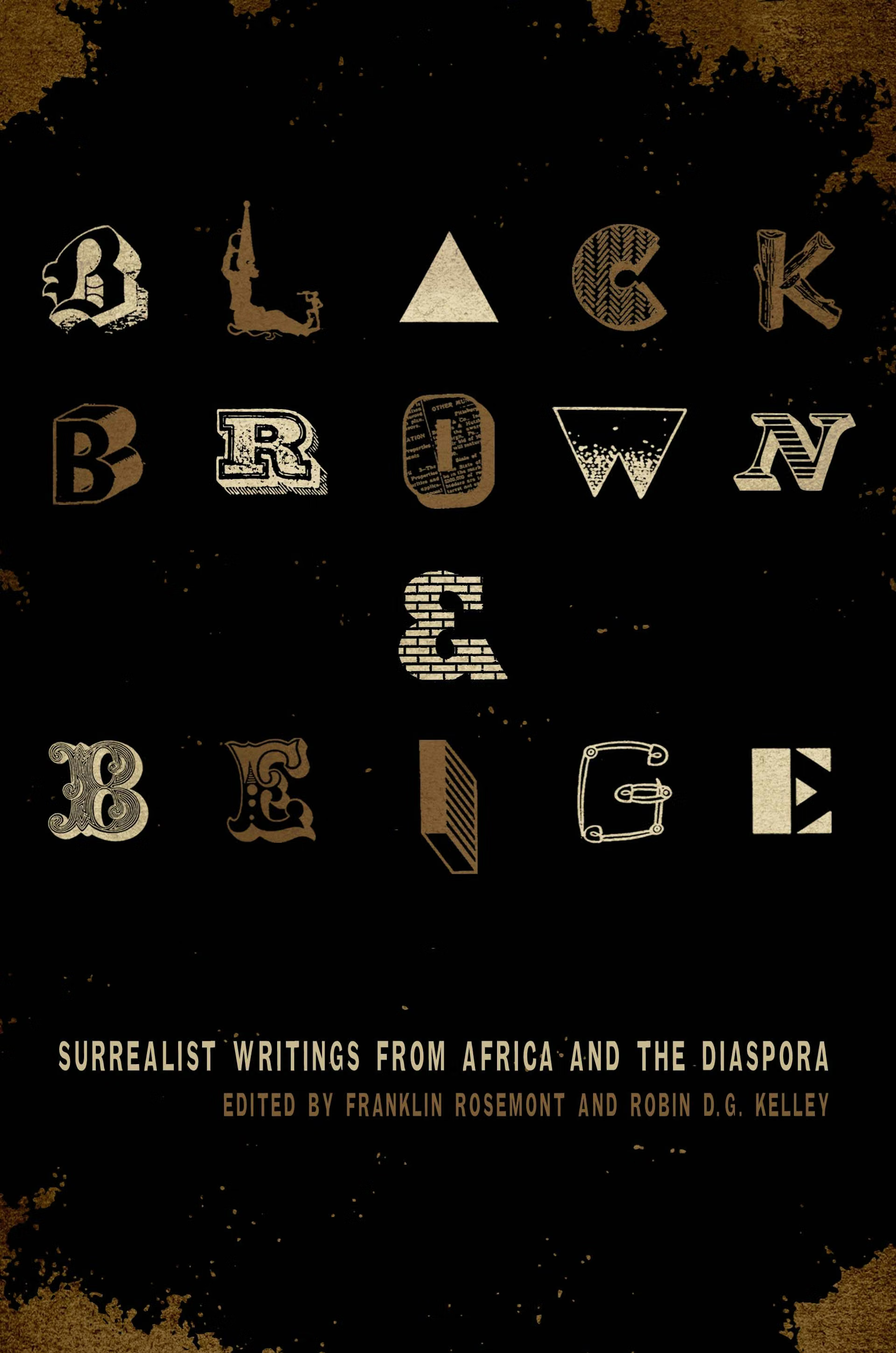
Black, Brown, & Beige: Surrealist Writings from Africa and the Diaspora (2009), edited by Franklin Rosemont and Robin D.G. Kelley
“A foundational anthology gathering Surrealist writings by African and diasporic writers, artists and thinkers, many translated into English for the first time. Franklin Rosemont and Robin D.G. Kelley shift Surrealism out of its European frame, situating it as a practice rooted in African and diasporic cultures of resistance and imagination.” E.D.O.

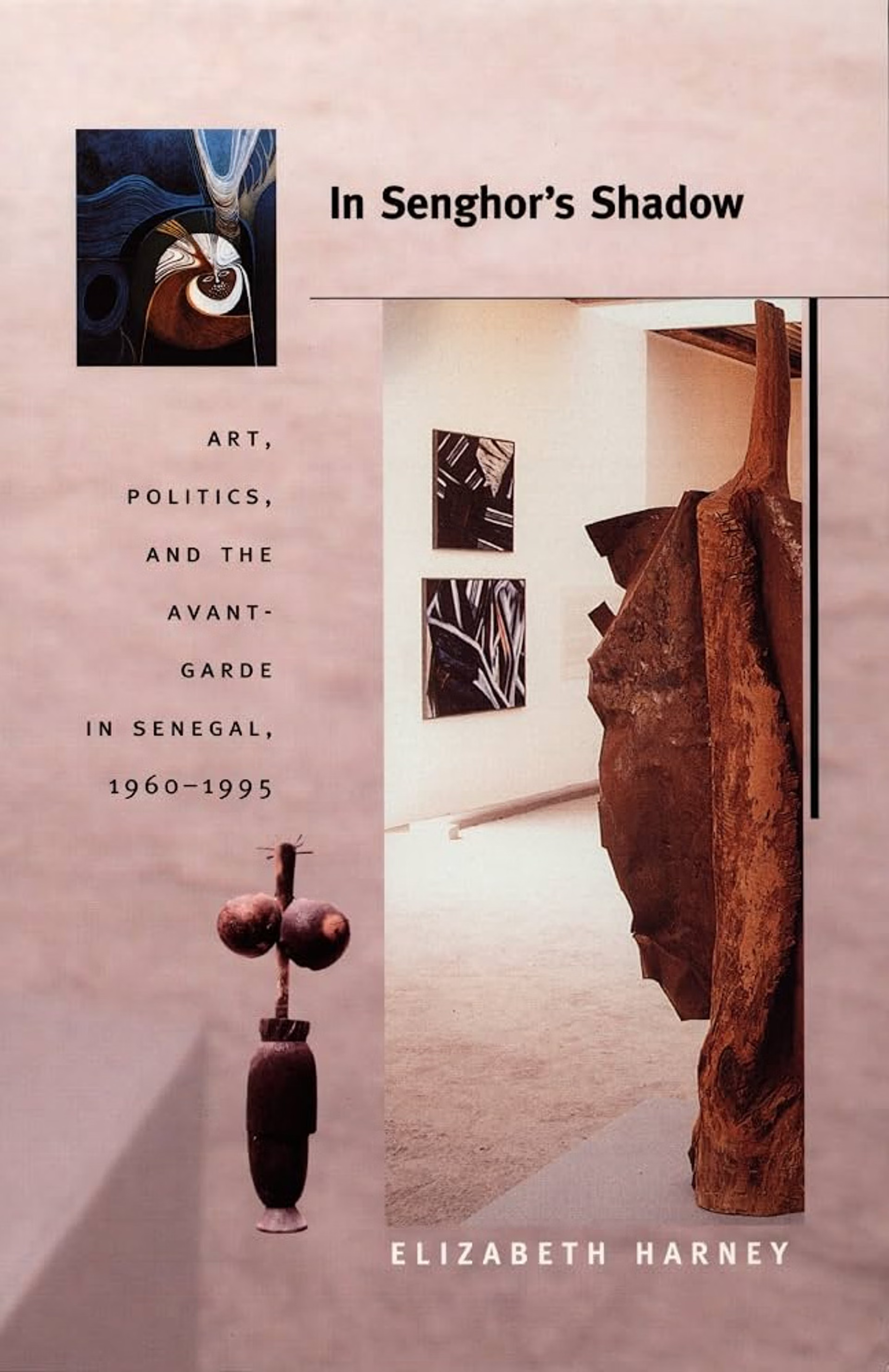
In Senghor’s Shadow: Art, Politics, and the Avant-Garde in Senegal, 1960-1995 (2004) by Elizabeth Harney
“The poet-politician Leopold Senghor, who helped to found [the intellectual movement] Negritude, believed that artists would play a central role in the reconstruction of African society after decolonisation. During his presidency of Senegal, he founded arts schools and exhibitions to advance this agenda. Elizabeth Harney’s fascinating study traces this institutional and cultural matrix and reveals how avant-gardists contested Negritude beliefs by breaking out of established artistic forms.” A.G.

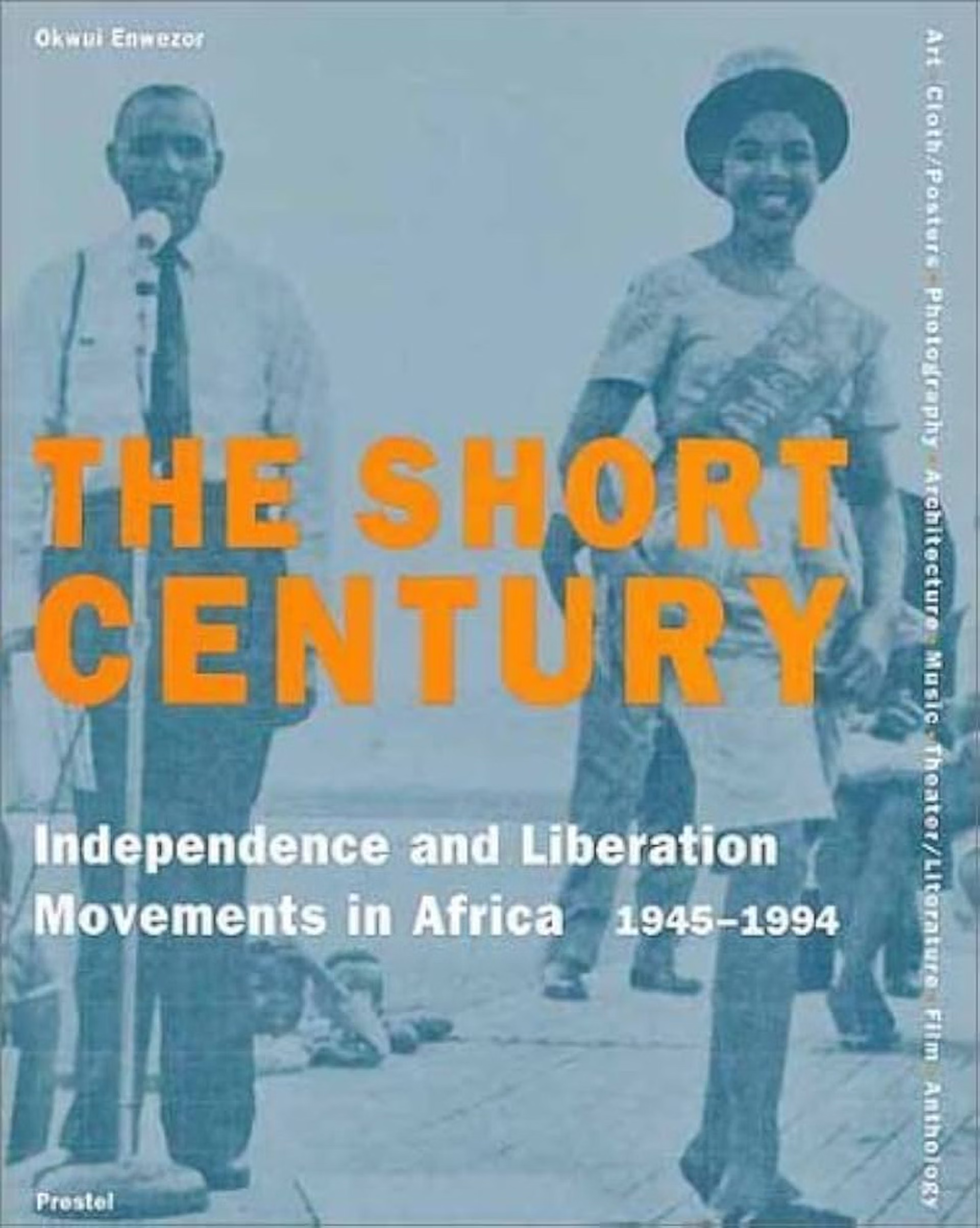
Short Century: Independence and Liberation Movements in Africa, 1945-1994 (1999), edited by Okwui Enwezor and Chinua Achebe
“This is the accompanying catalogue to the late Okwui Enwezor’s path-breaking survey exhibition of the same name, which travelled to museums in Germany and the US between 2001 and 2002. The wide-ranging exhibition and catalogue boldly announced African Modernism across art, architecture, photography and cinema that responded to the anti-colonial and early post-independence decades on the continent.” A.G.

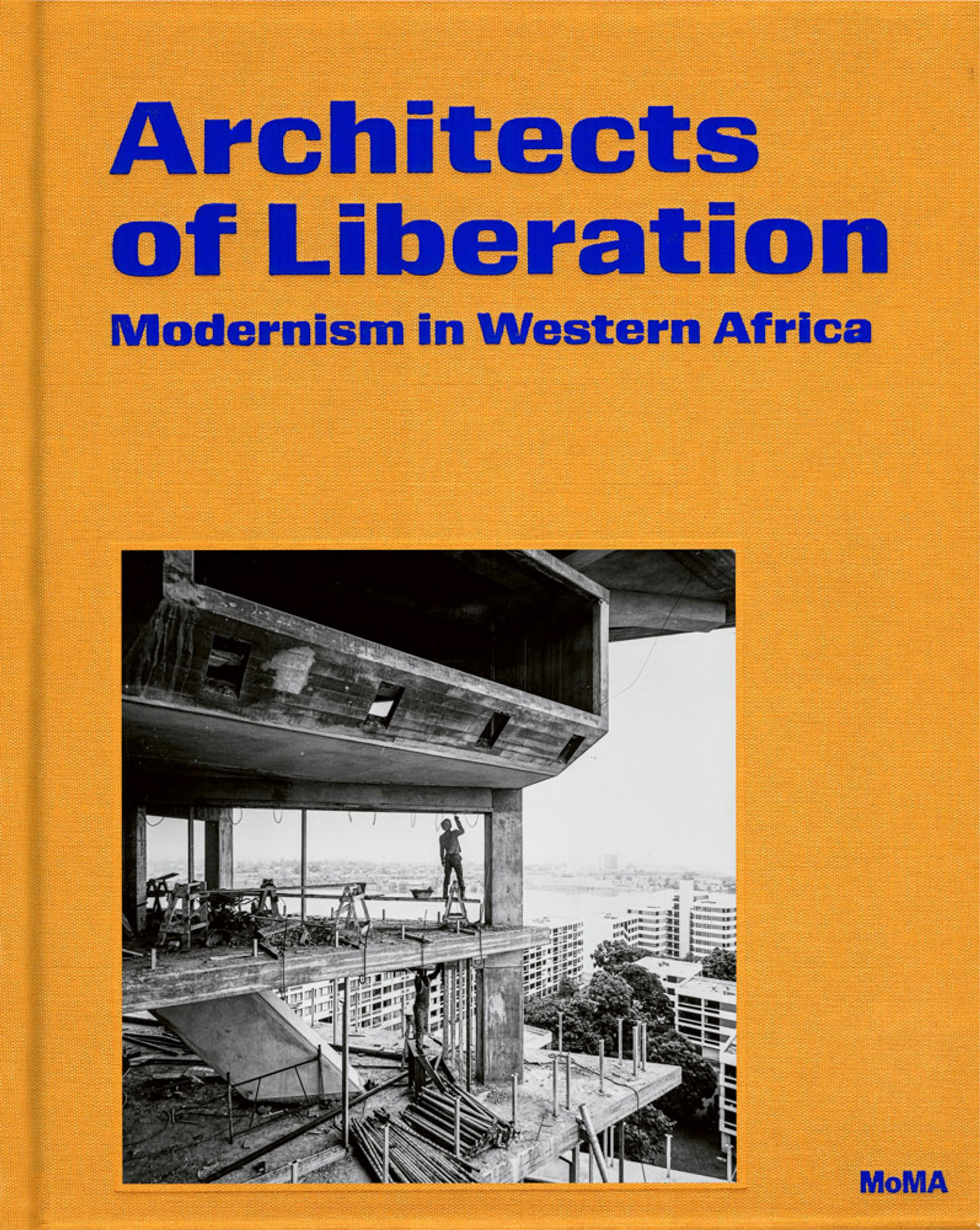
Architects of Liberation: Modernism in Western Africa (2026), edited by Martino Stireli, Ikem Stanley Okoye and Mallory Cohen
“A recently opened exhibition at the Museum of Modern Art in New York tells the story of how the built environment was radically transformed across western Africa in the age of decolonisation. Organised around the work of pioneering architects, the exhibition catalogue demonstrates how pan-African aesthetics and commitments melded with nationalist aspirations and local idioms.” A.G.
• Project a Black Planet: The Art and Culture of Panafrica, Barbican Art Gallery, London, until 6 September


