


Editor’s Note: This story originally appeared in On Balance, the ARTnews newsletter about the art market and beyond. Sign up here to receive it every Wednesday.
Happy Friday! Here’s a round-up of who’s moving and shaking in the art trade this week
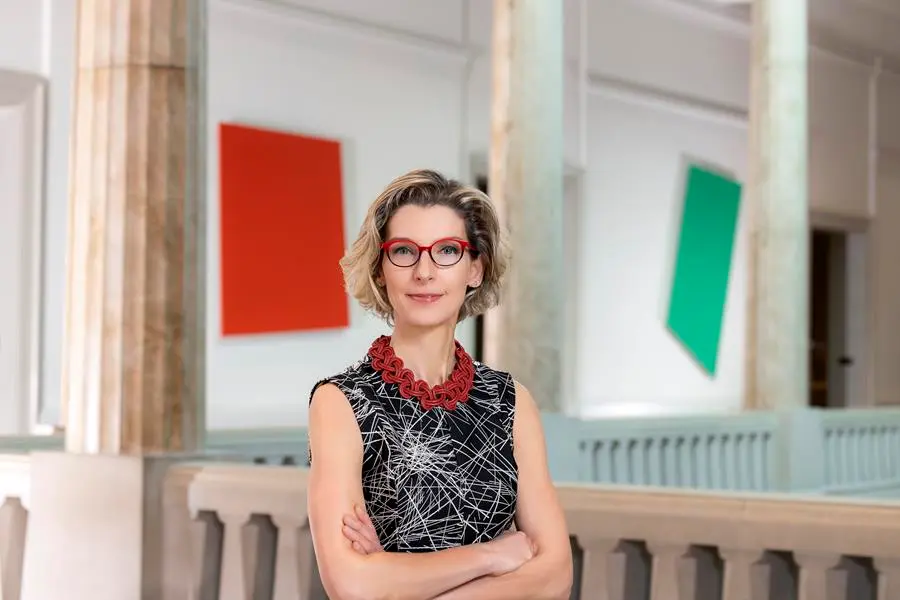
Francesca Casadio Appointed Director of the Getty Conservation Institute: The conservation scientist, who currently serves as vice president and Grainger Executive Director of Conservation and Science at the Art Institute of Chicago, will start at the GCI in early fall 2026.
Elif Saydam Wins Tiemann Prize for Contemporary Painting: Six works from the Berlin-based artist’s “Späti Paintings” series will enter the collection of theHamburger Bahnhof—Nationalgalerie der Gegenwart through the 2026 prize, awarded by the Ingeborg and Dr. H. Jürgen Tiemann Foundation. The paintings will be included in a new collection presentation, “A Thousand Times Berlin,” opening June 12.
GRIMM Opens New Amsterdam Space and Launches Artist Residency in France: In its 20th anniversary year, the gallery will open a new space in a 17th-century canal building on the Leidsegracht in September and launch an artist residency at the newly acquired Château Val Croissant in Provence.
Steven Nelson Named Inaugural Executive Director of Sam Gilliam Foundation: The art historian and curator joins the Washington, D.C.–based foundation from the National Gallery of Art, where he served as dean of the Center for Advanced Study in the Visual Arts. He will oversee institutional partnerships, research, publications, and programs supporting artists and social advocacy.
The Big Number: $67 M.
That’s the combined estimate for two Claude Monet works set to hit the block at Sotheby’s London later this month. Due to appear in the modern and contemporary evening sale on June 24, the works—Nymphéas (1907) and Camille assise sur la plage à Trouville (1870–71)—carry estimates of £30 million to £40 million ($40 million to $53.5 million) and £7 million to £10 million ($9.4 million to $13.4 million), respectively. Both works appeared recently at auction, and are being consigned by the same anonymous collector.w
Read This
If you, like me, couldn’t make it out to Los Angeles for the opening of Refik Anadol’s glitzy new AI art museum and are wondering what, exactly, is up with it, Hyperallergic’s Matt Stromberg has you covered. Stromberg walks readers through his “whirling,” “hyper-stimulating,” and “numb[ing]” visit to Dataland, and comes away with the unsettling conclusion that, for Anadol, data is “an end rather than a tool.” As much as Dataland seems eager to flaunt the data behind the many works on view, the “data cloud,” in Stromberg’s estimation, tends to overwhelm the viewer rather than clarify anything. And for all the supposed transparency, there’s strikingly little information available about how the museum is financed or governed. It is, after all, a private for-profit institution, with an extensive roster of tech industry partners and collaborators. Caveat spectator.
