
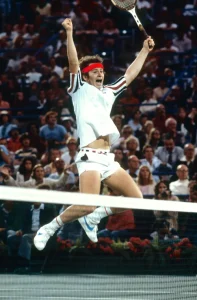






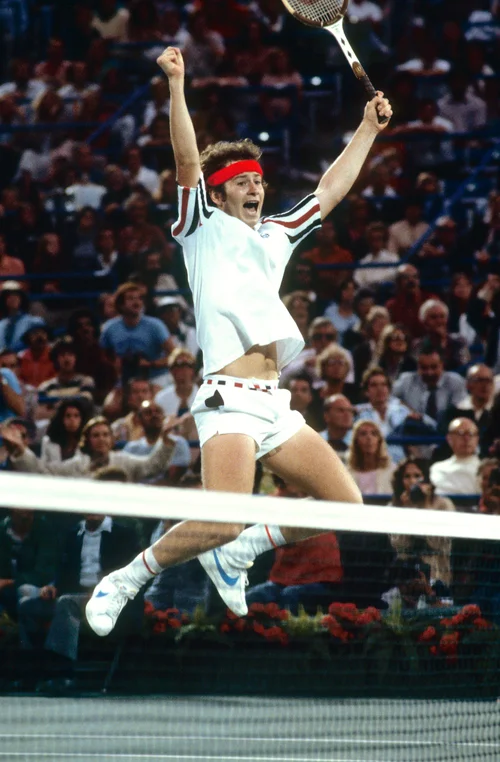
John McEnroe, Flushing, NY, 1979
Walter Iooss, Jr.
Bruce Silverstein Gallery
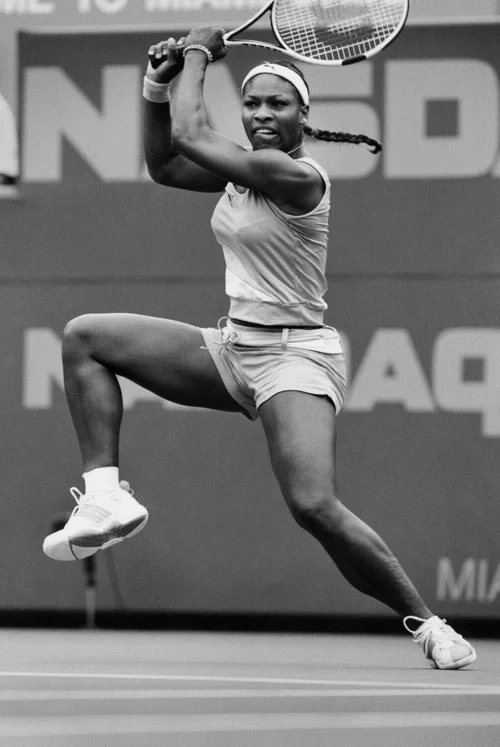

Serena Williams, Scottsdale, AZ, 2003
Walter Iooss, Jr.
Bruce Silverstein Gallery
Tennis has long carried associations with wealth, style, and exclusivity. Its pristine courts, private clubs, and well-dressed spectators have helped cultivate an image of the sport that extends far beyond its competitions.
As its biggest players become global celebrities, their tastes off the court—from fashion and watches to architecture and design—have attracted nearly as much attention as their serves.
For several tennis stars, that interest extends to contemporary art. Some have quietly built significant collections; others have developed close relationships with artists, galleries, and museums. A few have even crossed into the art business themselves.
Here, Artsy looks at six tennis stars who have made art an important part of their lives.
Venus Williams


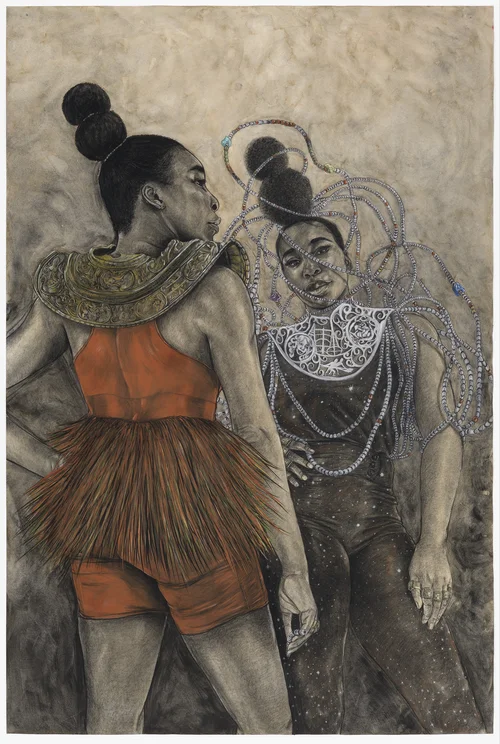

Few tennis players have had as broad a cultural impact as the Williams sisters. Both Serena and Venus have separately achieved a level of fame comparable to that of few athletes in the modern era.
Beyond her achievements on the court, Venus Williams has built a career encompassing fashion, design, philanthropy, and, increasingly, contemporary art.
Venus is a member of the Metropolitan Museum of Art’s Vanguard Council, a group of collectors and patrons who support the museum’s contemporary art programming. In 2024, she also collaborated with the Carnegie Museum of Art on a six-episode podcast tied to its exhibition “Widening the Lens: Photography, Ecology, and the Contemporary Landscape,” interviewing participating artists including Xaviera Simmons and Skye Hopinka.
Serena Williams


Serena Williams, Key Biscayne, FL, 2006
Walter Iooss, Jr.
Bruce Silverstein Gallery
Serena Williams, 23-time Grand Slam winner, has developed a substantial contemporary art collection, with a particular emphasis on Black artists.
When she opened her Florida home to Architectural Digest in 2021, art was central to the interiors. Large-scale works by Radcliffe Bailey, Leonardo Drew, Titus Kaphar, and Nick Cave appeared throughout the house, including in a soaring central space that Williams described as an “art gallery.”
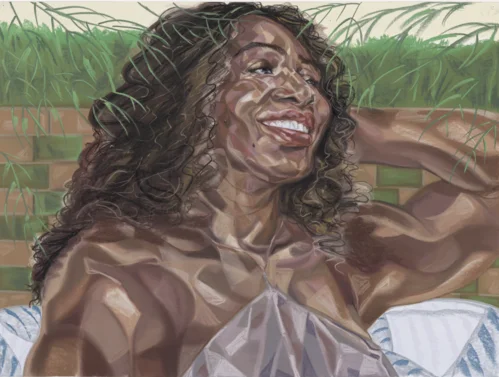

Serena has also appeared on the other side of the artist-collector relationship. In 2022, Toyin Ojih Odutola created Serena, a portrait in pastel, charcoal, and graphite commissioned by the Smithsonian’s National Portrait Gallery for its Portrait of a Nation Award. Venus was honored in the same project with Rob Pruitt’s Venus Williams, Double Portrait (2022), made with crayon, pastel, and coffee wash.
Together, the Williams sisters have become unusually visible advocates for contemporary artists, bringing their influence as athletes and cultural figures into museums, galleries, and private collecting.
Reilly Opelka



When Venus Williams cohosted a soiree with Pace Gallery during Art Basel Miami Beach in 2023, the attendees included the American player Reilly Opelka.
Opelka belongs to a younger generation of athletes for whom contemporary art has become an increasingly serious pursuit.
He is a regular at art fairs and artist studios and has developed friendships across the art world. These include German painter Friedrich Kunath and Belgian gallerist Tim Van Laere, whose branded pink tote bag he took onto the court for a 2021 U.S. Open match (he was fined $10,000 for failing to cover it up). Van Laere was a college tennis player and runs the TVLG Art x Tennis initiative in partnership with tennis equipment brand Tecnifibre.
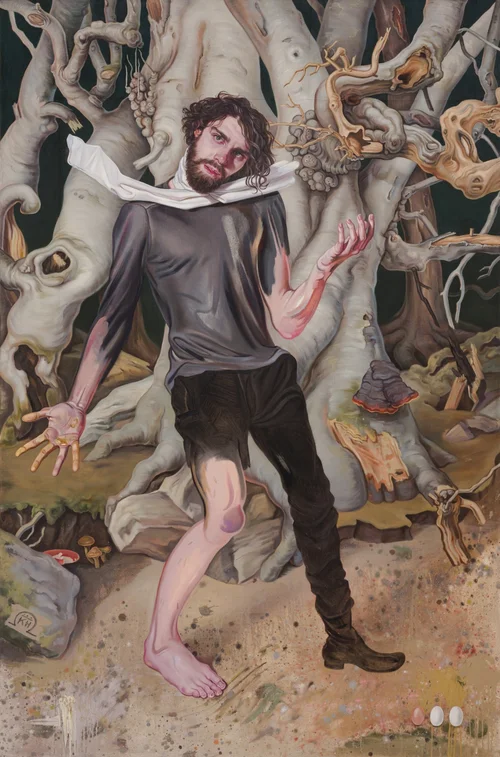
Like Venus, Opelka has said that he buys largely on instinct rather than working with an advisor. His collection includes works by artists such as Rinus Van de Velde, Jonathan Meese, and Kati Heck. The relationship with Heck has even moved in the opposite direction: She made Opelka the subject of Jungs III – Goldene Hand (2022), shown in her exhibition “Legends” at Tim Van Laere Gallery.
By 2023, Opelka told GQ that he had “no wall space” left at home. It apparently has not stopped him from collecting.
John McEnroe


John McEnroe, Tatum O'Neal and Baby Kevin, 1986
Andy Warhol
Hedges Projects
Long before contemporary athletes became regulars at art fairs, John McEnroe was buying—and selling—art.
The seven-time Grand Slam singles champion opened the John McEnroe Gallery in New York’s SoHo in 1994. Though the gallery lasted only a few years, McEnroe’s involvement with art has proved much more durable.
Over the decades, he has cultivated relationships with artists including Eric Fischl and Jonas Wood. In 1986, Andy Warhol famously made a portrait of McEnroe and his then-wife, actress Tatum O’Neal.
His collection reflects both his longevity in the art world and an appetite that extends well beyond blue-chip names. Alongside works by Jean-Michel Basquiat, Ed Ruscha, Warhol, Glenn Ligon, Oscar Murillo, Kara Walker, Bob Thompson, and more, McEnroe has collected works by self-taught artists such as Henry Darger, Acharya Vyakul, and Bill Traylor.
For McEnroe, art has never been merely an athlete’s side interest. He has spent decades operating as a collector, dealer, and art world insider.
Maria Sharapova
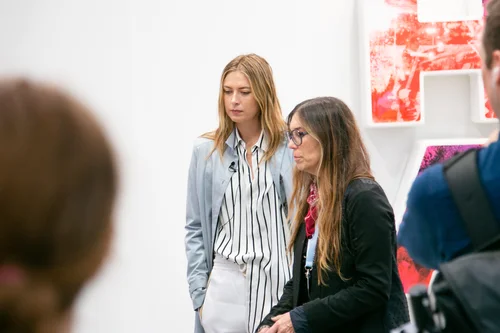

Since retiring from professional tennis in 2020, Maria Sharapova has become increasingly visible in the worlds of art, architecture, and design.
Her collecting sensibility tends toward restrained, process-driven work, informed in part by the years she spent traveling as a professional athlete. Sharapova has spoken particularly about the influence of Japanese craft and design traditions on her taste, an interest also reflected in her collection of furniture.
Her Los Angeles home includes works such as a painting from Joe Goode’s “Ocean Blue” series, a black-and-white photograph of Basquiat by Christopher Makos, and an abstract painting by Chris Gwaltney. Sharapova has credited her friendship with Gwaltney with helping ignite her interest in collecting.
That interest extends beyond fine art. Her interiors include furniture by designers and craftspeople such as George Nakashima and Jean Touret, and she has collaborated with Canadian furniture company Rove Concepts on her own designs.
For Sharapova, collecting is less about assembling recognizable names than creating a coherent visual environment where art, furniture, architecture, and craft are closely intertwined.
Wojciech Fibak
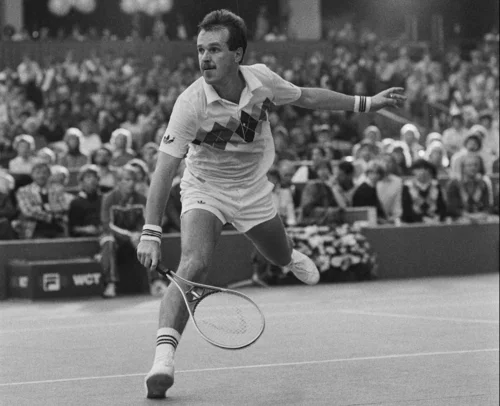

Polish tennis champion Wojciech Fibak has taken an equally committed approach to art, building a collection and gallery practice largely around artists from his home country.
Fibak, who reached world No. 10 in 1977, turned increasingly toward the art world after his tennis career. In 2001, he founded Galeria Fibak in Warsaw, focusing largely on 20th-century and contemporary Polish art.
His private collection follows a similar emphasis. Alongside works by international figures such as Basquiat and Jean Dubuffet, Fibak has collected art by major Polish artists including Mela Muter, Magdalena Abakanowicz, Piotr Potworowski, Stefan Gierowski, and Tamara de Lempicka, as well as works by contemporary artists such as Andrzej Nowacki.
That sustained focus has made Fibak not simply a celebrity collector but an advocate for Polish art, using his profile and resources to promote artists both at home and internationally.


