


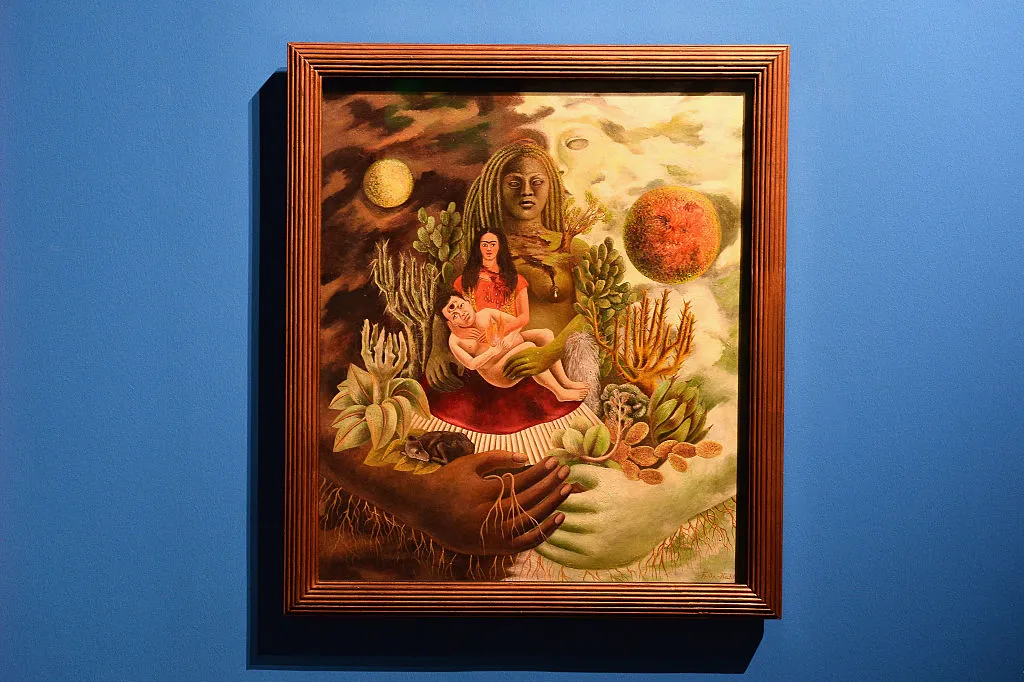
Banco Santander announced Wednesday that it will manage roughly half of the Gelman Collection—one of the most significant collections of 20th-century Mexican art—after the collection disappeared from public view in 2008, El País reports.
More precisely, the Madrid-based bank now oversees 160 of approximately 300 works amassed by influential art patrons Jacques and Natasha Gelman. After their deaths, the collection passed to their executor, Robert R. Littman, who reportedly divided it and circulated the works to museums worldwide, despite the will’s stipulation that it be shown intact in a private museum in Mexico. The collection has not been seen in Mexico since 2008 and its whereabouts were largely unknown, with only sporadic sightings of some paintings in foreign art institutions.
According to the bank’s announcement, the collection will anchor the new Faro Santander cultural center, set to open in June. The exhibition was made possible through a long-term loan agreement between Santander and the Zambranos, the prominent Mexican business family, who were revealed to own the once-lost collection. According to the report, the Zambranos’ involvement has sparked some controversy in Mexico over whether a collection of such national artistic importance should remain in private hands.
Many of the works in the collection—including every work by José Clemente Orozco, Diego Rivera, David Alfaro Siqueiros, and Frida Kahlo—are protected under Mexican law with Declaration of Artistic Monument status and are typically granted export licenses of one of two years. The Santander Foundation, however, will house and exhibit the collection in Spain
“We will comply with customs obligations and our responsibilities. However, it is a flexible legal framework in which the INBAL [Mexico’s National Institute of Fine Arts and Literature] has a significant say, and we will work with them in the most flexible way possible,” Daniel Vega Pérez, director of the new Faro Santander, said in a statement.
The temporary export licenses, Vega Pérez said, “can be extended by decision of the INBAL (National Institute of Fine Arts and Literature),” adding that the regular return of the works to Mexico is “a mere formality.
“There have been exceptions in the past, and we have an open dialogue with [the Mexican government]. The need for customs control clashes with issues such as the preservation of the artworks,” he said. For now, there are no plans to exhibit the collection in Mexico, though the cultural center’s director there are intentions to do so in the future. Vega Pérez, however, told the press that “the collection will always be present at Faro, but that it will change and always be dynamic.”
