


Early in the morning last Thursday, cell phones started buzzing. Pace gallery staff and their friends in the art world were sending each other a couple of short messages: “Is everything okay? What’s happening?”
Just after midnight, the New York Times ran a story reporting that Pace was preparing to lay off roughly 50 employees and cut about 50 artists from its roster. For many Pace staffers, it was the first they had heard of it. The timing could hardly have been worse: Pace was scheduled to hold a company-wide town hall at 9 a.m. that morning; the Times published before the gallery expected it to. Employees who went to bed uncertain woke up wondering whether they still had jobs.
“Everyone wanted to know what was happening,” one employee who remains at Pace told me. “But I didn’t know anything yet. No one did.”
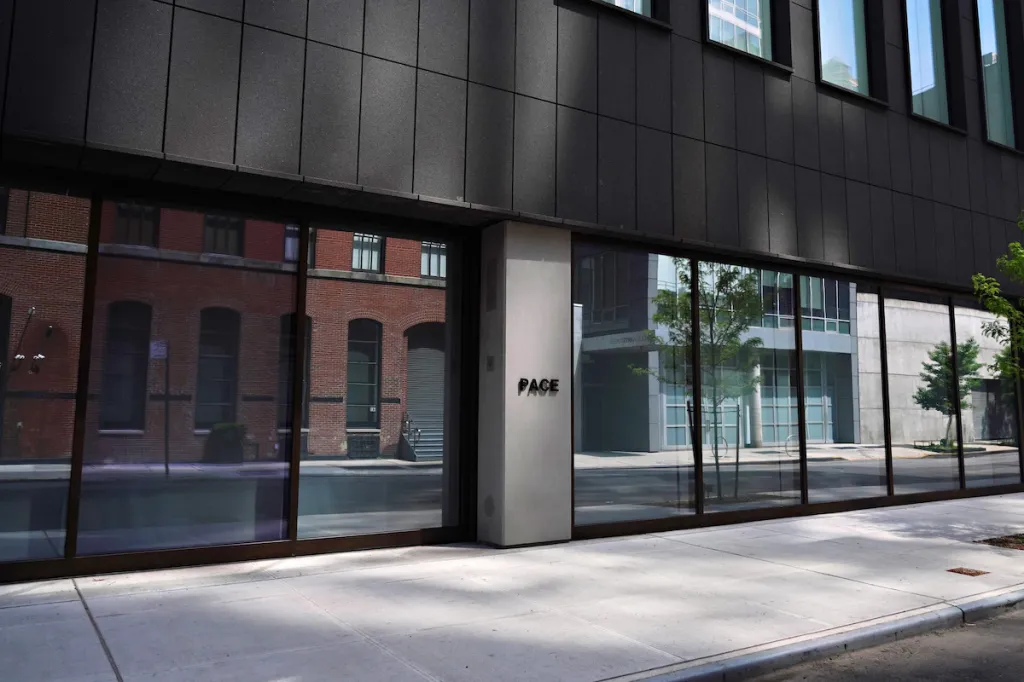
Quarterly town halls are a familiar ritual inside the gallery. They are typically held in the fourth-floor kitchen of Pace’s vast Chelsea headquarters. Employees gather in person. There are bagels. Questions are submitted in advance. CEO Marc Glimcher talks, often at length, and answers those questions. But Pace hadn’t held a town hall since the fourth quarter of last year, and employees had been expecting one for months. The gathering on Thursday, which staff were alerted to on Tuesday, had been postponed more than once, prompting anxieties. And this one turned out to be very different.
Shortly before it was scheduled to begin, the in-person gathering was scrapped and replaced with a Zoom call. Staffers who live in the outer boroughs were on their way out the door when they had to backtrack and log on to the meeting. The usual employee question form never arrived. The meeting lasted less than 30 minutes. For a company accustomed to lengthy discussions, it felt abrupt.
According to several people familiar with the call, Glimcher spent much of the meeting explaining why Pace had reached this point. The gallery had grown too large. Costs had risen too high. The model no longer worked. More surprising was what came next. Rather than solely blaming the state of the art market, Glimcher largely blamed himself.
Glimcher, sources say, acknowledged that many of the decisions that led Pace to this point were his own. Over the last decade, the gallery had become one of the defining examples of the mega-gallery era, expanding internationally, adding artists, opening new spaces, and building a business designed for perpetual growth.

Portrait of Marc Glimcher, September 23, 2021. Taken at Pace Gallery, 5 Hanover Square, London.
Suzie Howell
Now its boss was arguing that the entire model needed to be reconsidered. “It was the elephant in the room,” one current employee said. “He couldn’t really have that conversation without acknowledging his role in it.”
The layoffs that followed touched nearly every corner of the business. According to people familiar with the cuts, employees in sales, communications, art resources, operations, and other departments were affected almost evenly across the board. One source said the reductions did not appear concentrated in any single area. Some of those let go had been at Pace for years. Others had arrived more recently.
My phone calls and text messages to more than half a dozen former Pace employees went unanswered. Many appeared reluctant to speak publicly while severance arrangements were still being finalized or while they searched for new positions in an art market that has already seen significant layoffs and gallery closures over the past two years.
When employees arrived at Pace’s Chelsea headquarters after the Zoom call, the uncertainty wasn’t over. Many still didn’t know who had been let go. Throughout the morning, people moved between desks, offices, and conference rooms trying to piece together what had happened. Some employees disappeared into severance meetings. Colleagues discreetly checked their text messages and whispered in corners trying to figure out who was staying and who was gone. “It felt heavy,” one employee said.
For staff who remained, another reality quickly set in. Pace had gone through rounds of layoffs before, and surviving employees knew what often followed. Work rarely disappeared alongside the jobs. Instead, responsibilities were redistributed among those who remained.
Since Thursday, unconfirmed rumors have leaked though the art world indicating more layoffs are on the way, with some pointing at Pace’s London outfit as next up for cost-cutting. When asked about the prospect of additional layoffs, a Pace spokesperson said the cuts were “an ongoing process” and that staff in Europe “were notified this week.”
For artists, the news landed differently. Several had known something was coming.
For one artist who is still represented by Pace, what stuck most was not the decision itself but how Glimcher described it in the press. “These were the same things he said when we spoke,” the artist said. That observation matters because Glimcher’s explanation has been met with both admiration and skepticism throughout the art world. The argument Glimcher made in the Times is straightforward: The gallery system became too large. Expansion became an end in itself. Rising overhead required rising prices, which required more expansion, which required even more overhead. The cycle eventually became unsustainable.
Many dealers I’ve spoken with privately agree with that assessment. Instagram comments would have one believe otherwise. The harder question is why it took so long to act. Others remain uneasy.
Another artist, also still represented by Pace, said the layoffs arrived after years of speculation about the gallery’s finances. Reports about Pace’s hefty rent obligations have been held against Glimcher and the gallery for years. (Pace reportedly pays $700,000 per month in rent on a 20-year lease, though a gallery representative has in the past described those numbers as inaccurate. One source told me last year that “Chelsea headquarters account for less than 10 percent of the gallery’s overhead, and was only a five percent increase from the total costs incurred from the gallery’s previous seven-story headquarters on 57th Street.”) Then there were the stories linking the gallery to potential deals involving Sotheby’s; last year’s creation of Pace Di Donna Schrader also fueled questions about the gallery’s direction.
That artist said that in conversations with gallery leadership, the upcoming “model correction” was framed as an acknowledgment that the art world had changed significantly in the last 10 years and that Pace needed to change with it. But the conversations offered few specifics about what came next. That uncertainty remains. Even supporters of the restructuring aren’t entirely sure whether they are watching a company make a course correction after years of expansion or respond to deeper financial problems.
“I can’t tell if they were just overleveraged and are righting the ship,” the artist said, “or if things were worse than people realized.” That question hangs over the entire exercise.
Glimcher has argued that Pace is abandoning a model that became too large, too expensive, and too corporate. Critics might point out that Pace helped build that model in the first place. Both things can be true. For now, Pace employees, artists, and collectors are being asked to believe that the hardest part is over.
“I just hope the best is yet to come,” one artist still represented by the gallery said.
The gallery may be smaller, but the questions surrounding it are not. In interviews last week, Glimcher said Pace would ultimately focus on roughly 80 artists. Yet the gallery’s website currently lists 104 artists and estates. If that target remains the goal, the full extent of which artists have been cut is not yet known—neither to the public nor, perhaps, to the artists themselves.
When asked about the roster discrepancy, a Pace spokesperson said, “We are fulfilling our commitments to current and ongoing projects with a number of artists so we are still working with them.”
