


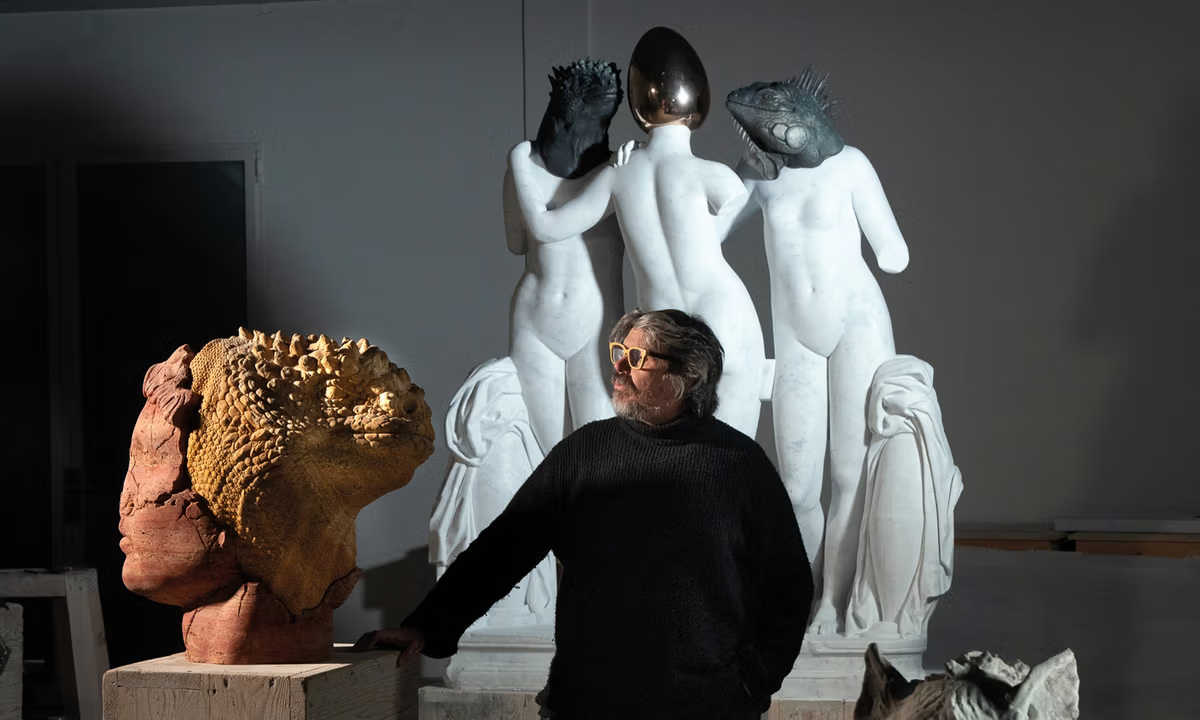
Koen Vanmechelen’s art dissolves boundaries between disciplines, cultures and species, particularly between humans and other animals. His recent project We Thought We Were Alone (until 22 November) at Palazzo Rota Ivancich in Venice particularly zeroes in on humanity’s destructive illusions of isolation, using his hybrid sculptures to supplant humans’ notions of supremacy with our interdependence. Presenting over 40 new works curated by James Putnam, the show is the Belgian artist’s first solo sculpture exhibition in Venice. Here he shares some of the inspirations behind his show, his biodiversity projects and his hopes for art’s impact in the world.
The Art Newspaper: What is the philosophy of empathy you want to convey with We Thought We Were Alone, both the title and the show?
Koen Vanmechelen: You can read it in different layers. All these years, we [humans] consider ourselves as being the centre of the universe, not particularly calculating that we have to live with the trees and the grass and the birds and all the animals around us. We started to use but also to abuse them, and went too far. In the time of dinosaurs you had rocks and fire and flesh. Now as we make everything full of concrete, we have created a new dinosaur: a prehistorical way of living that brings out aggression with a hardening. If we could see how we coexist everything becomes softer. I think if you love yourself, you have to love the other.
Installation view of Koen Vanmechelen’s Will We Ever Exist Photo: © Francesco Allegretto
How does the show incorporate more recent art histories?
I go back especially to the to the Greek and the Roman traditions, because we are in Venice. Looking at Medusa, it’s interesting that snakes provide poison to kill, but a light dose can contain a cure. In evolution, reptiles become birds. Now 80% of all flu vaccinations are cultivated using chicken eggs.
You can play with the idea of what is an animal and what is a human being? The Three Graces in Greek mythology are a symbol of beauty, but in my work Will We Ever Exist the mirror of the polished egg, reflects back iguana heads. But it’s still beautiful, because it’s a living creature.
How do you source the taxidermied animals in your work?
I’ve never killed an animal for my art. Foundations and natural parks actually call me when an animal dies, because they know me. You can buy it, and the money goes to the natural parks protecting that kind of animal. I also have my own sanctuary in in Labiomista [in Gent], and use animals that die naturally there. I have tapirs, because I care about animals that are under risk of extinction.
At my studio, along with chickens there are camels and llamas. I have this research project about llamas’ unique immune systems. It’s quite complicated, and can be used to make medication to fight illnesses like coronavirus or cancer. For me, animals are like a library and without testing on them we can learn a lot, such as insights into genetics.
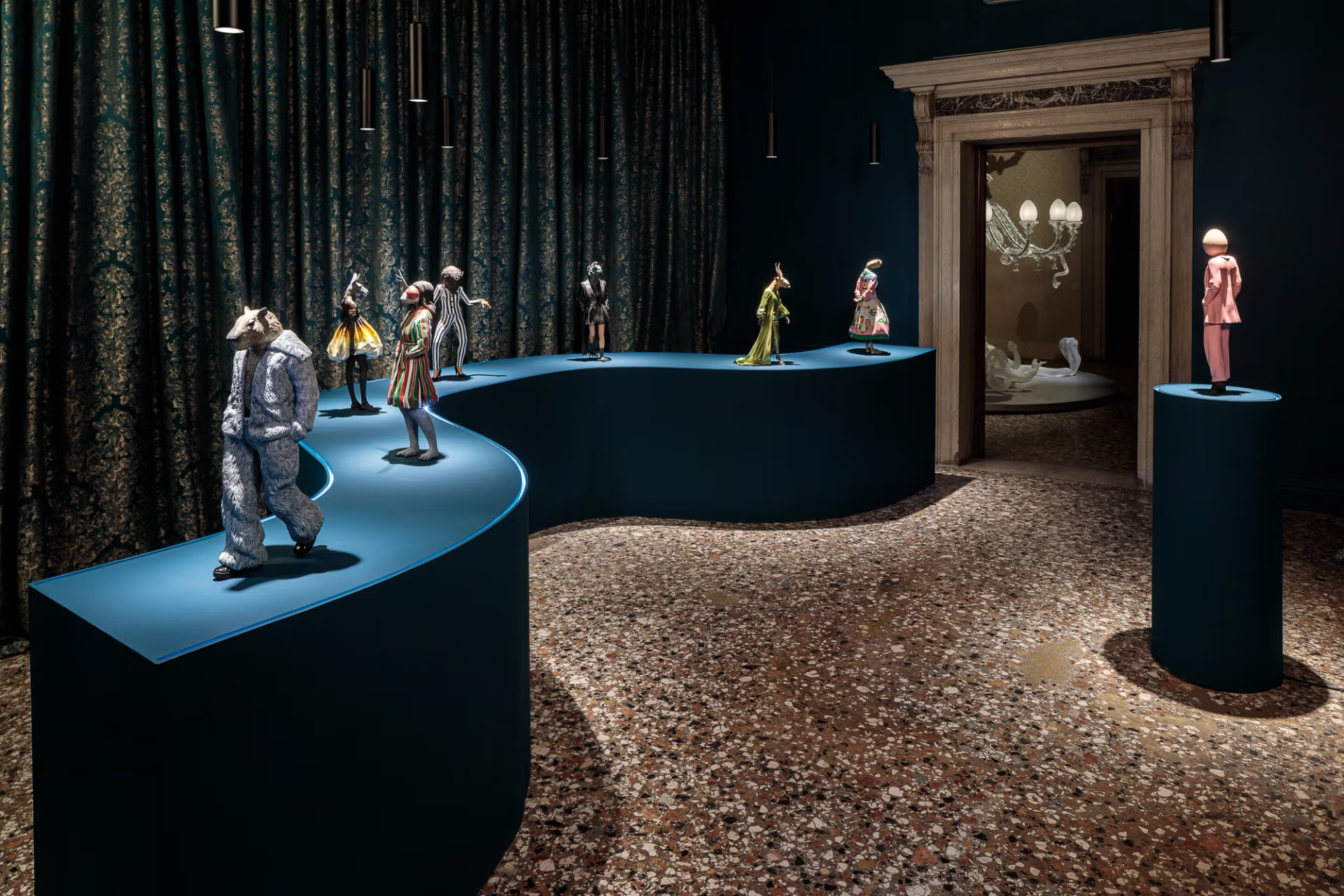
Installation view of Koen Vanmechelen’s We Thought We Were Alone Photo: © Francesco Allegretto
How else does your art engage with science?
I like to work with geneticists. Through my chickens, for example, we discovered that by crossbreeding the diversity, immunity and fertility increased enormously. The philosophy is that crossbreeding is necessary to survive. I’m also working with quantum physicists, people who are asking where we have come from. What is the universe, and how did we think we were alone? I also like social science, and work a lot with communities. I made a huge farm in Ethiopia with the International Livestock Research Institute, looking for the livestock that is best suited to the community.
You recently unveiled the temporary bronze sculpture Cosmopolitan Fossil at the Belgian embassy in Beijing. How was your commitment to animal rights received in China?
I think that China is really moving forward on animal rights, which is really great. Environmental topics are high on the agenda. Beijing has become a quiet city because everything is electric. I actually had my first exhibitions in China in the 1990s and I can see progress, especially since Covid.

Installation view of Koen Vanmechelen’s Cosmopolitan Fossil, which depicts a child holding a part iguana, part dragon creature Photo: © Francesco Allegretto
Where else do you see causes for hope?
The sad story is that, if you go into the numbers, one third of the of the world is at war. I think art is a very important thing that we can use to make statements about it, we can show where it goes right and where it goes wrong. I think I still believe in in humanity. I still believe that we have the force to change. Like with animal rights in China, you see that a society can change.
There is always a trap, and art is a good example, of romanticising ideas of the past. If you do that then you’re stuck. Art is an important tool; people just think art is to hang on the wall and to enjoy as decoration. No, art has a knowledge that can be spread. That is the most beautiful present, I think, that you can give as an artist.
• We Thought We Were Alone, Palazzo Rota Ivancich, Venice, until 22 November
