

Close Menu
  • News
  • Stocks
  • Bonds
  • Commodities
  • Collectables
    • Art
    • Classic Cars
    • Whiskey
    • Wine
  • Trading
  • Alternative Investment
  • Markets
  • More
    • Economy
    • Money
    • Business
    • Personal Finance
    • Investing
    • Financial Planning
    • ETFs
    • Equities
    • Funds

Subscribe to Updates

Get the latest markets and assets news and updates directly to your inbox.

Trending Now

Equity markets resilient amid ‘uneasy’ geopolitical events

April 23, 2026

Latest collection of luxury jewellery house Boucheron inspired by pioneering founder – The Art Newspaper

April 23, 2026

AllianceBernstein expands active ETF platform with European launch

April 23, 2026
Facebook X (Twitter) Instagram
The Asset ObserverThe Asset Observer
Newsletter
LIVE MARKET DATA
  • News
  • Stocks
  • Bonds
  • Commodities
  • Collectables
    • Art
    • Classic Cars
    • Whiskey
    • Wine
  • Trading
  • Alternative Investment
  • Markets
  • More
    • Economy
    • Money
    • Business
    • Personal Finance
    • Investing
    • Financial Planning
    • ETFs
    • Equities
    • Funds
The Asset ObserverThe Asset Observer
Home»Art Market
Art Market

Humans, not Glaciers, Moved Rocks Used in Stonehenge’s Construction, According to New Evidence

News RoomBy News RoomJanuary 28, 2026
Share
Facebook Twitter LinkedIn Pinterest Email

Researchers at Curtin University in Australia have presented evidence that humans, rather than glaciers, moved the rocks used in Stonehenge’s construction to England. Their findings were published January 21 in the journal Communications Earth and Environment.

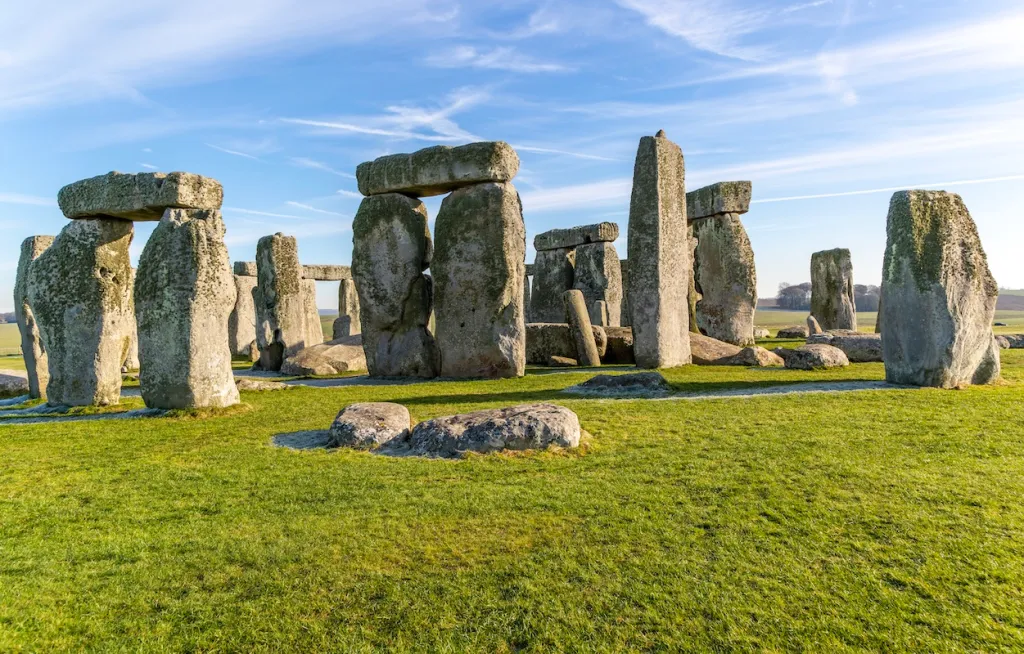
Located on Salisbury Plain in England, Stonehenge was built in stages by Neolithic and Bronze Age peoples between around 3000 BC and 1500 BC. It consists of an outer circle and inner horseshoe of sandstone trilithons with inner arcs of smaller bluestones.

Geological evidence has confirmed that the monument’s sandstone boulders came from the Marlborough Downs, 20 miles away, while the smaller dolomite bluestones were quarried in the Preseli Hills in southwest Wales, 180 miles to the northwest. The average sarsen (sandstone block) at Stonehenge weights 25 tons; the average bluestone ranges 2 to 5 tons, and the largest weighs 40 tons. Stonehenge’s Altar Stone, weighing six tons, is now thought to have originated in Scotland.

Until this month, there were competing theories as to how the stones traveled such long distances, with some positing that humans moved them by land or by sea and others suggesting they were deposited by glaciers during the Ice Age.

Now it seems almost certain that the stones were moved by people. Scientists at Curtin tested sediments collected from streams around Stonehenge for mineral evidence of glacial activity. According to their findings, the area remained unglaciated during the Pleistocene, making direct glacial transport of Stonehenge’s megaliths unlikely.

Just how humans did move the stones, however, remains a mystery. “Some people say the stones might have been sailed down from Scotland or Wales, or they might have been transported over land using rolling logs, but really we might never know,” said Dr. Anthony Clarke, a geologist at Curtin’s Timescales of Minerals Systems Group and lead author of the study. “But what we do know is ice almost certainly didn’t move the stones.”

Share. Facebook Twitter Pinterest LinkedIn Tumblr Email

Keep Reading

Latest collection of luxury jewellery house Boucheron inspired by pioneering founder – The Art Newspaper

Private Sales Are Surging as Auction Houses Lean into Exclusive, Experience-Led Selling

Slags, bings and pipelines: Edinburgh landscape offers fitting backdrop for exhibition on fossil fuel extraction – The Art Newspaper

‘The museum is not a space for the elite’: Portuguese building firm’s new museum puts workers first – The Art Newspaper

Berlin Museum Oversees Digital Resurrection of Hundreds of Paintings Destroyed During World War II

Claude Lalanne Mirror Ensemble Sells for $33.5 M., Breaking Design Auction Records

Venice Biennale’s 2026 Golden Lion Jury to Be Led by Videobrasil Founder

Trump White House Ballroom Contract Allowed Anonymous Donors, Limited Oversight

Top Collector John Phelan Fired as Navy Secretary, After Reports of Pentagon Infighting

Recent Posts
  • Equity markets resilient amid ‘uneasy’ geopolitical events
  • Latest collection of luxury jewellery house Boucheron inspired by pioneering founder – The Art Newspaper
  • AllianceBernstein expands active ETF platform with European launch
  • Private Sales Are Surging as Auction Houses Lean into Exclusive, Experience-Led Selling
  • Slags, bings and pipelines: Edinburgh landscape offers fitting backdrop for exhibition on fossil fuel extraction – The Art Newspaper

Subscribe to Newsletter

Get the latest markets and assets news and updates directly to your inbox.

Editors Picks

Latest collection of luxury jewellery house Boucheron inspired by pioneering founder – The Art Newspaper

April 23, 2026

AllianceBernstein expands active ETF platform with European launch

April 23, 2026

Private Sales Are Surging as Auction Houses Lean into Exclusive, Experience-Led Selling

April 23, 2026

Slags, bings and pipelines: Edinburgh landscape offers fitting backdrop for exhibition on fossil fuel extraction – The Art Newspaper

April 23, 2026

Event Voice: A High-Conviction, Quality-Focused Approach to Japanese Equities

April 23, 2026
Facebook X (Twitter) Instagram
© 2026 The Asset Observer. All Rights Reserved.
  • Privacy Policy
  • Terms
  • Press Release
  • Advertise
  • Contact

Type above and press Enter to search. Press Esc to cancel.