






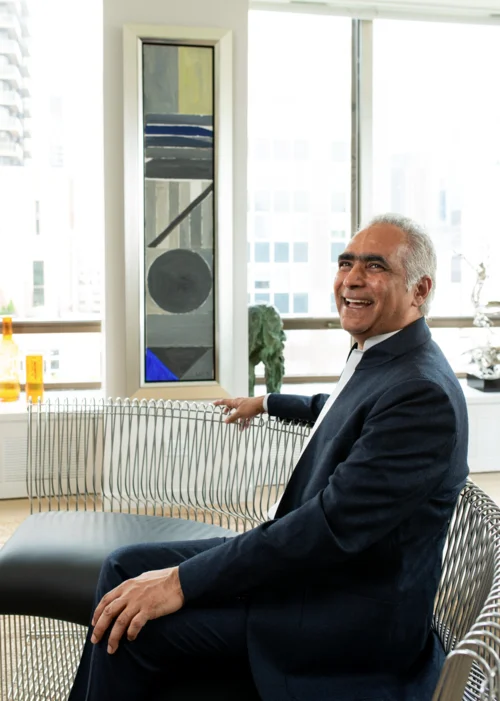

“Art is wealth we must share,” said Sundaram Tagore. “And that has been my mission for the last 25 years: to find artists and share them with the world.”
Tagore founded the eponymous Sundaram Tagore Gallery in 2000. It now has spaces in New York, Singapore, and, most recently, London. But his career has always extended beyond the gallery: He is a writer, scholar, collector, filmmaker, and above all, a friend to art and artists. “I don’t follow the market,” he added. “I follow instinct. And friendships.” His faith in friendship—and in art as something carried between people—began long before he opened a gallery.
Born in 1961 into one of India’s most culturally influential families, Tagore grew up around Jorasanko Thakur Bari, the family’s ancestral home in Kolkata, eastern India, before moving between the towns of Santiniketan and Delhi. Jorasanko was also the birthplace of his great-granduncle Rabindranath Tagore, the poet, educator, and painter who, in 1913, became the first Asian and first non-European to win the Nobel Prize in Literature.
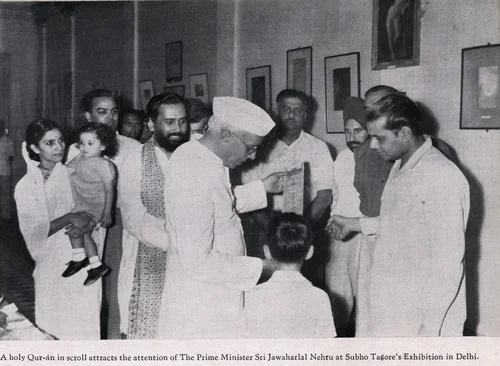

“Kolkata, once the capital of British India, was exceptionally cosmopolitan,” Tagore recalled. “Not many people know that the first Bauhaus exhibition outside Europe was staged in the city in 1922, with works by Paul Klee and Wassily Kandinsky shown alongside leading modern Indian artists.” His childhood home drew a steady procession of intellectuals, political activists, and cultural leaders.
His father, Subho Tagore, was part of that world. “He was a poet, a painter, and a rebel of a kind,” Tagore said. In 1943, Subho helped form the Calcutta Group, an early modernist art collective that rejected Romanticism in favor of a more urgent, socially engaged visual language. Its artists sold work to raise funds amid World War II, India’s independence movement, and the Bengal famine of 1943—a catastrophe, exacerbated by British colonial policies, that killed millions.
“There was always an understanding that whatever resources you possessed, whether money, education, influence, or knowledge, you had a responsibility to use them in the service of others,” Tagore noted.
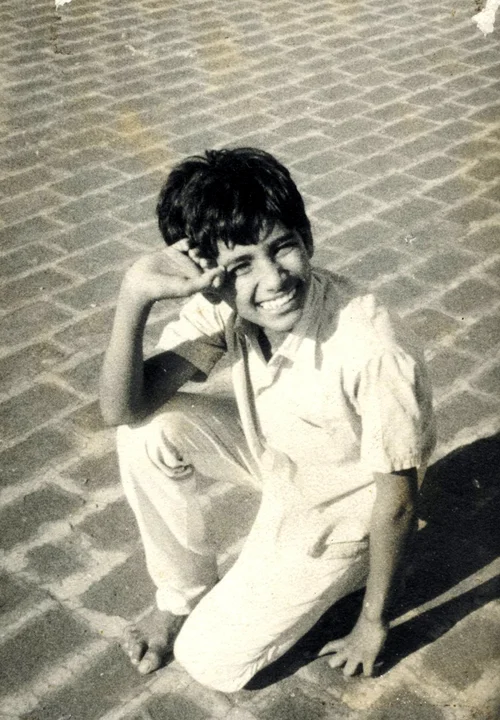

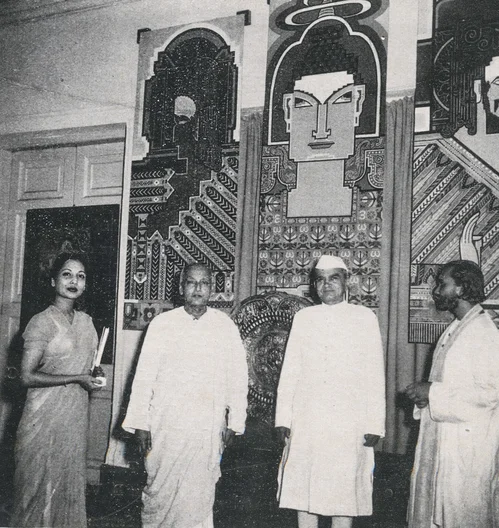

The lesson stayed with him. Drawn to art from an early age, Tagore studied in the United States before pursuing doctoral research at Oxford University on how modernism traveled between cultures. “Unlike European modernism, Indian modernism did not reject tradition. We went back to it,” he said. “We didn’t reject figuration for abstraction; we embraced it.” Indian modernists including Amrita Sher-Gil, M.F. Husain, S.H. Raza, and F.N. Souza absorbed international styles and movements while remaining rooted in their own histories. “We found a synthesis,” he added. “That has been our greatest civilizational strength.”
Yet when he moved to New York in the ’90s, working on exhibitions and later joining Pace Gallery, Tagore became increasingly aware that modern and contemporary art in the West was still presented as a largely European and American story dominated by white men. He opened his own gallery on Greene Street in SoHo as an experiment in synthesis—a place where artists across countries, movements, and generations could be brought into conversation.
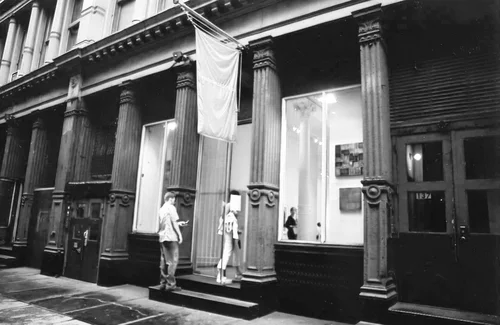

Early exhibitions championed Indian-born artists and Minimalists including Sohan Qadri and Natvar Bhavsar alongside overlooked women of the New York School, such as Susan Weil, Merrill Wagner, and Joan Vennum. Tagore formed close friendships with artists, gaining a deeper understanding of their work. By sharing that understanding, he helped them claim space in art historical conversations on their own terms. Weil, for example, was often known primarily as Robert Rauschenberg’s wife, but she herself was a master of mixed-media painting. “She had an extraordinary ability to make time visible, to hold movement, memory, and the passage of a single moment within one composition,” he said.
The same instinct led him to show works by Japanese artist Hiroshi Senju after encountering his monumental waterfall paintings at the Japan pavilion at the 1995 Venice Biennale. He later added Pakistani American artist Anila Quayyum Agha, known for elaborately patterned steel cubes that transform entire rooms through shadow and light, and American painter Judith Murray, whose large, colorful abstractions combine raw energy with a sense of the sublime. The gallery was already internationalizing the New York art world, carrying forward the cross-cultural curiosity and adventurous spirit of Tagore’s childhood home. “I was interested in artists who expanded my understanding of the universe,” Tagore said.
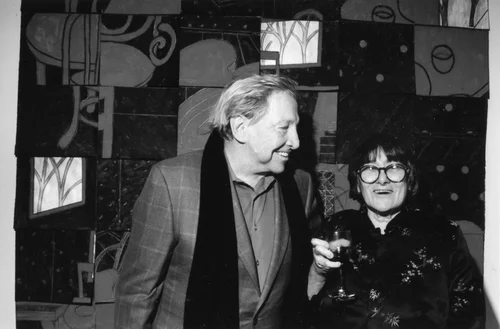

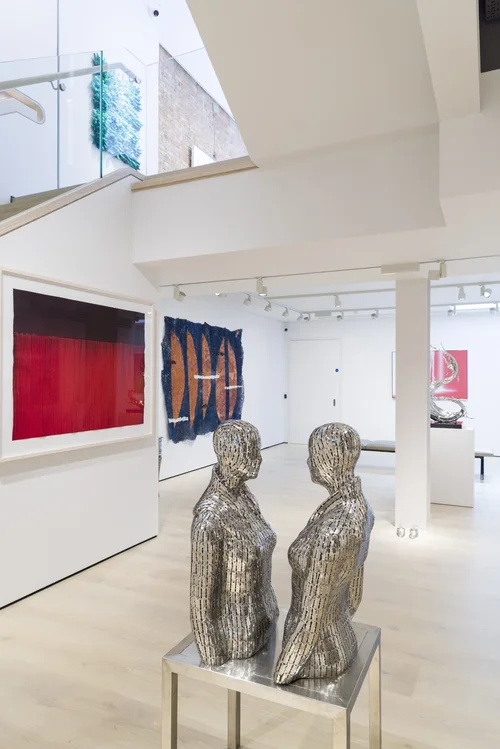
After several years in SoHo, the gallery moved to its current Chelsea home on West 26th Street. Tagore opened a Hong Kong outpost in 2007, which ran until 2020, followed in 2012 by a space at Singapore’s Gillman Barracks, where it became the district’s first New York gallery. A permanent London presence followed, and a new space in the upscale district of St. James’s opened earlier this year.
The gallery’s expansion coincided with the rapid globalization of the art market. “I showed at art fair after art fair. It was the most democratic way to understand which artists and ideas audiences and collectors resonated with,” he said. From Art SG, Kiaf SEOUL, Zona Maco, and EXPO Chicago to Art Mumbai and Abu Dhabi Art, Tagore built relationships with an increasingly nomadic collecting community moving across the global cultural calendar. Only around 10 percent of his collectors, he said, are Indian. The rest are spread across the United States, the United Kingdom, Asia, and the Middle East.
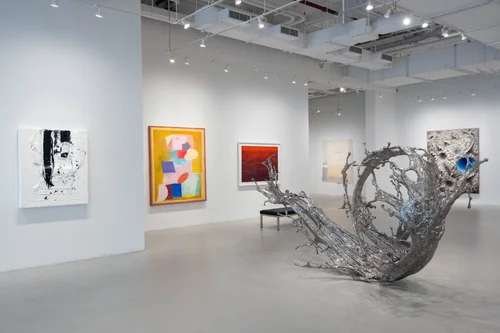

But that globalization, particularly from the 2010s onward, brought its own excesses. “There was a time when New York galleries stayed open until midnight on Thursdays, Fridays, and Saturdays, or when the street outside a Jasper Johns exhibition would be packed,” Tagore said. He remembers an art world in which artists, gallerists, and collectors “experimented more,” and gallery-going was part of the city’s social and intellectual life. “It’s a lot more commercialized now,” he said, adding, “including friendships.”
Still, Tagore remains rooted in the values that brought him this far. Beyond exhibitions, the gallery hosts poetry readings, films, musical performances, book launches, and conversations, programmed “not to please, but to connect with purpose.”


