


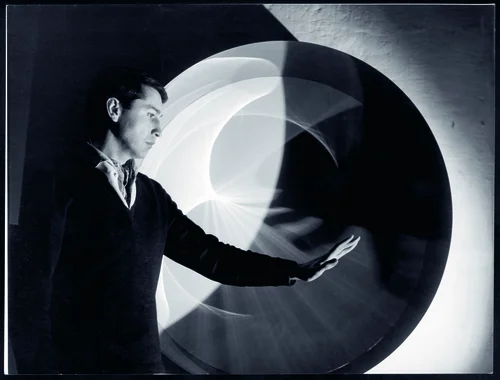
Julio Le Parc, the Argentine artist whose explorations of light and movement helped define kinetic and Op art in the 20th century, has died at the age of 97 in Paris.
His son, Yamil Le Parc, confirmed the news to Argentine newspaper La Nación. Le Parc died on May 30th following a period of declining health and a brief hospitalization. A major retrospective of his work is scheduled to open at the Tate Modern in London on June 11th.
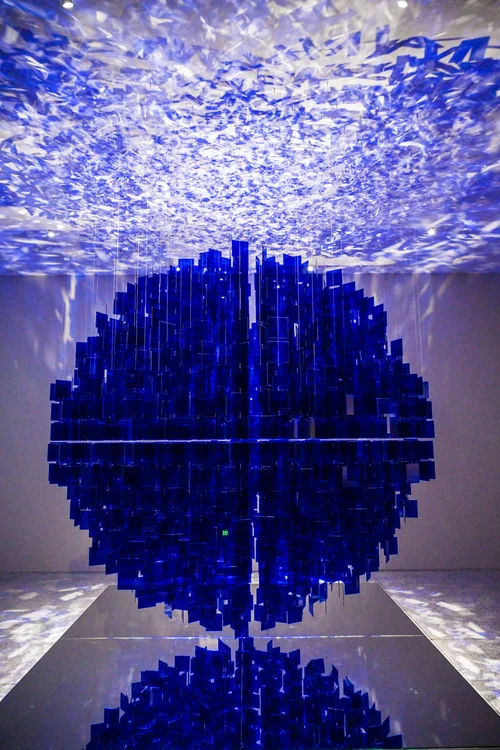
Over a career spanning more than seven decades, Le Parc developed a pioneering body of work that reimagined what it means to look at art. Using light, optical effects, and interactive installations, he placed the viewer’s experience at the center of his artworks.
These immersive environments and sculptures established him as one of the most significant artists working in kinetic art. His practice, building on the lessons of Concrete art and Lucio Fontana’s Spazialismo movement, was rooted in systems; his lifelong commitment to collective artistic experimentation shaped generations of artists working with perception and participation.
Born in Mendoza, Argentina, in 1928, Le Parc studied at the Escuela de Bellas Artes in Buenos Aires before moving to Paris in 1958. There, he became part of an experimental postwar artistic community. In the early 1960s, he helped co-found the Groupe de Recherche d’Art Visuel (GRAV), a collective of opto-kinetic artists dedicated to perception, movement, and the democratization of art through audience participation.
Le Parc first gained international recognition in the 1960s through geometric paintings, optical experiments, and light-based kinetic works. Using moving reflective elements, projected light, and viewer interaction, he created dynamic environments that constantly shifted in response to their surroundings. His “Continual Light Mobiles,” first developed in the early 1960s, became among his most celebrated works.
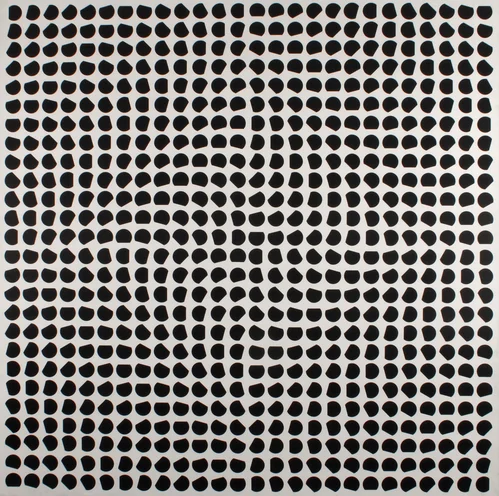
In 1966, Le Parc received the Grand Prize for Painting at the Venice Biennale, an achievement that solidified his international reputation. His work was subsequently exhibited at institutions including the Museum of Modern Art and the Metropolitan Museum of Art in New York, Palais de Tokyo in Paris, MALBA in Buenos Aires, the Serpentine Galleries in London, and the Pérez Art Museum Miami.
Le Parc continued working from Paris into his nineties, producing new paintings, sculptures, and light-based works that revisited ideas first developed in the late 1950s and early 1960s. The Tate Modern retrospective—featuring more than 60 works— will trace his lifelong exploration of perception, including key interactive and immersive installations.
Le Parc was one of the last surviving pioneers of kinetic art, whose experiments with light and movement forever reshaped the relationship between artwork and viewer.
