


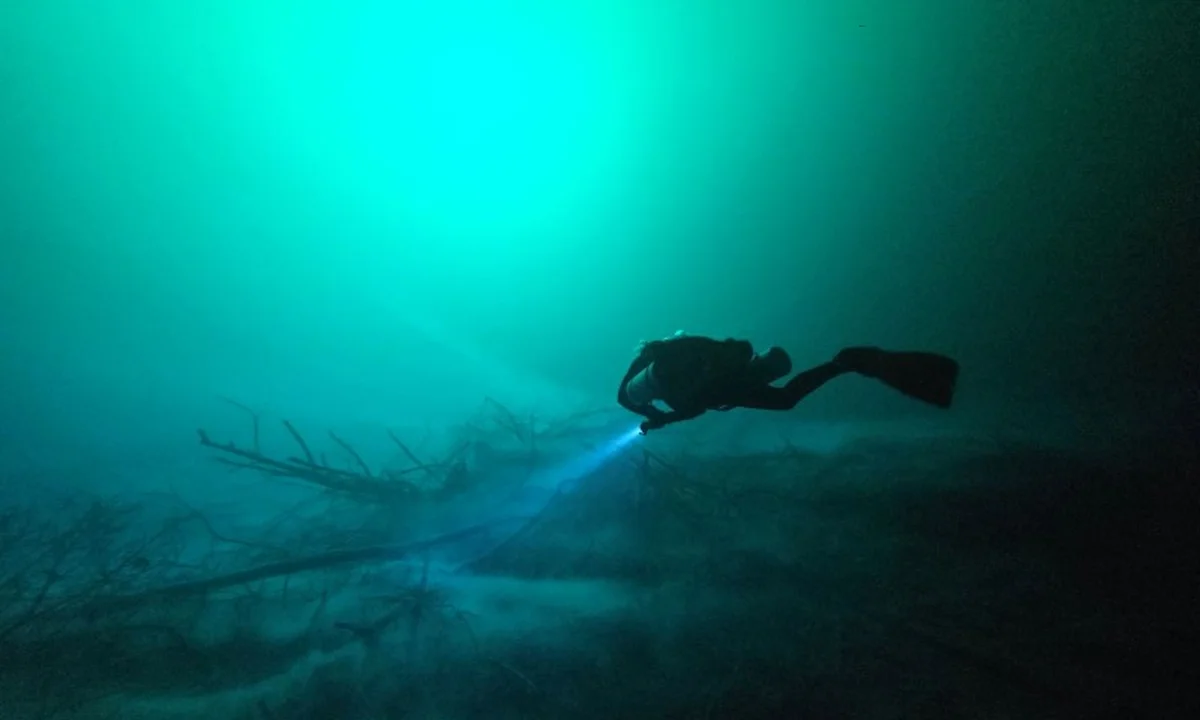
In the depths of Yaakun, a cenote in Playa del Carmen in the Mexican state of Quintana Roo, what are believed to be ancient human and animal remains, along with three Maya ceramic vessels, were recently found. The discovery has prompted a new research project led by Mexico’s National Institute of Anthropology and History (INAH) seeking to date and study the remains. The find adds to the many paleontological, pre-Hispanic and historic remains discovered among the more than 8,000 cenotes across the Yucatán Peninsula, including weapons from the region’s 19th-century Caste War.
Cenotes are limestone sinkholes connected to the Peninsula’s extensive underground aquifer. Since ancient times, they have served practical and ritual purposes. For centuries they were the region’s main source of water and provided shelter. The Maya also linked them to the underworld. Ample material evidence—including paintings, ceramic artefacts, offerings and reliefs—indicates that rituals were performed there.
A ceramic vessel found at a depth of 43m in the Yaakun cenote Photo courtesy Gustavo García García, Subdirección de Arqueología Subacuática, Instituto Nacional de Antropología e Historia
The light, temperature and humidity conditions of cenotes favour the preservation of remains. In 2000, INAH launched the Subaquatic Archaeological Atlas of Cenotes, Flooded and Semi-flooded Caves, and other Bodies of Continental Water. Between 2001 and 2025, 161 submerged contexts were registered. “The atlas has been the main tool for documenting cenotes’ submerged heritage,” Roberto Junco, the head of INAH’s underwater archaeology division, tells The Art Newspaper. “It continues to grow as new vestiges emerge.”
The new findings at Yaakun follow a report by the landowners and technical divers in late 2025. Recreational diving beggan there at the site years ago. Experts from the INAH registered the 80m-deep cenote, conducting a photogrammetric survey of the remains, located between 42m and 53m deep, and 30m apart. “Information is still hypothetical, yet animal remains are likely the most ancient, followed by the human remains and the Maya pieces,” Junco says.
The human remains likely belong to a female between 18 and 25 years of age, according to preliminary analysis. The taking of dental samples is planned for 2027 and could facilitate DNA analysis to help date the remains.
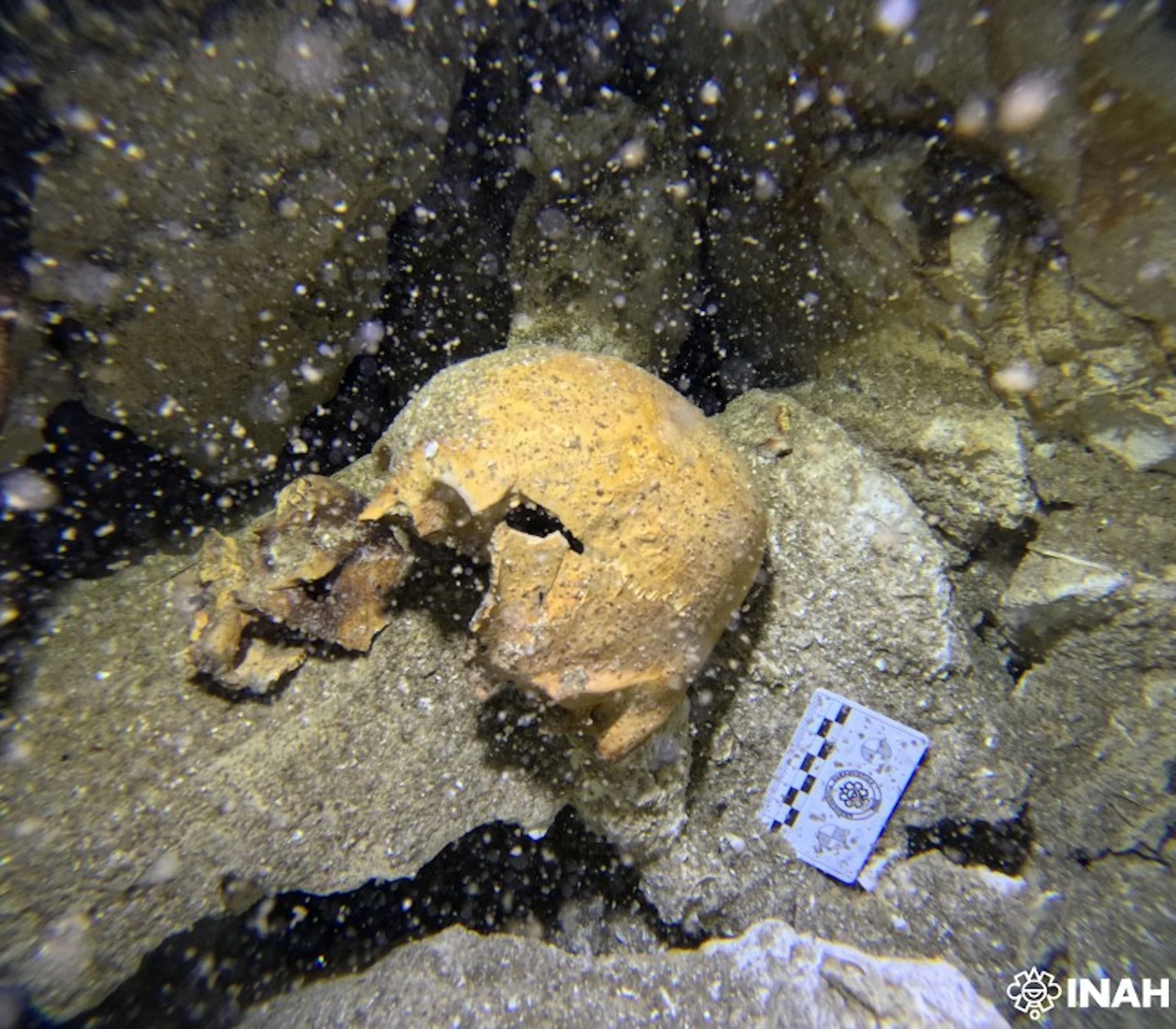
Skull of an individual believed to be female, named Yatzil, in the Yaakun cenote Photo courtesy Gustavo García García, Subdirección de Arqueología Subacuática, Instituto Nacional de Antropología e Historia
“The three ceramic vessels found, one intact and two fragmented, possibly belong to Eastern Coast Maya groups and date to the Late Postclassic Period (AD1200-AD1521),” INAH underwater archaeologist Gustavo García García said in a statement. He stressed that research on an extracted ceramic fragment is ongoing.
The landowners’ cooperation is key to protecting the remains, which were left in situ. INAH acknowledged this by allowing them to name the human remains Yatzil, or “loved one” in Maya, echoing Yaakun, which means “love”. “When communities work together, heritage can be better protected,” Junco says.
Cenotes in the region face damage from water pollution, urbanisation, agriculture and pork production, and infrastructure projects like the Maya Train. Activists say construction of the massive transit project included the insertion of 125 pillars into cenotes.
“Fortunately, the water in this cenote is in optimal condition and connects us to the past,” says the environmental activist and diver José Urbina. “While diving there, we encountered rarely seen, endangered endemic fish species, such as three Damas Blancas.” Urbina adds that access to the remains is complex and involves traversing a thick hydrogen sulfide cloud.
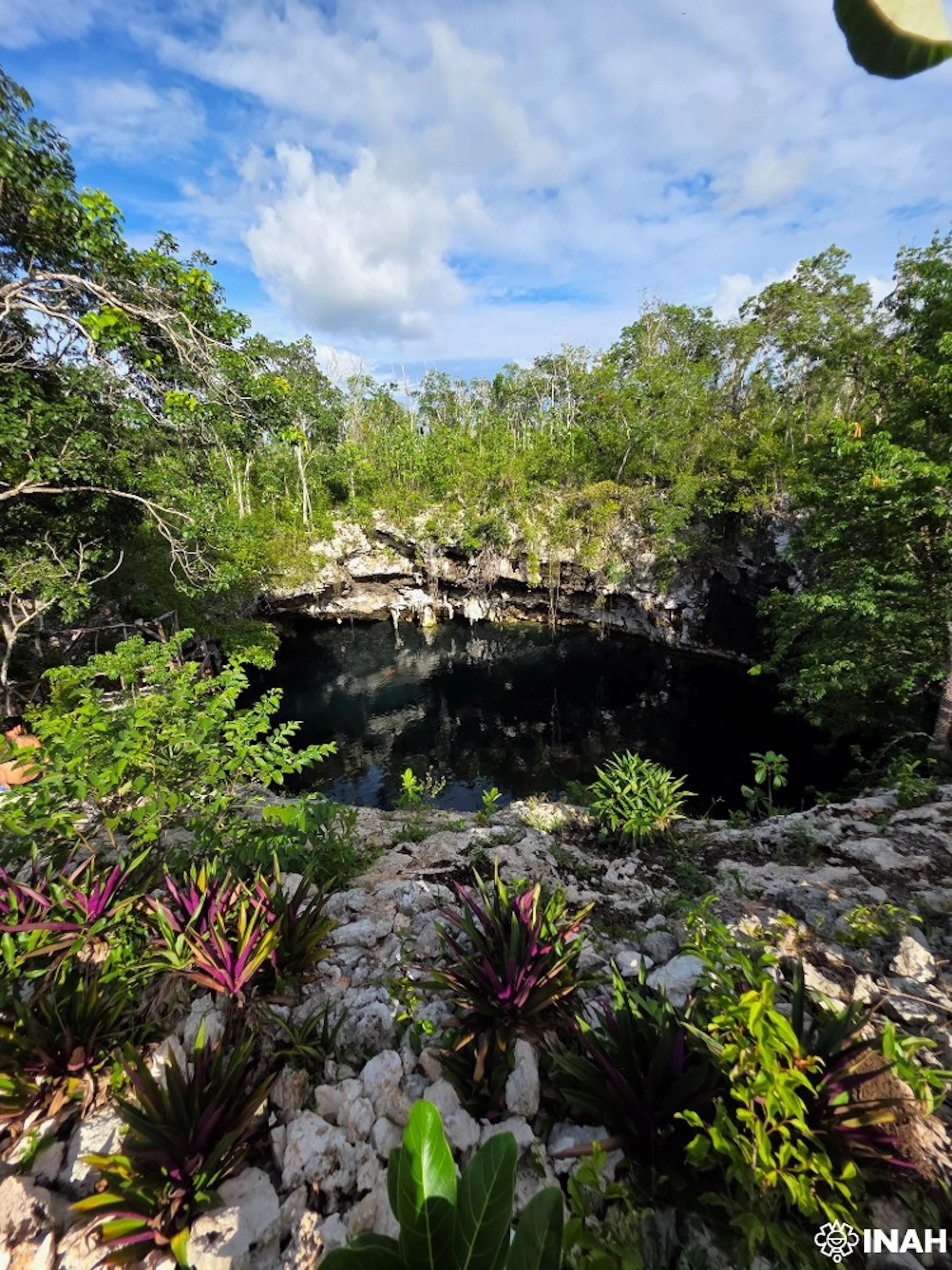
View of the Yaakun cenote in Playa del Carmen, Quintana Roo, Mexico Photo courtesy Gustavo García García, Subdirección de Arqueología Subacuática, Instituto Nacional de Antropología e Historia
The heritage items found in cenotes are very fragile. Fragments from the human skull at Yaakun show signs of being “removed”, prompting INAH experts to stress the importance of avoiding touching or moving the vestiges, which under Mexican heritage law are the property of the nation. The increase in technical diving activities and disregard for regulations have resulted in damage. Last April, divers damaged 15,000-year-old puma remains in the 55m-deep Hoyo Negro cenote in nearby Tulum, which is home to Pleistocene remains—including “Naia,” one of the oldest human skeletons found in the Americas.
Research continues, but the archaeologists’ main concern is raising awareness to protect the heritage that has been preserved in the cenotes for centuries. “More projects are planned to better understand specific submerged contexts,” Junco says, “But education and community participation are key.”
