


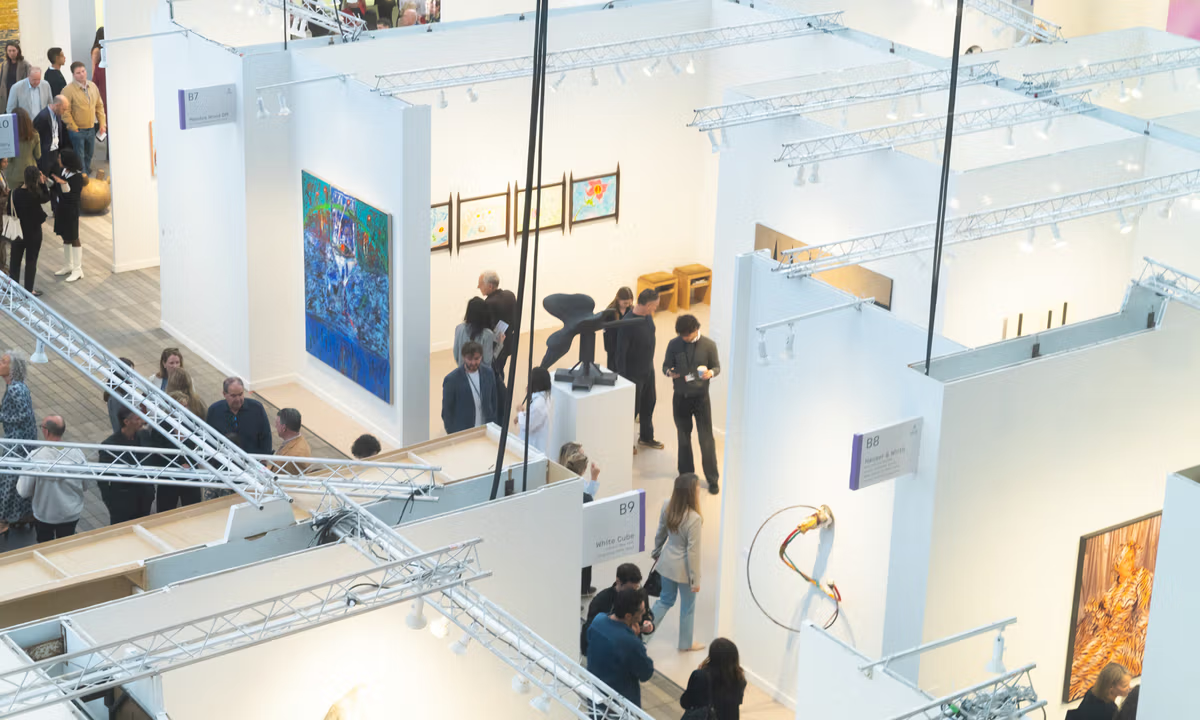
Last year, in the first 100 days of Donald Trump’s second presidency, gallerists from Latin America pulled their participation from art fairs across the US as uncertainty regarding tariffs and visas made attendance untenably risky. But this year, we are seeing a surge in participation among Latin American galleries at Frieze New York. The presence of 14 galleries—from Mexico, Argentina and points in between—is the result of non-profit support, a concerted effort by the Frieze Americas team to bring more Latin American galleries to the fair and the growth of galleries in the region.
Anamaria Boschi, a project manager with Latitude, a nonprofit that supports the internationalisation of Brazilian galleries, says that last year “gallerists were saying, ‘If I can’t bring my artists, why would I go [to fairs in the US]?’” But as some fairs in Colombia, Mexico and Argentina have seen slowing sales, many galleries from the region have decided to re-commit to participating in US expos. Latitude, a partnership between ApexBrasil (the Brazilian Trade and Investment Promotion Agency) and ABACT (the Brazilian Contemporary Art Association), provided support to all eight Brazilian galleries showing at Frieze this year, with more support being funnelled to emergent galleries. This aid has been critical as shipping costs have risen sharply.
For established Brazilian gallerists who have been bringing their work to Frieze for years, the increased tensions between Brazil and the US have been difficult to stomach. Last year, the Trump administration slapped Brazil with a 50% tariff on imports to the US in an apparent move to pressure President Luiz Inácio Lula da Silva to spare his predecessor Jair Bolsonaro prison time for his role in an attempted coup.
“It’s not our favourite place to be right now, but this is the hegemonic centre of the art world,” says Márcia Fortes, a founding partner of the Brazilian gallery Fortes, D’Aloia & Gabriel. “But Frieze has always been a quality fair and we want to be loyal to that; there is so much to share.” For Márcio Botner, a co-founder of the Rio de Janeiro-based gallery A Gentil Carioca, New York is a “democratic island” that “feels insulated from the political uncertainties of the past year”. Yet even New York is not immune to the larger political trends at play.
Works by Brazilian artists in this year’s edition include Mitologia grega para meninas (Icária) (2025) by Alex Červený, on show at São Paulo’s Almeida & Dale Steven Molina Contreras
While no Latin American gallerists showing at the fair have reported having issues with bringing their artists to the US this year, the Mexican artist Jerónimo López Ramírez, known as Dr Lakra, was not able to attend the opening of his own show at Kurimanzutto on Wednesday night. The exhibition (until 13 June) features works by Dr Lakra and Miguel Covarrubias, a Mexican artist who rose to prominence in the 1920s and was known for his illustrative work for Vanity Fair. José Kuri, the co-founder of Kurimanzutto, notes that the artists share many similarities.
“Both artists evaded categorisation, entered the art world from ‘the outside’, through illustration and tattooing, and have been very influenced by the culture of Southeast Asia,” Kuri says. “And just as Jerónimo was denied a visa, so was Covarrubias.” Despite being an artist active in New York, during the Cold War era Covarrubias was denied entry into the US because of his ties to the Communist Party and could not return for the rest of his life. Though the government did not provide a reason for denying Dr Lakra’s entry, the parallel history is “disturbing”, Kuri says.
Despite these obstacles, however, Latin American galleries, especially in Mexico and Brazil, have been growing. “While the trend in the States is that galleries are closing or downsizing, we’re seeing the opposite trend in Brazil right now,” says Louis Vaccara, who was recently appointed international director at the Brazilian gallery Almeida & Dale. Almeida & Dale, along with other established Brazilian galleries like Fortes D’Aloia & Gabriel and Mendes Wood DM, have been expanding both at home and abroad.
Meanwhile, in Mexico, a new generation of galleries opened during the pandemic. Campeche, a Mexico City gallery, is one of them, and is showing at Frieze New York for the first time in the Focus section.
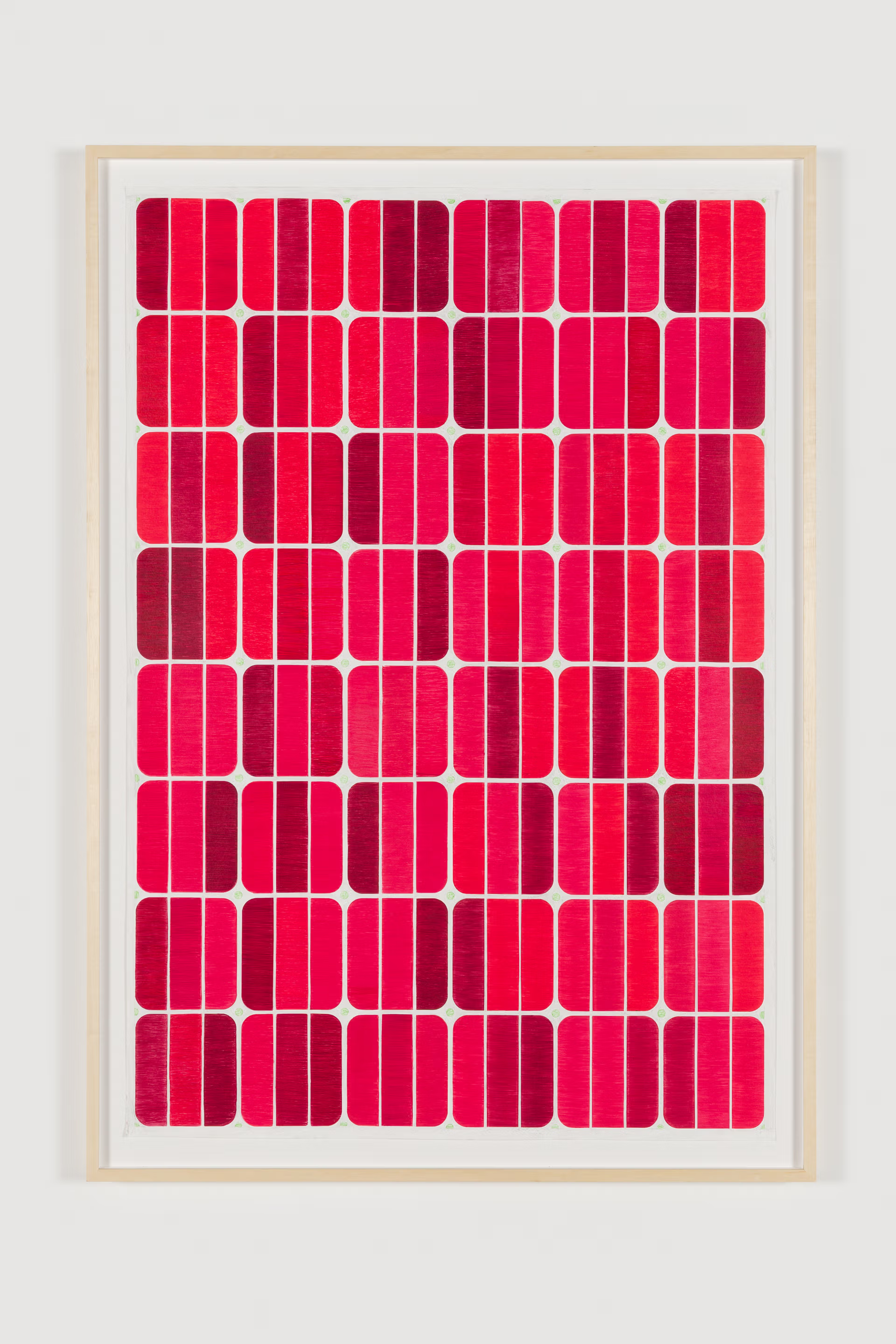
Eu Sol (2026) by Jarbas Lopes, on view at the Rio de Janeiro-based gallery A Gentil Carioca Steven Molina Contreras
“Everyone has a story; I wouldn’t say it was because of the pandemic but that is when so many of us happened to have opened our spaces,” says Fátima González, who founded Campeche in 2021. “But there is a new generation of gallerists and artists emerging from Mexico with a lot of combined ambition and know-how.”
Christine Messineo, Frieze’s director for the Americas, first met González after seeing the work of the then little-known Mexican artist Abraham González Pacheco hanging in a collector’s home and went to visit his gallery, Campeche, soon after. Messineo tapped González as well as Omayra Alvarado-Jensen of the Colombian gallery Instituto de Visión to be a part of the fair’s selection committee this year.
“We all belong to this single continent, and I want that to be represented,” Messineo says. By bringing on González and Alvarado-Jensen, she built a team that could help research emerging Latin American artists and gallerists alongside the work done by the Focus section curator Lumi Tan. For Messineo, the subsidised Focus sector is a way of supporting the development of the art ecosystem.
“Of course, we are a market, but we are also a place where the visibility and success of artists is crafted,” Messineo says. “Getting to watch and be a part of the growth of an artist’s career is the most exciting part of this job.”
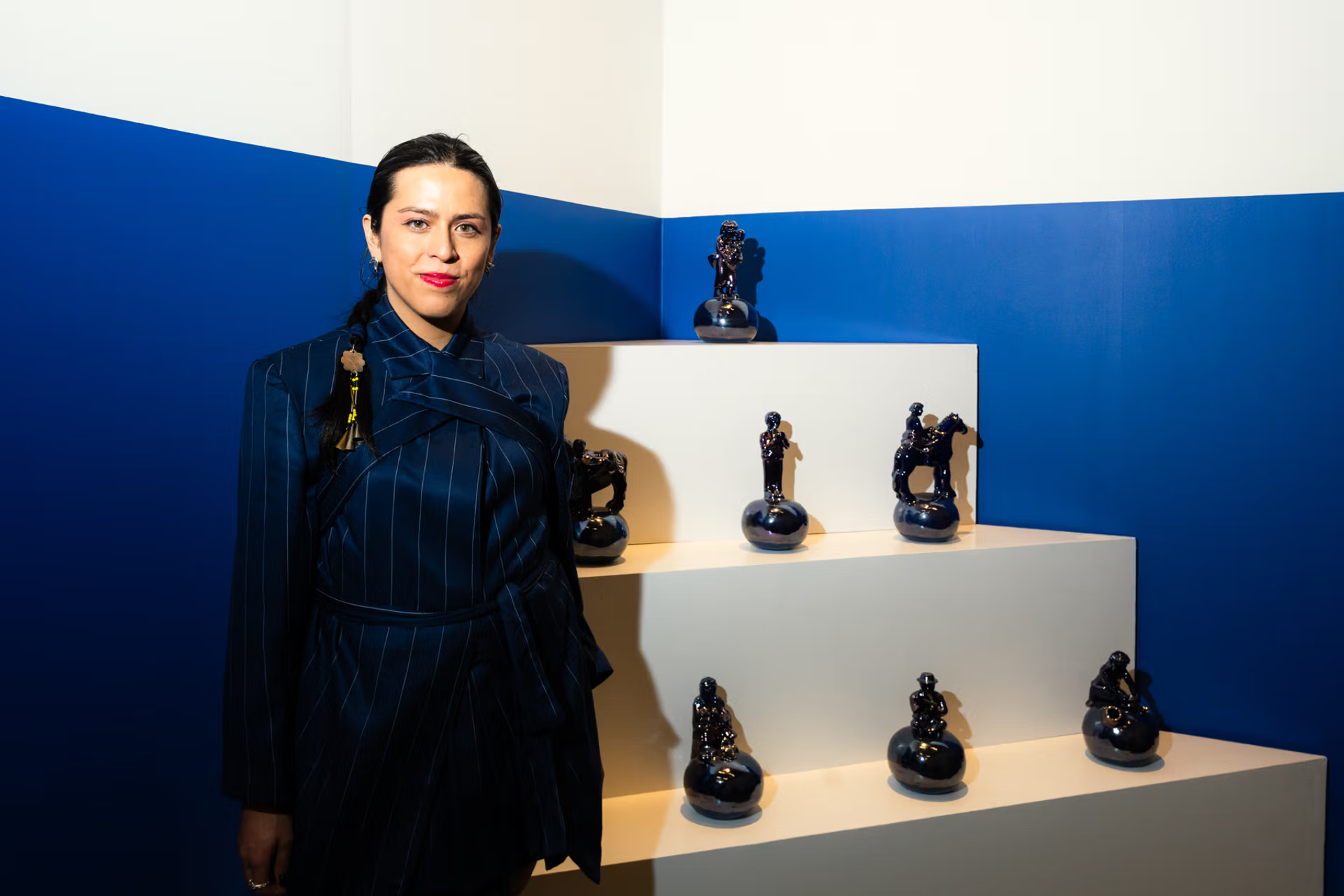
Seba Calfuqueo, a Chilean artist of Mapuche heritage, is this year’s winner of the Frieze Focus Stand Prize; her works are being shown with Buenos Aires’s W-Galeria Steven Molina Contreras
The career-defining potential of the fair is on full display at the stand of the Buenos Aires-based W-Galería, which is showing works by Seba Calfuqueo, a Chilean artist of Mapuche heritage. Calfuqueo won the Frieze Focus Stand Prize on Wednesday (13 May) for her work addressing colonial violence against the Mapuche people, who live across Argentina and Chile. The Baltimore Museum of Art also acquired one of Calfuqueo’s works, and she received an unrestricted award of $5,000.
“After so many years of hard work, it’s incredible to have this opportunity to make my mark in New York,” Calfuqueo says.
Though Calfuqueo has typically worked in performance and video art, the pieces she brought to Frieze New York’s Focus section are sculptural works made with hair, papier-mâché, metallic lustre and mother-of-pearl glazes. Through these works, Calfuqueo addresses the violence done to Indigenous peoples by ethnologists and anthropologists, including a grisly campaign that brought Indigenous people from Patagonia to Buenos Aires to participate in a human zoo in the late 19th century. For Calfuqueo, these works, incorporating sacred Mapuche protective and sacred elements like sound, shimmer and the colour blue, are a way of “returning dignity” to those who were abused and killed in these colonial campaigns.
“Latin Americans have a special ability to speak back to the issues that have shaped and continue to affect the Americas,” says Leopol Jose Maria Mones Cazon, the founder of the Buenos Aires-based gallery Isla Flotante, which is showing experimental works by the Argentine artist Rosario Zorraquín in the Focus sector. “For that reason, a strong Latin American presence really is obligatory.”
