


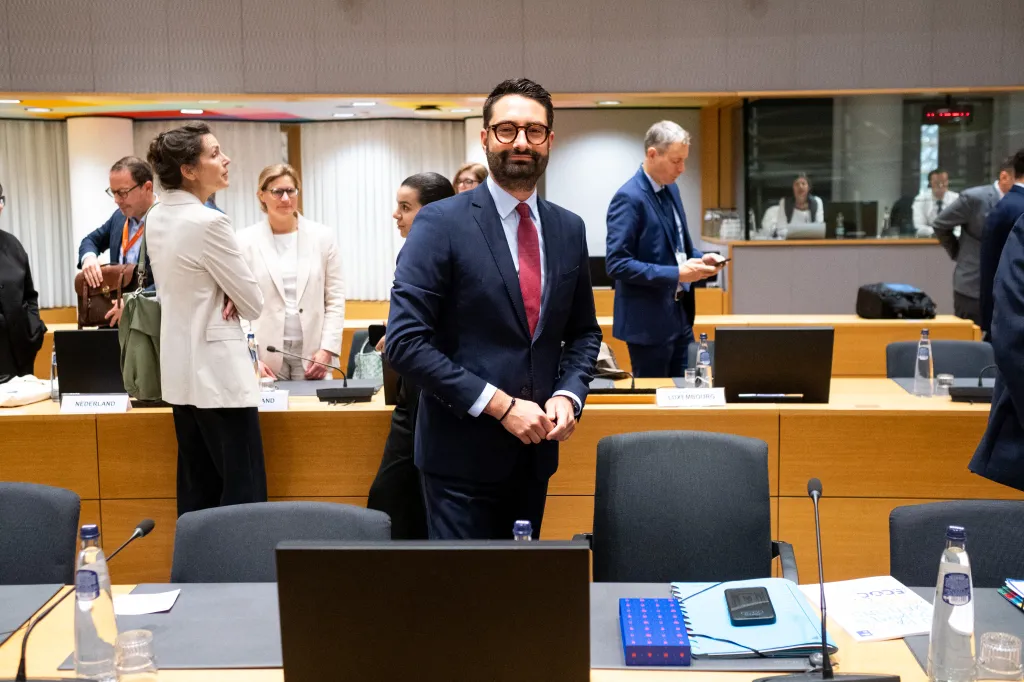
Luxembourg’s pavilion for the upcoming Venice Biennale has sparked a political spat at home, after lawmakers questioned both the cost of the project and the nature of the work set to represent the country.
At the center of the debate is La Merde, a project by Luxembourg-born artist Aline Bouvy representing the country at the biennale’s 61st edition. The work, described as a feminist and societal commentary centered on a personification of excrement, has drawn criticism from members of Luxembourg’s right-wing Alternative Democratic Reform Party (ADR). They say the concept is both provocative and an expensive way to promote the country abroad.
The criticism was formally raised in parliament by ADR lawmaker Alexandra Schoos, who questioned the pavilion’s €540,000 budget and whether it was justified “given the current budget situation, social challenges, and tax burden,” reported Paper Jam. Schoos also pointed out that the figure is far higher than the €150,000 annual budget for the country’s new cultural observatory.
In response, Luxembourg’s culture minister Éric Thill defended both the project and its funding. He argued that artistic freedom is a core principle of democratic societies.
“The role of the state is not to filter works in the name of good taste,” Thill said, adding that art should challenge audiences rather than simply please them. He said the public debate surrounding the project proves that it is doing its job.
Thill then pushed back on the suggestion that the budget was too high. According to the ministry, costs for Luxembourg’s participation in the biennale have been rising steadily in recent years: €418,600 for the architecture edition in 2023, €494,100 for the art edition in 2024, and €521,400 in 2025. The latest figure reflects rising production, shipping, and logistical costs that have impacted large international exhibitions across the board.
Most of the budget is reportedly going toward practical expenses. Roughly two-thirds covers production, transport, installation, and travel for the team involved in the project. Organizing the pavilion over the biennale’s seven-month run accounts for another 8 percent, while communications take 12 percent. Artist fees and the official opening each account for about 7 percent.
Thill said that Luxembourg’s spending also sits broadly in line with other countries participating in the biennale. In 2024, Switzerland allocated about 550,000 Swiss francs for its pavilion, Germany spent roughly €650,000, Austria €660,000, and Italy around €1.2 million.
He also pointed to Bouvy’s credentials, noting that she has exhibited widely and that her work is held in several institutional collections.
