


Good Morning!
- Iconic British artist David Hockney has died at 88.
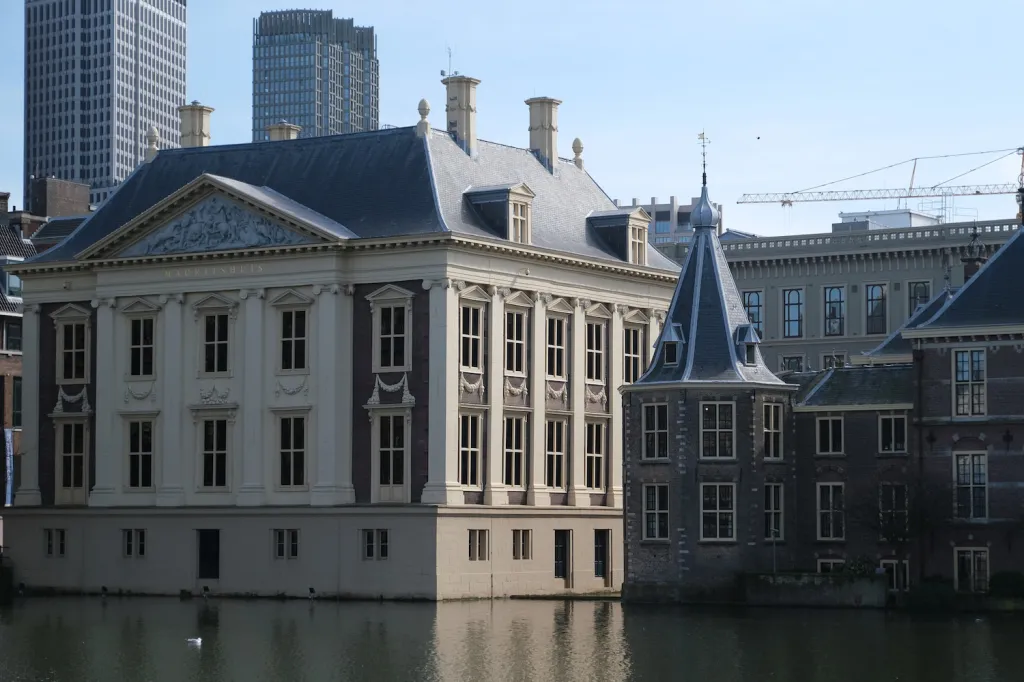
- A court in The Hague said the Mauritshuis does not have to return 25 valuable artworks—including eight Rembrandts—to the heirs of its former museum director.
- Fallout continues from a viral artist residency “scandal” that misled artists.
The Headlines
IN MEMORIAM. British artist David Hockney has died at 88. He “passed away peacefully at home on June 11, 2026, one month short of his 89th birthday,” stated his publicist, Erica Bolton. One of contemporary art’s most influential figures, Hockney never stopped painting what he loved, even late into his life. This included the people and places the artist encountered over the course of a remarkable life spent in London, Los Angeles, East Yorkshire, and Normandy, among others. Born July 9, 1937, the artist—immediately recognizable in his colorful, gentlemanly attire, complete with cap and round glasses—is survived by his partner Jean-Pierre Goncalves de Lima, two brothers, Phillip and John, as well as their children and grandchildren. Hockney first made a name for himself as a Pop artist in the late 1950s and early ’60s, going on to make highly coveted paintings of Los Angeles swimming pools, which now command many millions at auction—along with the rest of his vast oeuvre. His Portrait of an Artist (Pool with Two Figures)(1972) sold at Christie’s for $90.3 million in 2018; at the time, it was the most expensive auctioned artwork by a living artist. But Hockney was not confined to painting on canvas. He also painted with iPads, designed opera sets, and made etchings, lithographs, photographs, and stained-glass windows. His practice managed to touch the hearts of both a wider public and the art world’s most discerning critics, making him one of the most globally recognizable art stars of the last century.
HAGGLING IN THE HAGUE. A court in The Hague has ruled that the Mauritshuis museum in the Netherlands does not have to return 25 valuable artworks—including eight Rembrandts—to the legal heirs of art historian and former Mauritshuis director Abraham Bredius, reports the NL Times. Descendants of Joseph Kronig, the sole heir of Bredius, who died without children, had filed a legal claim arguing that the museum was reneging on its promise to permanently display the 25 works Bredius bequeathed to it, under the condition that they all remain on permanent display. Fifteen of the 25 paintings remain in storage, prompting the lawsuit. However, the District Court of The Hague ruled that Bredius’s will leaves “some room for uncertainty,” and determined that it intended for the paintings to be displayed exclusively within the Mauritshuis but barred from loans to other exhibitions. Storing them there is therefore permitted, since there was no “absolute duty” to permanently hang all the paintings for public viewing, the court concluded. The museum has argued that it is physically impossible to display all 25 artworks at once.
The Digest
Artists feel misled and disrespected after receiving bulk emails that falsely announced that they were both shortlisted and invited to participate in an arts residency run by Abstract Magazine, even in cases where they had never applied. [Artnet News]
Portrait photographer William Coupon, whose subjects ranged from Jean-Michel Basquiat to Richard Nixon, has died at 73. [New York Times]
A Brazilian court has ordered the former director of Rio’s Museu de Arte Moderna, Fábio Szwarcwald, to pay about $20,000 in fines for breach of contract, following his publicly stated concerns about the museum’s safety and lack of fire insurance. [The Art Newspaper]
Less than 36 hours before a court-ordered deadline to remove President Trump’s name from the John F. Kennedy Center for the Performing Arts, the institution’s board appealed the directive and challenged an accompanying legal halt to renovation plans. [The Washington Post]
Grimm Gallery in Amsterdam is expanding to new, larger headquarters in the city center and is opening an artist residency in an 18th-century château in southern France, as it celebrates its 20th anniversary. [Artnet News]
A bag purportedly made of reconstituted Tyrannosaurus rexskin, drawn from a collagen sample trapped inside a fossil, flopped at auction in Paris, where it had been estimated at €300,000 ($347,100). [Le Figaro and AFP]
The Kicker
LAZYBONES. Curator Helen Molesworth has a soft spot for “artists who flirt with not working, not making things— artists who succumb to laziness,” she writes in Cultured. Molesworth, along with other art world figures, was asked to comment on one of the seven deadly sins in today’s era. She picked sloth, which “encompasses laziness, an attribute that haunts me,” she admits. We wager she is not alone. In fact, the much-anticipated Basel Social Club, held June 14 to June 20, tackles this subject via this edition’s office work theme—seen in its absurdities and digital-era transformations. What do artists say about sloth? Molesworth reminds us that there’s Lee Lozano’s General Strike Piece (1969), which starts with this instruction to self: “Gradually but determinedly avoid being present at official or public ‘uptown’ functions or gatherings related to the ‘art world.’” Even better is Robert Barry’s Closed Gallery, in which the invitation to the show read, “During the exhibition the gallery will be closed.”
