


Max Levai is expanding into Chelsea at a moment when much of the market is pulling back.
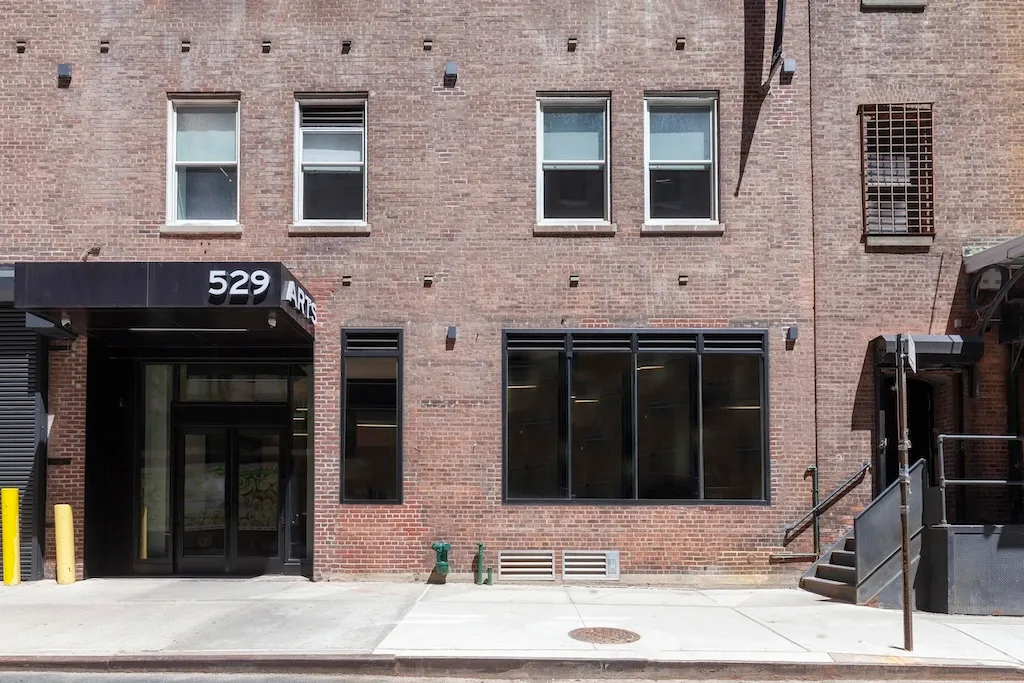
The former president of Marlborough Gallery will open a 7,000-square-foot flagship at 529 West 20th Street this fall, his first permanent New York space after several years of operating between pop-ups, international projects like his presentation of works by Frank Auerbach at the 2024 Venice Biennale, and his Montauk compound, The Ranch.
“Having a gallery that is permanent… has been on my mind for a while,” Levai told ARTnews this week by phone. “There’s a roster of artists I’m motivated to provide a proper stage for.”
That stage, he believes, still belongs in Chelsea. While Tribeca has drawn a younger wave of galleries, Levai is blunt about where he sees the center of the market.
“In my opinion, Chelsea is simply the best place to have a gallery,” he said, pointing to the scale and flexibility of its buildings. His previous Tribeca location, roughly 900 square feet, was suited to tightly focused historical shows. Plus, he said, it was never meant to be permanent.
Owned by Eagle Point Properties and designed as part of the broader 529 Arts building, the ground-floor gallery will give Levai the footprint and infrastructure he has been missing. The new gallery will house two distinct exhibition areas across two levels. Levai decided early on he would not run both himself.
Install view of Frank Auerbach’s work at the Palazzo da Mosto during the 2024 Venice Biennale.
Sebastiano Pellion di Persano
Instead, he brought in 47 Canal, the gallery cofounded and run by Oliver Newton, to run the second program within the building. The arrangement is straightforward: two independent galleries sharing a single address with separate offices and programs.
Levai is precise about the terms. “We’re running our own operations under one roof,” he said. “It’s not a collaboration, it’s more like co-exisiting.” The setup reflects a practical calculation as much as a curatorial one.
“To develop as a primary market gallery, you need to leave yourself room to take risks,” Levai said. “And the problem with the way things has evolved is that room in the margins has slowly been eaten away. Unless you maintain that ability to take risks, you can’t develop, you can’t do things that are going to really have an impact.”
Sharing the building, he said, allows him to maintain scale without taking on the full burden alone. There may be occasional joint efforts—he mentioned the possibility of a summer exhibition spanning both floors—but most of the year, the two programs will run separately.
The Chelsea gallery also offers Levai something he has not had in New York City: range. In Tribeca, he focused on historical presentations, including a show of work by Renate Druks that benefited from the intimacy of the space. The new gallery allows him to expand that approach while also mounting exhibitions of contemporary work by artists he represents.
“I now have the right setup to do those types of shows,” he said, “but also to do shows of new work” with artists he represents like Daniel Lind-Ramos, Julius Von Bismarck, and Nancy Rubins. He is also interested in bringing over a format he developed at The Ranch pairing contemporary artists with historical figures in tightly conceived exhibitions shaped by both research and production.
But if the Chelsea gallery is about continuity and visibility, The Ranch operates on a different rhythm. Set on an active horse farm in Montauk, it has evolved into a site for projects that would be difficult to realize in the city. Artists often spend weeks or months on-site, producing work that responds to the landscape or requires a level of logistical freedom unavailable in New York.

Installation view of Max Levai’s presentation of work by Renate Druks at 61 Lispenard.
“It’s the place where you make shows that don’t make sense to make elsewhere,” Levai said.
Programming there is seasonal and non-repetitive, closer to a kunsthalle than a commercial gallery. The New York operation, by contrast, will be ongoing and artist-focused, with a clearer market function.
“The idea with the gallery in New York is that it’s something different,” he said. “It will establish its own identity separate from The Ranch.” There will be points of contact, but the two are designed to operate on parallel tracks.
Levai’s timing is not incidental. After a more than a decade of rapid growth, followed by years of instability, the art market has calmed and cooled down, and many galleries are reconsidering overhead and scale, or closing all together. Levai is among those moving in the opposite direction. He does not dismiss the risk.
“The timing… is risky in terms of the market,” he said. But he framed the decision in more personal terms. “In some ways, it would be risky for me not to take this opportunity,” he said.
That logic runs through the entire project. The gallery is not just a physical upgrade but a structural one designed to give him enough flexibility to take chances, develop artists, and build a lasting program that can move between historical and contemporary work without compromise. In a tighter market, that may be the real bet.
