


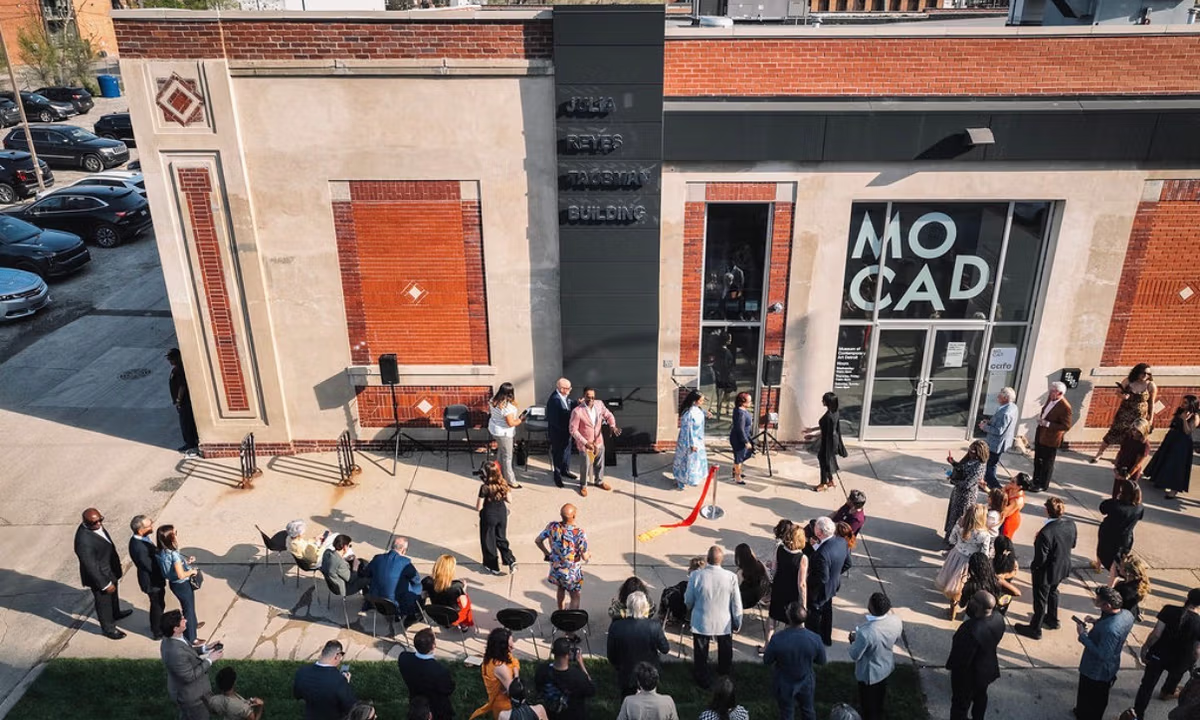
The Museum of Contemporary Art Detroit (Mocad) reopened its doors for the first time in more than a year on 25 April, showing off upgrades to its 22,000-sq.-ft Midtown space—just in time for the museum’s 20th birthday. Updates to the kunsthalle inside a former car dealership include the addition of a learning space, an air-conditioning system (which it previlusly lacked) and a large, street-facing window better connecting Mocad’s galleries to the surrounding neighbourhood. The main campus building has been renamed in honour of the museum’s co-founder, Julia Reyes Taubman.
Three years ago, when Marie Madison-Patton stepped into the museum’s co-directorship alongside Jova Lynne, their aim was to position the institution more explicitly as a civic space. “We want this to be a place where people of all ages can learn about art at different levels,” Madison-Patton tells The Art Newspaper. “A space that prompts reflection and helps people make connections.”
As museums increasingly present politically and socially charged contemporary art, many are shifting from delivering information to facilitating dialogue. Mocad underscores how a participatory model can reshape the gallery experience, providing opportunities for visitors to share and reflect on their personal realities, histories and identities. The museum’s redesign also demonstrates how a smaller institution can create physical space that makes contemporary art more accessible to audiences with different levels of familiarity and comfort.
“It’s important that our community feels at home here,” Madison-Patton says. “Detroit is rich in culture, and people are proud of it. We want to reflect that.” As a result, many of the artists featured in the museum’s exhibitions are local.
Lynne says that one approach behind Mocad’s community engagement is Visual Thinking Strategies (VTS), a facilitated-discussion method that slows down looking and redistributes interpretive authority—a shift away from didactic interpretation and towards dialogue-based engagement. While VTS provides Mocad with a structured framework for building interpretation through observation and discussion, the museum’s programming also extends into sensory and reflective experiences.
Opening weekend of Olayami Dabls: Detroit Cosmologies at Mocad Photo: Justin Milhouse.
VTS encourages educators and docents to avoid instructing viewers on what to see. Instead, the method directs them to ask audiences to articulate what they notice. The approach is based on a staged theory of aesthetic development rooted in research developed in the 1970s and 80s by the cognitive psychologist Abigail Housen at the Harvard Graduate School of Education.
Housen examined how people interpret art when asked open-ended questions. Her later work, with the museum educator Philip Yenawine of New York’s Museum of Modern Art, identified a vast gap between museum programming and audience readiness. Housen and Yenawine found that many visitors were in the early stages of aesthetic development, so they designed VTS to build interpretive skills—initially in schoolchildren, and later in adults.
Tara Geer, the director of the Visual Thinking Strategies Institute, says that VTS is “not about getting the right answer. It’s about creating a space where people can practice making meaning.”
Now that the museum has reopened, Meghan Morrow, its curator of education, plans to bring students to the local artist Martha Mysko’s first solo exhibition, Retail Therapy (until 21 June), an immersive environment of familiar thrifted objects, which could jumpstart a dialogue around consumer habits. And while leading groups through textiles in the local artist Carole Harris’s exhibition This Side of the River (until 21 June), Morrow hopes the assembled fabrics of familiar materials offer an entry point for observation, interpretation and shared meaning-making.
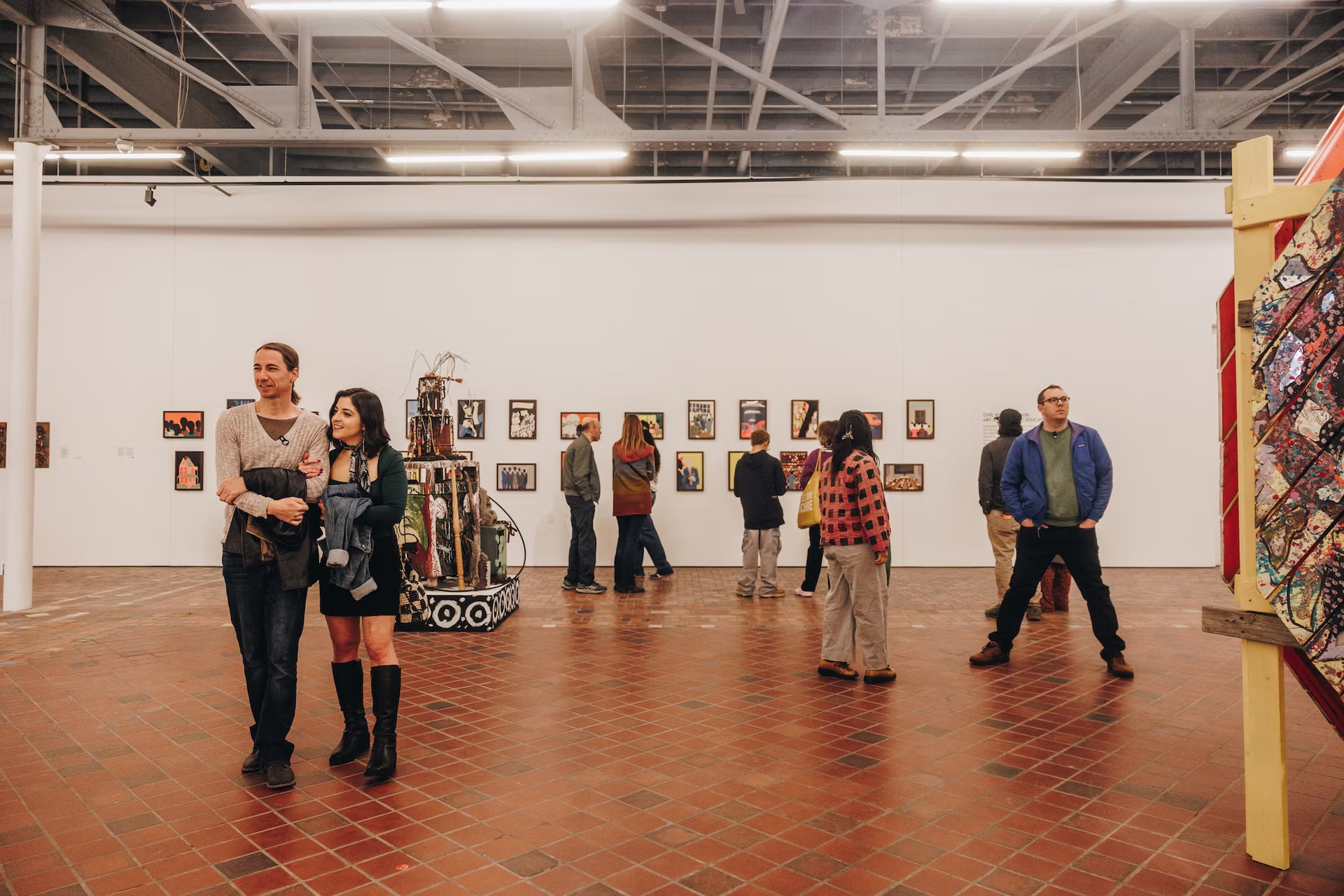
Reopening weekend at the Olayami Dabls show Photo: Justin Milhouse
Lynne says the current exhibitions are ripe for structured discussions. When using the VTS method, a facilitator asks: “What’s going on in this picture?” Participants respond. The facilitator follows with: “What do you see that makes you say that?” and “What more can we find?” Well-trained facilitators draw connections between comments but remain neutral. The goal is not to deliver content but to cultivate observation, reasoning and listening as the foundation for understanding.
Occasionally, shared meaning-making may diverge from established scholarship, since these dialogues around art elicit real-life experiences. “We’re not concerned about maintaining a single authoritative interpretation,” Lynne says.
At times, a facilitator strategically breaks from the strict format to share contextual information. Last year, during the exhibition Code Switch: Distributing Blackness, Reprogramming Internet Art, Morrow’s team foregrounded the Detroit-based artist Wes Taylor, using his local ties to make the work more accessible to school groups.
Some Mocad programmes extend beyond facilitated group discussion about observations, evidence and meaning to personal reflections about feelings and associations. For example, they handle beaded necklaces featured in the local artist Olayami Dabls’s retrospective Detroit Cosmologies (until 12 July). Signage invites people to hold the beads, ask themselves what kind of feelings may arise, reflect on what they are connecting to through their past or future, then place that intention into the beads and carry it forward.
“This is something you might expect in a children’s museum but not in a contemporary art museum,” Lynne says. “That’s what we’re trying to do.”
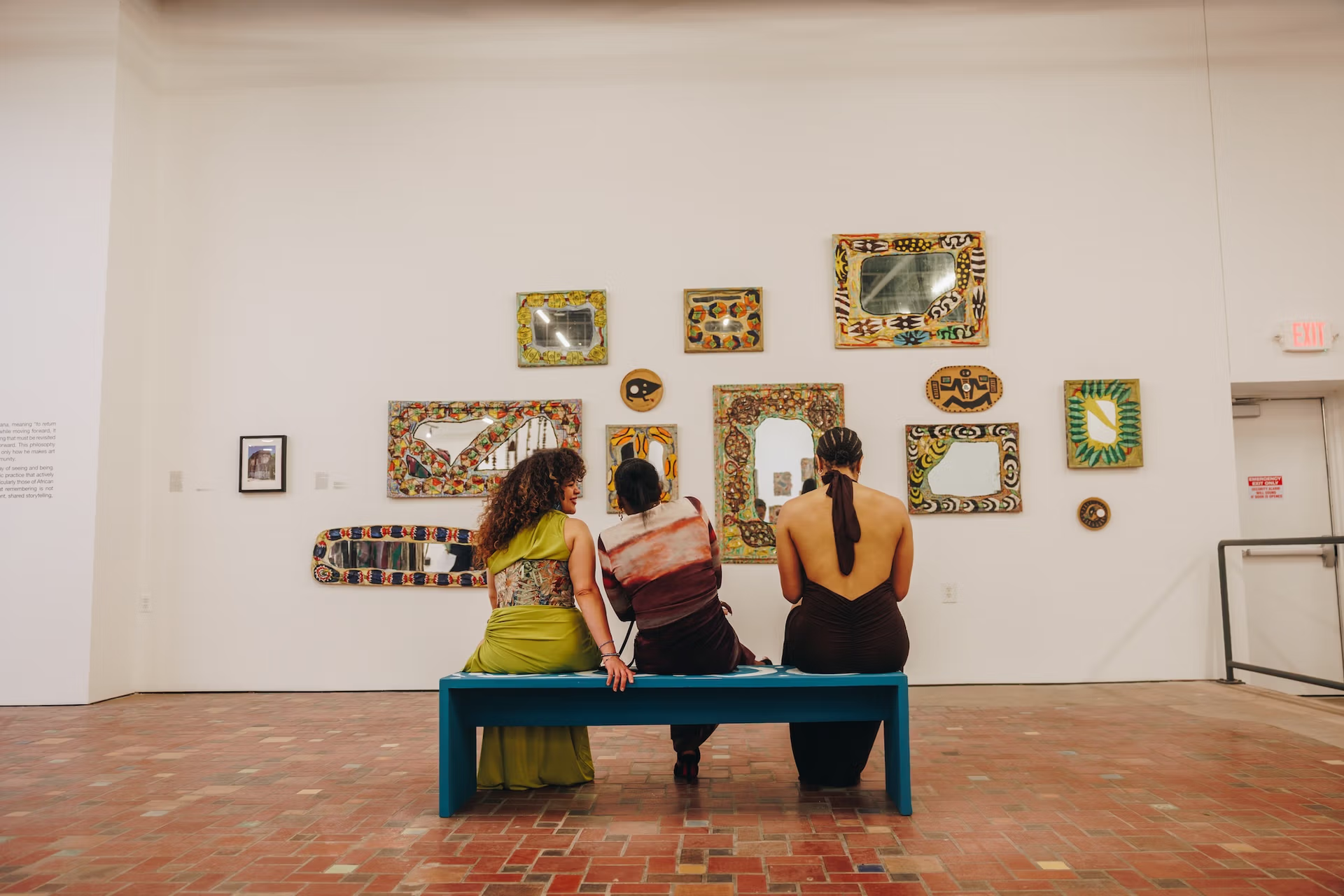
Reopening weekend at the Olayami Dabls exhibition Photo: Justin Milhouse
Elsewhere in the exhibition, Dabls’s paintings and cut-paper works reference the Civil Rights Movement and explore themes of collective learning and social growth. Assemblages with mirrors invite literal self-reflection, prompting visitors to consider their own presence within the gallery. Lynne says Dabls’s work can be fertile ground for discussions, particularly using the artist’s broken mirrors to challenge negative associations with making mistakes.
Lynne describes Mocad as “small but mighty”, supporting a more immediate, community-oriented dynamic. During the museum’s reopening events last month, staff observed visitors of all ages moving fluidly between exhibitions and the new learning space, where making is now embedded into the gallery experience.
Anchored by a maker table with drawing tools and prompt cards for looking, making and connecting, the learning space introduces a playful dimension to the galleries while reinforcing opportunities to develop skills in observation, listening, critical thinking and discussion. It is as a space where conversations can unfold, both individually and collectively, reinforcing the museum’s role as a site of shared inquiry.
A second phase of upgrades, scheduled to begin in autumn of this year, will further connect Mocad to the community. These will include a new kitchen and culinary programme inside the museum, as well as a sculpture garden, performance space and parking lot just outside.
