


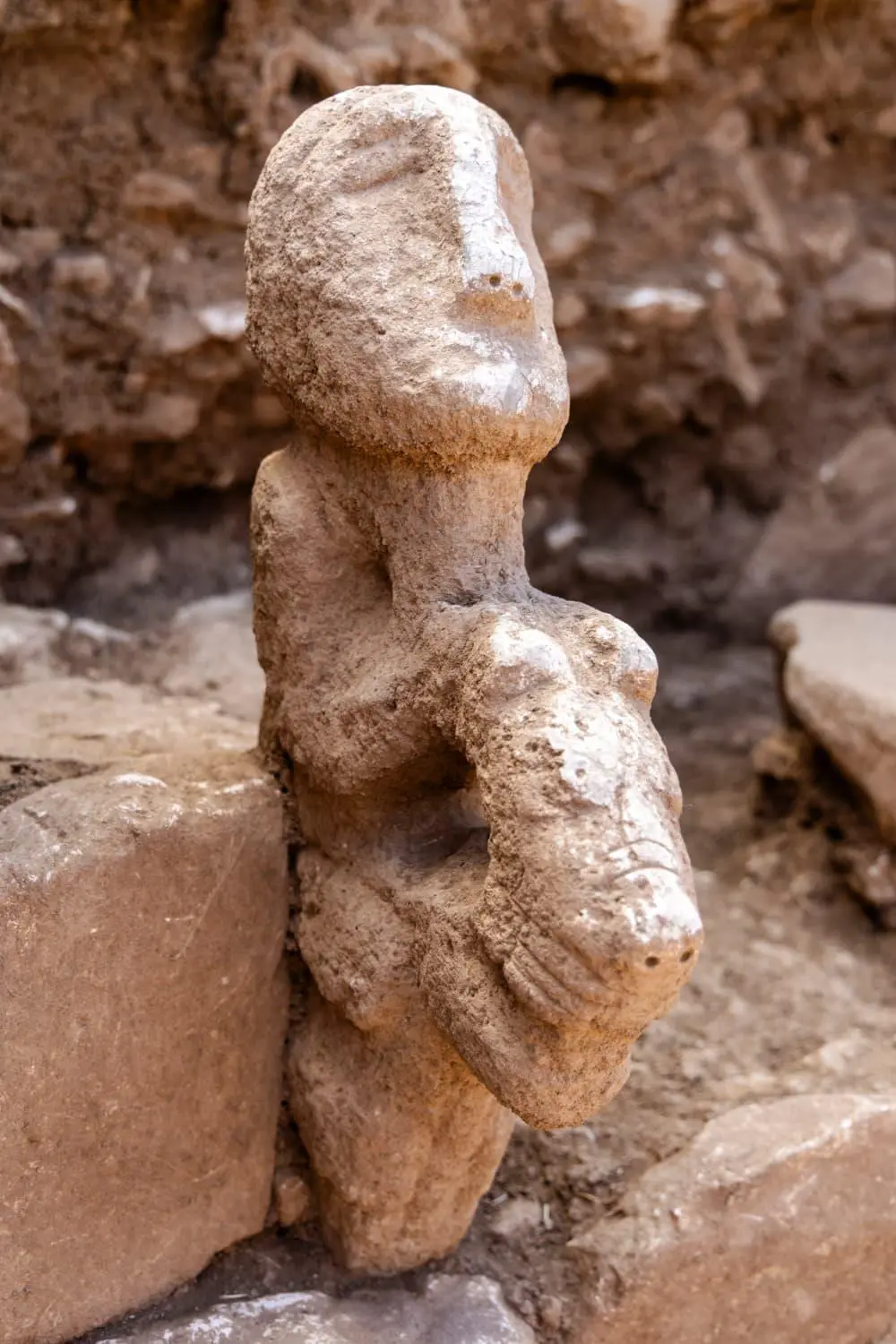
An 11,000-year-old statue depicting a person on the back of a leopard was unearthed by archaeologists at a Stone Age site in southern Turkey, the country’s Ministry of Culture and Tourism announced in a statement on August 25.
The find from the Neolithic site Karahan Tepe measures about 28 inches tall and would have sat on a platform along the wall of a larger round building roughly 10 feet in diameter. Notably, the style of the composite statue is “unlike anything seen before,” Turkey’s Minister of Culture and Tourism, Mehmet Nuri Ersoy, said.
Experts believe the statue may have symbolized masculinity, virility, strength, and courage. “Leopards were common feline predators in the region,” Jens Notroff, a Neolithic archaeologist at the German Archaeological Institute, told Live Science. “They are vigorous, dangerous animals, so probably challenging game for skilled hunters. That might have added to their symbolic meaning.”
He added, “An individual fearlessly shown among these animals […] or even apparently mastering one, as in this new sculpture from Karahan Tepe, could be read as maybe a symbol of power, of control over this vigor and danger.”
A similar statue was found at the same site years before entering the Şanlıurfa Museum’s collection. Still, this latest discovery raises questions and offers new information about the region’s earliest human settlements.
Constructed around 9750 BCE in the Urfa (or Şanlıurfa) province, Karahan Tepe is one of the oldest known villages in the world, alongside others like Göbekli Tepe.
