


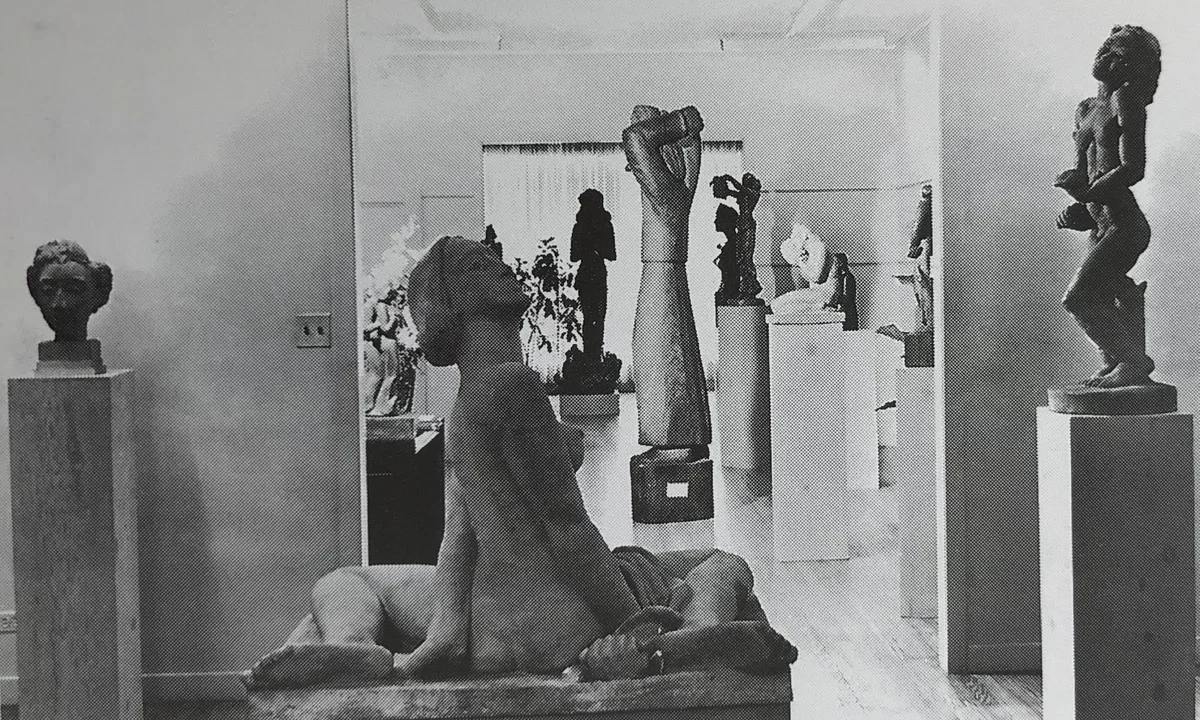
When the F. Valentine Dudensing Gallery first opened its doors in Manhattan exactly a century ago, it kicked off with the art-world equivalent of a bang: an exhibition of paintings and drawings by the celebrated artist Tsuguharu Foujita. It was the debut US showing for this Japanese French artist who had just received the chevalier of the Legion of Honour from the French government, and launched the gallery’s remarkable series of firsts.
In its 21 years of activity, the Valentine Gallery hosted the first American solo shows for Raoul Dufy and Joan Miró; the first US retrospective of Henri Matisse in 1927; it was the first venue to host Pablo Picasso’s Guernica, in May 1939, when the war-themed canvas began its fundraising tour; and it held the only lifetime solo exhibition for Piet Mondrian, in January 1942. The gallery organised more Picasso exhibitions during the 1930s than any other in America. Valentine Dudensing was instrumental in establishing a taste for Modern art in the US, cultivating relationships with leading collectors and influencing the Modernist collections in the country’s museums.
Never heard of Valentine Dudensing? Neither had the independent art researcher Julia May Boddewyn when she first encountered the dealer’s name as a graduate student in 1995, in connection with Giorgio de Chirico’s debut US solo show (another first for the Valentine Gallery). She was not alone.
Valentine Dudensing opened his New York gallery 100 years ago Library of Congress/Carl Van Vechten photograph collection
“I remember sitting in the New York Public Library with the giant issues of Art News, and going through them page by page, and every issue there’d be another Valentine Gallery exhibition,” recalls Boddewyn. “It just felt like, wow, this is unbelievable—how do people not know about this, and how am I the first one to put these pieces together? This has to be told, this is too important to not let it get out into the world.”
Boddewyn began researching Dudensing in a pre-internet, pre-email era, using the old-school tools of letter writing, faxes and even a request to the National Archives. Tracking down Dudensing’s life dates proved to be an undertaking: it took seven months of correspondence just to confirm that he had died in France in 1967. “But in that process, I was just so hooked on this,” Boddewyn says.
She has since been piecing together everything she could, despite the minimal paper trail Dudensing left behind, which now culminates in The Valentine Gallery: The Forgotten Story of Valentine Dudensing, Matisse, Picasso, and the US Market for Modern Art (1926-1947). Boddewyn’s original research includes sources such as government records, society pages, art reviews, memoirs, oral histories, diaries, catalogues raisonnés, auction catalogues and more.
It also includes primary materials that Boddewyn uncovered, after tracking down a descendant living in the French château where Dudensing and his wife, Margaret Gross (aka Bibi), retired. Steamer trunks in the attic held major finds such as a set of leather-bound ledger books that included artist names, dates, buyers’ names and prices (a trove of information now preserved in New York’s Museum of Modern Art archives). “Over the years that’s been my anchor to this whole project, just realising how much I could learn from them. It really felt like the pot of gold at the end of the rainbow,” Boddewyn says.
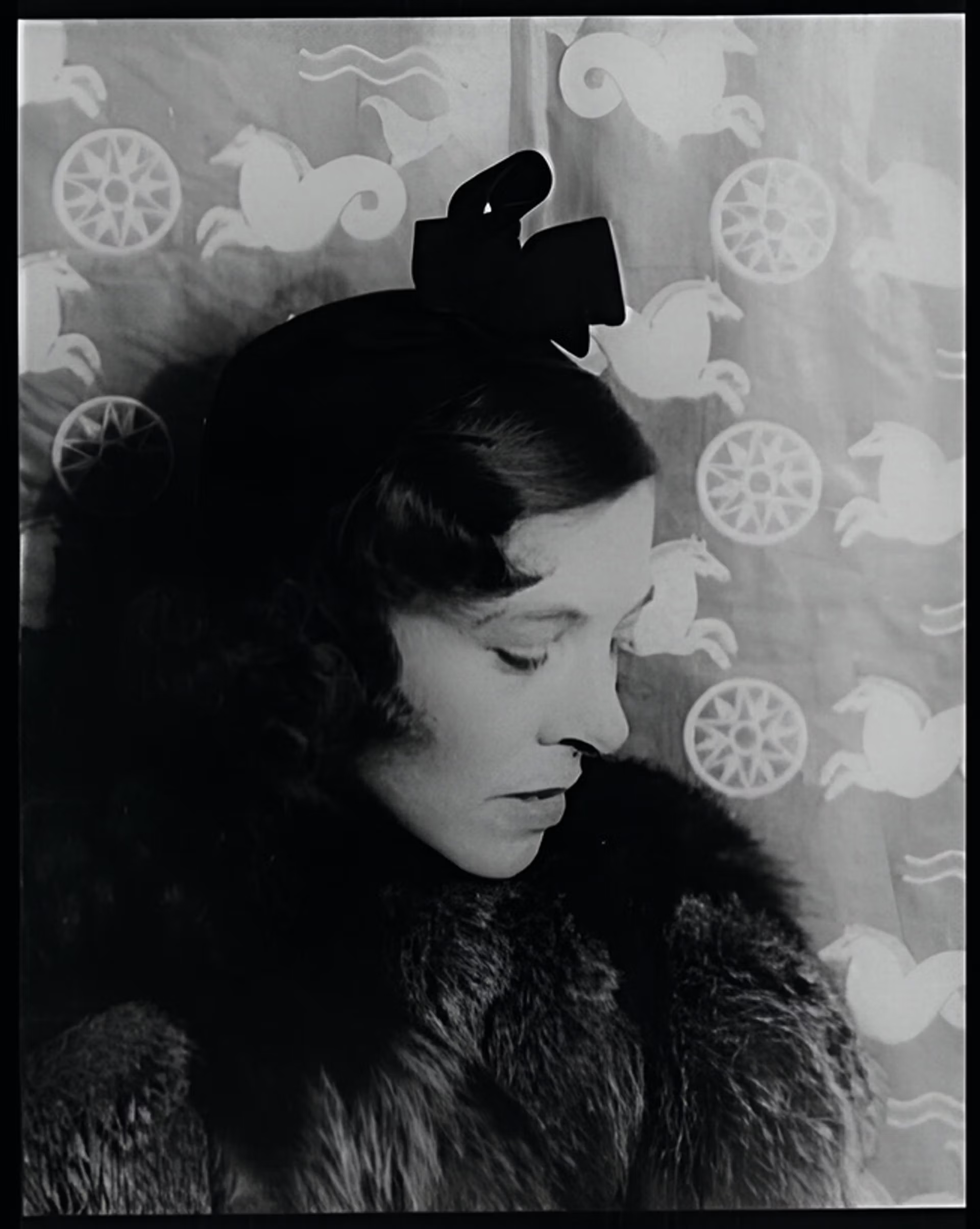
Bibi Dudensing took care of the gallery’s front desk Library of Congress/Carl Van Vechten photograph collection
Another discovery from those steamer trunks was a set of diaries that Bibi kept during the gallery’s final decade, between 1937 and 1947. In those years she manned the gallery’s front desk and greeted customers, taking notes about who came in and what they were interested in, and also kept up the gallery’s maintenance and correspondence.
Since Dudensing did not keep an archive, Boddewyn also pieced things together by finding his letters in other people’s archives. One such cache was in the archive of the art critic Henry McBride (held at Yale University). McBride often reviewed and promoted shows at the Valentine Gallery, and there was rich correspondence between the two.
Boddewyn hopes that this book helps further scholarship about the US art market during the first half of the 20th century—something that has started to gain steam but is not yet as developed as research about the post-war period. “I wish I could answer the question of why some dealers are remembered and others are not,” she says. To that end, in addition to the book’s well-researched chapters, Boddewyn included an appendix with a full list of the gallery’s exhibitions.
“I really want it to be a resource for scholars. I want them to be able to trust the information, to know that that date and that address and that fact comes from—not someone else’s book—but from the newspaper, or the letter, you know, the actual primary source where it was found.”
• Julia May Boddewyn, The Valentine Gallery: The Forgotten Story of Valentine Dudensing, Matisse, Picasso, and the US Market for Modern Art (1926-1947), Bloomsbury Visual Arts, 312pp, £95 (hb)
Update (3 March): the lead image on this story replaces a previous photograph showing Galerie Durand-Ruel
