


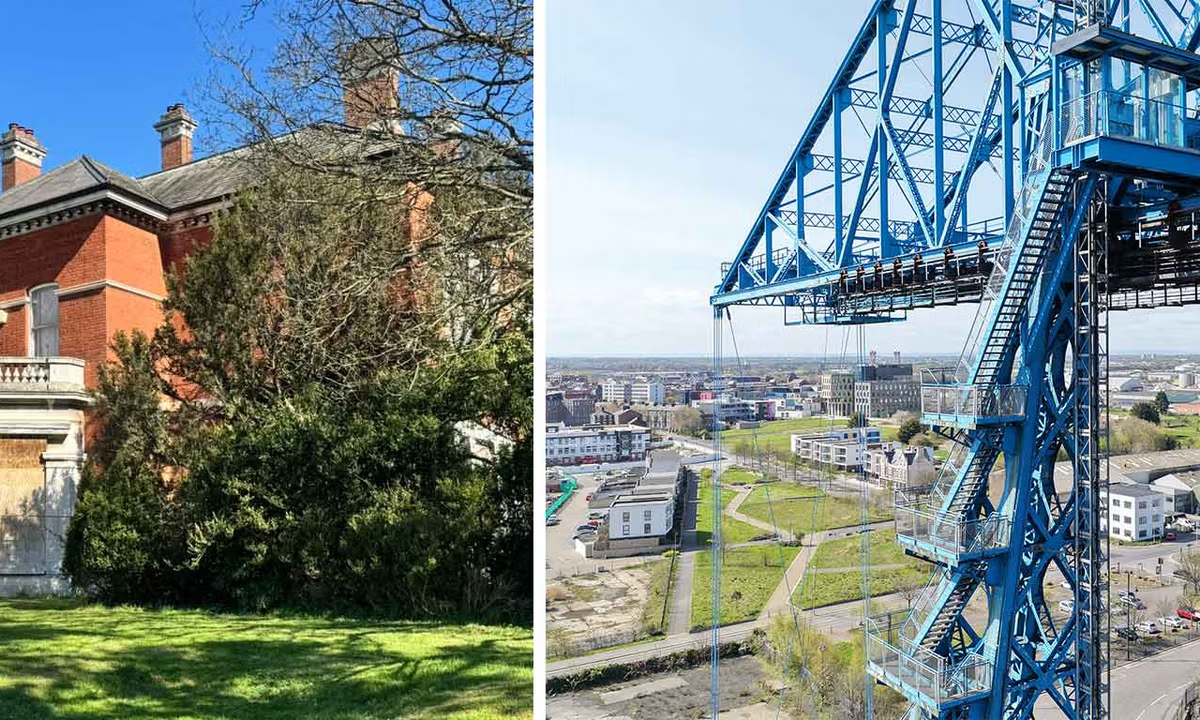
A derelict mansion marooned within a modern hospital’s grounds, featuring a hidden trove of wall paintings by an almost-forgotten woman artist, has made the Victorian Society’s latest list of the top ten at-risk buildings in England and Wales.
A wealth of paintings by the Victorian artist Elizabeth Arkwright, a noted horse trainer who also trained as an artist, possibly as a pupil of Edwin Landseer, are hidden behind the locked doors of Parndon Hall, which is today only for storage by the Princess Alexandra hospital in Harlow, Essex.
The house was built in 1867 by her husband Loftus Arkwright, the great grandson of the pioneer industrialist Richard Arkwright, and she covered the walls, ceilings, and doors of the hall, stairs and main rooms with nymphs, mermaids, and rosy cherubs carrying swags of flowers, many still hidden under a coat of Edwardian whitewash. Loftus died suddenly in 1889, aged just 60, and Elizabeth outlived him by only a year, collapsing in Liverpool Street station—another building the Victorian Society has been campaigning to save—and dying two days later in the station hotel. The house was acquired by the Harlow New Town authority in 1953 before being occupied as offices and a library by the nearby hospital, but has been unoccupied since repairs after a flood in 2024.
James Hughes, the director of the Victorian Society, called Parndon “not just an important Victorian house, but [one that] contains a rare and highly significant volume of workby a female artist that deserves national recognition. ”Griff Rhys Jones was crosser: ‘‘Grrr. Come on Harlow. This is a worthy building . To just stick it to one side and let it rot is such a waste of a valuable resource. My dad worked at the Alexandra Hospital. I lived in Harlow as a kid. This could be an asset instead of derelict and should be.”
The society has published the endangered buildings list each year since 2010 in a bit to encourage intervention. This year’s edition also include an icon of the north of England, the Tees Transporter Bridge, seen in the background of innumerable photographs and film scenes. The site is Grade II* listed but now closed and in need of an estimated £60 million repairs, which are far beyond the means of the local authorities that share ownership.
Launching the list, the actor Rhys Jones, who is also the president of the Victorian Society Griff, described the sites as “extraordinary survivals from the can-do age” and insisted all could and should be recycled. Of the Transporter Bridge, he said: “You don’t need me to tell you that people love this bridge. It is a symbol. It is a monument. And more than that it is a link and a potential working part of Stockton and Middlesbrough. Got to be saved. Got to be operational again. If we can find money for new bridges, we can find money for this great survivor and all that it means.”
The list includes many redundant buildings in need of a new purpose, all listed at Grade II or Grade II*. They include a railway station in Barrow in Furness, market buildings in Bridgnorth, a cemetery chapel in Sheffield, the Faenol family mausoleum in west Wales, a school in Huddersfield and a library in Devonport. The one-time Derby School of Art, which became a cinema and a rehearsal space before being sold to a company in Georgia in 2021, is featured too.
The Faenol family mausoleum in west Wales
The most unusual building is a unique survival in Hackney, East London: a Victorian “disinfecting station”. The site steam cleaned soft furnishings and bedding to combat epidemics of infectious diseases such as smallpox, diphtheria, scarlet fever and measles—and provided temporary shelter for poor families while their homes were stripped. It was built in 1901, and in its first year treated the contents of 2,800 rooms, totalling more than 24,000 items. James Hughes, the director of the society, said it told a powerful story of how society responded to crisis. Jones added: ”Recent epidemics tell us how vital and ground-breaking this initiative was, and this building must be re-used.”
