


An online platform selling work by more than 200 Iranian artists to buyers around the world launched on 13 August. Continuum: Artist Relief for Iran aims to provide direct financial relief to a community whose livelihood has been battered both by war and long-standing economic hardship driven by sanctions.
Continuum is the first initiative from Duran Art Projects, a Canada-based curatorial platform founded by the collector Dario Duran and the curator Mariam Rasti. The non-profit offers around 700 works by emerging and under-represented Iranian artists, with 100% of proceeds going straight to their creators. Participating artists and galleries stretch well beyond Tehran, spanning cities and regions across the country.
The project’s roots lie in the war that began on 28 February, when joint US and Israeli strikes on Iran triggered retaliatory attacks. According to the United Nations’ refugee agency, the war has temporarily displaced 3.2 million people within the country, many of whom fled north from Tehran and other major cities.
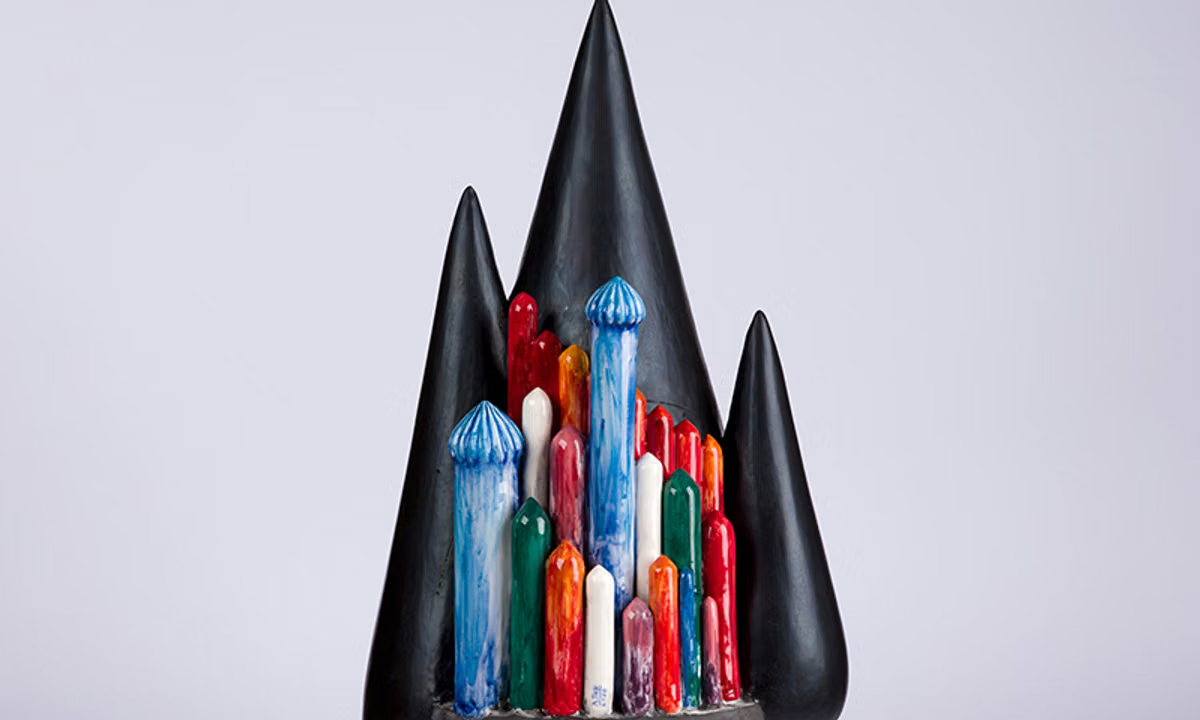
Mina Darijani’s Untitled (2019), one of the pieces for sale © Mina Darijani, 2019. Courtesy the artist and Continuum: Artist Relief for Iran, presented by Duran Art Projects
Duran, a Canadian Iranian curator and collector who moved to Iran from Toronto six years ago, escaped Shiraz with his family as the city came under heavy bombardment earlier this year, travelling to a coastal town in northern Iran. Rasti fled Tehran for nearby Rasht around the same time.
Duran was shaken by conversations with artists whose situations were deteriorating by the day. One person told him he was selling his paintbrushes and tubes of paint just to get by. While Duran had already begun buying works from artists to help, the need was far too great for him to meet alone.
He decided to write a letter recounting his conversations with artists and sent it to galleries, friends and colleagues abroad. An emotional Duran tells The Art Newspaper from Shiraz that the response he received was the “ignition” he needed. “Every single person who wrote back said two things,” he recalls. “That they cried reading it. And that whatever I wanted to do, they would support me.”
A market already under strain
Iranian artists are so isolated from the rest of the world that they struggle getting international exposure more than most. Many international galleries do not take them on because of issues with shipments and payment, largely as a result of sanctions. And travelling is very challenging due to visa restrictions, making opportunities such as residencies abroad extremely rare. Due to the country’s isolation, these artists also rarely come across international visitors who might buy their work.
Rasti, who has worked in the Iranian art world for more than a decade, says the sector’s troubles predate the war. “The art scene is always the first thing to be damaged in any kind of social, political or economic event,” she tells The Art Newspaper from Tehran. She describes artists she knows who had gone months without a sale before the war even began, amid unrest and closures that had already gripped the country.
But Rasti is quick to add that many people in Iran genuinely care about what is happening in the arts and the cultural scene itself is far from withered. “We [Iranians] are a people who still go to the tombs of our poets, poets who lived centuries before us, like a pilgrimage site,” she says.
With encouragement from friends abroad, Duran and Rasti compiled a shortlist of works by around 30 artists in acute need into a PDF to circulate. It quickly outgrew that format as word spread of their project. The pair began reaching out to artists directly on social media and approached galleries in Iran with one condition: no commission. The response, Duran says, was “unprecedented”—galleries across the country signed on, waiving their fees so that artists would receive maximum benefit.
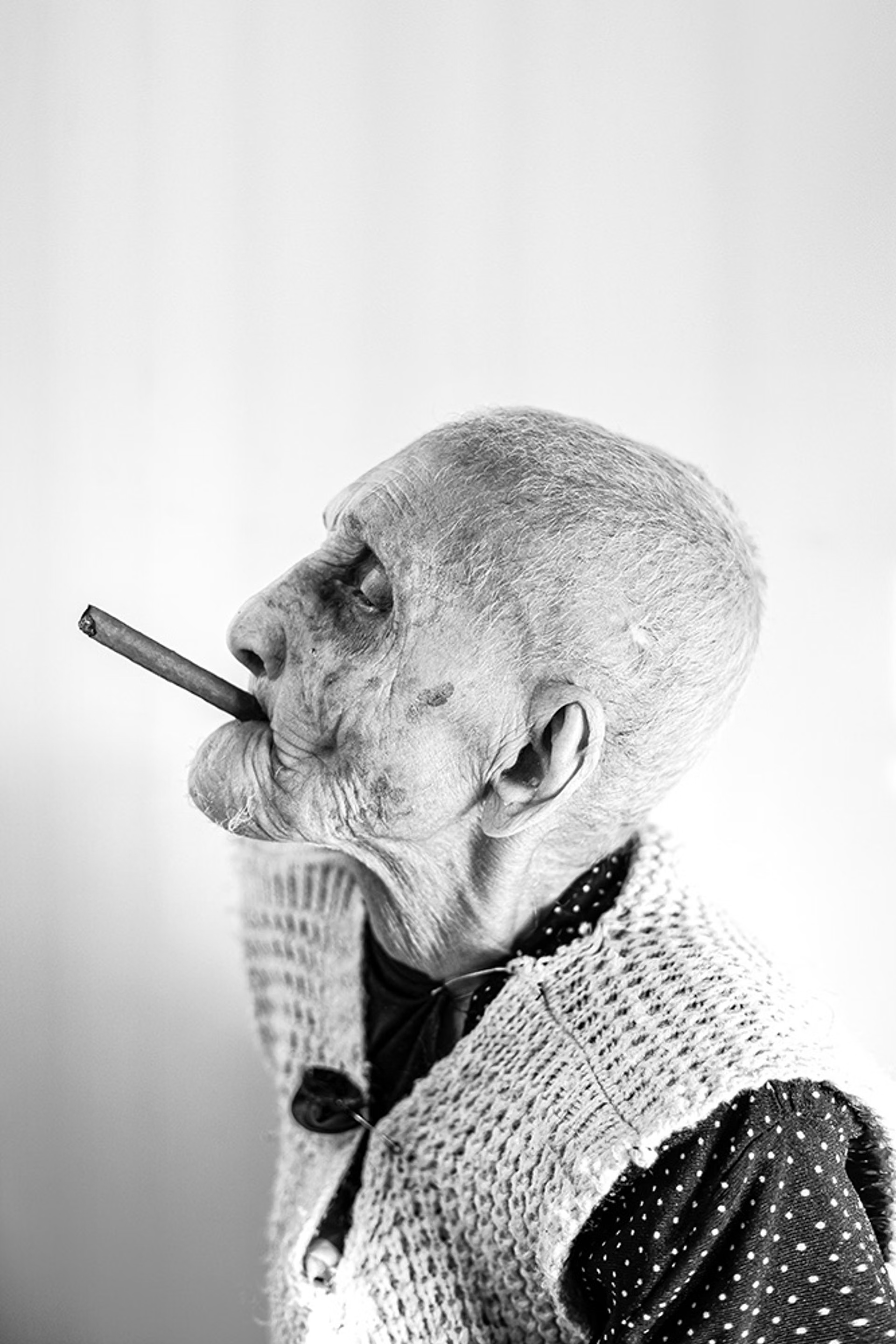
Erfan Sharaf’s Iron & Ash (2021) © Erfan Sharaf, 2021. Courtesy the artist and Continuum: Artist Relief for Iran, presented by Duran Art Projects
Not every applicant has been accepted. Rasti and Duran describe a deliberate curatorial process running alongside the relief effort. The initiative was built for artists based in Iran facing genuine hardship, but the pair also wanted the platform to reflect serious contemporary practices while actively resisting an Orientalist lens.
Rasti describes Continuum as a conscious effort to avoid “trauma marketing”. Artists were not asked to make work about the war, and subject matter on the site varies widely. The response to the platform, Duran says, has been “overwhelmingly positive”, helped in part by the dedication of Continuum’s global partners.
A path for connection
Behind Continuum’s sales lie both logistical and financial challenges. Iran’s currency has continued to crash on the mere prospect of further US sanctions, Duran says, and such volatility can erode the value of proceeds between sale and payment.
Shipping, too, is unpredictable. With flights disrupted since the war began, Continuum quotes buyers a three-to-six-month window, though Duran says the team works to deliver much sooner—the estimate, he says, is simply about being “transparent, just in case”. Only two buyers have withdrawn over the shipping terms, while most have been understanding of the challenges.
Both Duran and Rasti frame Continuum as something broader than a sales platform. “I look at this as a piece of cultural diplomacy,” Duran says, adding that “art can maintain forms of connection when other kinds of connection become difficult”. For Rasti, the aim is closer to correcting an imbalance of visibility long tied to “luck and chance”—ensuring that an artist working in a remote town has the same exposure as someone in Tehran.
For participating artists, this last point is crucial. Based in Bam, Kerman province, the artist couple Mina Darijani and Ali Akbar Sharifi both have works on the platform. Darijani tells The Art Newspaper that, at times, one of them must stop working altogether so the other can afford materials. But even in this dire financial situation, “when a work of mine is seen or purchased abroad, I don’t see it simply as market success”, Darijani says. “I see it as a kind of opening of a path for connection.”
