


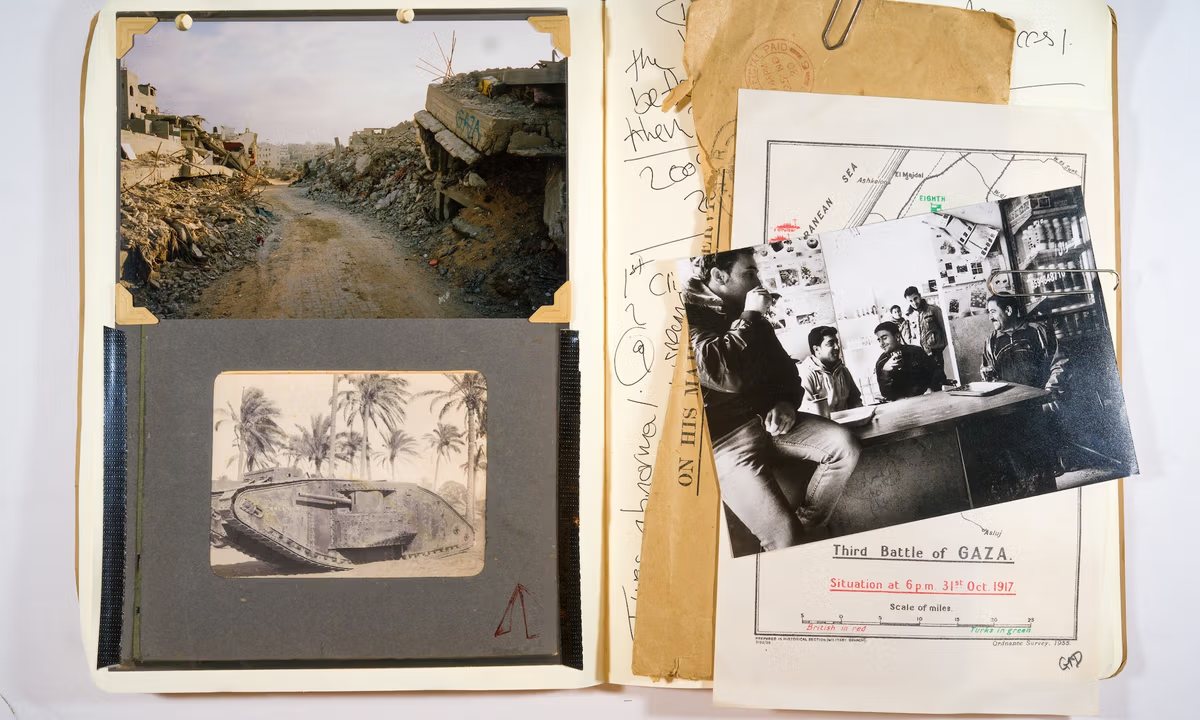
For the next two weeks, the British photographer Giles Duley is leading visitors around a 77th-floor penthouse above Manhattan’s Midtown East neighbourhood. The goal is to contemplate his haunting images of wars around the globe and draw connections to past conflicts as a way of breaking the cycle of violence.
Duley is not speaking as an observer. He has personally suffered and overcome the full consequences of war. The former fashion photographer lost both legs and an arm after stepping on a landmine in Afghanistan. “I thought I would die,” he says. In 2017, he created the Legacy of War Foundation, which works in Ukraine, Lebanon and Rwanda.
At the 12 May opening of Distortion/Memory/Resilience (until 24 May), Duley pulled visitors from the stunning views into a room darkened with blackout curtains. A camera obscura, upside-down version of the skyline is punctuated by the sound of Shaheed drones, recorded live by his friend Yuliia Tymoshenko, a Ukrainian journalist, while she took cover in her bathroom in Kyiv at the start of Russia’s full-scale invasion in 2022. He compares the camera obscura version of the city to lives being upended by war.
View of Giles Duley’s exhibition Distortion/Memory/Resilience Photo by Nikolaienko Photo LLC
The blackout room installation, Youth (2026), about the youth and dreams stolen by war, is one of three installations in smaller rooms of the 4,600-sq.-ft space at Sutton Tower, a residential high-rise overlooking the East River. The other two are Childhood and Memory.
Childhood is composed of wooden school desks filled with children’s art gathered by Gen Ukraine, which works with young victims of wartime trauma. The corridor outside the room has Duley’s photos of Angolan child soldiers as grown men with no names, who no longer have the sympathy of the world. “These kids were not helped,” Duley says of the grown-up child soldiers. “The distortion of childhood leads to the next generation of violence.”
Memory features armchairs and a box of old photos, which are actually portraits Duley took recently of soldiers and cultural figures in Ukraine. The room is based on his visit to the home of a Ukrainian woman named Luba Sorokina, whose fate is unknown, on the frontline in Avdiivka in eastern Ukraine in 2021.
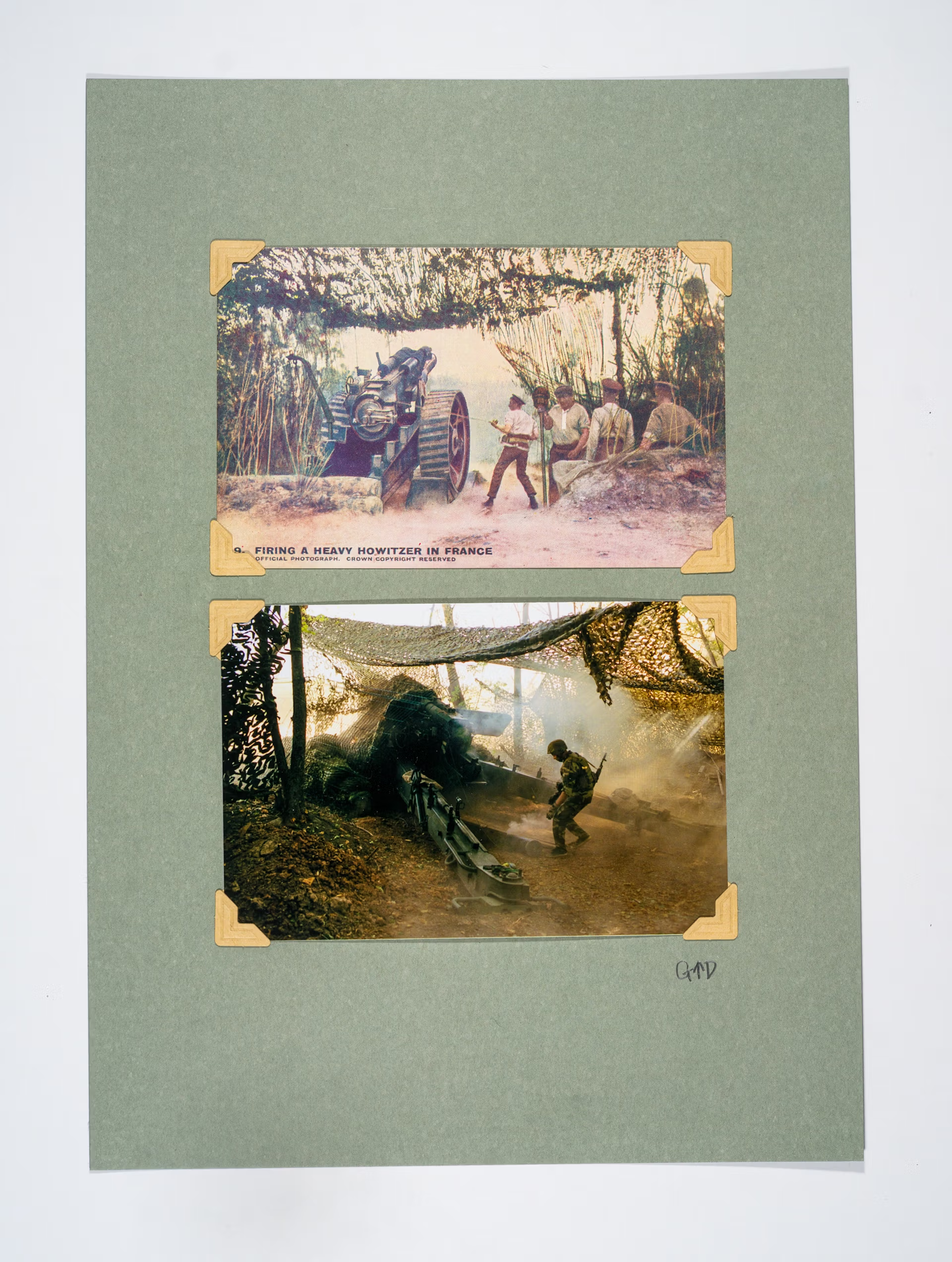
Giles Duley, Whatever I’ve Said 2 Courtesy the artist
The exhibition is presented by the new luxury tower’s developer and management company, and follows Duley’s London exhibition, Where Do We Go From Here?, during Frieze London in 2025.
“For me everything is connected,” Duley says. “I am a storyteller, not a photographer.”
His understanding of war began with his mother’s stories of being a nurse during Nazi Germany’s blitz of the UK. Duley was immediately struck by the similarity between a 1940 Life magazine cover shot by Cecil Beaton of three-year-old Eileen Dunne, injured by the blitz in London, which his mother kept as a reminder of the war, and Ivanna, an injured young girl he photographed in Beirut last year. The two images hang side-by-side in the penthouse.
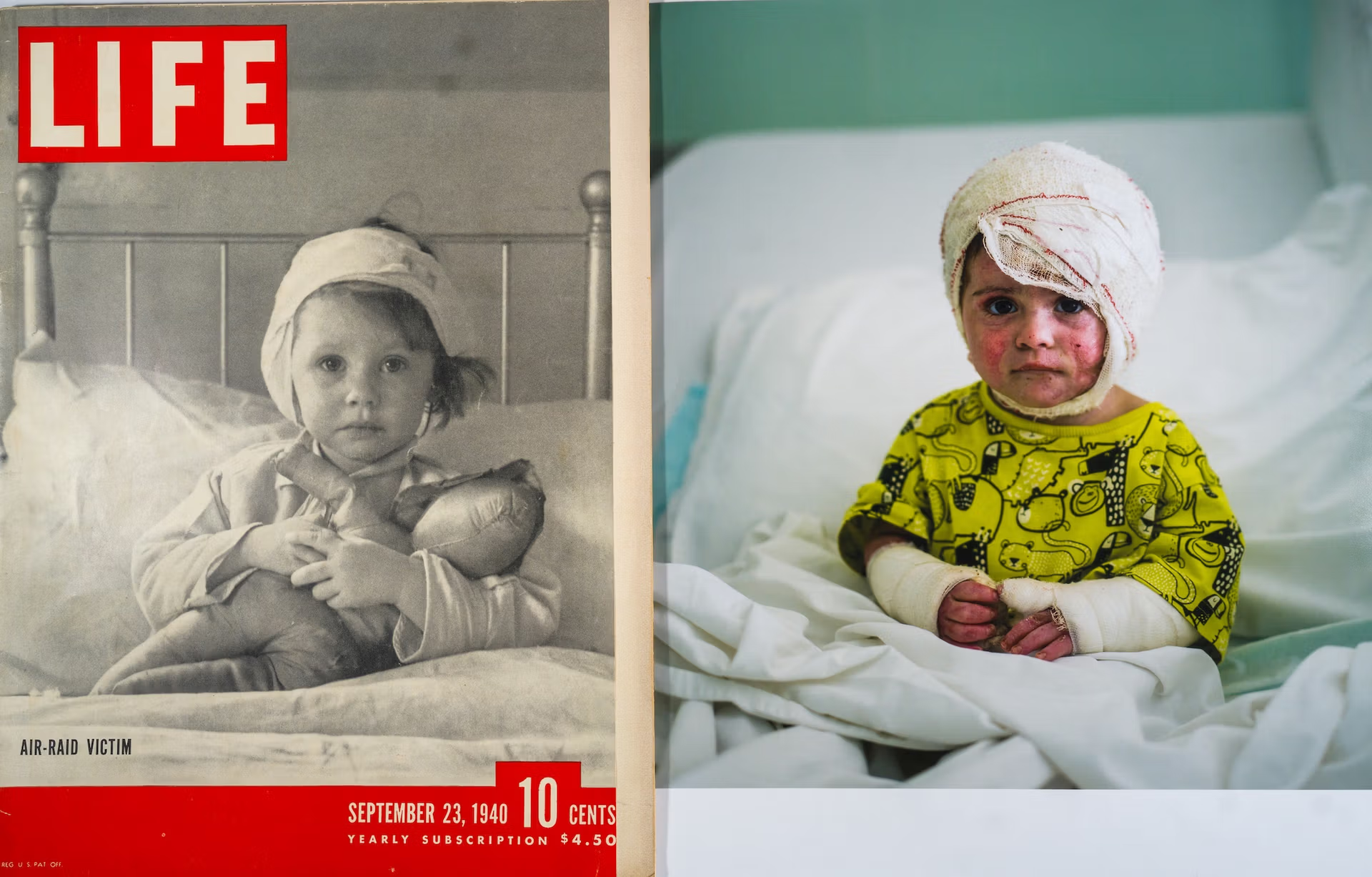
Giles Duley, EILEEN 1940 – IVANA 2024, 2024 Courtesy the artist
“People are saying that the world has never been this bad,” Duley says. “It has.” The inundation of images via social media, he says, the “flooding the zone” of ideologue Steve Bannon, makes many people give up or feel trapped in a cycle of prioritising one conflict over another. What he has seen in person has given him a different perspective. “We are all connected. We are all capable of creating change.”
Duley, who is also a passionate cook who promotes the power of food in connecting people under the moniker One Armed Chef, will be hosting two salon-style benefit dinners at the penthouse on 19 and 21 May.
- Distortion/Memory/Resilience, until 24 May, Sutton Tower, New York
