


The Barnes Foundation in Philadelphia is well known for its Van Gogh collection, with an enviable seven pictures. It now has among the largest holdings of Van Goghs in the US—after those at New York’s Metropolitan Museum of Art, the National Gallery of Art in Washington, DC and the Art Institute of Chicago.
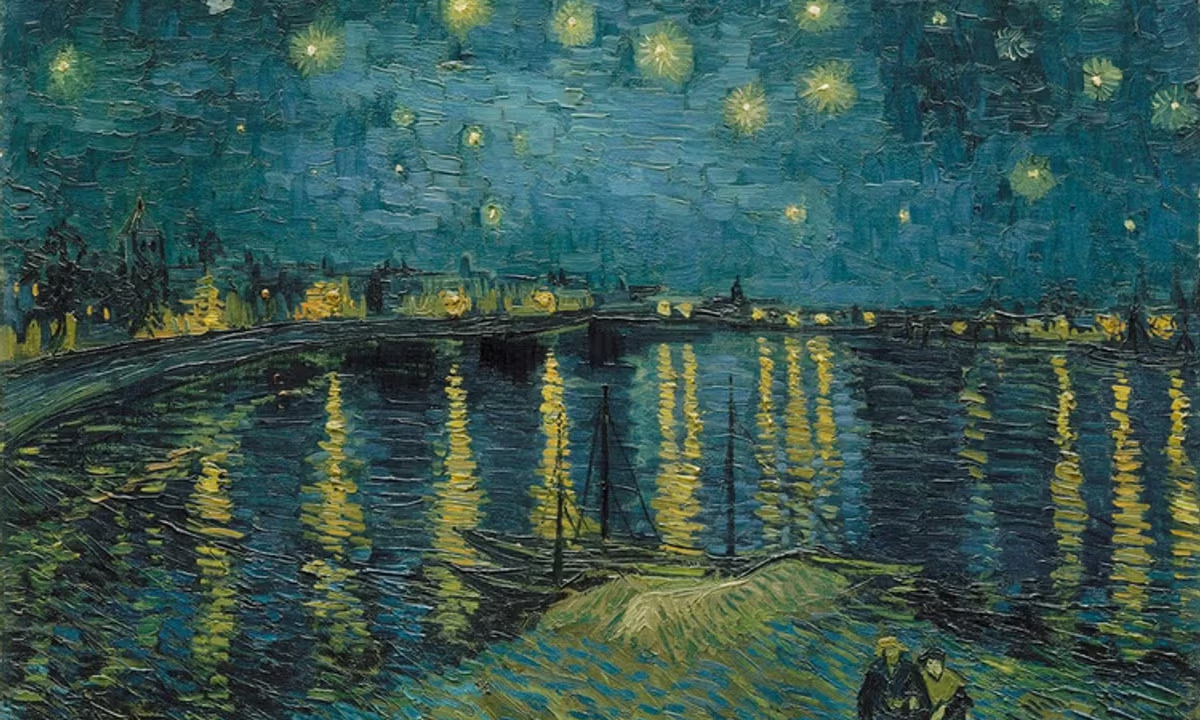
But Albert Barnes, the first American to buy a Van Gogh, also passed up very unusual opportunities to acquire the “Starry Night” paintings. Van Gogh made two famous nocturnal scenes: Starry Night over the Rhône (September 1888), now at the Musée d’Orsay in Paris, and the even more powerful Starry Night (June 1889), at New York’s Museum of Modern Art. Both offers are recorded in unpublished correspondence in the archive of the Barnes Foundation.
Barnes, who made his wealth from the pharmaceutical industry, became the leading US collector of European Post-Impressionist paintings in the early 20th century. In 1925 Barnes opened his own educational institution, where he hung his paintings.
Two years earlier, in 1923, the New York-based writer and agent Frank Washburn Freund had written to Barnes, enquiring if he might be interested in “one of Van Gogh’s finest and most important landscape paintings”, Starry Night over the Rhône (September 1888).
Washburn Freund explained that he could “offer this painting at a reasonable figure”. Although the picture was “still in Europe”, he “could have it sent over for your inspection”. Barnes failed to pursue the offer, possibly because he was concerned that building his planned educational institution might leave him short of funds.
Starry Night over the Rhône instead went to the Paris industrialist Fernand Moch and eventually ended up in the Musée d’Orsay, where it is among the museum’s main attractions.
Van Gogh’s Starry Night (September 1889) Museum of Modern Art, New York
Barnes later had the chance to acquire another Van Gogh nocturnal scene. In 1936, the Van Wisselingh gallery in Amsterdam wrote to Barnes, to “take the liberty of bringing to your attention” the fact that Starry Night was available for sale. They explained that the painting had been in a Rotterdam private collection for 30 years and enclosed a black-and-white photograph.
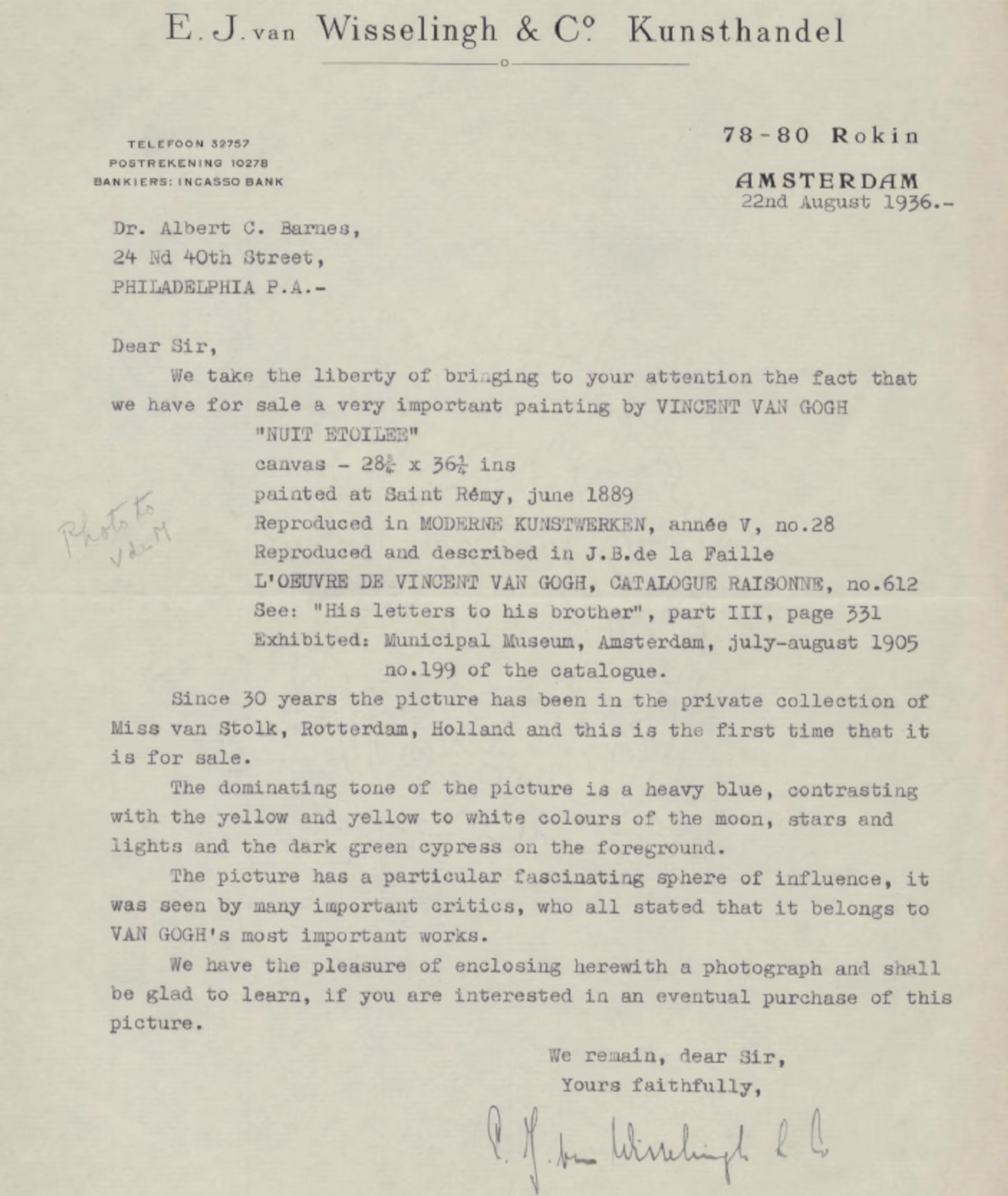
E.J. van Wisseling’s letter to Barnes, 22 August 1936 Letter. E.J. van Wisselingh & Co. to Albert C. Barnes, August 22, 1936. Albert C. Barnes Correspondence, Barnes Foundation Archives (AR.ABC.1936.203)
Van Wisselingh added that Starry Night had been seen by “many important critics, who all stated that it belongs to Van Gogh’s most important works”. Once again, Barnes failed to pursue it. The painting was bought by the Paris dealer Paul Rosenberg, who later exchanged it with the Museum of Modern Art in 1941 in return for three lesser pictures.
The Barnes seven
Despite passing over the two Starry Nights, Barnes was a true US pioneer when it came to acquiring Van Goghs. He owned seven works in total: in 1912 he had bought The Postman, followed by two more paintings later that year. He made further acquisitions in 1922 and 1924, with his final purchase, Still Life, in 1933.
Barnes wrote in his 1925 book The Art in Painting that Van Gogh’s “colour is bright, rich and juicy”. He added that the artist “infuses a spirit of emotional tenseness into themes ordinarily placid or composed, and a feverish, almost delirious, quality into situations intrinsically dramatic”. The collector concluded that Van Gogh’s “success in achieving a form that is original, animated and appealing, entitles him to a high place” in late 19th-century painting.
Barnes died in 1951 and in 2012 his collection was moved from Merion to a museum in central Philadelphia, retaining his highly idiosyncratic display. The seven Van Goghs are not hung together, but scattered among several rooms.
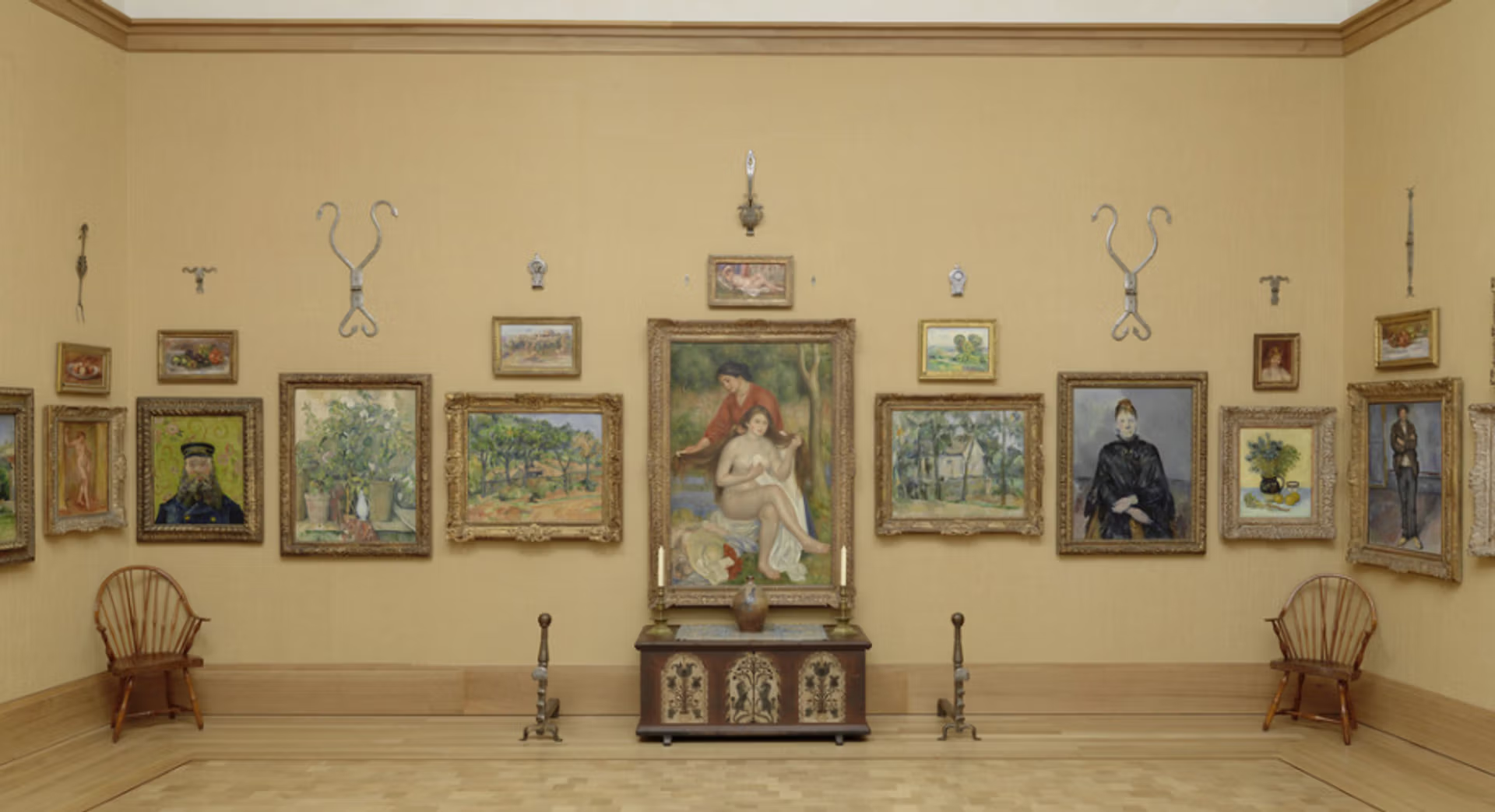
The north wall of room 2 in the museum of the Barnes Foundation, Philadelphia—with The Postman on the far left and Still Life on the far right Barnes Foundation, Philadelphia
Since until very recently pictures from the Barnes Foundation were never lent to other venues (other than for an exceptional touring exhibition in 1993-95), his Van Goghs are not well known. Until the 1990s they were not normally allowed to be reproduced as colour images.
All of the Barnes Van Goghs are from the artist’s French period (1886-90), which represents his finest years. Works range from Reclining Nude, painted in Paris, to Houses and Figure, done at the asylum at Saint-Rémy-de-Provence.
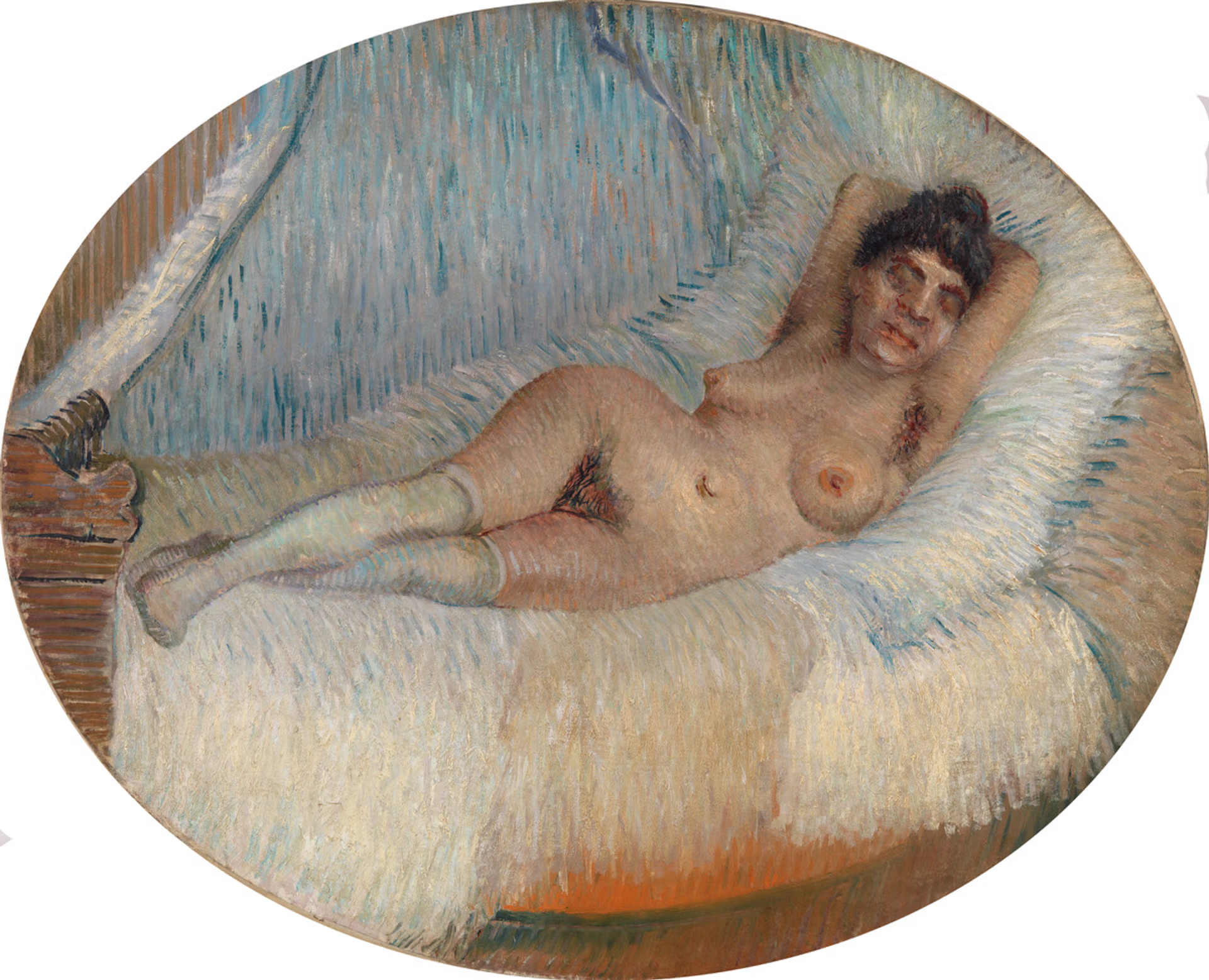
Van Gogh’s Reclining Nude (March 1887) Barnes Foundation, Philadelphia
Barnes had a risqué taste when it came to female nudes (he particularly loved Pierre-Auguste Renoir’s bathers). Although Van Gogh rarely painted nudes, Barnes acquired his explicit Reclining Nude (March 1887).
Blake Gopnik, author of last year’s critical biography of Barnes (The Maverick’s Museum), writes that it reflects the collector’s “taste for the lascivious that has often been papered over but is of a piece with Barnes’s disdain for the tame”.
As for Barnes, when he wrote about Reclining Nude he focussed on the brushwork: “The whole painting, including the nude, is done with the characteristic narrow, long, ribbon-like spots of contrasting colour”.
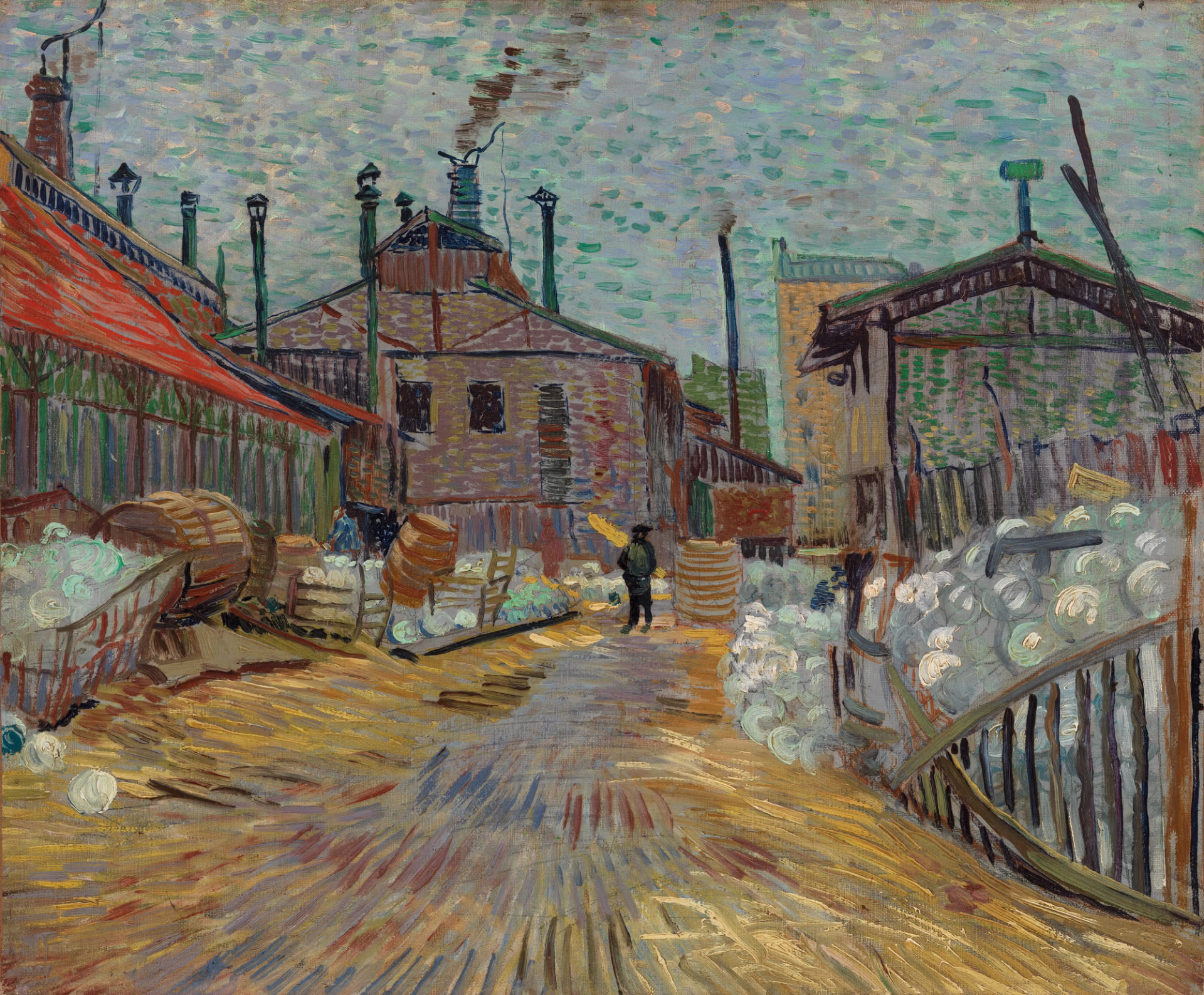
Van Gogh’s The Factory (July-September 1887) Barnes Foundation, Philadelphia
The Factory (July-September 1887) was painted a few months later, on the outskirts of Paris, Asnières. It represents a somewhat unlikely subject: a glass factory, with balls of glass stored outside in the foreground.
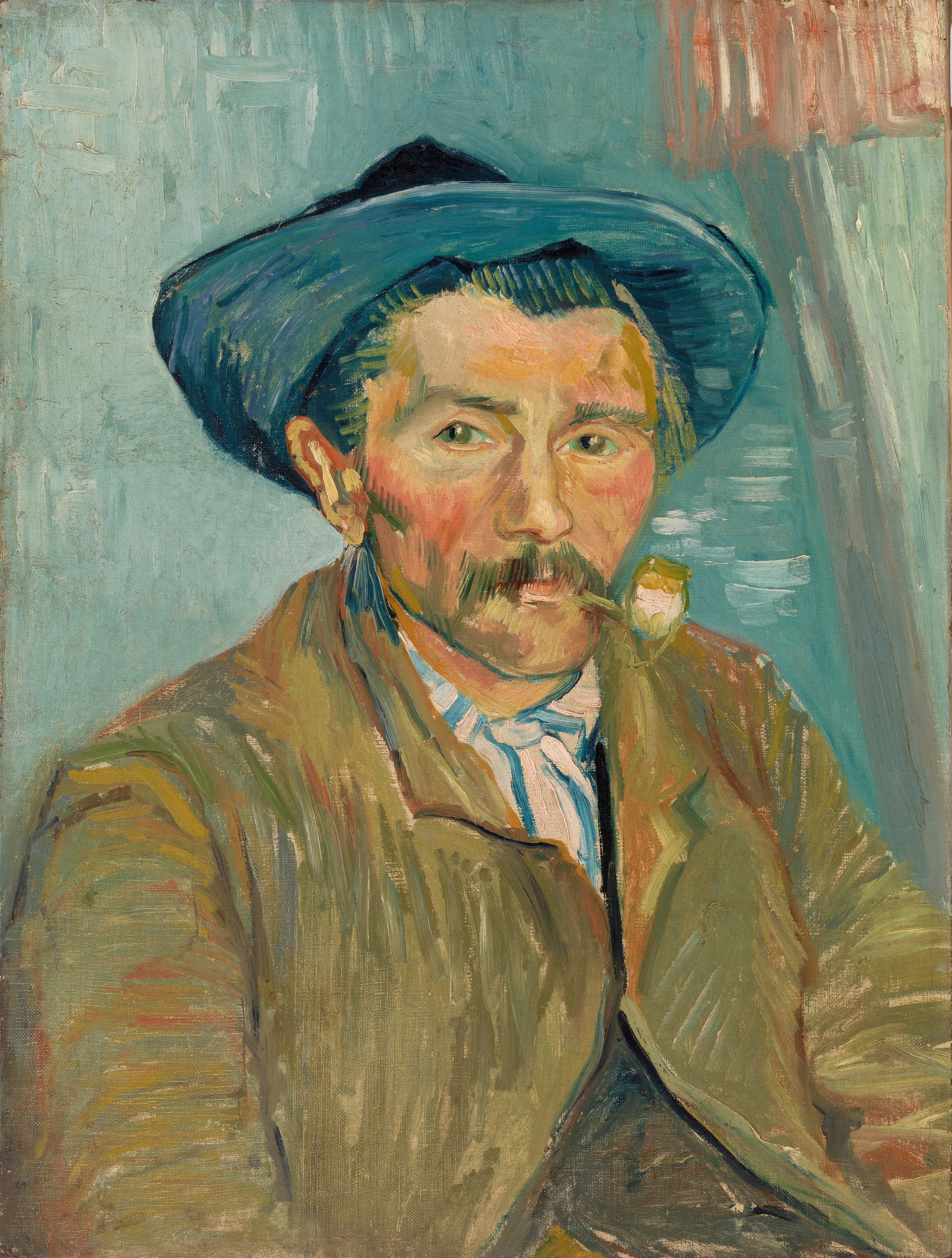
Van Gogh’s The Smoker (February 1888) Barnes Foundation, Philadelphia
The Smoker was until recently thought to have been painted in December 1888, while Van Gogh was working with Paul Gauguin, but it has now been re-dated to February that year, just a few days after the Dutchman’s arrival in Arles. The unidentified sitter wears workmen’s clothes and the artist may well have found him where he was staying, at the Hotel Carrell.
Barnes wrote about the portrait: “The [colour] distortions are made more apparent by the broad brushstrokes which make the eyes cavernous, and similar distortions about the nose accentuate the contrast between the nose and the eyes. Here also the face is rendered in a non-naturalistic colour, which accentuates the effect of distortion and contrast.”
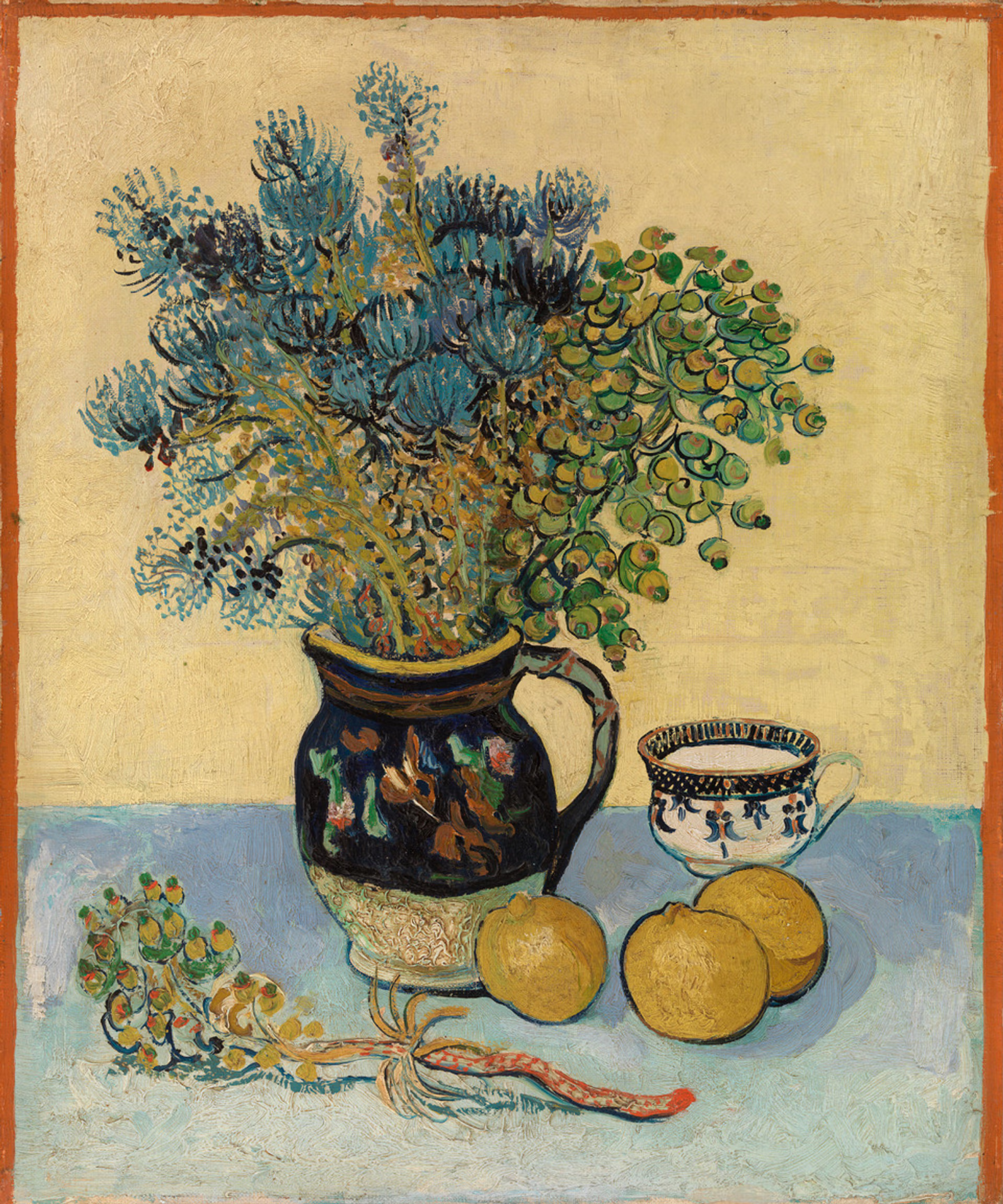
Van Gogh’s Still Life (May 1888) Barnes Foundation, Philadelphia
Still Life (May 1888) depicts flowers in a blue majolica vase. They were presumably picked on a springtime walk in the surrounding countryside outside Arles. It was a precursor to the Sunflowers, which he painted three months later. Van Gogh had added a red painted border around the top and sides of the Barnes composition.
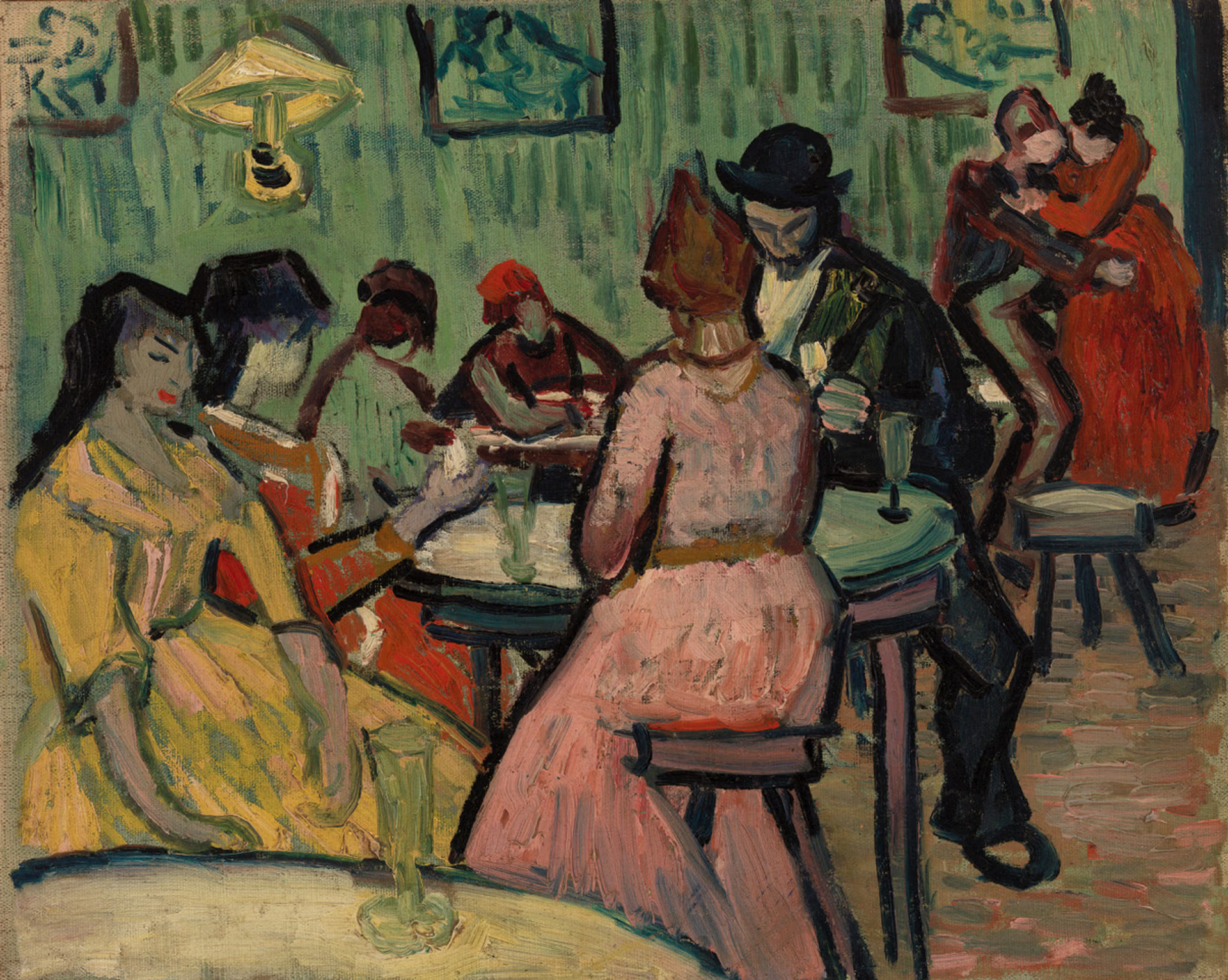
Van Gogh’s The Brothel (November 1888) Barnes Foundation, Philadelphia
The Brothel (November 1888) was painted soon after Gauguin’s arrival in Arles. It probably depicts an establishment in Rue du Bout d’Arles, which Van Gogh called the “Street of the Kind Girls”. Although Van Gogh would have visited the brothel, probably accompanied by Gauguin, he painted the scene afterwards from memory. He had hoped to develop this oil sketch into a more finished painting, but he apparently never did so.
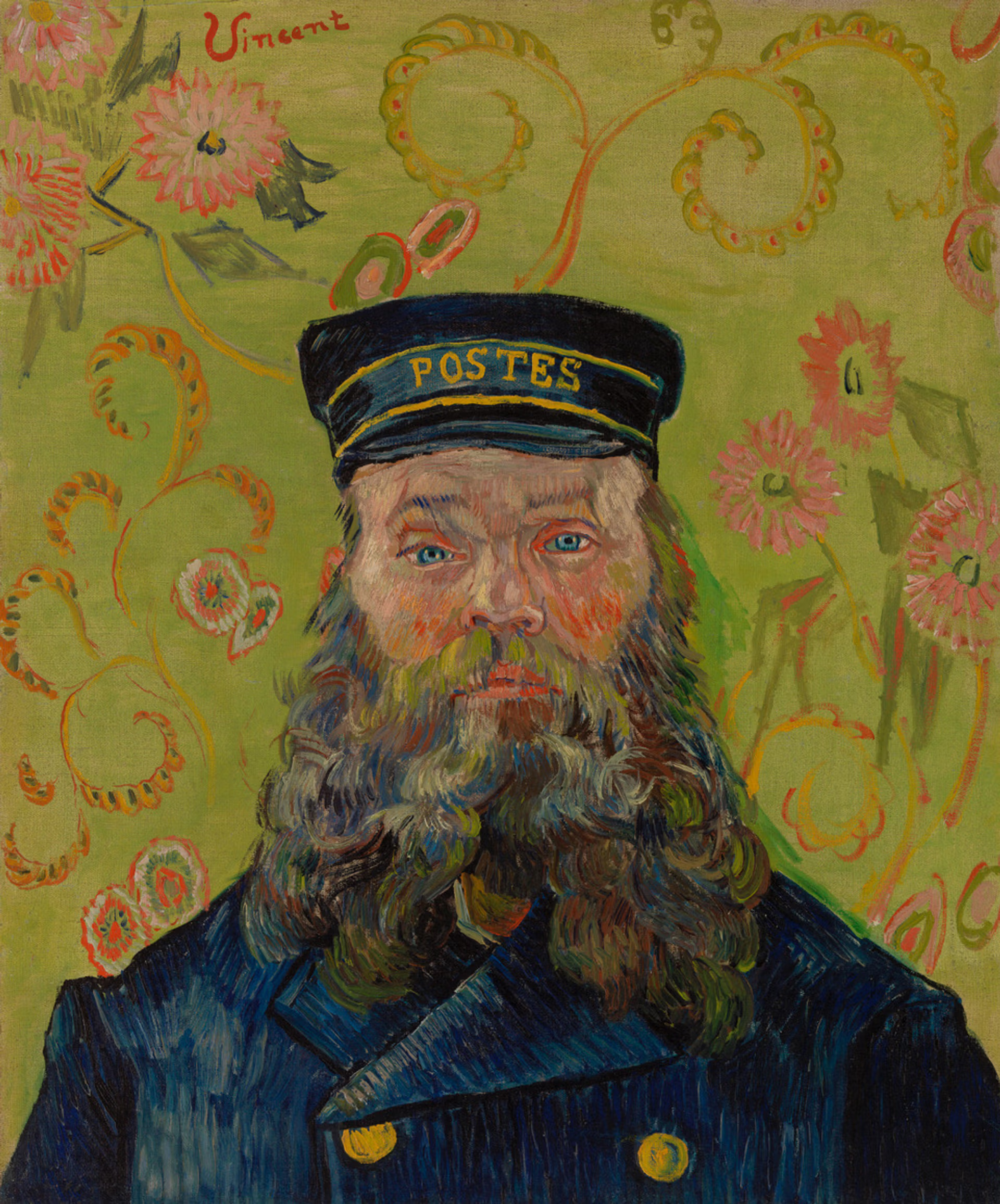
Van Gogh’s The Postman (recently redated by Van Gogh Museum to November-December 1888) Barnes Foundation, Philadelphia
The Postman (November-December 1888) depicts Joseph Roulin, set against an imaginary flowery background. It is one of six painted portraits of his good friend, with his distinctive bushy beard. This portrait was also done during Gauguin’s two-month stay in Arles.
Barnes wrote of the work: “Distortions in the features are somewhat in evidence, with the effect of distortion increased by use of obviously unnatural colour-effects: the moustache and a good part of the beard are rendered in a pea-green colour, shading off in some places to a yellowish-green. Here again the keynote of the design is contrast.”
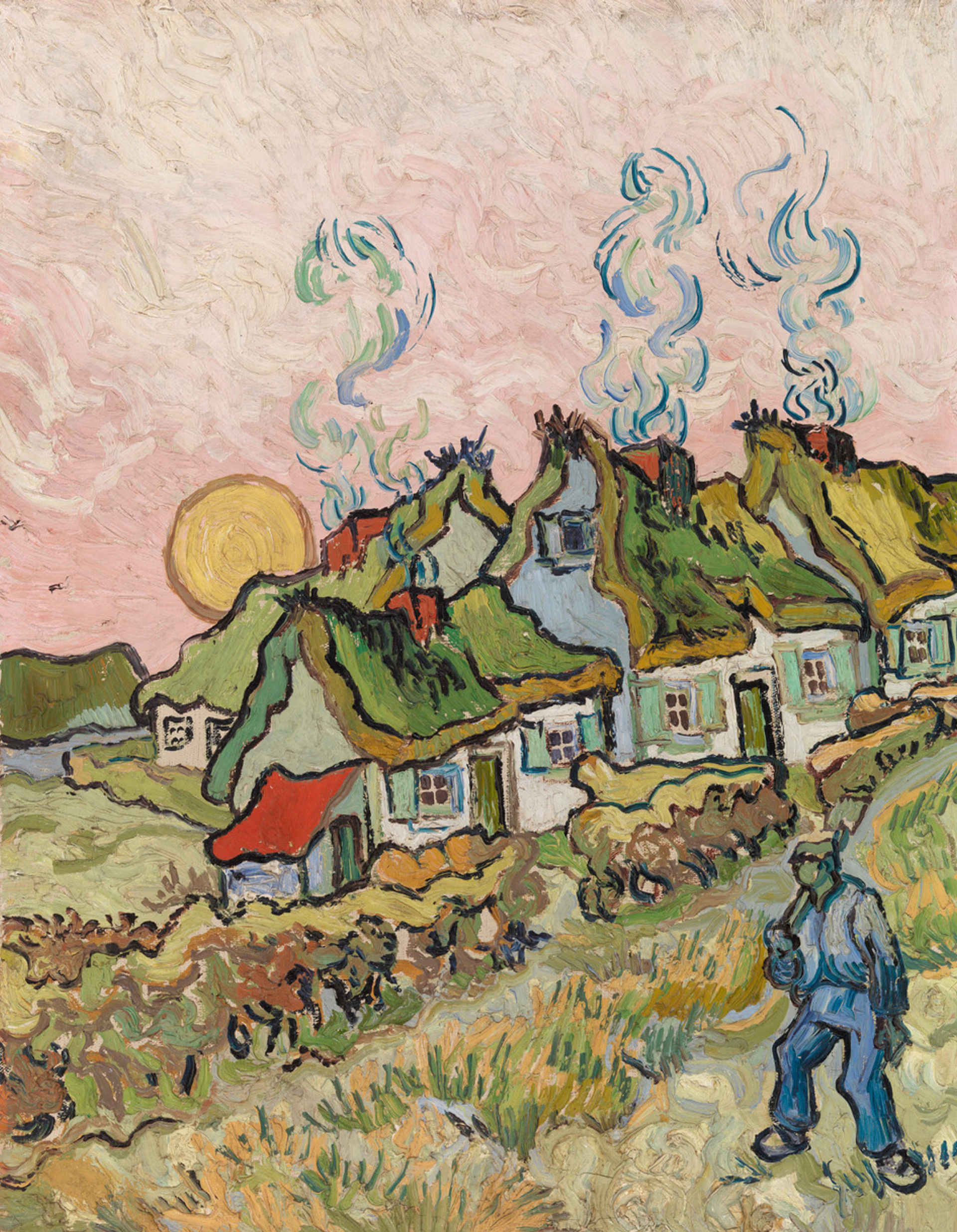
Van Gogh’s Houses and Figure (March-April 1890) Barnes Foundation, Philadelphia
Houses and Figure (March-April 1890) is the last Van Gogh in the Barnes collection, in terms of when it was painted. It is an unusual work, since it is one of the artist’s few paintings that represent “reminiscences of the north [the Netherlands]”, done when he was recovering from a mental attack. The steep roofs tilt at crazy angles and the walls contain few straight lines, perhaps evidence of his then unstable mind. Surprisingly, this may have been among Barnes’ favourite Van Goghs, for it was the sole example which he chose to illustrate in The Art in Painting.
Finally, we should mention a picture that was once in the Barnes Collection, depicting a ravine in Les Alpilles, the hills above the asylum. The collector described it in 1912 as “the weirdest thing I ever saw, I like it”. This is probably the painting that ended up at Boston’s Museum of Fine Arts, Ravine, dating from October 1889. It remains unclear why Barnes relinquished it.
Barnes did very well in his Van Gogh acquisitions, since all but one were bought before the publication of Jacob-Baart de la Faille’s 1928 catalogue raisonné, which provided a firm foundation for understanding the artist’s oeuvre. Buying seven works meant Barnes was certainly America’s most far-sighted collector of the work of Van Gogh.
