


After closing for the last two editions of the Venice Biennale following its war in Ukraine, Russia will reopen its national pavilion this year, its organizers told ARTnews.
In February 2022, Russian artists Kirill Savchenkov and Alexandra Sukhareva, along with Lithuanian curator Raimundas Malašauskas, withdrew from the pavilion from that year’s Biennale, citing Moscow’s invasion of Ukraine. Calling the war “politically and emotionally unbearable” and saying there was “no place for art” amid the conflict, they stepped down, posting a message on Instagram that read simply, “The Russian Pavilion will remain closed.”
Two years later at the 2024 Venice Biennale, Russia handed over the keys to its pavilion in the Giardini to the Plurinational State of Bolivia to mount a pavilion for the event’s 60th edition. Russia did not issue a public statement, and ARTnews’s attempts at the time to reach the pavilion’s organizers and the country’s culture ministry for comment were unsuccessful.
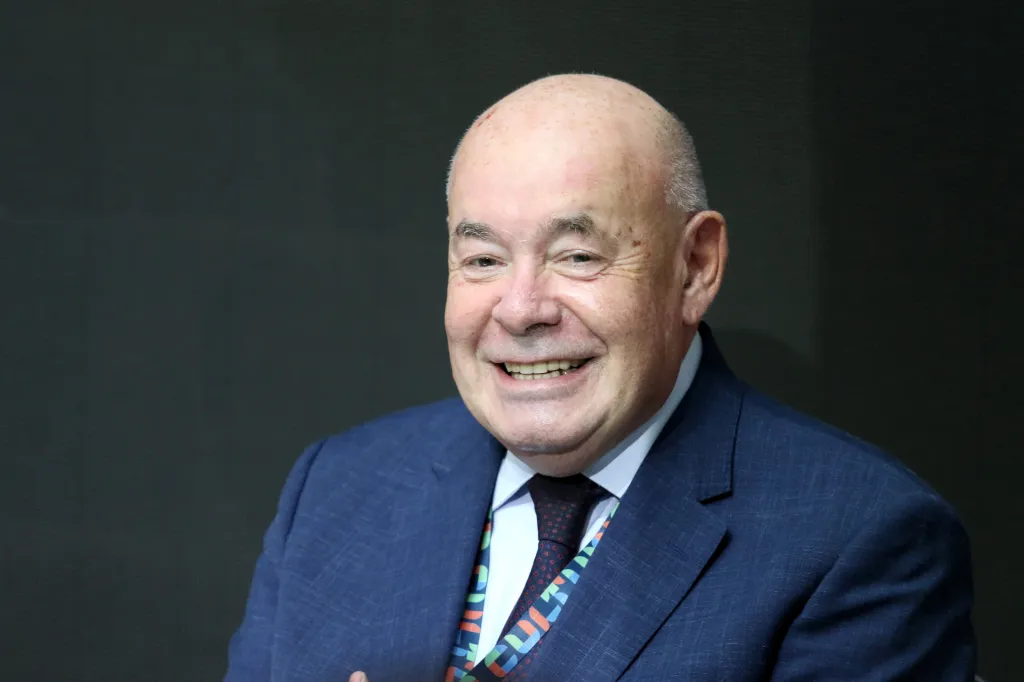
However, on Tuesday, Mikhail Shvydkoy—Russia’s delegate for international cultural exchanges and the country’s former culture minister—confirmed the Russian Pavilion will open in May, alongside the rest of the 2026 Biennale.
“I would like to note that Russia never left the Venice Biennale,” he wrote in an email. “The very presence of our pavilion—regardless of what takes place there, whether exhibitions by our Latin American friends or the hosting of an educational center for the entire Biennale—means the presence of our country in Venice’s cultural space. Therefore, since we have not gone anywhere, we are not ‘returning.’ We are simply seeking new forms of creative activity in the current circumstances.”
Shvydkoy said the forthcoming pavilion will involve more than 50 young musicians, poets, and philosophers from Russia and other countries. “This is further proof that Russian culture is not isolated, and that attempts to ‘cancel’ it—undertaken for the past four years by Western political elites—have not succeeded,” he said. “That is precisely why we decided to create a project in which a multilingual polyphony of cultures will be heard—cultures that do not consider themselves peripheral in relation to the West.”
The exhibition is titled “The Tree is Rooted in the Sky,” and one of its themes will center on the idea that “politics exist within temporary dimensions, whereas cultures communicate in eternity,” Shvydkoy explained. “In our new project, eternity prevails over momentary concerns, culture over politics… unfortunately, not everyone is capable of understanding this.”
Inside the pavilion, musicians from across Russia and from other countries, including Argentina, Brazil, Mali, and Mexico, will feature in a “musical festival.” It will aim to highlight the “creative potential of peripheral areas and practices, showcasing traditions, musical languages, and experimental approaches that emerge far from major cultural centers, yet precisely for this reason preserve an authentic and innovative expressive power,” the Russian Pavilion’s organizers told ARTnews. “Through the meeting of different cultures, the project aims to create a space for dialogue and exchange, where local roots can intertwine with global visions, generating new artistic perspectives and strengthening a sense of international community.”
Shvydkoy added: “Various sanctions may be devised, and official Western institutions may be prohibited from working with us, but no one can deprive Russia of the right to artistic self-expression.” He said he believes the Biennale’s leadership has shown that it is “ready to seek a compromise [to ensure the pavilion remains open], naturally without wishing to jeopardize the work of the entire Venice Biennale.”
He pointed to the participation of Russian artists in international cultural events in Europe and the US, including animator Konstantin Bronzit, who is nominated for Best Animated Short Film at this year’s Academy Awards. “That is why the leadership of the Venice Biennale is trying to find a way out of the difficult situation in which the Russian pavilion has found itself,” he said. “And that is why the project’s curators wish to present Russian art in collaboration with colleagues from different regions of the world.”
ARTnews asked the Venice Biennale for comment on the Russian Pavilion’s reopening. “As a general premise, La Biennale di Venezia does not decide on national participation; countries themselves choose whether to take part. I would like to inform you that La Biennale is finalizing all elements of the list, which will be announced on March 4,” Cristiana Costanzo, the Biennale’s head of press and media relations, wrote in an email.
When asked if he expects people to protest Russia’s decision to reopen its pavilion, Shvydkoy said that “any form of provocation against Russian cultural figures in the Venice Biennale is possible, but I hope that common sense will prevail.”
He continued, “I am confident that this will be a win not only for the Russian side, but for all participating countries. Russian cultural figures are open to cooperation—not only in the present, but in the future as well.”
It’s not unusual for geopolitics to affect the status of Venice’s national pavilions, but last year Russia was the only country not to participate due to ongoing military conflict. Despite the war in Gaza, Israel was still able to move forward with its 2024 pavilion; the pavilion’s artists and curators announced during the preview, hoever, that they would not open the exhibition until “a ceasefire and hostage release agreement is reached” in the conflict in the Gaza Strip.
The Israeli Pavilion is set to open in May, but it is being moved from the country’s permanent structure in the Giardini to one in the Arsenale. The pavilion was closed to the public two years ago following protests on the biennale’s opening day. Belu-Simion Fainaru, the sculptor representing Israel this year, told ARTnews the move to Arsenale was necessary because the Israeli Pavilion in the Giardini is currently under construction.
