

Close Menu
  • News
  • Stocks
  • Bonds
  • Commodities
  • Collectables
    • Art
    • Classic Cars
    • Whiskey
    • Wine
  • Trading
  • Alternative Investment
  • Markets
  • More
    • Economy
    • Money
    • Business
    • Personal Finance
    • Investing
    • Financial Planning
    • ETFs
    • Equities
    • Funds

Subscribe to Updates

Get the latest markets and assets news and updates directly to your inbox.

Trending Now

The Wild Ways Artists Have Made Their Livings, from the Renaissance to Today

March 15, 2026

New York Academy of Art to Give Away Money Donated by Jeffrey Epstein

March 14, 2026

Our 6 Favorite Artworks from Women-Led Galleries Now

March 14, 2026
Facebook X (Twitter) Instagram
The Asset ObserverThe Asset Observer
Newsletter
LIVE MARKET DATA
  • News
  • Stocks
  • Bonds
  • Commodities
  • Collectables
    • Art
    • Classic Cars
    • Whiskey
    • Wine
  • Trading
  • Alternative Investment
  • Markets
  • More
    • Economy
    • Money
    • Business
    • Personal Finance
    • Investing
    • Financial Planning
    • ETFs
    • Equities
    • Funds
The Asset ObserverThe Asset Observer
Home»Art Market
Art Market

Slave Ship Relic to Depart Smithsonian’s African American History Museum After Decade on View

News RoomBy News RoomMarch 13, 2026
Share
Facebook Twitter LinkedIn Pinterest Email

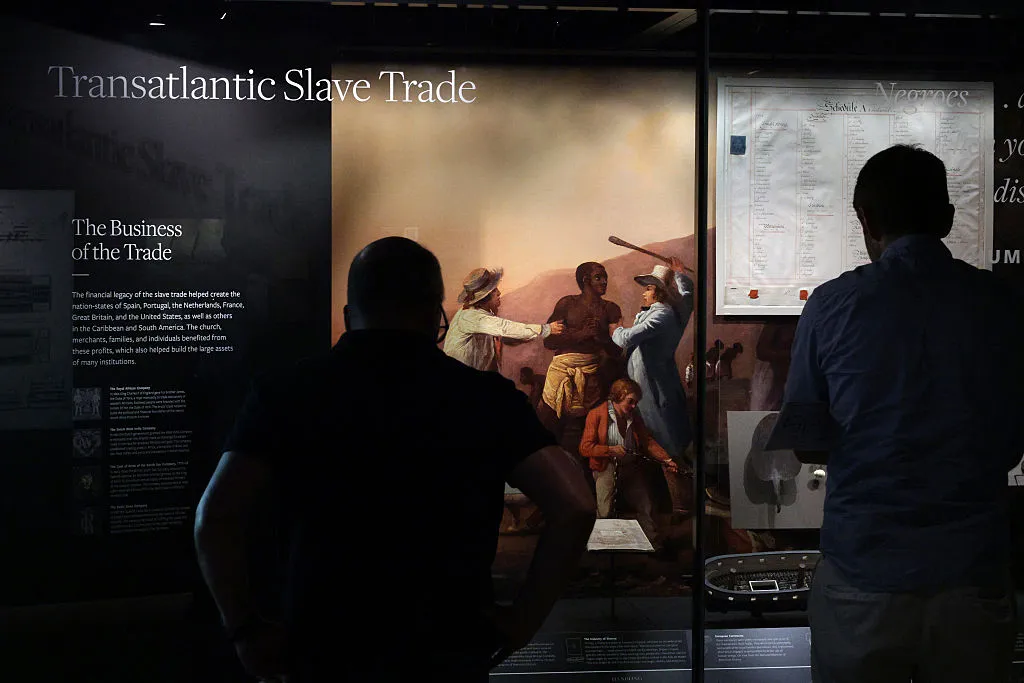
A relic of the transatlantic slave trade that has anchored a major gallery at the Smithsonian’s National Museum of African American History and Culture since its opening will soon leave Washington, DC.

According to the Associated Press, the museum plans to remove a timber fragment from the São José-Paquete de Africa, a Portuguese slave ship that sank off the coast of Cape Town in 1794 while carrying more than 400 captive Africans. The 33-pound piece of wood, displayed in the museum’s “Slavery and Freedom” exhibition since 2016, will return to the Iziko Museums of South Africa when its loan agreement expires this year.

Museum officials say the artifact’s final day on view will be March 22.

The timber sits at the center of one of the museum’s most solemn spaces, a dimly lit gallery devoted to the Middle Passage, the brutal Atlantic crossing that carried millions of enslaved Africans to the Americas. Suspended over a dark void beside ballast stones once used on the ship, the fragment offers a rare physical connection to the vessels that powered the slave trade.

When the object leaves Washington, it will be replaced by a cargo manifest from the ship documenting the people who were forced aboard.

The São José sank in December 1794 after striking rocks near Cape Town while en route to Brazil. Roughly half of the captives on board died in the wreck. Survivors were later resold into slavery in the Western Cape. The shipwreck was identified after its recovery in 2015 through the international Slave Wrecks Project, which studies maritime sites tied to the transatlantic slave trade.

Museum leaders say the change reflects conservation needs and the terms of the loan, which was initially set for five years and later extended until July 1, 2026. The timber’s fragile condition requires specialized handling and transport back to South Africa.

Still, any changes to the museum’s presentation of American history now attract scrutiny. In 2025, President Donald Trump signed an executive order directing federal agencies to review how U.S. history is presented at national museums and historic sites, including institutions within the Smithsonian.

The African American history museum has already faced questions about exhibition changes in recent months. Last year, some lenders said objects they had loaned to the museum were returned earlier than expected, though the institution said the moves reflected routine gallery rotations.

For visitors, however, the slavery galleries remain among the museum’s most powerful spaces. Even after the fragment leaves Washington, curators say the history it represents will stay firmly in place.

Share. Facebook Twitter Pinterest LinkedIn Tumblr Email

Keep Reading

The Wild Ways Artists Have Made Their Livings, from the Renaissance to Today

New York Academy of Art to Give Away Money Donated by Jeffrey Epstein

Our 6 Favorite Artworks from Women-Led Galleries Now

American artist Lauren Halsey’s “sister dreamer” sculpture park opens in Los Angeles.

Dealers at TEFAF Maastricht Report Robust Sales, Offering Works Ranging from Two Inches to Room-Size

Can a Play Capture an Artist as Enigmatic as Henry Darger?

South Carolina’s International African American Museum Officially Acquires Earliest Known Daguerreotypes of Enslaved Americans

Contemporary Art Market Declines For Fourth Straight Year, as Old Masters and Impressionist Works Rebound: Art Basel UBS Report

At the Guggenheim, Carol Bove Bends Metal—and Minimalism—to Her Will

Recent Posts
  • The Wild Ways Artists Have Made Their Livings, from the Renaissance to Today
  • New York Academy of Art to Give Away Money Donated by Jeffrey Epstein
  • Our 6 Favorite Artworks from Women-Led Galleries Now
  • American artist Lauren Halsey’s “sister dreamer” sculpture park opens in Los Angeles.
  • Dealers at TEFAF Maastricht Report Robust Sales, Offering Works Ranging from Two Inches to Room-Size

Subscribe to Newsletter

Get the latest markets and assets news and updates directly to your inbox.

Editors Picks

New York Academy of Art to Give Away Money Donated by Jeffrey Epstein

March 14, 2026

Our 6 Favorite Artworks from Women-Led Galleries Now

March 14, 2026

American artist Lauren Halsey’s “sister dreamer” sculpture park opens in Los Angeles.

March 14, 2026

Dealers at TEFAF Maastricht Report Robust Sales, Offering Works Ranging from Two Inches to Room-Size

March 14, 2026

Can a Play Capture an Artist as Enigmatic as Henry Darger?

March 13, 2026
Facebook X (Twitter) Instagram
© 2026 The Asset Observer. All Rights Reserved.
  • Privacy Policy
  • Terms
  • Press Release
  • Advertise
  • Contact

Type above and press Enter to search. Press Esc to cancel.