


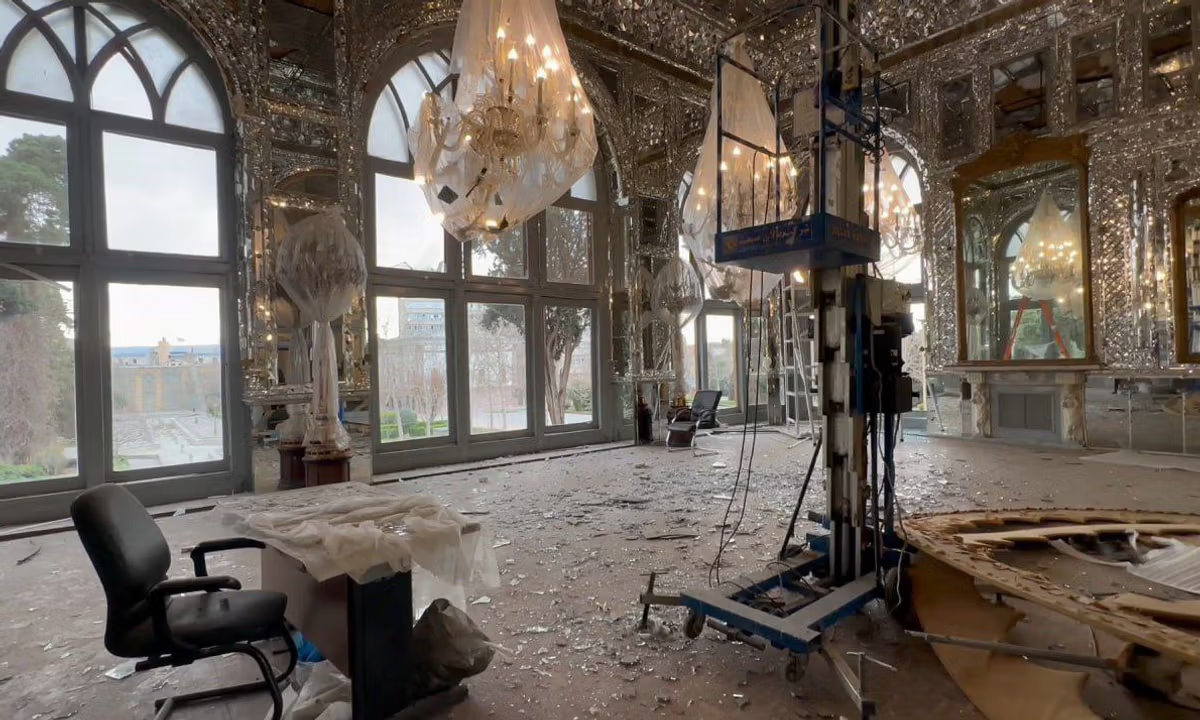
Tehran’s only Unesco World Heritage Site, Golestan Palace, was damaged on Sunday (1 March) as the United States and Israeli forces intensified their offensive against Iran.
The assaults, launched on 28 February, killed the country’s supreme leader, Ayatollah Ali Khamenei, and scores of senior officials. Iran retaliated immediately with attacks on US and Israeli interests and military bases in neighbouring Gulf states. The total number of people reported to have died is in the hundreds, while the conflict has escalated across the region, with both Washington, DC and Tehran warning they are prepared for a prolonged war.
Unesco joined other United Nations bodies and senior officials, including Secretary-General António Guterres, in condemning both the US-Israeli strikes and Iran’s retaliatory attacks.
Located in the heart of Tehran’s historic district near Arg Square, the 400-year-old Golestan Palace reportedly sustained damage from a nearby missile blast. Images published by local media show the complex, which also functions as a museum, strewn with debris, its windows blown out and its distinctive mirror and glasswork damaged. The palace’s historic orsi and wooden doors were also reportedly affected, with Ahmad Alavi, the head of the Tehran city council’s tourism committee, telling local media that the force of the blast was strong enough to lift sections of tarmac within the grounds.
The 400-year-old Golestan Palace reportedly sustained damage from a nearby missile blast

Golestan Palace in 2016 Photo: Sarvy Geranpayeh
The palace’s fragile chandeliers and other decorative features had been wrapped in protective material and its artefacts were relocated to safe storage before the strikes. Three weeks ago, Sedaye Miras News Agency reported that artefacts from Tehran’s museums—including the National Museum of Iran, as well as the Sa’dabad and Niavaran palace complexes—had been evacuated to secure facilities by 5 January amid growing unrests across the country and fears of a US strike. Similar evacuations were carried out nationwide, including at the Persepolis museum in the Fars province.
So significant is the Golestan Palace site and its surroundings that Iran’s senior cultural officials, including Reza Salehi-Amiri, the minister of cultural heritage, tourism and handicrafts, and the deputy minister Ali Darabi, visited the palace on Monday (2 March) to inspect the damage. According to local media, Salehi-Amiri described the attack as a clear violation of international rules and cultural commitments and said an official report would be submitted to Unesco to begin the restoration process.
Unesco released a statement the same day confirming that the palace was damaged by a strike in its buffer zone, Arg square, and expressing “concern over the protection of cultural heritage sites amidst escalating violence in the Middle East”. The organisation says it is closely monitoring heritage sites across the region and has “communicated to all parties concerned the geographical coordinates of sites on the World Heritage List as well as those of national significance, to avoid any potential damage.”
Reports also indicate damage to historic sites nearby, including the city’s Grand Bazaar and the Arg Mosque.
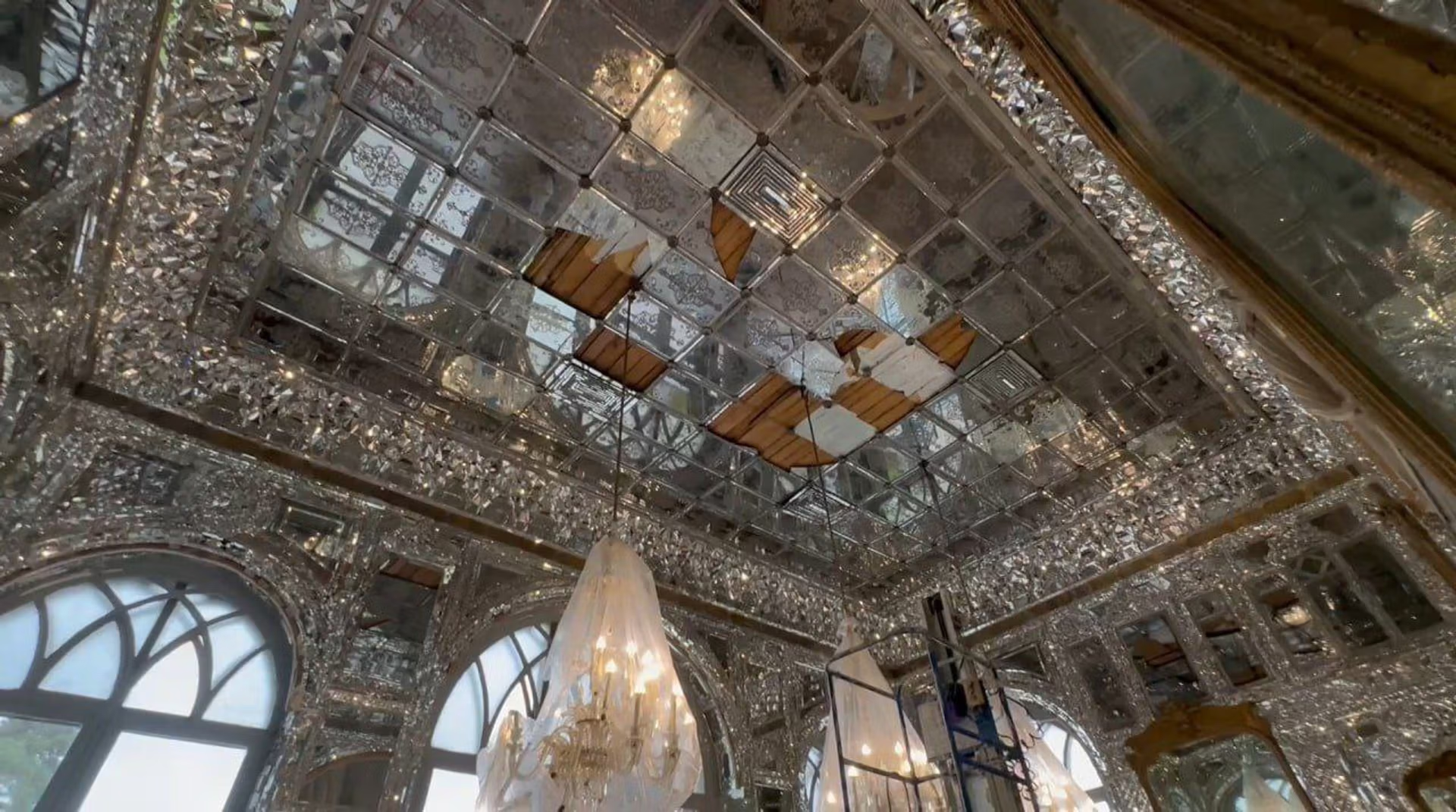
The mirrored ceilings and walls of Golestan Palace have reportedly been damaged by strikes
Golestan Palace’s origins date back to the Safavid dynasty (1501–1736), but it was later expanded under the Qajars (1794–1925), blending Persian arts and architecture with European styles before becoming the royal residence. The complex comprises of eight main palace structures and gardens, enclosed by an outer wall with gates. Most of its defining features were added in the 19th century, and it became a centre of artistic production and the heart of Qajari arts and architecture.
Iran is home to more than 800 museums and 29 Unesco World Heritage Sites, reflecting a cultural history spanning thousands of years and vast, diverse collections. There are currently no confirmed reports of damage to other cultural sites in the country. However, ongoing communication interruptions and the fact that information about damage from more populated sites, such as hospitals, residential areas and schools, tends to emerge first mean reporting on cultural heritage outside of the capital remains limited and slow.
Cultural property is protected under international law, notably the 1954 Hague Convention for the Protection of Cultural Property in the Event of Armed Conflict, including its enhanced protection mechanism, as well as the 1972 Convention concerning the Protection of the World Cultural and Natural Heritage.
The human cost of the conflict continues to rise across the region. According to the Iranian Red Crescent Society, 787 Iranians have been killed and thousands injured. The US Central Command reports six US servicemen have been killed and 18 injured. Israeli strikes on Lebanon have killed at least 52 people and wounded more than 150, according to the local health ministry, while at least 11 people have been killed in Israel and three killed in the United Arab Emirates. The US-Israeli assault and the killing of Khamenei has also sparked protests in Pakistan, Iraq and Bahrain, including attempts to attack US embassies and consulates, resulting in a number of fatalities. Meanwhile, the second day of protests against Khamenei’s killing in India’s Kashmir resulted in clashes with security forces injuring at least 14 people.
