


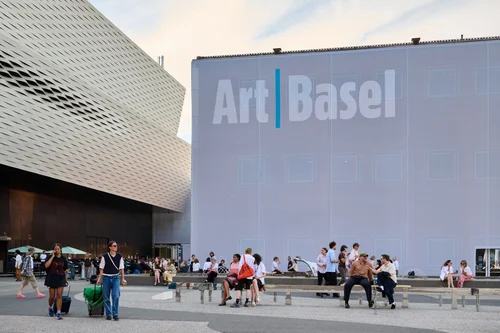
Lionel Messi might have made his return to the FIFA World Cup 2026 yesterday, but there was only one Messe on the minds of the art world yesterday. Yes, Art Basel returns to its Swiss home in the Messeplatz this week with 290 galleries from 43 countries, bringing together blue-chip heavyweights, ambitious historical presentations, and closely watched newcomers.
As ever, the fair—which runs through Sunday, June 21st—offers a snapshot of the art market at its most polished: museum-quality modern works, fresh-from-the-studio paintings, and enough seven-figure trophy pieces to keep the aisles buzzing.
This year, however, Art Basel is also leaning into the drama of discovery. Basel Exclusive, a new initiative for the Swiss edition, asks participating galleries to hold back select works from pre-fair previews, online viewing rooms, and advance sales, unveiling them publicly for the first time during the VIP opening. The initiative did appear to add some urgency to the live encounter at a moment when much of the market’s top end is accustomed to seeing and buying work before the doors officially open. Also new to Basel this year is Zero 10, a dedicated hall in the Messe highlighting technology-driven practices that produce generative, computational, and screen-based work.
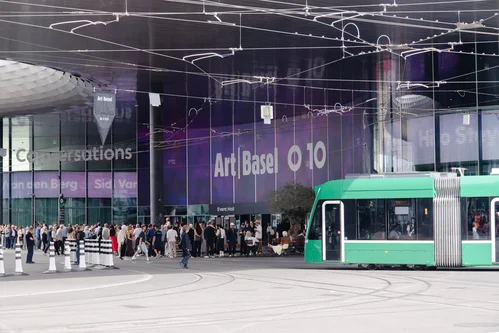
The sense of occasion this year is also extending well beyond the booths. Across town, Kunstmuseum Basel is staging a major Helen Frankenthaler survey, the artist’s largest European exhibition to date and her first institutional solo show in Switzerland, while the city’s satellite fairs and alternative platforms offer their own exciting counterpoints. Liste Art Fair Basel returns with its largest edition yet, bringing 105 galleries to Messe Basel, and Basel Social Club turns a vacant office building near the city’s main train station into a temporary stage for art, performance, and nightlife.
Still, the central pull of this week remains its tentpole fair. At Art Basel’s VIP day on Tuesday, June 16th, the significance of the people in attendance and the artworks on view affirmed its standing as the world’s premier art fair. While there were fewer blockbusters this year, many gallery presentations showcased a wider breadth of their rosters, with a notable uptick in the number of smaller works and more accessible works by major names. Several significant sales were reported by galleries on VIP day, led by a Pablo Picasso work with an asking price of $35 million at Hauser & Wirth. That gallery’s president, Iwan Wirth, hailed the opener as “as strong a first day as we’ve ever had.”
Here, we share our 10 best booths.
Annely Juda Fine Art
Booth B9
With works by Anthony Caro, David Nash, David Hockney, Elizabeth Magill, Yuko Shiraishi, Suzanne Treister, Nigel Hall, Yves Zurstrassen, Kasimir Malevich, Naum Gabo, László Moholy-Nagy, Robert Michel, Ella Bergmann-Michel, Friedrich Vordemberge-Gildewart, Nicola Turner and Sammi Lynch
Annely Juda Fine Art’s booth has taken on an unexpected poignancy following the death of David Hockney last week at age 88. The gallery’s presentation includes Delphiniums on My Garden Table, July 2025 (2025), a late acrylic painting with a vivid yellow, purple, blue, and green palette that exemplifies Hockney’s lifelong love of looking. As Nina Fellmann, director at the gallery, noted, the work “demonstrates in its vibrant color the unique joy he was able to convey, which we will all miss greatly.”
That sense of joy is also evident in two earlier Hockney works from 1966, Ubu Roi: The Polish Royal Family and Ubu Collecting Taxes from Peasants. Their theatrical setups, spare architecture, and lightly absurd figures show another side of Hockney’s imagination—witty, staged, and politically mischievous. Seen alongside the 2025 canvas, they present a compressed arc of an artist who could move from graphic satire to radiant still life without losing his sense of play.
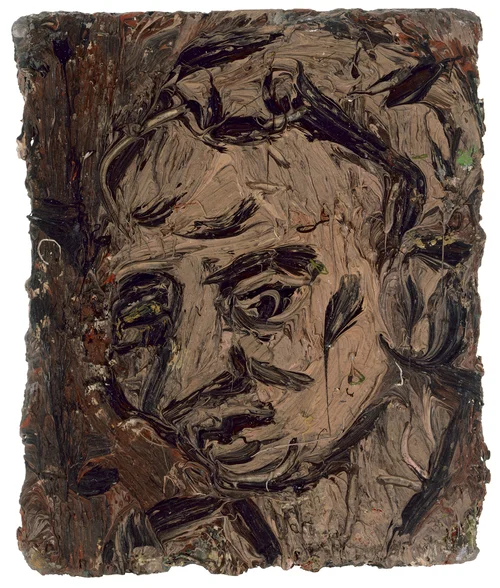
Self-portrait, 1974
Leon Kossoff
Annely Juda Fine Art
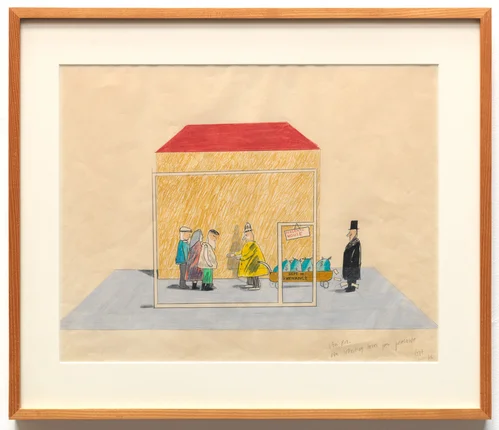
Ubu Collecting Taxes from Peasants, 1966
David Hockney
Annely Juda Fine Art
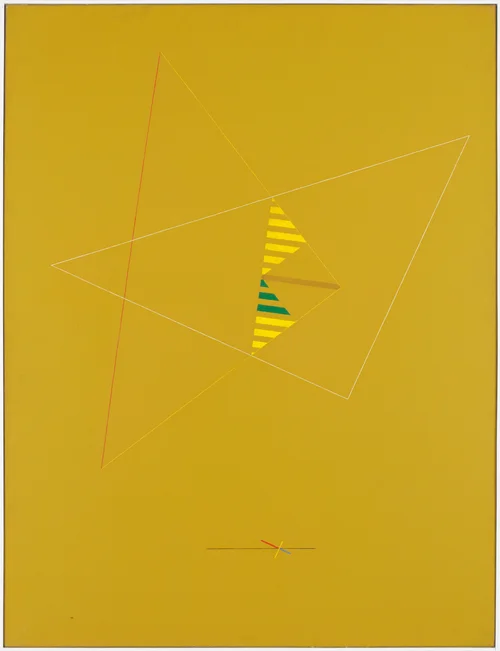
Composition No. 121, 1940-1941
Friedrich Vordemberge-Gildewart
Annely Juda Fine Art
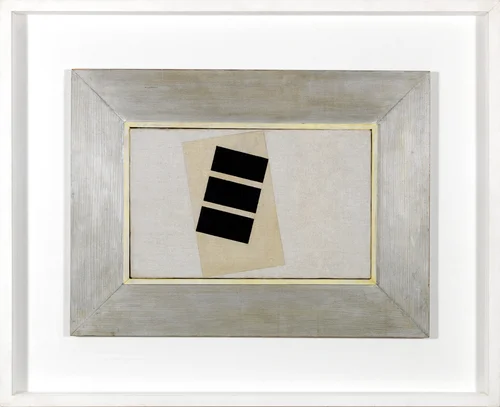
Composition No. 60, 1930
Friedrich Vordemberge-Gildewart
Annely Juda Fine Art
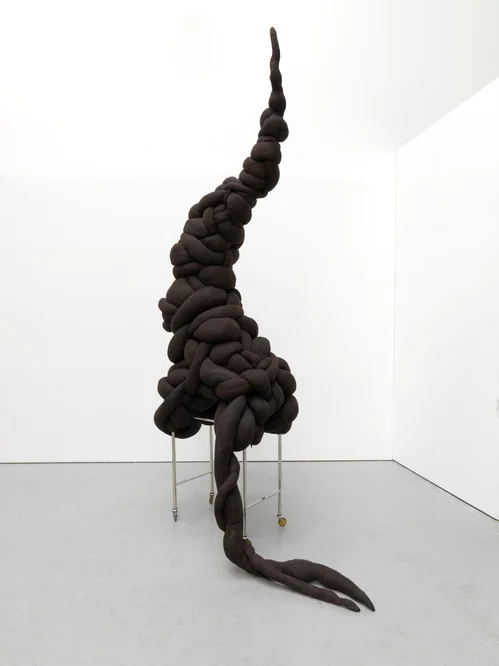
Vita, 2026
Nicola Turner
Annely Juda Fine Art
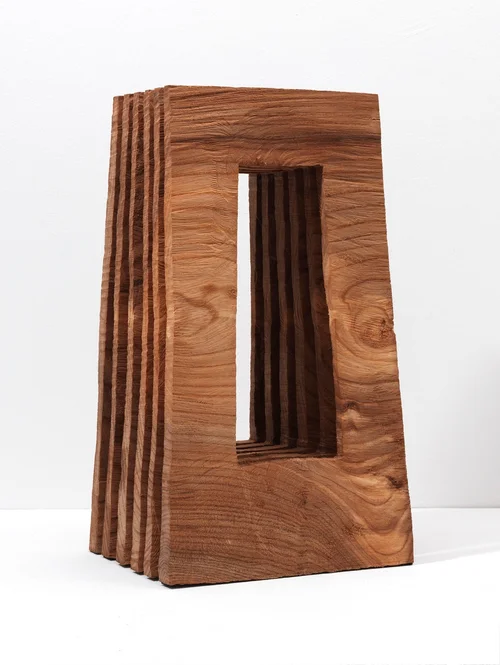
Layered Elm Frame, 2024
David Nash
Annely Juda Fine Art
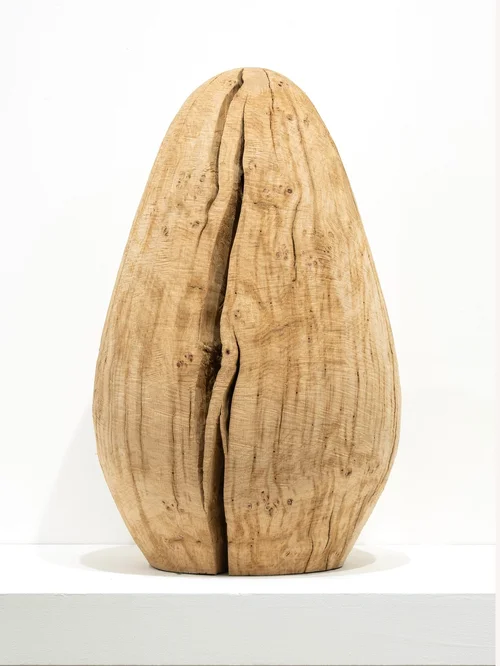
Oak Egg, 2024
David Nash
Annely Juda Fine Art
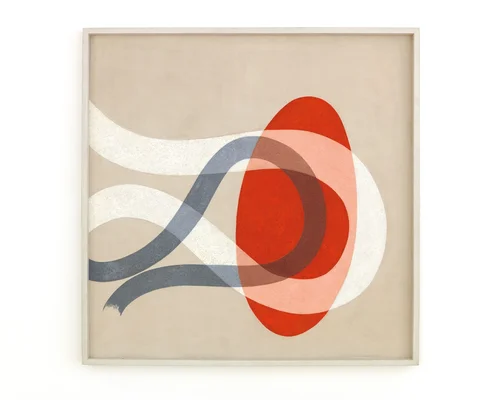
CH Space 6, 1941
László Moholy-Nagy
Annely Juda Fine Art
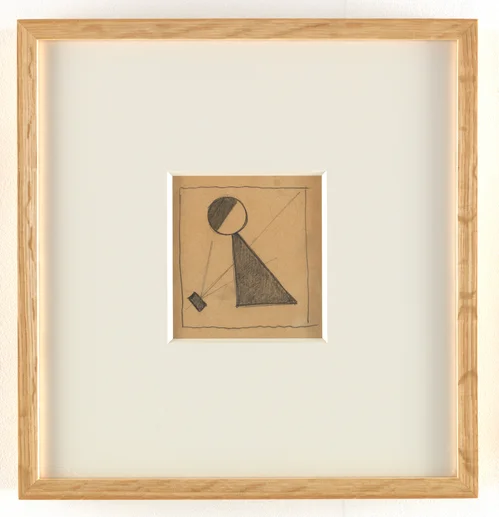
Protomagnetic Construction, 1916
Kasimir Malevich
Annely Juda Fine Art

Demolition of YMCA building, London, no. 2, 1971
Leon Kossoff
Annely Juda Fine Art
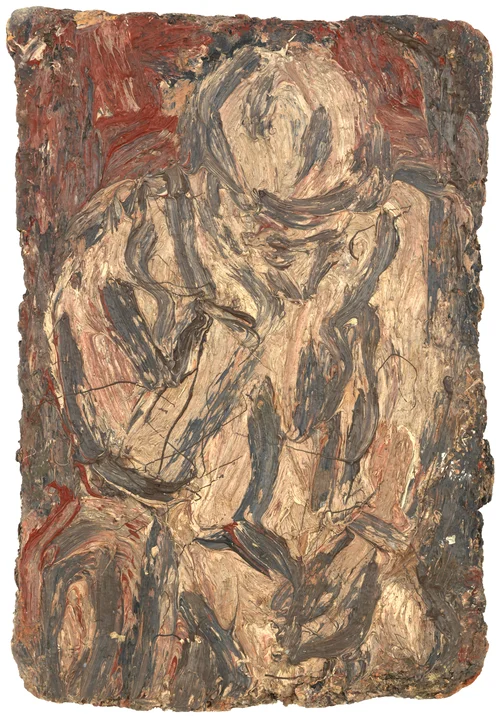
John Asleep, 1988
Leon Kossoff
Annely Juda Fine Art
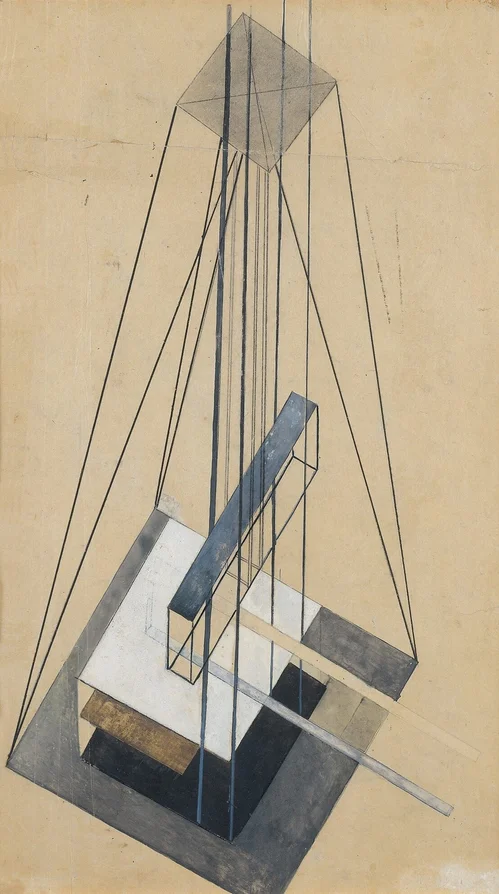
Architectural Study, 1921-22
Gustav Klucis
Annely Juda Fine Art
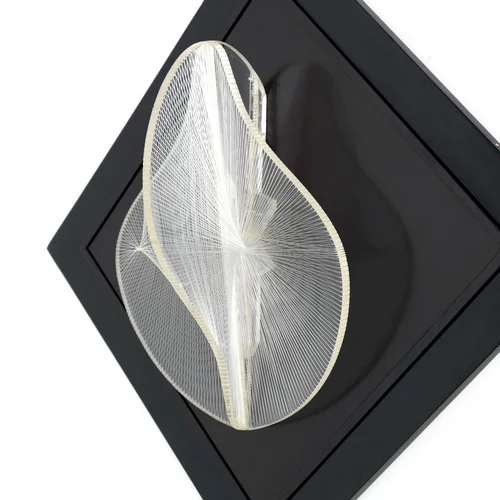
Linear Bas-Relief (on Black Perspex Base), c. 1961
Naum Gabo
Annely Juda Fine Art

Floor Piece Beth, 1972
Anthony Caro
Annely Juda Fine Art
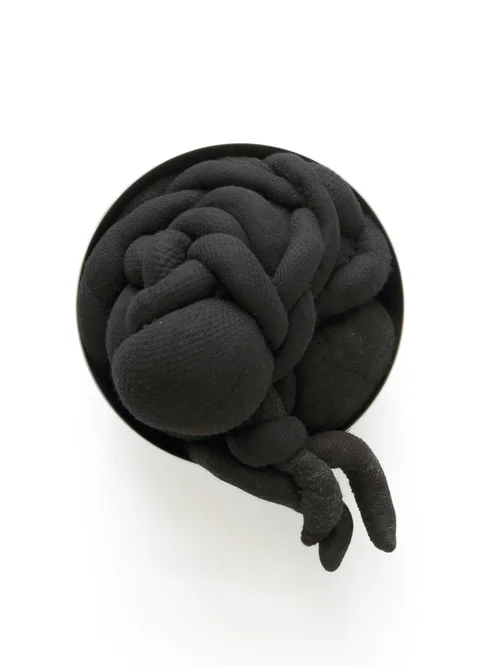
Nativitas, 2026
Nicola Turner
Annely Juda Fine Art
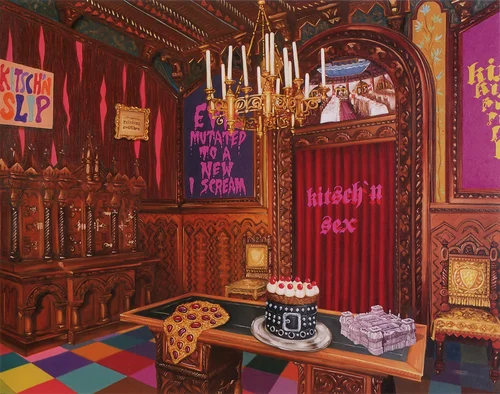
Q.Would you recognise a Virtual Paradise? Entering the Kitchen in Reverse No. 1,, 1996
Suzanne Treister
Annely Juda Fine Art
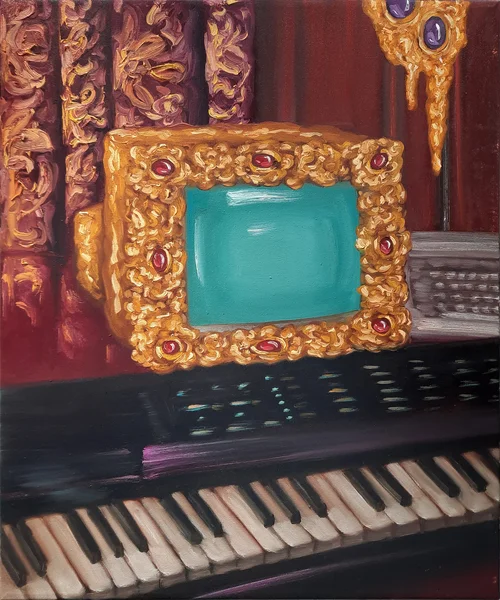
Q.Would you recognise a Virtual Paradise? Inside the Diningroom of the Virtual Castle. (jewel tv), 1994
Suzanne Treister
Annely Juda Fine Art
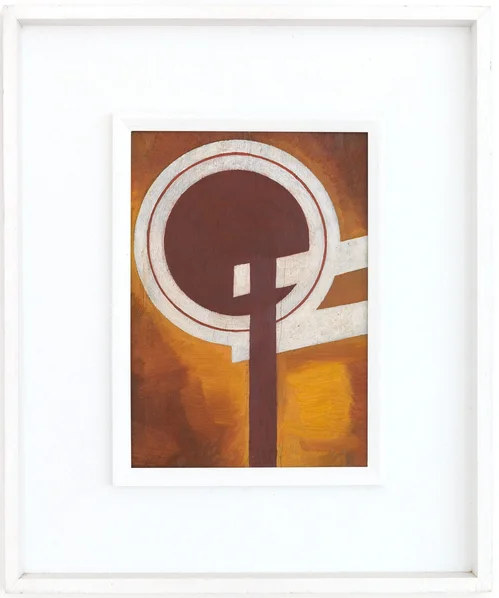
Composition, 1920
Alexander Rodchenko
Annely Juda Fine Art
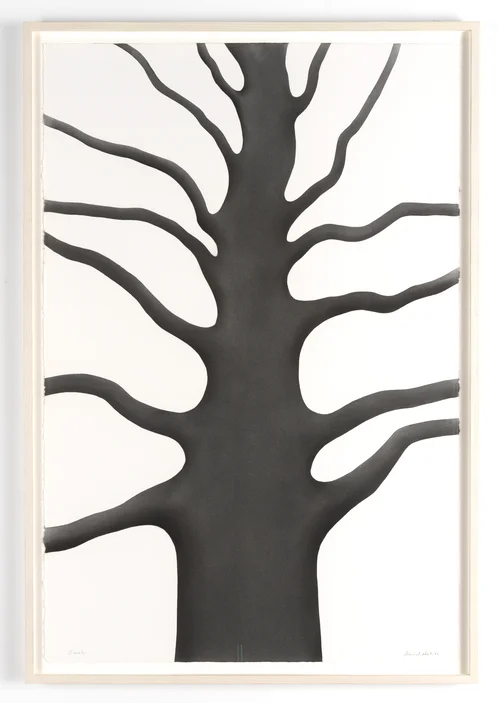
Beech, 2025
David Nash
Annely Juda Fine Art
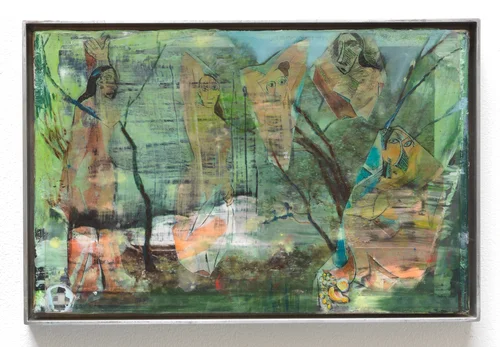
Demoiselles, 2015-17
Elizabeth Magill
Annely Juda Fine Art
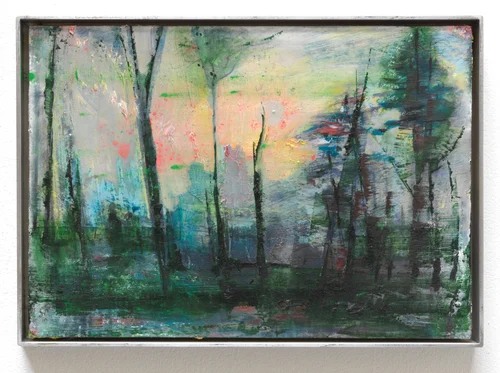
Another Land, 2015-17
Elizabeth Magill
Annely Juda Fine Art
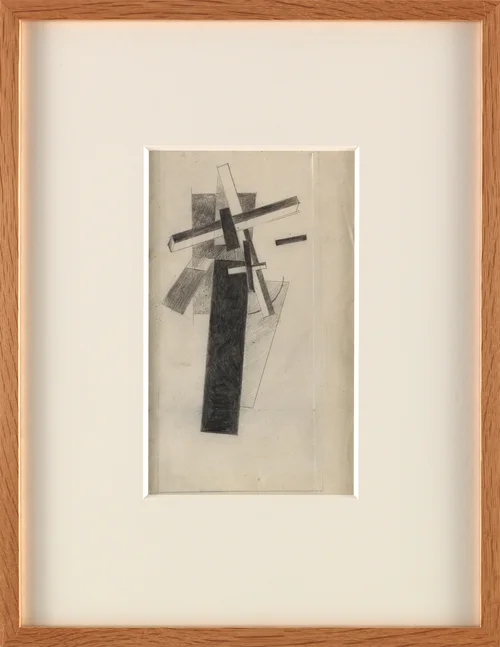
Architectonic construction with non objective volumes , motif of 1915 and 1916, 17, version 1918 , 1919
Kasimir Malevich
Annely Juda Fine Art
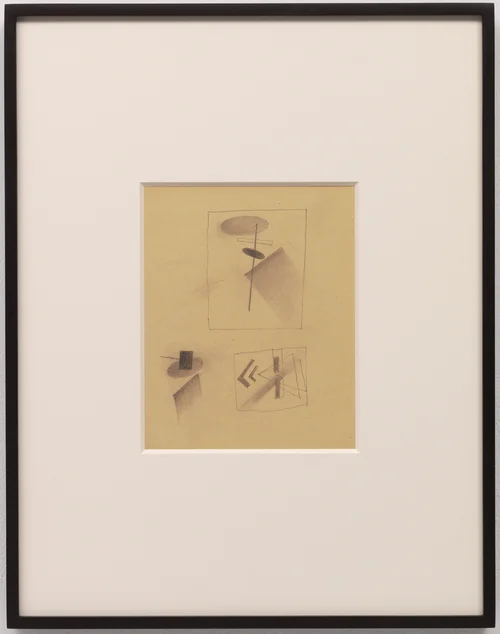
Composition with plan for dissolution and magnetic elements, 1918
Kasimir Malevich
Annely Juda Fine Art
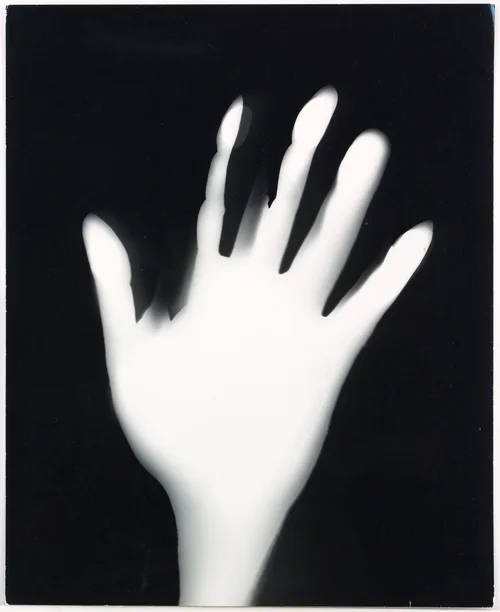
Untitled, 1939-41
László Moholy-Nagy
Annely Juda Fine Art

Untitled, 1939-41
László Moholy-Nagy
Annely Juda Fine Art
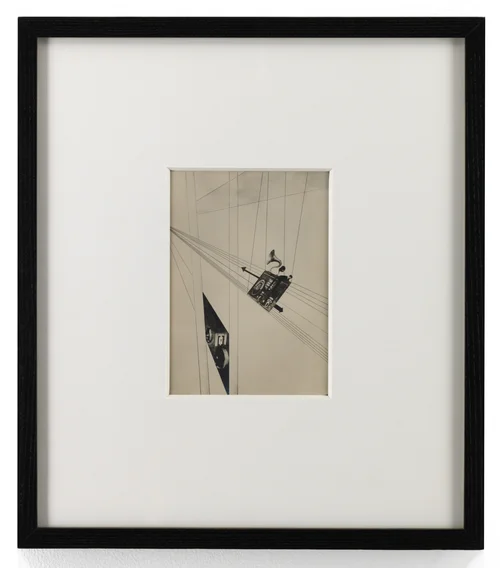
Gramophone, 1925-1927
László Moholy-Nagy
Annely Juda Fine Art
He’s only one of the booth’s mix of all-British artists. Another anchor was Leon Kossoff, whose market has recently been re-energized by a record-setting auction result in March. Christ Church, Winter Evening (1992), an oil-on-board work depicting Christ Church in Spitalfields, London, has a personal link to the artist’s history: Kossoff lived near the church as a child and returned to it repeatedly in his work. This painting was shown at the 1995 Venice Biennale, when he represented Great Britain, and Fellmann described it as “an incredible example” of Kossoff’s gestural impasto paintings of London.
Elsewhere, found-wood works with burnt marks by Roger Ackling offer an intriguing counterpoint to the booth’s painterly force. And the booth’s Basel Exclusive works are tender paintings by Sammi Lynch, who recently joined its roster.
Gagosian
Booth B15
With works by Derrick Adams, Richard Artschwager, Richard Avedon, Georg Baselitz, Jean-Michel Basquiat, Amoako Boafo, Carol Bove, Cecily Brown, Alberto Burri, Alexander Calder, Maurizio Cattelan, Christo, John Currin, Edgar Degas, Willem de Kooning, Edmund de Waal, Richard Diebenkorn, Jean Dubuffet, Roe Ethridge, Jadé Fadojutimi, Rachel Feinstein, Urs Fischer, Lucio Fontana, Helen Frankenthaler, Theaster Gates, Cy Gavin, Alberto Giacometti, Nan Goldin, Katharina Grosse, Mark Grotjahn, Andreas Gursky, Lauren Halsey, Duane Hanson, Simon Hantaï, Keith Haring, Damien Hirst, David Hockney, Alex Israel, Neil Jenney, Jia Aili, Jasper Johns, Donald Judd, Jamian Juliano-Villani, Y.Z. Kami, Titus Kaphar, Jeff Koons, Roy Lichtenstein, Rick Lowe, René Magritte, Brice Marden, Henri Matisse, Adam McEwen, Joan Mitchell, Tyler Mitchell, Henry Moore, Takashi Murakami, Cady Noland, Albert Oehlen, Irving Penn, Giuseppe Penone, Pablo Picasso, Richard Prince, Nathaniel Mary Quinn, Gerhard Richter, Ed Ruscha, Jenny Saville, Richard Serra, Jim Shaw, Taryn Simon, Rudolf Stingel, Mark Tansey, Tatiana Trouvé, Cy Twombly, Andy Warhol, Tom Wesselmann, Rachel Whiteread, Stanley Whitney, Jordan Wolfson, Jonas Wood, and Christopher Wool
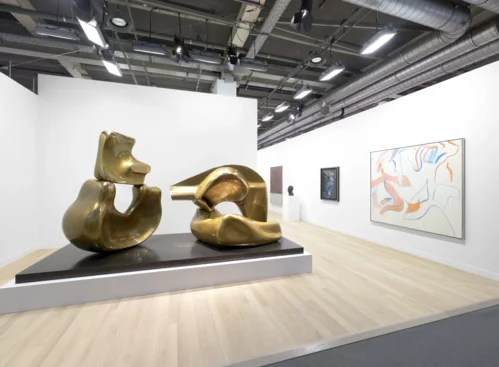
Gagosian’s booth announces itself with the blunt force of scale. A monumental Henry Moore sculpture, Large Four Piece Reclining Figure (1972–73), commands one entrance, setting an institutional tone. From the opposite side, the mood shifts to contemporary spectacle: Damien Hirst’s Black Sheep (2007), from his “Natural History” series of formaldehyde tanks, greets viewers with the familiar shock of life suspended in death.
A standout Francis Bacon portrait is the most visceral and charged in the presentation, alongside notable works by Helen Frankenthaler, Willem de Kooning, Christopher Wool, Maurizio Cattelan, Donald Judd, and Jadé Fadojutimi. Frankenthaler’s Jockey (1978) will particularly resonate with collectors in Basel, where the Kunstmuseum is concurrently staging a major survey of the artist. A late de Kooning abstraction and a 1967 red-lacquered galvanized-iron wall work by Judd add even more historical heft.
This is a booth that could feel overwhelming—not least because of the crowds populating it on VIP day. But there is so much to admire here: the names are canonical, and the works outstanding.
PKM Gallery
Booth P4
With works by Young In Hong
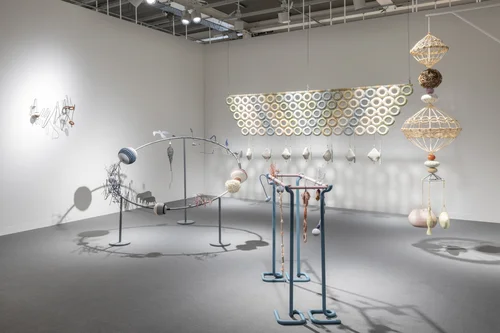
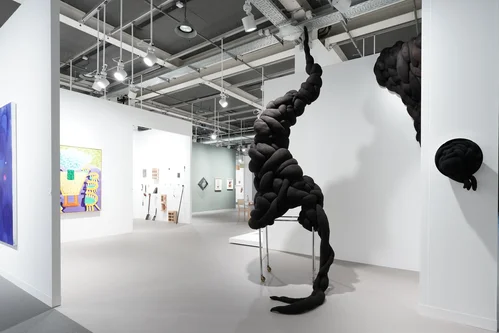
PKM Gallery’s solo booth of works by Young In Hong is an absorbing environment built from sculptural objects: suspended screens, hanging forms, ceramic bells, and woven structures made from straw, willow, textiles, and paper. The sculptures, priced between $15,000 and $40,000 apiece, recall musical instruments or perhaps stage props. And at a fair increasingly attuned to digital art and technology, Hong’s handmade works propose a different kind of contemporary urgency, turning craft into a language for exploring sound, ecology, and human-centered systems of power.
The most striking of these is Prop 8. Bell Screen (2024), a suspended, horizontal screen composed of rows of straw-and-sedge rings with ceramic bells hanging below. Its repeated circular forms cast delicate shadows across the wall, while the bells give the work a sonic charge. Nearby, Prop 7. Becoming Birds (2024) enlarges a bird toy to human scale, highlighting Hong’s interest in animal agency and in objects that combine craft, play, and performance.
As Alex Jung, head of the corporate office at PKM Gallery, explained, Hong’s works bring together “music and instrument storytelling” guided by her research into the relationship among humans, animals, and nature.
P.P.O.W
Booth B10
With works by Hilary Harkness, Dotty Attie, Grace Carney, Kyle Dunn, Elizabeth Glaessner, Ishi Glinsky, Yu Ji, Hortensia Mi Kafchin, Sanam Khatibi, Guadalupe Maravilla, Carolee Schneemann, Michael Wilkinson, Robin F. Williams, David Wojnarowicz, and Martin Wong
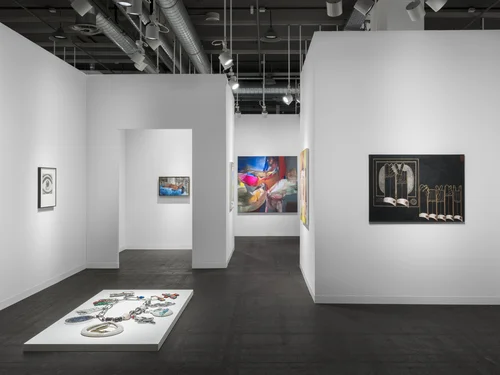
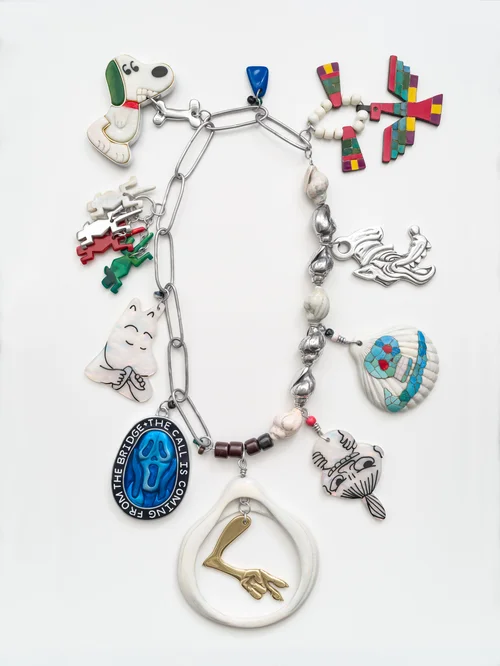
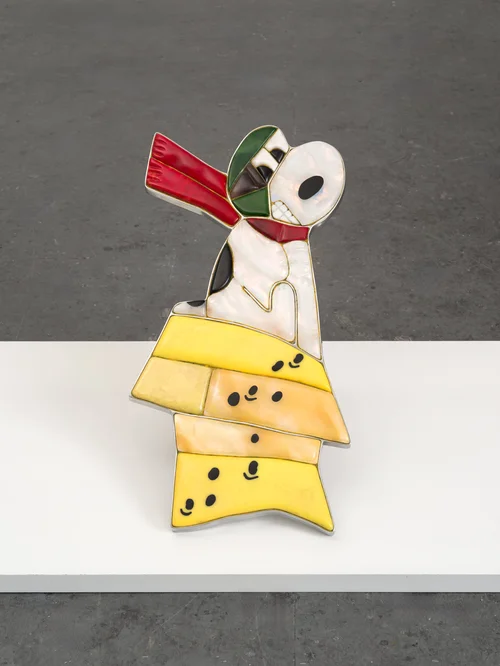
P.P.O.W’s booth has everything: historical figures, mid-career names, and some of the gallery’s youngest artists, offering a concise summary of the New York gallery’s dynamic program. Works by Carolee Schneemann, David Wojnarowicz, Martin Wong, and Dotty Attie give the presentation its historical anchors. Meanwhile Grace Carney’s painting Turn of the Screw (2026) and Ishi Glinsky’s sculptural charm necklace Cool Crew #3 (2026) show that lineage alongside a more contemporary register of abstraction, identity, and material storytelling.
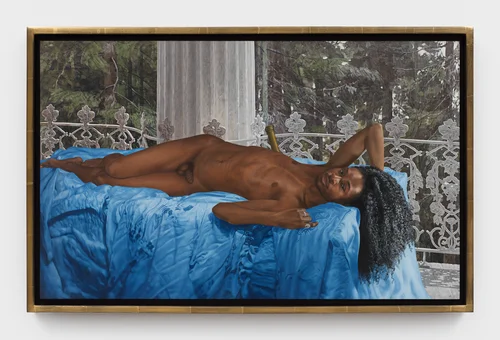
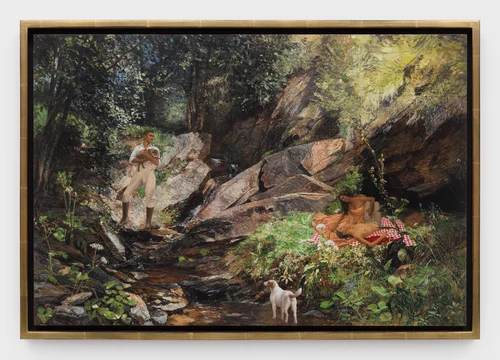
The booth’s gravitational center, however, is its presentation of new paintings by Hilary Harkness. The works belong to the artist’s ongoing “Prisoners from the Front” series, which began with her encounter with Winslow Homer’s Civil War painting of the same name at the Metropolitan Museum of Art. From that source, Harkness has developed an elaborate fictional world around Arabella Freeman, a free, landowning Black woman in Virginia, using historical painting as a stage to reimagine power, privacy, and queer desire.
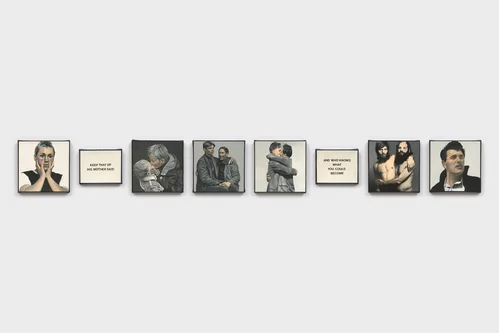
Crazy Love I, 2009
Dotty Attie
P.P.O.W
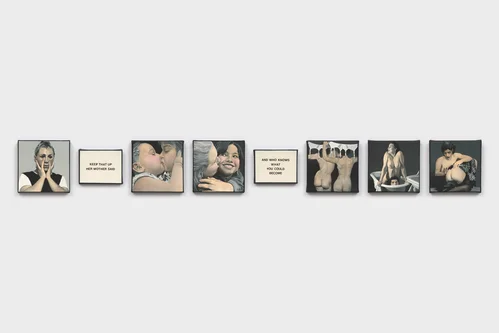
Crazy Love II, 2009
Dotty Attie
P.P.O.W
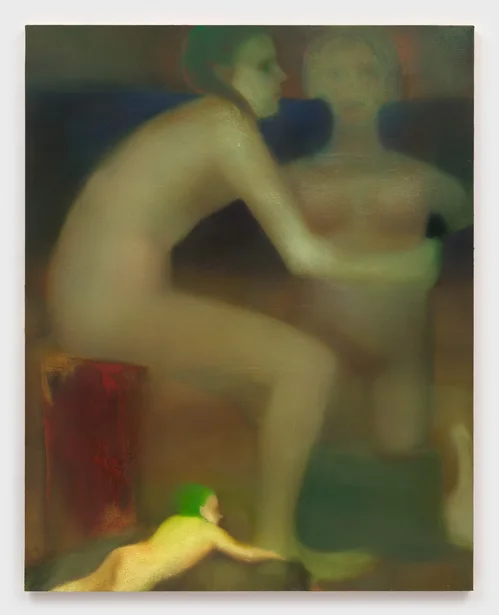
In Labor, 2025
Elizabeth Glaessner
P.P.O.W
Cool Crew #3, 2026
Ishi Glinsky
P.P.O.W
Attack Now, 2026
Ishi Glinsky
P.P.O.W
Moses, 2026
Hilary Harkness
P.P.O.W
Her Land, Her Love, 2026
Hilary Harkness
P.P.O.W
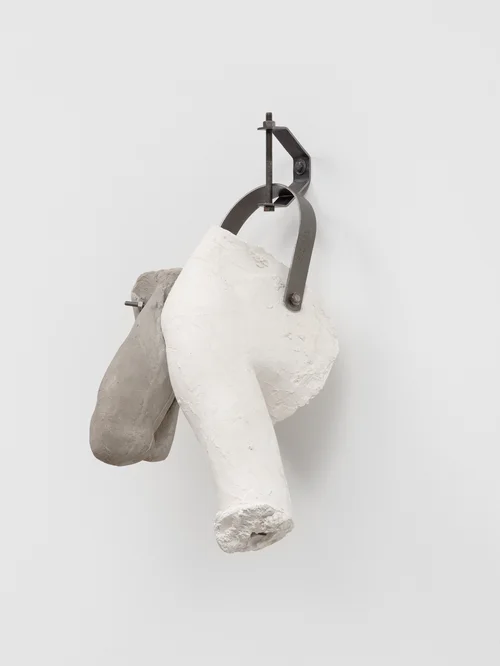
Flesh in Stone – Ghost No.11, 2026
Yu Ji 于吉
P.P.O.W

Peace Offering, 2025
Sanam Khatibi
P.P.O.W
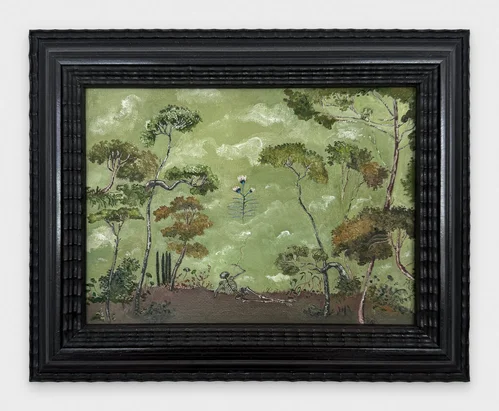
As Old As the Hills, 2026
Sanam Khatibi
P.P.O.W
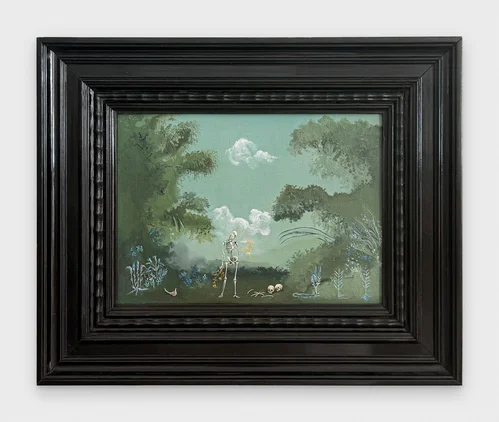
Treason, 2026
Sanam Khatibi
P.P.O.W
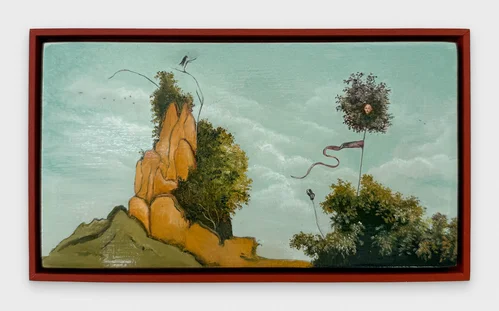
Genesis, 2025
Sanam Khatibi
P.P.O.W

The East Wind, 2025
Sanam Khatibi
P.P.O.W

Tijuana Retablo, 2023 / 2026
Guadalupe Maravilla
P.P.O.W
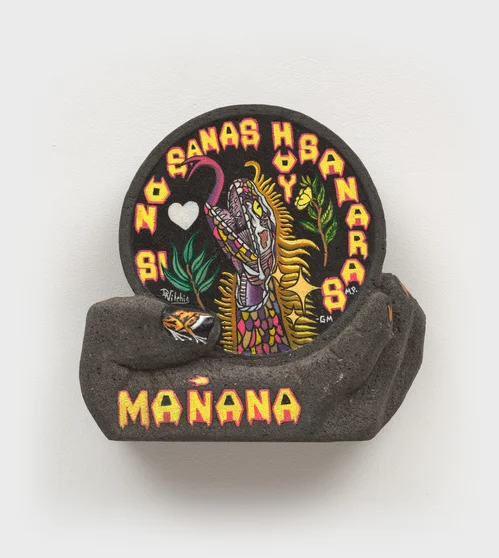
Si No Sanas Hoy Sanarás Mañana, 2024
Guadalupe Maravilla
P.P.O.W
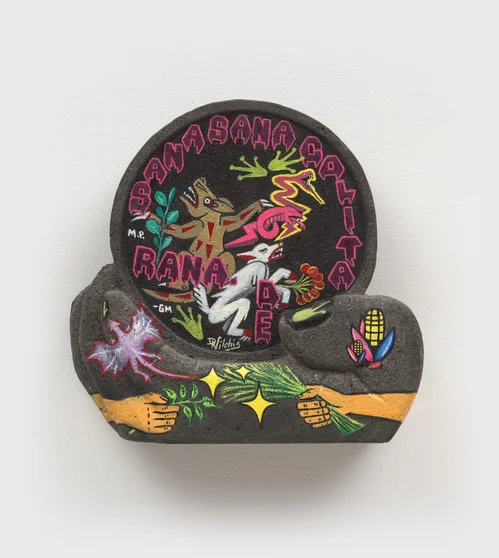
Sana Sana Colita de Rana, 2024
Guadalupe Maravilla
P.P.O.W
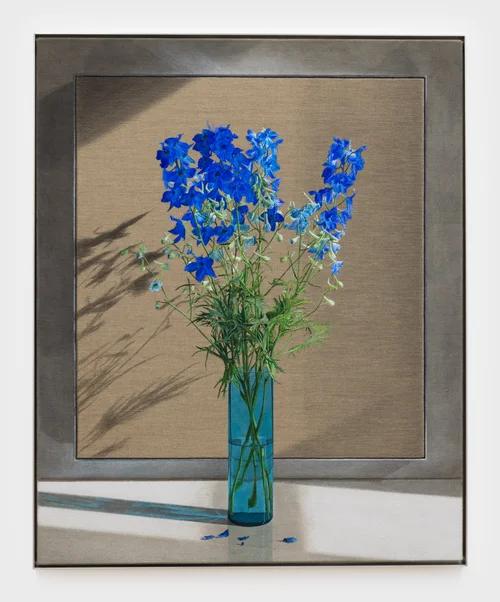
Delphinium, 2026
Michael Wilkinson (b. 1965)
P.P.O.W
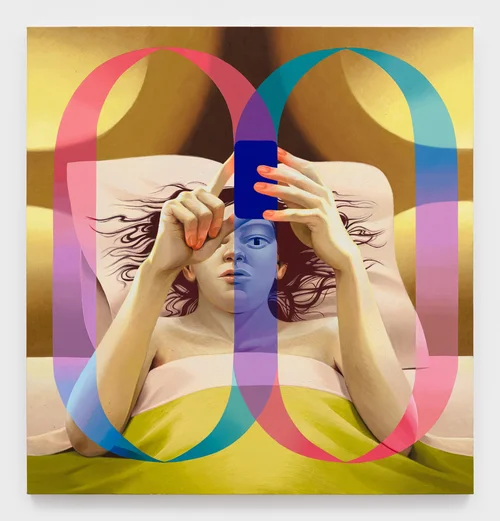
Infinite Scroll, 2026
Robin F. Williams
P.P.O.W
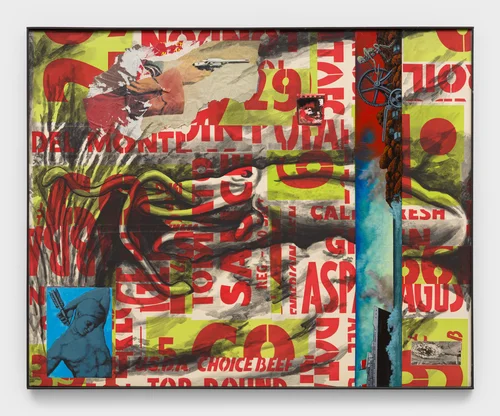
My Father Was a Sailor/My Father was the Century, 1998-89
David Wojnarowicz
P.P.O.W
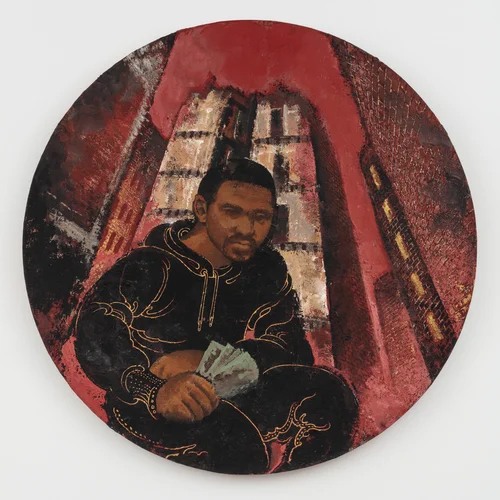
In the Money, 1986
Martin Wong
P.P.O.W
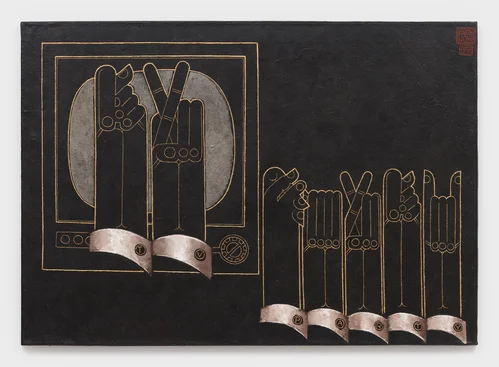
TV Party, 1988
Martin Wong
P.P.O.W
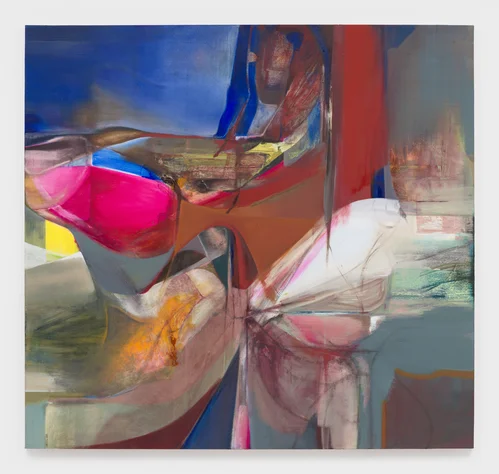
Turn of the Screw, 2026
Grace Carney
P.P.O.W
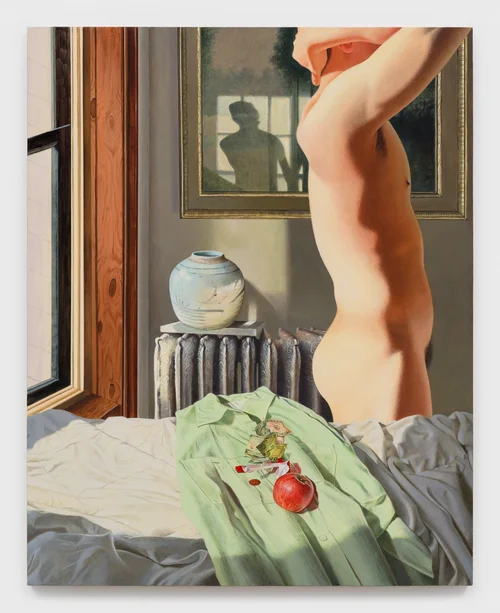
Algiers Point, 2026
Kyle Dunn
P.P.O.W
In her painting Moses (2026), the artist Moses Leonardo poses as Arabella, lounging in a lush landscape adapted from 19th-century Russian “mood landscape” painting. As gallery director Eden Deering explained, Harkness invents her characters “almost like theater” within these borrowed landscapes, building a narrative so elaborate it can feel like “its own romance novella.”
Galerie Christophe Gaillard
Booth F18
With works by Tetsumi Kudo, Hélène Delprat, Folkert de Jong, Julien des Monstiers, Pierre Molinier, Hans Bellmer, Germaine Richier, Anita Molinero, Maryan, Bernard Réquichot, Smith, Ursula, César, Niki de Saint Phalle, and Leo Orta
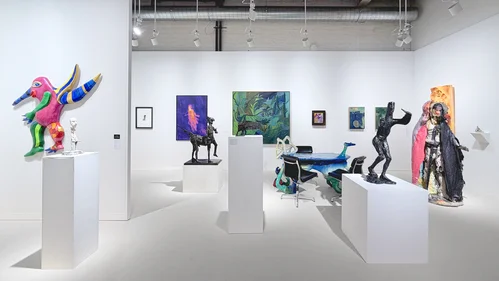
Is it a bird? A plane? A mythic creature? Nope, it’s Galerie Christophe Gaillard’s Basel Exclusive work by Niki de Saint Phalle, priced between €100,000 and €140,000 ($116,170 and $162,638). Mounted high on the wall like a fantastical creature mid-flight, the wall work gives its presentation an immediate jolt of color, humor, and theatricality.
Throughout the booth are works that depict the body as unstable, monstrous, and mutable. In one corner, Folkert de Jong’s life-size statue Salomé (in transition) (2025) looms like a figure from a ruined pageant, a creepy reference to religious figures with its multimedia patchwork of pieces. Nearby, César’s bronze Le Centaure, Hommage à Picasso (1983–87) makes the mythical hybrid creature monumental. There are other raw, fantastical paintings of distorted faces and forms, in Maryan’s 1967 Untitled, priced between €30,000 and €40,000 ($34,851 to $46,468) and Ursula’s 1993 Untitled.
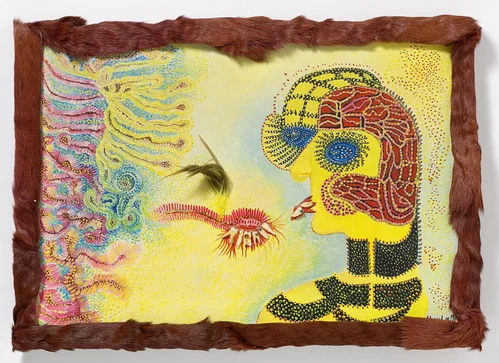
In Erwartung der Blütenzunge, 1970
Ursula
Galerie Christophe Gaillard
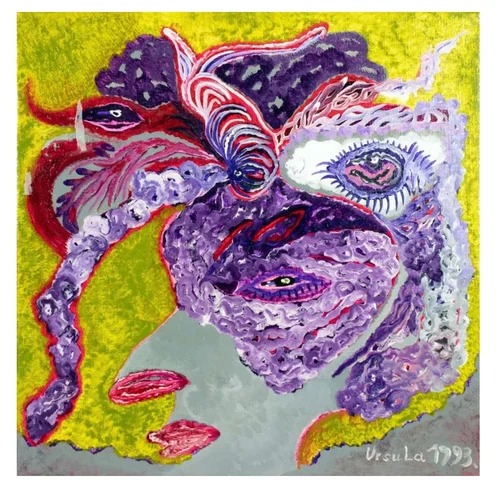
Untitled, 1993
Ursula
Galerie Christophe Gaillard
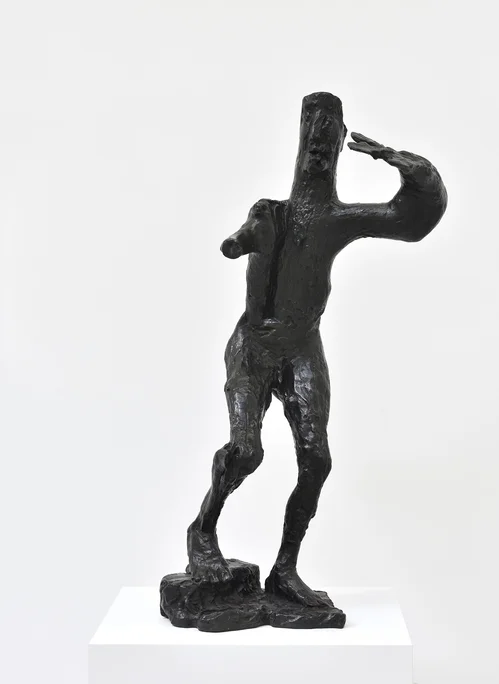
L’homme-Forêt, grand, 1945-1946
Germaine Richier
Galerie Christophe Gaillard
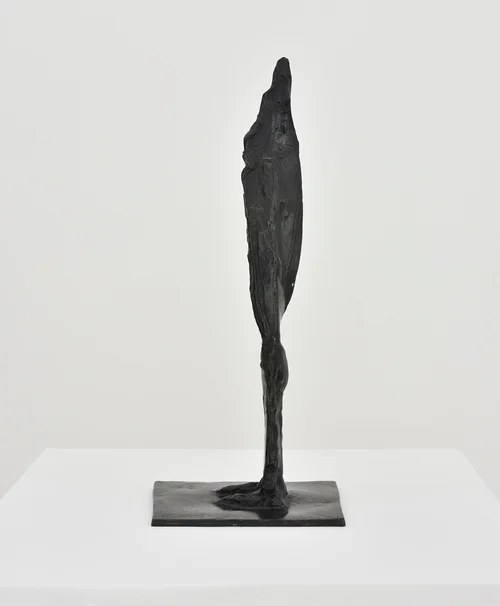
Guerrier n°13, 1956
Germaine Richier
Galerie Christophe Gaillard
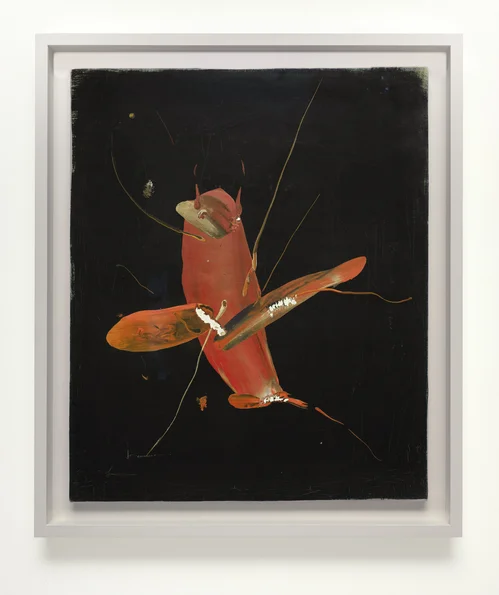
Untitled, 1955-1957
Bernard Réquichot
Galerie Christophe Gaillard
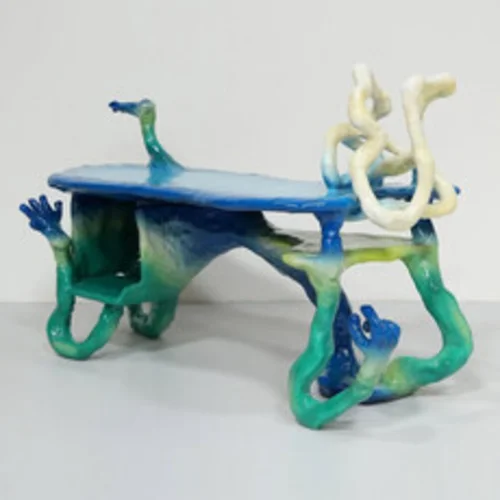
Untitled, 2025
Leo Orta
Galerie Christophe Gaillard
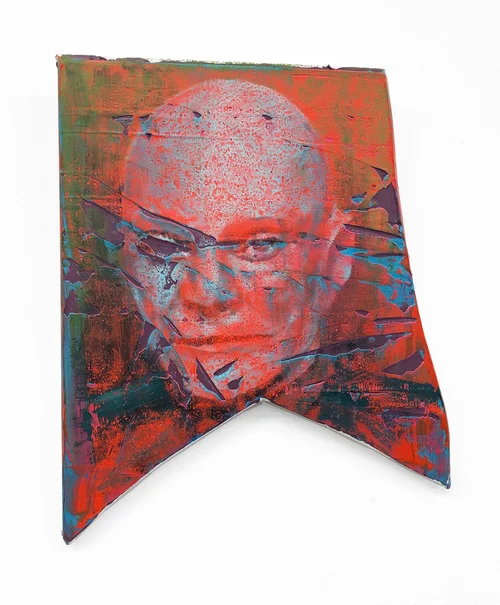
Sans titre, (Fantômas), 2020
Julien Des Monstiers
Galerie Christophe Gaillard
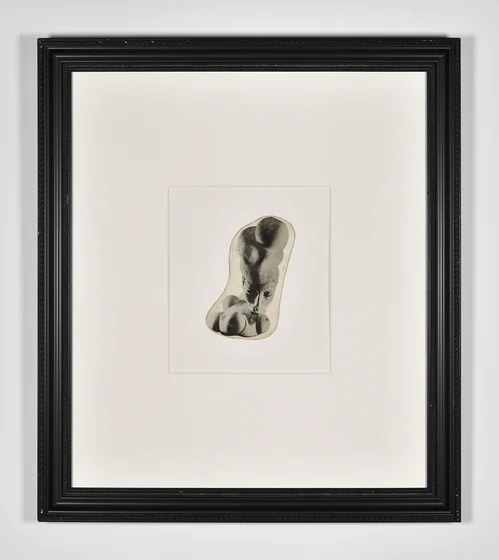
Nous la suivons à pas lents (Les jeux de la poupée), 1937-1949
Hans Bellmer
Galerie Christophe Gaillard

Petit bec – L'oeuf d'amour, 1962
Pierre Molinier
Galerie Christophe Gaillard
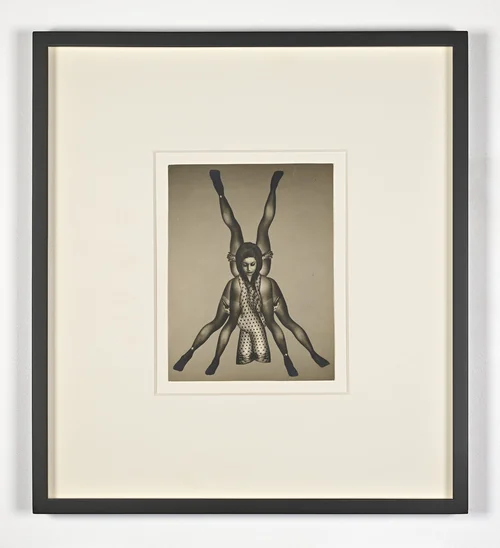
Féminin pluriel est triste, 1968
Pierre Molinier
Galerie Christophe Gaillard
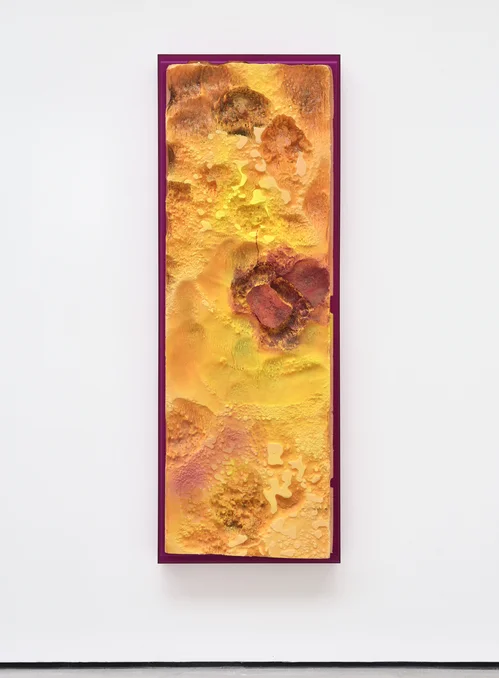
Croûûûte criarde saison rose , 2021-2022
Anita Molinero
Galerie Christophe Gaillard
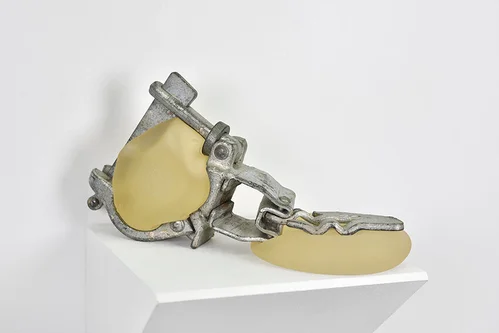
Untitled, 2022
Anita Molinero
Galerie Christophe Gaillard
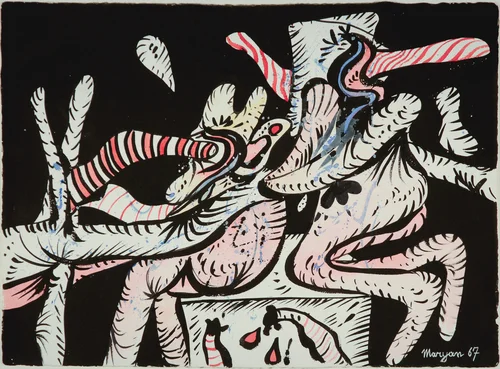
Untitled, 1967
Maryan
Galerie Christophe Gaillard
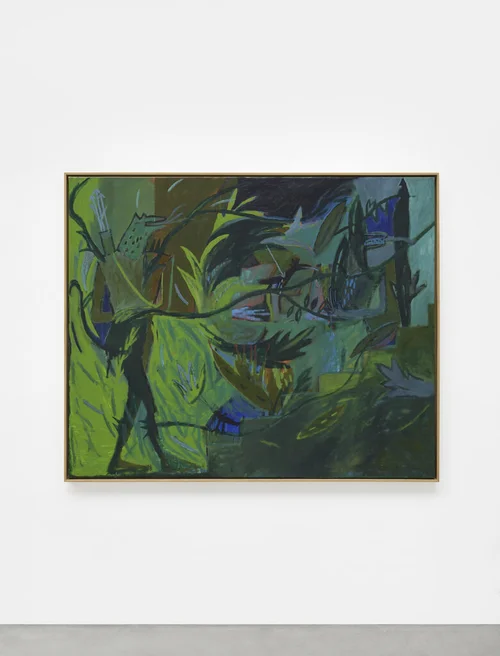
Chasse exotique, 1983 (juillet)
Hélène Delprat
Galerie Christophe Gaillard

Bras, 1996 (juillet)
Hélène Delprat
Galerie Christophe Gaillard
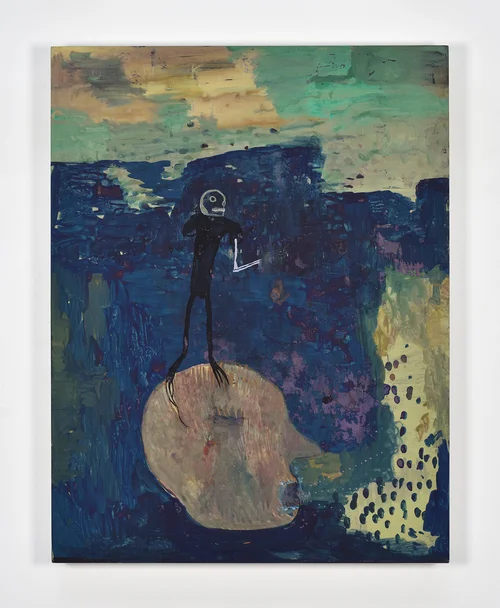
Untitled, 1998
Hélène Delprat
Galerie Christophe Gaillard
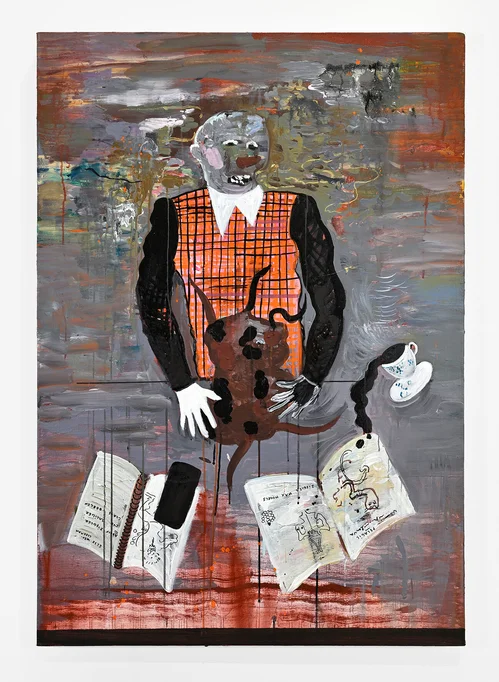
Autoportrait en savant fou, 2025
Hélène Delprat
Galerie Christophe Gaillard

Untitled (Dami, Fulmen), 2023
SMITH
Galerie Christophe Gaillard
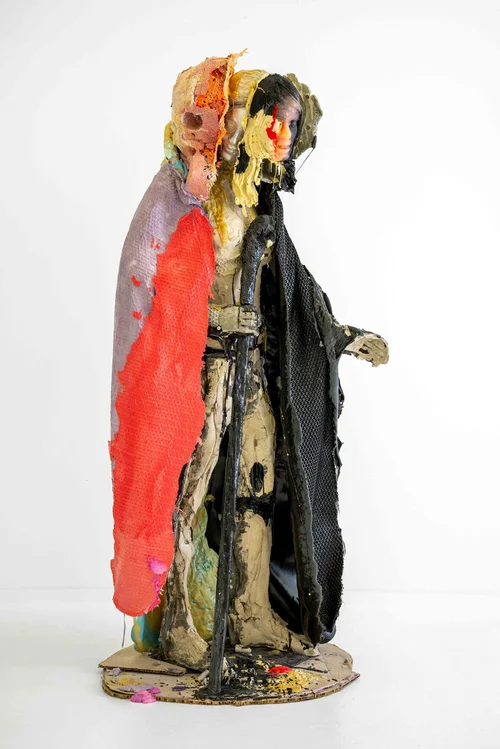
Salomé (in transition), 2025
Folkert de Jong
Galerie Christophe Gaillard
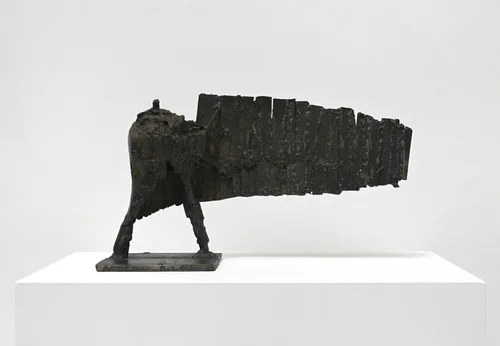
Petit Valentin, 1957
César
Galerie Christophe Gaillard
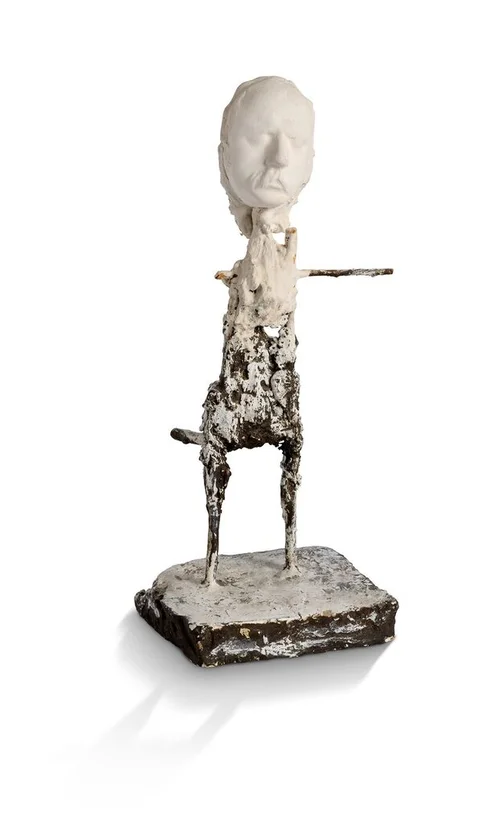
Double autoportrait, n.d.
César
Galerie Christophe Gaillard
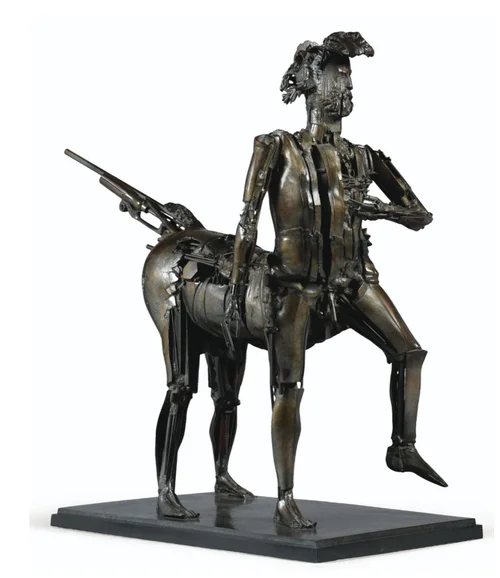
Le Centaure, Hommage à Picasso, 1983-1987
César
Galerie Christophe Gaillard
Elsewhere, Hélène Delprat’s Autoportrait en savant fou (2025) casts the artist as a mad scientist in a world of her own imagining, while Leo Orta’s functional, creature-like desk Untitled (2025)—which gallery staffers were sitting around on VIP day—is both furniture and sculpture, but could almost be an organism.
KOSAKU KANECHIKA
Booth M8
With works by Ataru Sato

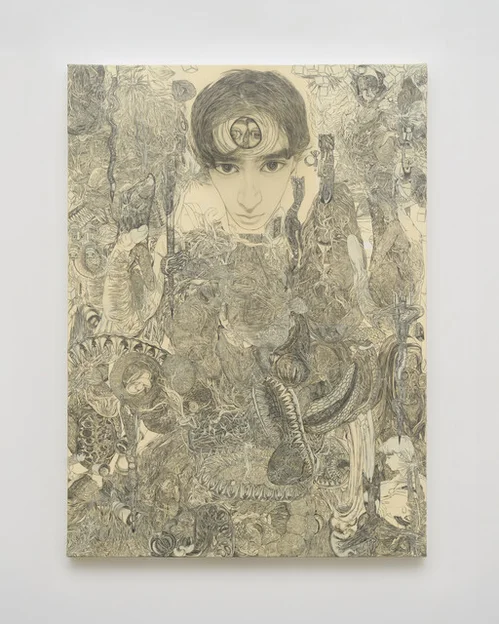
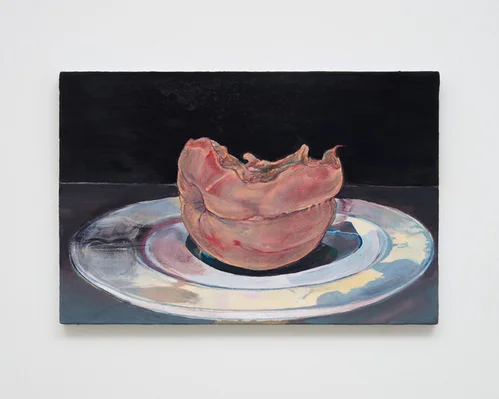
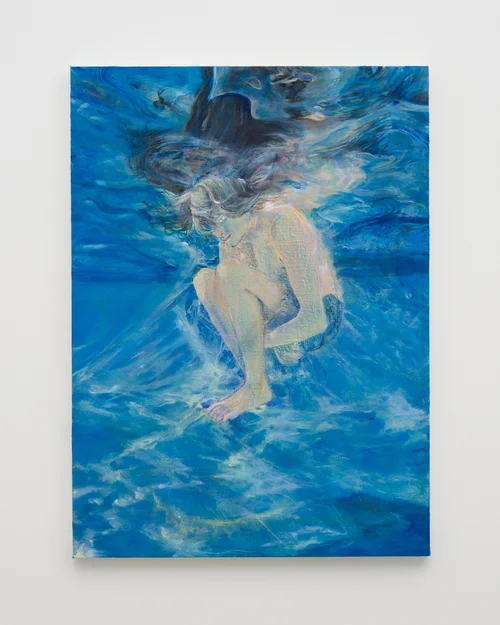
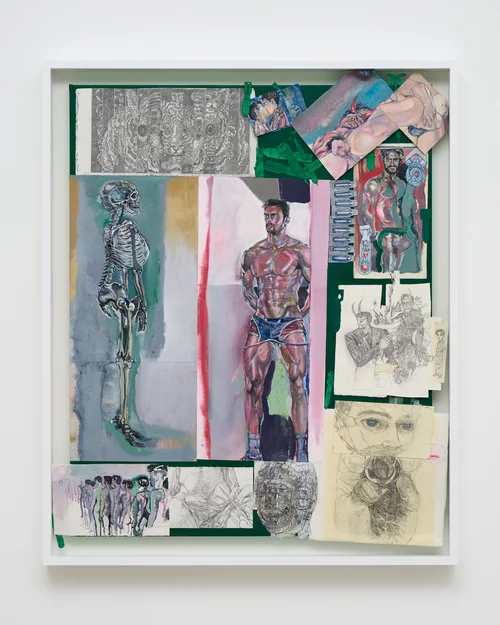
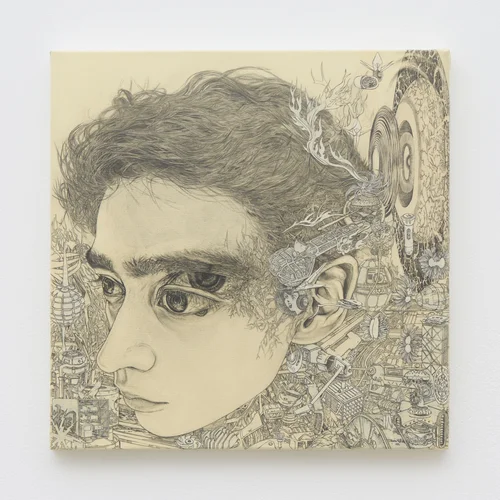
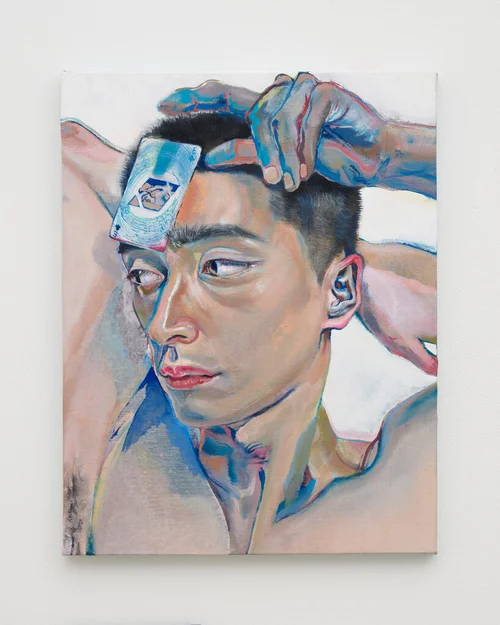
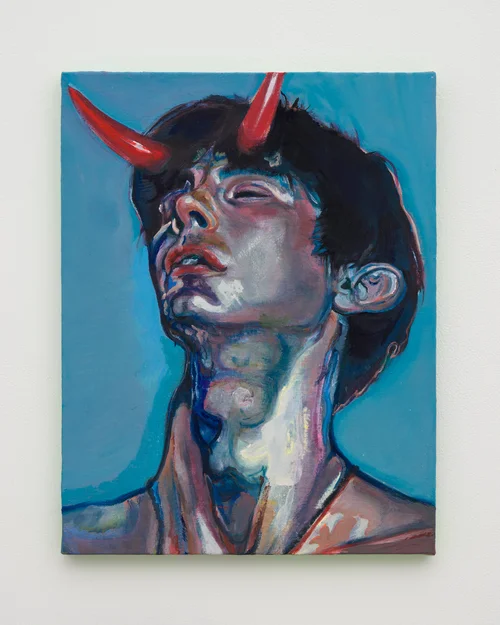
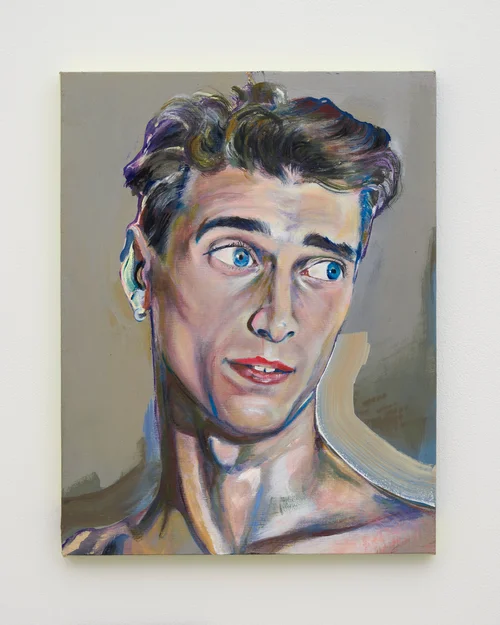
KOSAKU KANECHIKA’s solo presentation of Ataru Sato in the fair’s Statements section is densely packed with artworks. Installed as a box room with a single gap in the wall, the booth is accessible only through this opening: what the artist calls a “small window open to others.” Inside, the space is packed with paintings and drawings, many of them intimate portraits of subjects with arresting gazes.
Sato calls the installation “The Box,” describing it as a space shaped to represent his own body. The front wall, covered with small works and punctured by an entrance, acts as a barrier (or, for Sato, his skin). Inside, paintings such as Transparent (2026) and Naked Fruit No. 22 (2026) show how portraits can evoke exposure and transformation: These are vulnerable depictions of flushed skin, sharpened eyes, open mouths, devil horns, bare necks, and charged gestures.
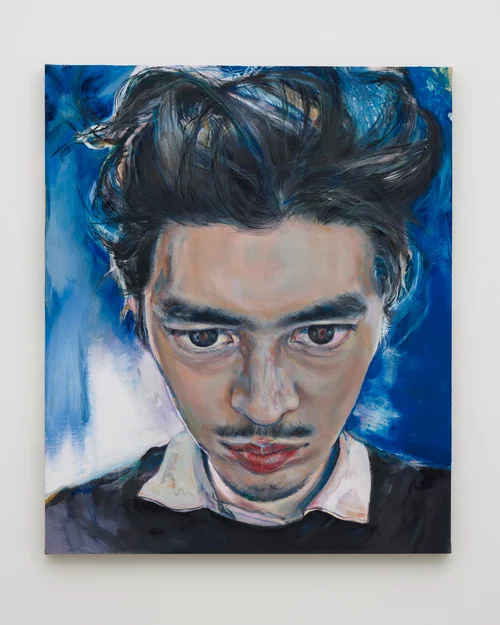
Transparent, 2026
Ataru Sato
KOSAKU KANECHIKA
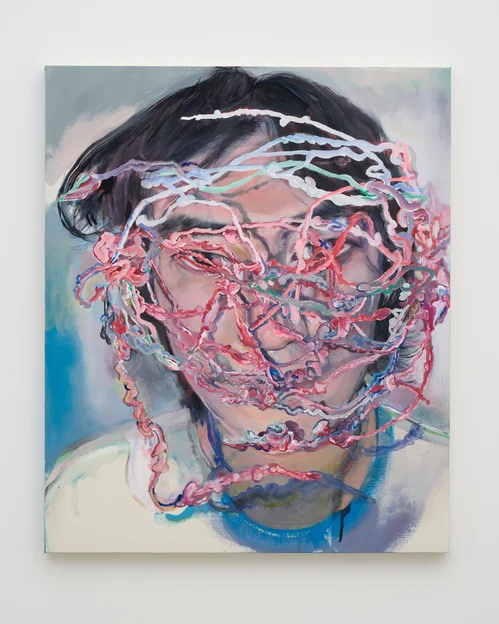
The Silent Cry, 2026
Ataru Sato
KOSAKU KANECHIKA
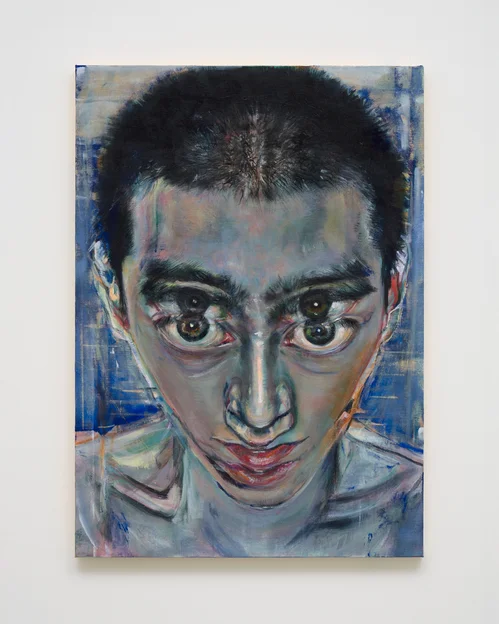
In der Nacht, 2025
Ataru Sato
KOSAKU KANECHIKA
Never more, 2026
Ataru Sato
KOSAKU KANECHIKA
Lemon, 2025
Ataru Sato
KOSAKU KANECHIKA
Never mind, 2026
Ataru Sato
KOSAKU KANECHIKA

Untitled, 2025
Ataru Sato
KOSAKU KANECHIKA
Voice Specimen, 2026
Ataru Sato
KOSAKU KANECHIKA
Hope you feel better soon, 2025
Ataru Sato
KOSAKU KANECHIKA
Naked fruit No.21, 2026
Ataru Sato
KOSAKU KANECHIKA
Naked fruit No.22, 2026
Ataru Sato
KOSAKU KANECHIKA
Naked fruit No.23, 2026
Ataru Sato
KOSAKU KANECHIKA
The booth could be quite claustrophobic. Its grid of painted faces feels like a crowd, while nearby drawings of eyes create piercing, almost surgical sensations. Sato makes looking feel reciprocal, awkward, and exposed: The portraits stare back from every side, and their accumulation turns the booth’s interior into a zone of confrontations. Prices for works range from $6,000 to $15,000 apiece.
Esther Schipper
Booth S1
With works by Anicka Yi, Saâdane Afif, Tauba Auerbach, Rosa Barba, Stefan Bertalan, Merikokeb Berhanu, Julius von Bismarck, Norbert Bisky, Martin Boyce, Sarah Buckner, Etienne Chambaud, David Claerbout, Thomas Demand, Simon Fujiwara, Ryan Gander, Pierre Huyghe, Ann Veronica Janssens, Karolina Jabłońska, Lotus L. Kang, Tomasz Kręcicki, Sojourner Truth Parsons, Tuan Andrew Nguyen, Philippe Parreno, Ugo Rondinone, Julia Scher, Rafa Silvares, and Hito Steyerl.

Esther Schipper’s booth is designed like a navigational system. Conceived around the idea of a compass, the presentation is divided into routes—North, West, East, and South—that guide visitors through a maze-like arrangement of compartments, each opening onto a different group of works. Enter from one direction and Pierre Huyghe’s film Of Ideal (2019), which uses AI to meld together amorphous shapes and figures, comes into view. Approach from another and Philippe Parreno’s new installation Marquee (2026), a flickering porch roof resembling a cinema entrance, takes over, turning the booth into a fun exercise in orientation and discovery.
Rather than flatten the range of its artists into a single fair-friendly hang, Esther Schipper uses architecture to give these major works room to operate. Around them, the presentation moves between monumental and uncanny themes: Ugo Rondinone’s massive the earthly + the celestial (2026) sculpture, for example, turns stacked stone forms into a pair of archaic figure-like shapes.
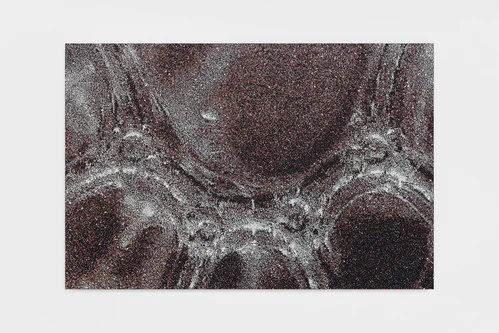
Foam, 2026
Tauba Auerbach
Esther Schipper
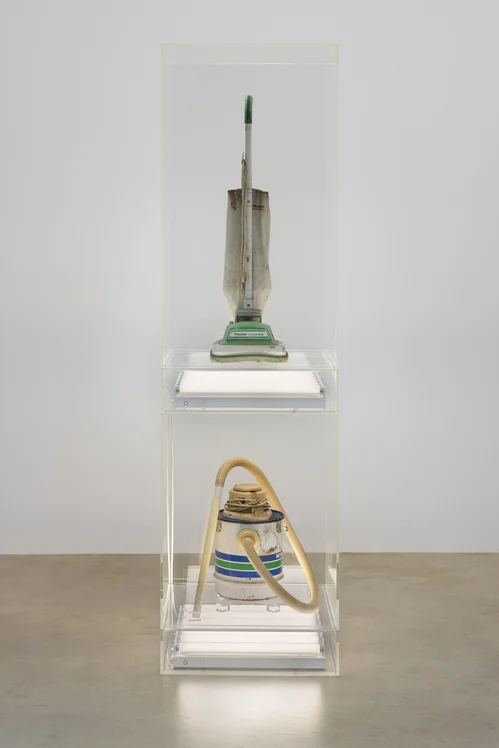
Old Shelton Wet/Dry 5 Gallon, Old Hoover Convertible Doubledecker, 2026
Saâdane Afif
Esther Schipper
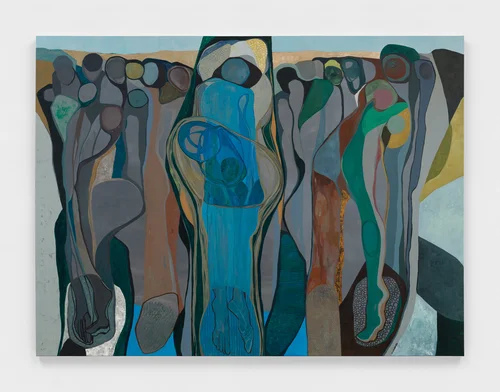
Untitled CXIII, 2026
Merikokeb Berhanu
Esther Schipper
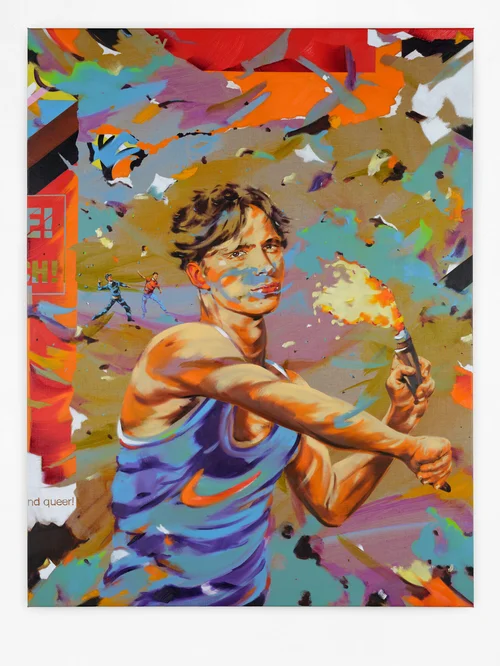
Fire, 2026
Norbert Bisky
Esther Schipper
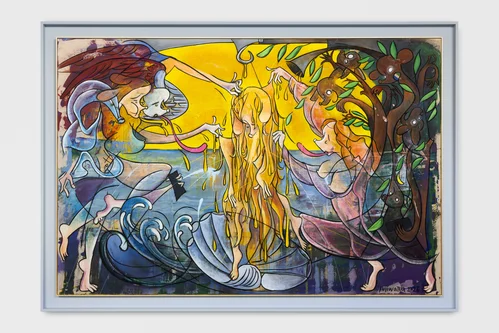
The Birth and Rebirth, and Rebirth of Who?, 2026
Simon Fujiwara
Esther Schipper
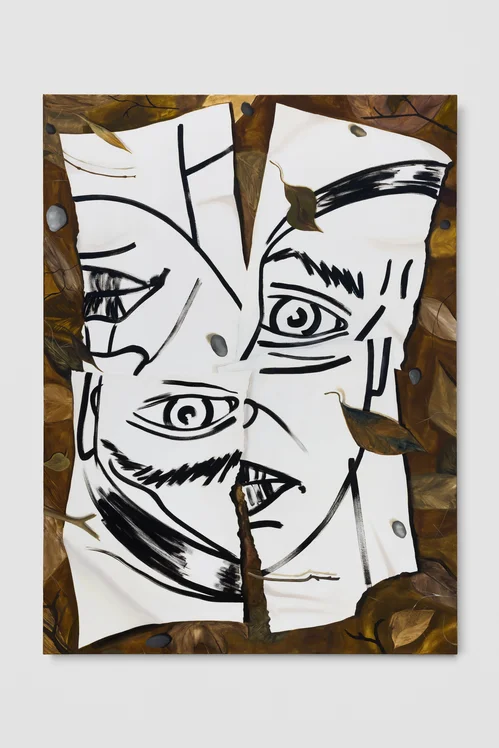
Ripped Self-Portrait, 2026
Karolina Jabłońska
Esther Schipper
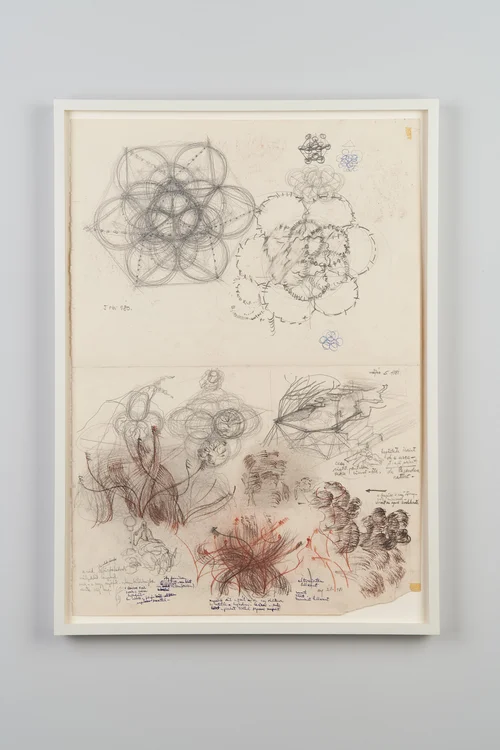
Untitled, 1980-1981
Stefan Bertalan
Esther Schipper

the earthly + the celestial, 2026
Ugo Rondinone
Esther Schipper
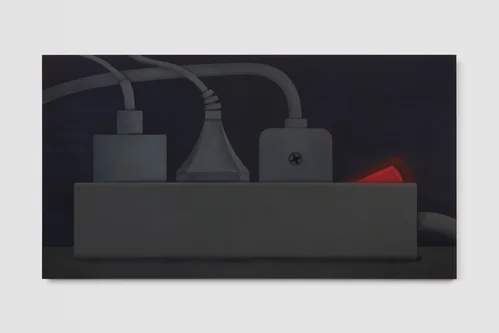
Power Strip, 2026
Tomasz Kręcicki
Esther Schipper
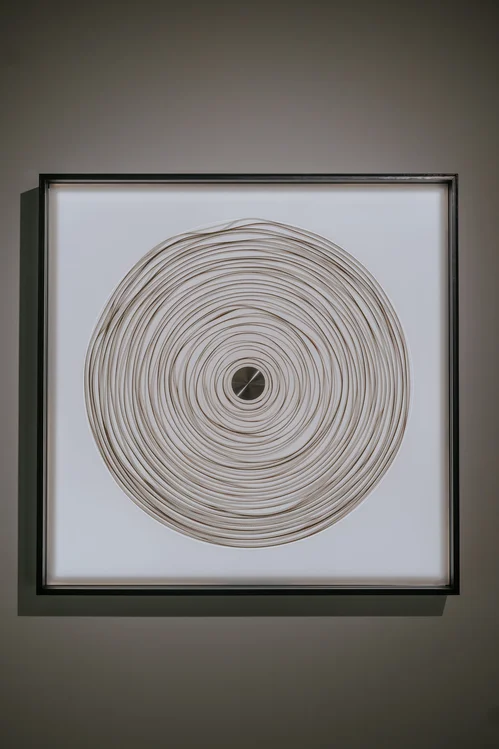
Thick Harmonies, 2026
Rosa Barba
Esther Schipper
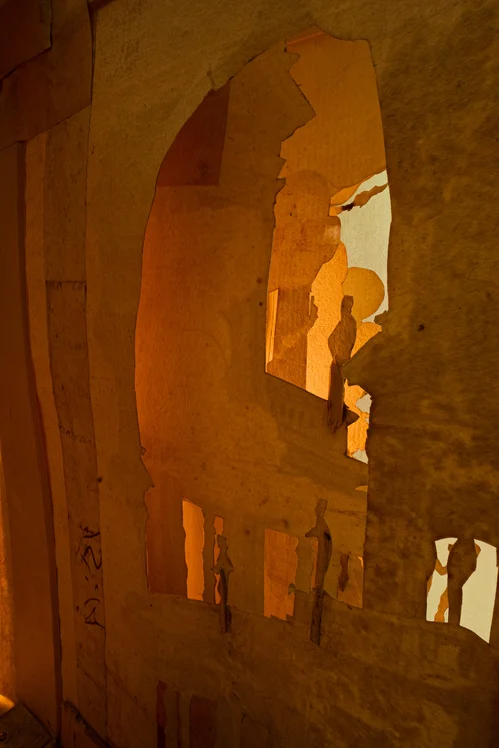
Reggia d'Apollo XIII, 2026
Thomas Demand
Esther Schipper
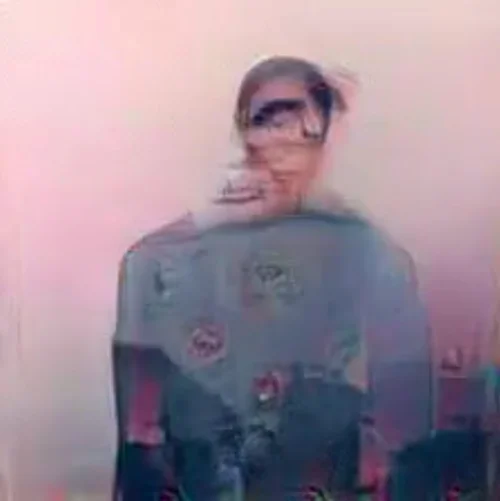
Of Ideal, 2019-ongoing
Pierre Huyghe
Esther Schipper
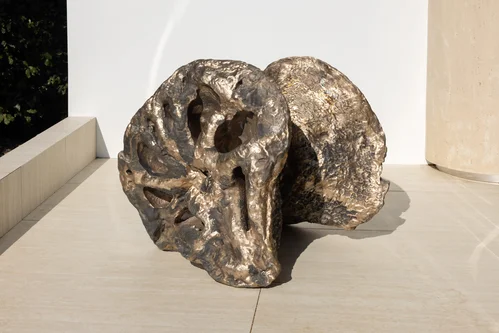
Root II, 2026
Lotus L. Kang
Esther Schipper
Elsewhere, Tauba Auerbach’s standout Pointillist painting Foam (2026) depicts the titular material in close detail, while Saâdane Afif’s Old Shelton Wet/Dry 5 Gallon, Old Hoover Convertible Doubledecker (2026) stacks two obsolete vacuum cleaners into a glowing, deadpan monument that humorously recasts Jeff Koons’s similarly named work.
As Florian Wojnar, co-owner of the gallery, put it, Art Basel remains the place where the gallery can present “major works” under the right conditions. Its compartments slow the viewer down, creating pockets of attention within the fair’s broader rush. Prices range from $10,000 to $1 million apiece.
acb
Booth D5
With works by Endre Tót

Endre Tót’s works comprise materials of correspondence, such as typewritten questionnaires, stamped sheets, annotated replies, postcards, artist documents, vitrines, and wall-mounted archival works. The focus of Budapest gallery acb’s presentation is Tót’s mail art of the 1970s, when, working under the restrictions of socialist Hungary, he used the postal system as a way to reach artists abroad and turn bureaucracy itself into a medium. As Fruzsina Kigyós of the gallery explained, Tót’s mail-art projects began as a way to overcome the isolation of the Iron Curtain, allowing him to “connect” with foreign artists when direct contact was otherwise nearly impossible.
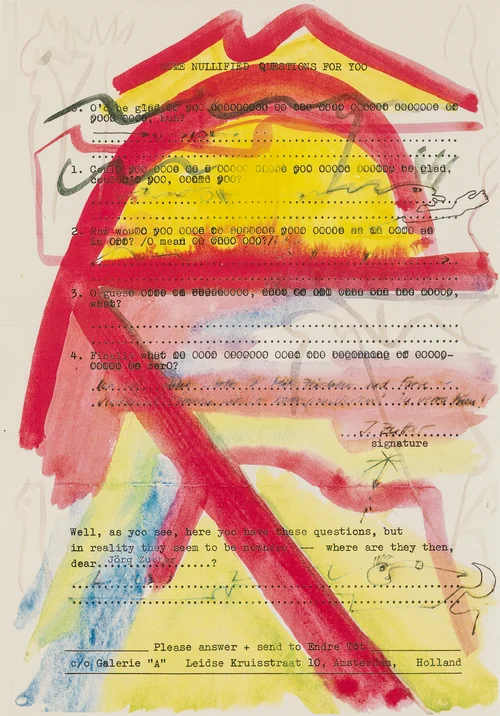
Some nullified questions for yoo / Amsterdam (J. Zutter), 1978
Endre Tót
acb
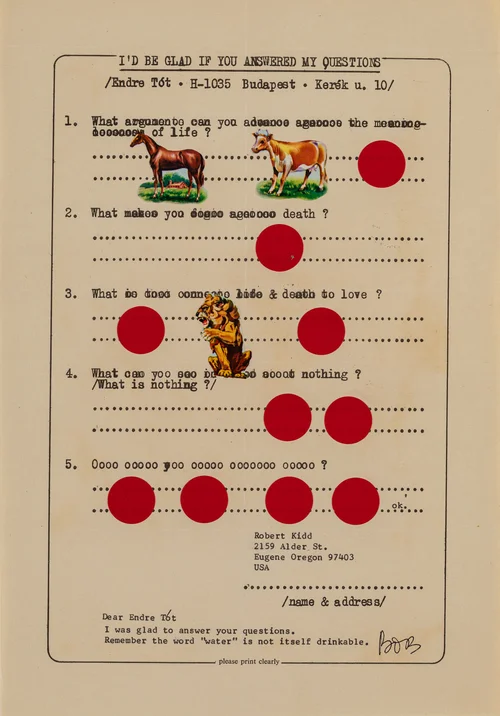
I'd be glad if you answered my questions (Robert Kidd), 1974
Endre Tót
acb
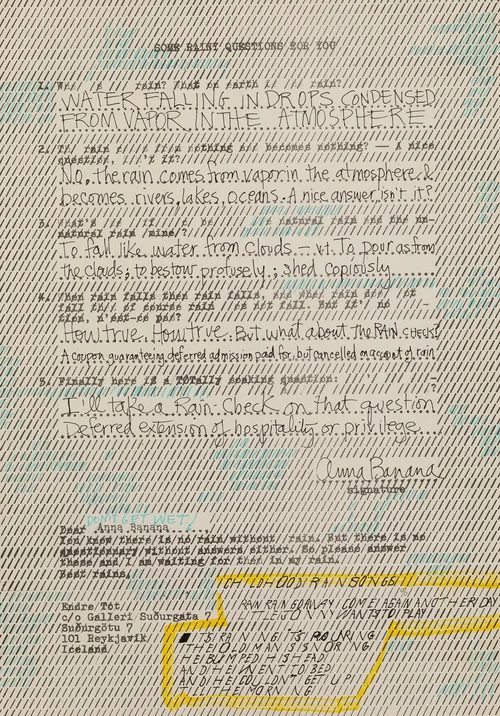
Some rainy questions for you / Anna Banana, 1978
Endre Tót
acb
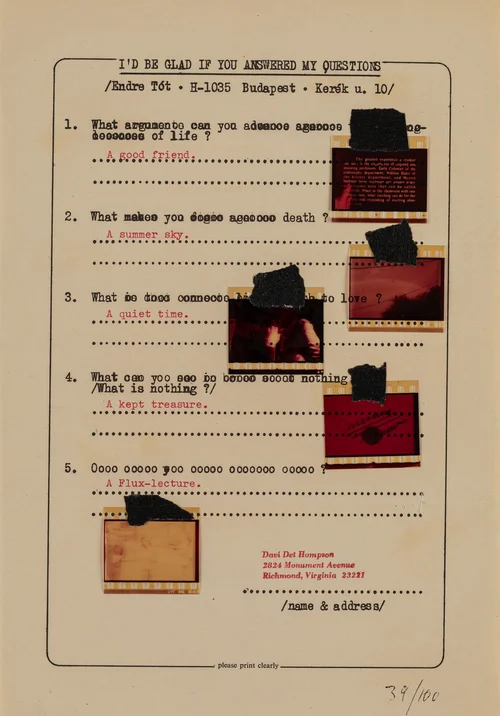
I'd be glad if you answered my questions (Davi Det Hompson), 1974
Endre Tót
acb
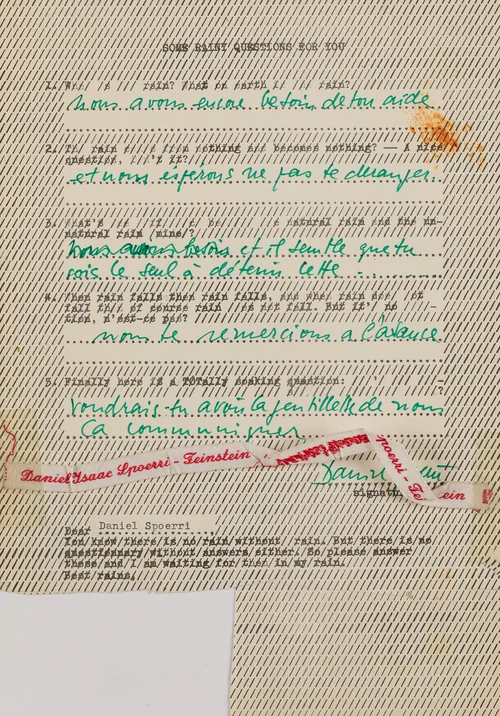
Some rainy questions for you / Daniel Spoerri, 1978
Endre Tót
acb

Some rainy questions for you / Janusz Ostrowski, 1978
Endre Tót
acb
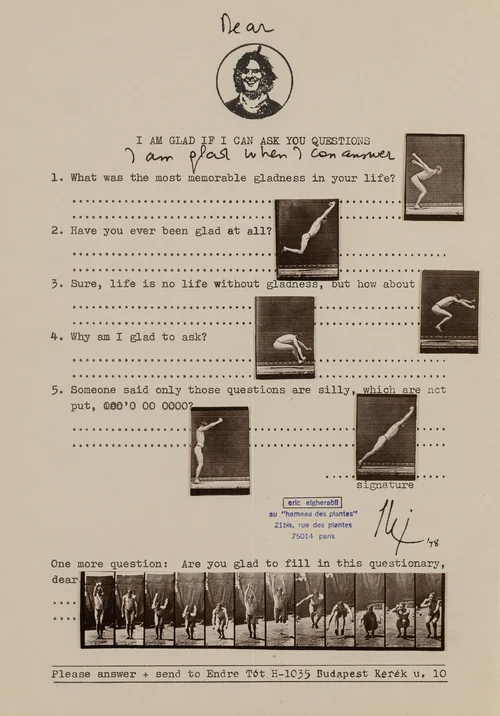
I am glad if I can ask questions (Eric Elgherabli), ca. 1975
Endre Tót
acb
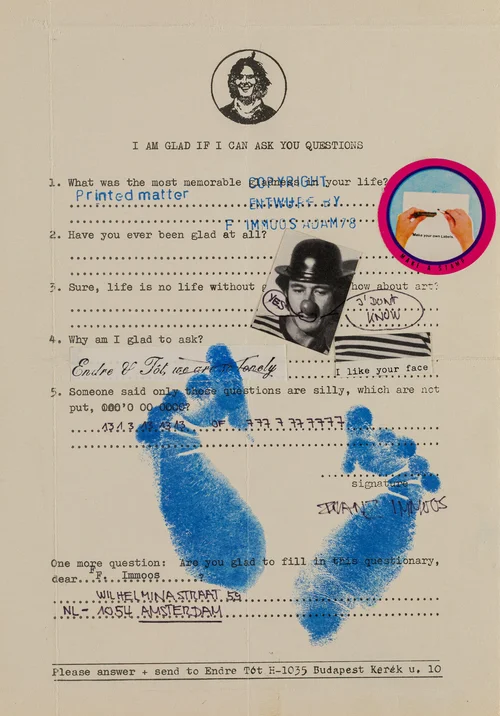
I am glad if I can ask questions / Franz Immoos, ca. 1975
Endre Tót
acb
Tót’s questionnaire projects took the form of printed sheets that he mailed to artists, asking them to respond to deliberately absurd prompts about life, death, and love, as well as subjects like rain, communication, and “nothing.” In Some nullified questions for yoo / Amsterdam (J. Zutter) (1978), a typed questionnaire is overlaid with loose washes of red, yellow, pink, and blue, the questions rubbed out or partly obscured by zeros and doodles. In Some rainy questions for you / Janusz Ostrowski (1978), the page is covered in Tót’s repeated slash-mark “rain,” with orange labels reading “a Polish Pope” standing in for answers, turning the questionnaire into an absurd visual poem of weather and politics. These works are priced at €7,000 ($8,113) apiece.
David Kordansky Gallery
Booth S2
With works by Huma Bhabha, Lucy Bull, Martha Diamond, Sam Gilliam, Sayre Gomez, Jenna Gribbon, Lauren Halsey, Rashid Johnson, Deana Lawson, Tala Madani, Adam Pendleton, Mai-Thu Perret, Torbjørn Rødland, Chico da Silva, Keith Sonnier, Tom of Finland, Richard Tuttle, Mary Weatherford, Jonas Wood, and Betty Woodman
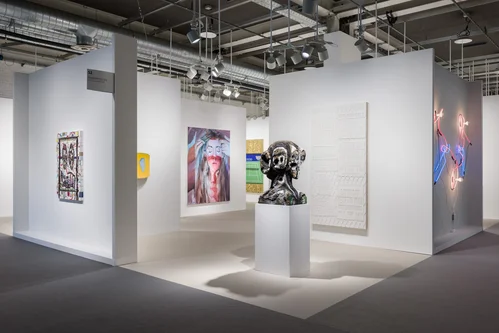
David Kordansky Gallery’s booth offers a polished showcase of major works by some of its strongest artists, led by two Basel Exclusive presentations placed on its exterior: Sam Gilliam’s expansive painting A Warmth, Lightness, A Glow and Then (1968), priced at “around” $3 million, and Keith Sonnier’s sculpture Neon Wrapping Incandescent VI (1968). Together, they offer two of the most exciting finds of the fair’s Exclusive initiative, pairing Gilliam’s expansive, atmospheric abstraction with Sonnier’s early investigation of neon, combining porcelain fixtures, incandescent bulbs, and electrical infrastructure.
From there, the booth opens into a confident cross-section of the gallery’s program. It includes Betty Woodman’s bright, fractured ceramic vessel, depicting faces, Scandinavia (2000), a combination of painting, sculpture, and design. Huma Bhabha’s totemic sculpture Come Drink with Me (2018), by contrast, delivers a rougher presence, its cork, acrylic, oil stick, and MDF body evoking a statue that has been unearthed.
The newest works on view are equally sharp. Jonas Wood’s painting Nintendo #4 (2026) turns a retro video-game tennis court into a flat, graphic field of nostalgia and pattern, while Lucy Bull’s painting 13:09 (2026) offers a very different kind of optical immersion, with its turbulent brushstrokes and flickering depth. Another highlight, Lauren Halsey’s hand-carved gypsum relief, Untitled (2026), references signage and architecture, remembered from the artist’s own L.A. neighborhood into a luminous white-on-white surface. It is simply a strong booth by a gallery that knows how to put its best material forward.
Galerie Bene Taschen
Booth B2
With works by Gregory Bojorquez, Joseph Rodriguez, Sebastião Salgado, Jamel Shabazz, Miron Zownir, and Arlene Gottfried
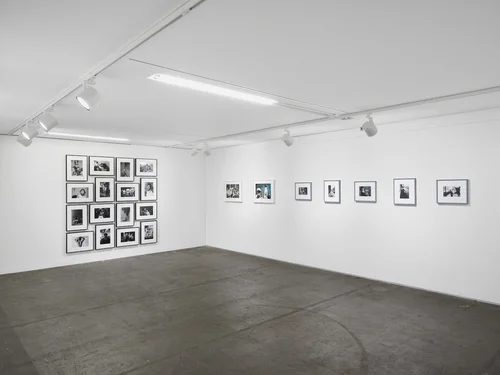
Galerie Bene Taschen’s booth stands apart at Art Basel with its emphasis on photography. In this tightly focused survey of documentary image-making, works portray New York, Los Angeles, Mexico City, Berlin, and Brazil, but they share a commitment to the street as a place where social history comes into view.
The booth’s strongest works are all about human proximity. Jamel Shabazz’s Young Love, Flatbush, Brooklyn, NYC (1988) captures a couple in a moment of radiant self-possession. As Wiebke Bugiel of the gallery noted, Shabazz understood his photographs as a kind of “visual diary,” attentive not only to hardship but also to joy, personal style, and the histories of the people he photographed. Arlene Gottfried’s Untitled, NYC (1990), printed using the now-extinct method of Cibachrome, brings a saturated, almost tactile color to the everyday theater of New York life with its characters and streets, while Gregory Bojorquez’s black-and-white portrait Halloween Gangster Moll (1999) has the flash-lit immediacy of a scene caught by an insider, all attitude, performance, and Los Angeles nocturnal energy.
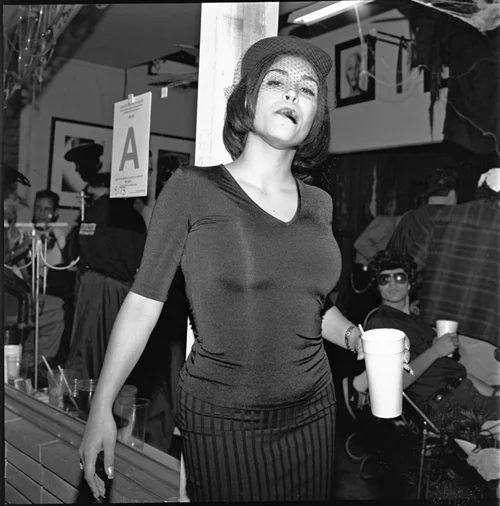
Halloween Gangster Moll, 1999
Gregory Bojorquez
Galerie Bene Taschen
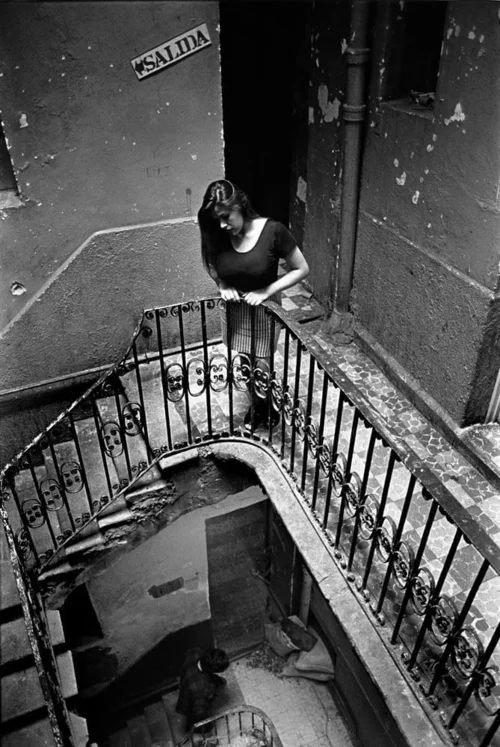
Norma is waiting on a customer as he walks up the stairs in her hotel. She is 18yrs old and has a young baby daughter who lives with her, La Merced, Mexico City, 1997
Joseph Rodriguez
Galerie Bene Taschen

Gold Mine of Serra Peleda, Pará, Brazil, 1986
Sebastião Salgado
Galerie Bene Taschen

Gold Mine of Serra Pelada, Pará, Brazil, 1986
Sebastião Salgado
Galerie Bene Taschen
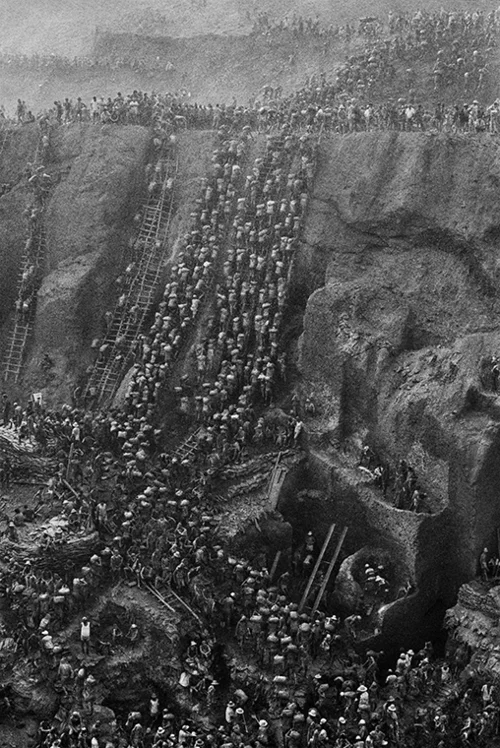
Gold Mine of Serra Pelada, Pará, Brazil, 1986
Sebastião Salgado
Galerie Bene Taschen
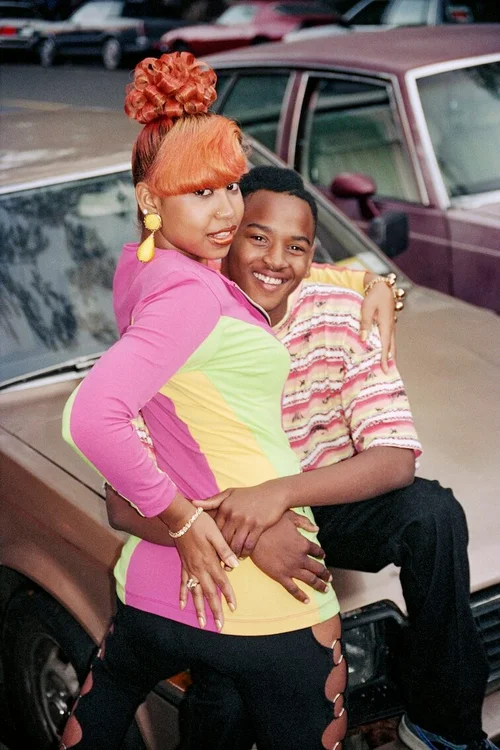
Young Love, Flatbush, Brooklyn, NYC , 1988
Jamel Shabazz
Galerie Bene Taschen
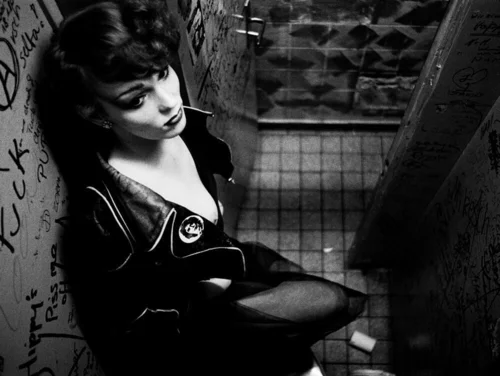
Berlin 1980, 1980
Miron Zownir
Galerie Bene Taschen
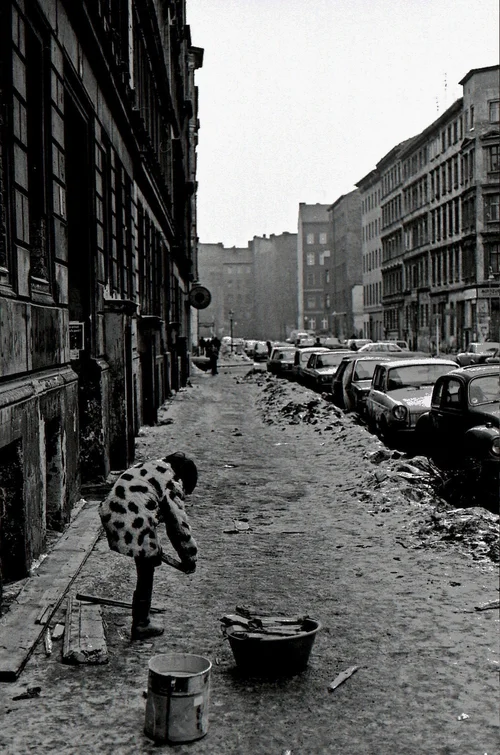
Berlin 1979, 1979
Miron Zownir
Galerie Bene Taschen
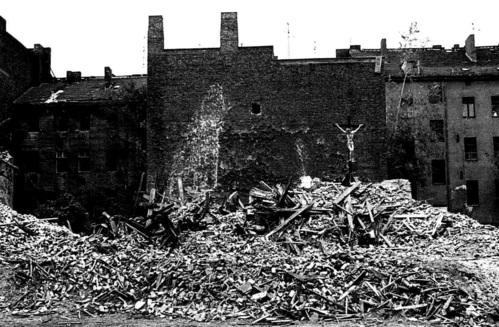
Berlin 1980, 1980
Miron Zownir
Galerie Bene Taschen

Berlin 1979, 1979
Miron Zownir
Galerie Bene Taschen
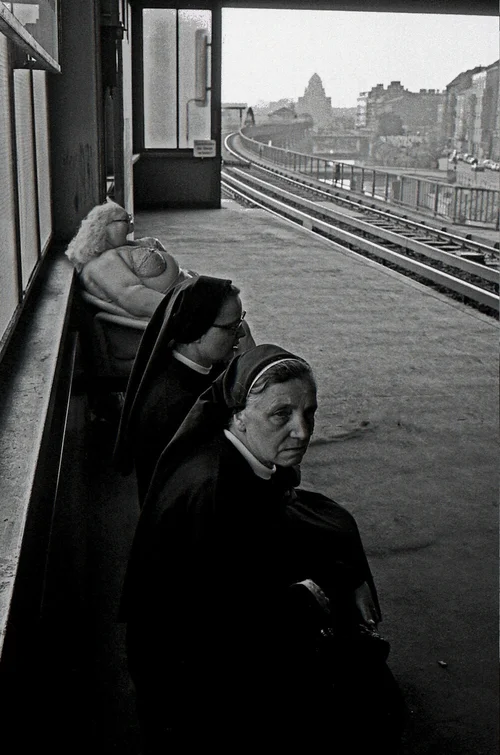
Berlin 1980, 1980
Miron Zownir
Galerie Bene Taschen

Nurse Wiping Away a Tear, NYC 1990, 1990
Arlene Gottfried
Galerie Bene Taschen
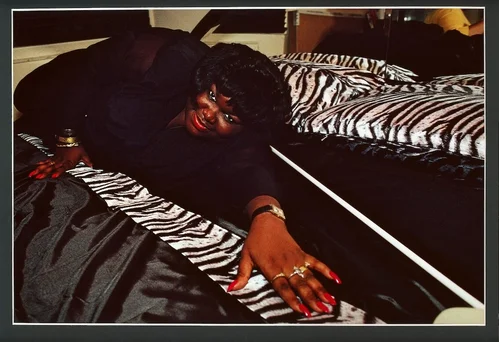
Untitled, NYC , 1990
Arlene Gottfried
Galerie Bene Taschen
Elsewhere, the booth turns darker and more expansive. Sebastião Salgado’s Gold Mine of Serra Pelada, Pará, Brazil (1986) depicts the endurance of humans engaged in their perilous but everyday labor. Joseph Rodriguez’s intimate Mexico City portraits draw on the classic tension of documentary photography around trust and access: As Bugiel explained, Rodriguez was able to enter local homes and neighborhoods where other photographers struggled because people “let him in” and shared their stories. Prices begin at around €3,000 ($3,485) and rise to €120,000 ($139,401) for the full set of Salgado images.
