


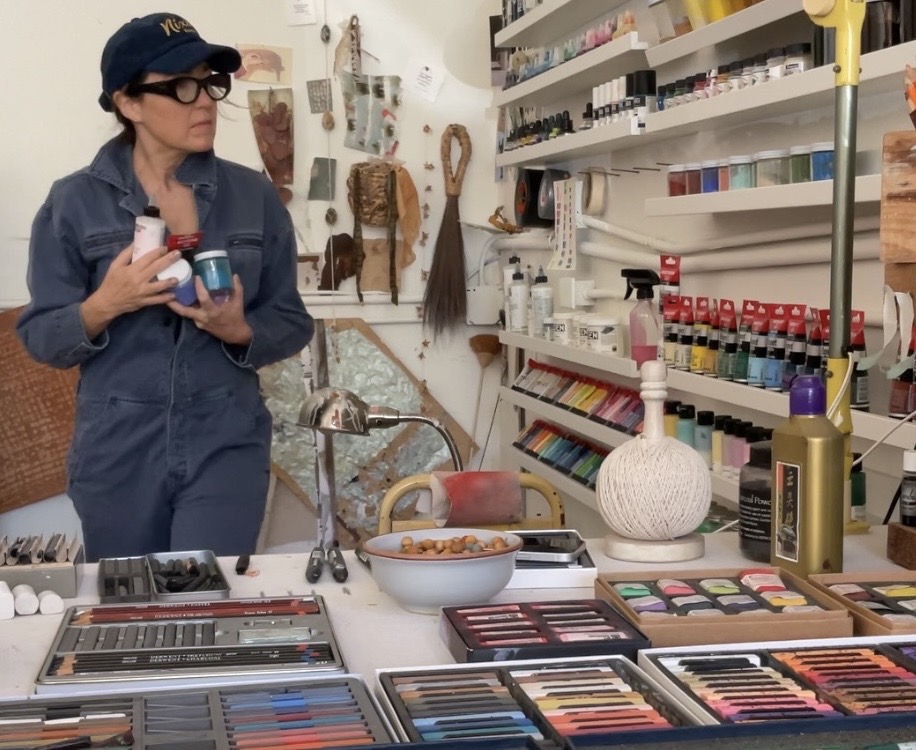
For much of my career, creativity existed through the structure of the fashion industry. For over two decades, I worked within a world built around movement, collaboration, deadlines, textiles, color stories, fittings, production teams, and the challenge of transforming an idea into something physical that people could live in. Fashion became part of how I observed the world—how color affects emotion, how texture changes perception, and how a garment can alter the confidence and experience of the person wearing it.
Then, a few years ago, after a move to the desert near Joshua Tree, my creative life began to shift.
The quiet and expansive landscape gave me the space to reconnect with creativity in a completely different way. The stillness of the desert, the changing atmosphere, and the muted yet powerful color shifts across the sky and land inspired me to begin creating work rooted in observation, emotion, and texture. There was something about the openness of the landscape that encouraged reflection and experimentation. The desert became more than a location; it became part of the creative process itself.
At the time, I didn’t know exactly where that path would lead or whether it would permanently replace fashion in my life. I wondered if focusing on painting and textile artwork meant leaving one creative identity behind for another. I questioned whether trying to do both would divide my focus too much, causing one side to suffer.
Instead, something unexpected happened.
The deeper I moved into fine art, the more it began to reshape the way I approached fashion. And eventually, when fashion re-entered my life again, I realized both worlds had quietly started informing each other in ways I never anticipated. What once felt separate became a blended creative life—one where art and fashion constantly exchange ideas, emotion, process, and inspiration.
That blending has become one of the most rewarding parts of my creative journey.
One of the biggest differences between fashion and fine art is the number of people involved in bringing something to life. In fashion, there are countless hands shaping the final product. Designers, patternmakers, textile developers, technical designers, sewers, production teams, factories, craftsmen, merchandisers, marketers—each person affects the final outcome. A garment evolves through many stages, and each stage can significantly change the direction of the product.
You rarely see the final result clearly from the beginning.
The process becomes a winding path filled with pivots, adjustments, reactions, and problem-solving. One fabric behaves differently than expected. A silhouette changes during fittings. A wash alters the mood of the color. A technical issue creates a completely new opportunity. Every stage becomes reactive and collaborative.
There is an unpredictability to it that I’ve always found inspiring.
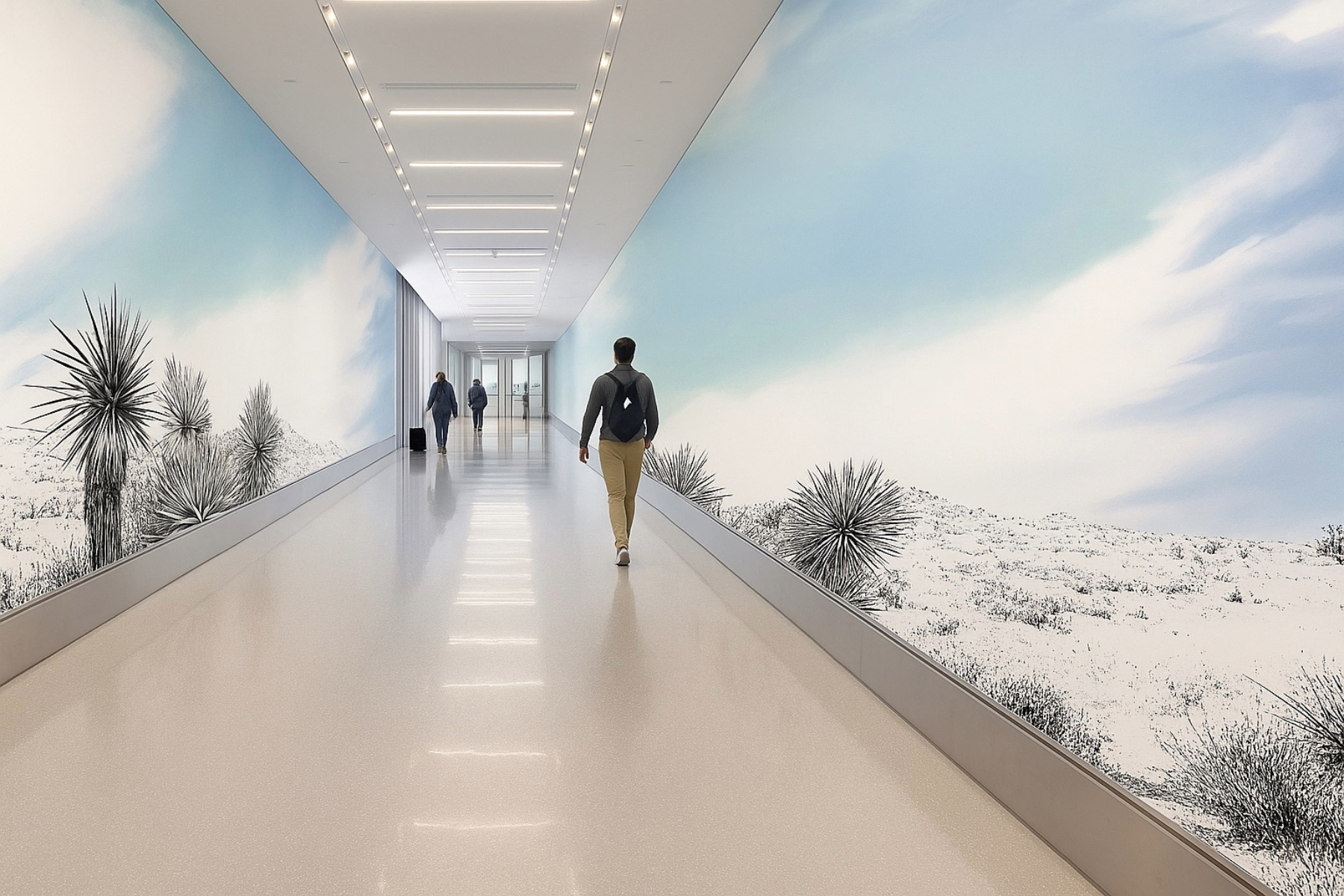
Artwork creation, although often more solitary, contains a similar unpredictability. While the work is primarily in my own hands, the surface itself begins to participate in the process. Paint reacts unexpectedly. Layers shift the atmosphere of a piece. Texture changes the emotion of color. One brushstroke suddenly redirects the entire composition. Sometimes the work begins to reveal something I did not originally intend to create.
Again, you cannot always see the ending. You respond to what is happening in front of you. That reaction—that openness to process—is something fashion and fine art deeply share.
For me, creativity has become less about controlling every outcome and more about learning how to observe, react, and evolve with the work itself. Both disciplines continuously remind me that uncertainty can be one of the most valuable parts of the creative process.
I have also become increasingly fascinated by the way both fashion and art affect people emotionally and psychologically.
With art, I’ve had conversations with collectors and viewers who describe seeing something deeply personal inside a painting or textile work. Sometimes a piece reminds them of a landscape they once experienced. Other times it evokes a memory, a feeling, or even a place they long to return to emotionally. Watching someone connect to a work on that level is incredibly meaningful.
There is a quiet moment that happens when a viewer stops in front of a piece and becomes fully present with it. You can often see the emotional shift happen across their face before they even speak. As an artist, those moments are priceless because they remind you that art exists beyond decoration. It becomes part of the human experience.
Art gives people a place to pause, to reflect, and to feel something.
Fashion creates emotional experiences differently, but with equal impact. Seeing someone wearing something you helped create out in the world carries its own kind of energy. In activewear especially, clothing often becomes connected to movement, motivation, and self-transformation. A garment may encourage someone to go outside, exercise, join a community, improve their health, or simply feel more confident in themselves.
That confidence affects how they move through the world. It changes interactions, posture, and presence. Something as simple as color, fit, texture, or silhouette can influence the emotional experience of the person wearing it—and even affect the people around them.
Fashion and fine art may appear very different externally, but both ultimately influence human experience. Both shape atmosphere, emotion, perception, memory, and identity in subtle ways. The blending of those ideas has become central to my own creative practice.
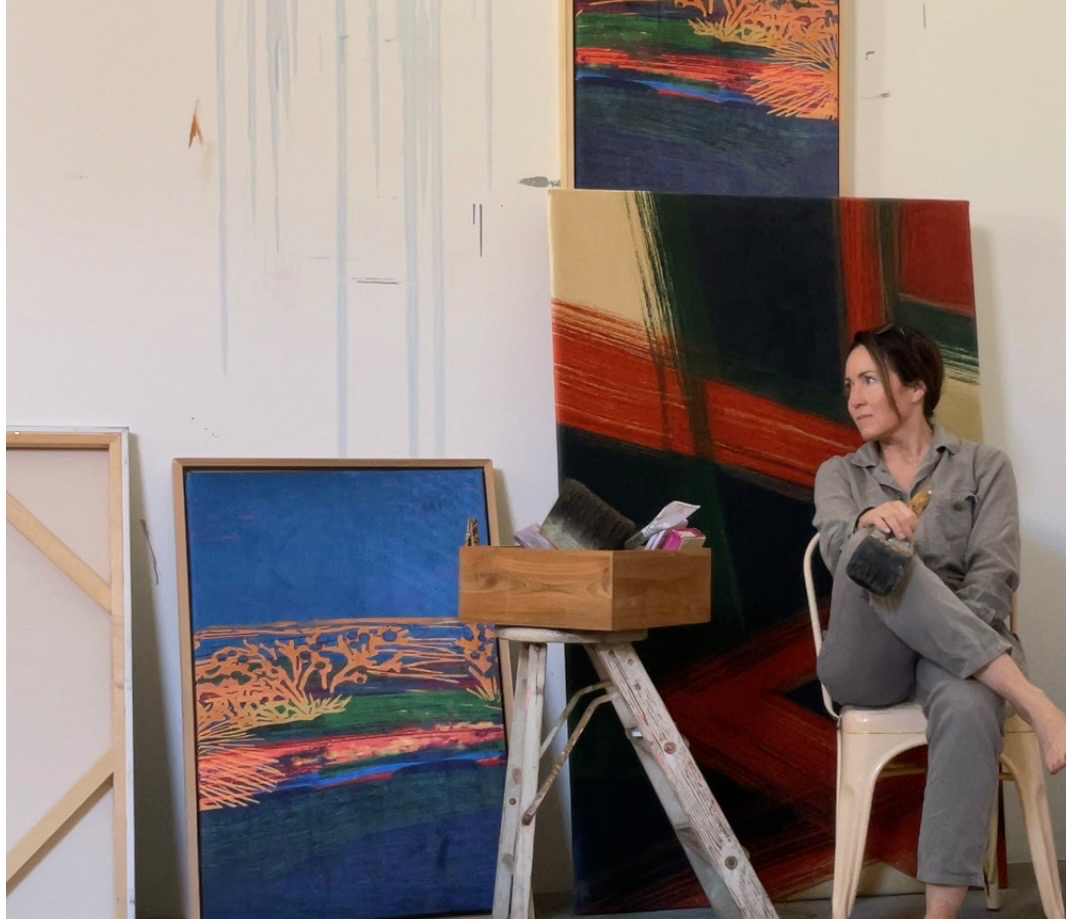
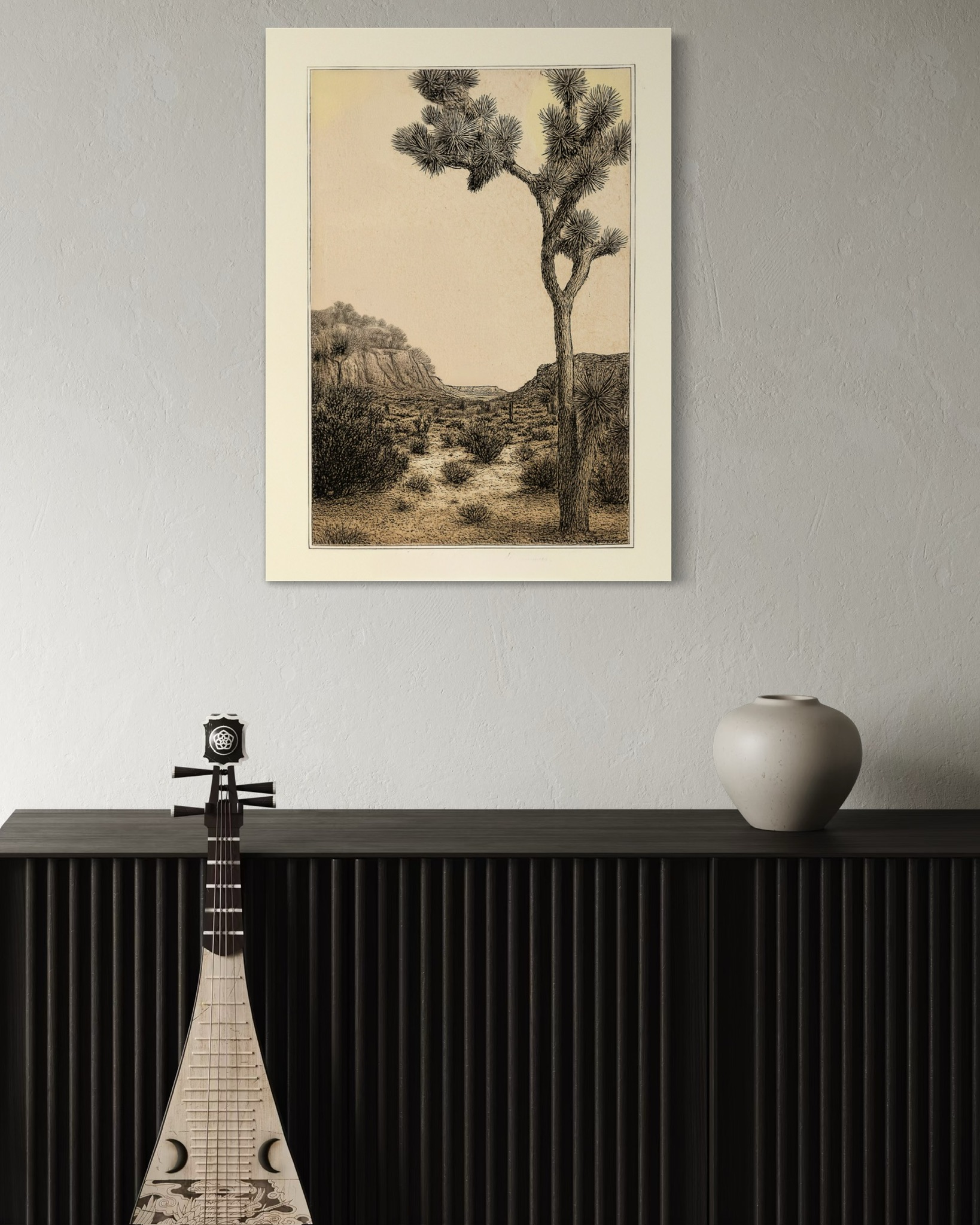
Now my art practice rotates between playful desert scenes, atmospheric seascapes, and layered forest landscapes—all deeply impacted by the outdoor spaces where I spend time hiking and exploring. Each landscape carries a different emotional energy, and I often bring those observations back into both my paintings and textile works. The outdoors has become an essential part of my creative rhythm, influencing not only the visual direction of the work but also the sense of movement, stillness, and reflection within it.
My artwork often begins with observing landscapes, texture, atmosphere, and light in the natural world. I spend a great deal of time paying attention to subtle color shifts, movement across the sky, weathered surfaces, and the emotional feeling a place carries. Those observations eventually move into painting, textile processes, and layered surfaces.
At the same time, fashion continues to influence how I think about proportion, movement, material, and the physical relationship between the body and design. My years in apparel taught me to think about construction, tactile experience, and functionality alongside beauty.
Now those influences constantly move back and forth between each other. A painting may inspire a textile direction; a fabric texture may influence a painting surface. An atmospheric landscape may evolve into a color palette for apparel, while a garment silhouette may inspire compositional balance inside an artwork. The boundaries between disciplines have become increasingly fluid.
That fluidity has allowed me to embrace creativity in a much broader way than I once imagined possible. For a long time, I thought creative careers required choosing a single direction. But I no longer believe creativity works that way. Some creative lives are built through specialization, while others are built through exploration and blending multiple forms of expression together over time.
There is beauty in allowing your creative identity to evolve, in not always knowing exactly where the process will lead, and in realizing that different disciplines can strengthen each other rather than compete.
I feel incredibly fortunate to experience both worlds. Fashion continues to inspire me through collaboration, craftsmanship, and movement, while fine art inspires me through
observation, emotion, and storytelling. Both encourage me to remain curious and to bring all my experiences back into the creative process.
At this point in my life, I no longer see fashion and art as separate identities. Instead, they have become part of one blended creative life—constantly evolving and pushing me toward new ways of seeing and building. I may not always know exactly where the path is leading, but I’ve learned to trust the process of discovery. Sometimes the most meaningful creative work happens while navigating the unknown and weaving it into daily existence.
Author Bio
After immersing herself in the action sports design world for several years, Sherri took the opportunity to explore her artistic side in painting and illustration. Driven by a deep passion for the arts, she enjoys experimenting with various traditional and contemporary media in her paintings. Inspired by her exploration of the outdoors, she finds inspiration in both the picturesque landscapes and captivating elements of land and sea. A versatile artist and designer, with a strong background in designing for brands including her own successful apparel line, she brings a unique perspective to her designs. Her technical design skills and creative vision blend seamlessly to create her work. Today her deep appreciation shines through in her artwork, she continues to push boundaries and explore new artistic horizons.
For more information, visit www.sherriscottstudios.com
Instagram:
https://www.instagram.com/sherriscottdesigns?igsh=NTc4MTIwNjQ2YQ%3D%3D&utm_source=qr
Facebook:
https://www.facebook.com/sherri.ds3?mibextid=wwXIfr&mibextid=wwXIfr
All images courtesy of Sherri Scott.
The post The Blended Life: Between Fashion And Art appeared first on Art Business News.
