


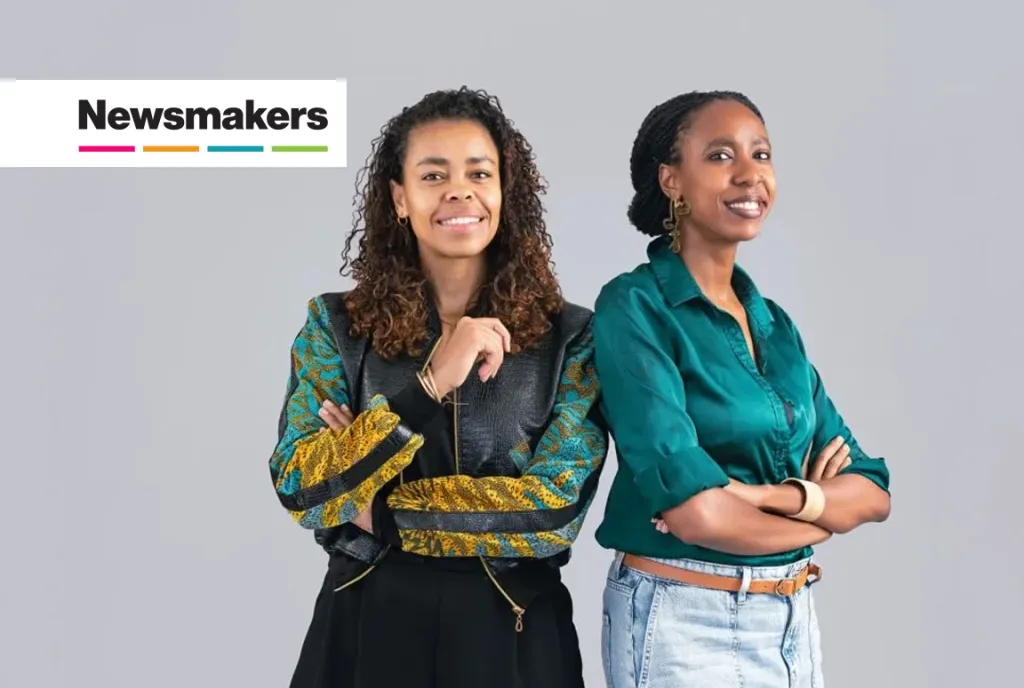
On March 31, the research initiative Open Restitution Africa (ORA) launched the ORA Open Data Platform, a database that provides information on the restitution of African artifacts and ancestral remains. Developed over six years by ORA’s all-woman, pan-African team, the site uses case histories and AI-powered tools to offer practical insights into the return process. This resource, available in French and English, allows users to explore past restitution efforts and their outcomes, helping individuals and communities develop their own restitution strategies.
The ORA platform presents 25 case histories spanning 200 years. Using data visualizations, essays, and interactive tools, it addresses the lack of knowledge available to African communities, educators, activists, researchers, and other stakeholders wishing to carry the process of restitution forward.
ARTnews interviewed ORA’s founders, Chao Tayiana Maina and Molemo Moiloa, about their reasons for creating ORA and how the ORA Open Data Platform works.
Anne Doran: How did your project start?
Chao Tayiana: I am a historian, and my interests are really around history and historical infrastructures, particularly how these intersect with public access and public education. I run an organization called African Digital Heritage that interfaces with museums and cultural institutions and asks what strategies and support systems do African museums need to engage with digital technologies on their own terms.
Molemo and I met at a conference in Namibia in 2019 called “Museum Conversations,” which was hosted by the University of Namibia and Goethe-Institut-Namibia. The focus was on the future of African museums, and it was geared toward museum professionals, particularly African professionals. Within this conference, restitution was a discussion being had, not just in terms of objects but in terms of the process itself and its challenges.
Molemo Moiloa: I’m an artist based in Johannesburg, South Africa, who works at the intersection of art practice and community organizing. One of my areas of interest is rethinking what the role of museums might be in an African context. So that’s what brought me to the conference.
In 2019 or 2020, I was looking for a rough number of how many things had been restituted to Africa in that year, and I couldn’t find the number. I reached out to Chao, whom I’d connected with at the “Museum Conversations” conference, and said, you know, I thought this information would be easy to find and it turns out that it isn’t, so maybe we should make it accessible—thinking we could do a quick project. So we waded into the restitution conversation with the intention of creating some kind of digital tracker and quickly realized that this quite basic project led to issues that are very complex.
AD: It seems that ORA has become a much vaster project that you initially conceived it.
CT: I think Molemo and I always knew that a time would come when our project went beyond restitution.
MM: The project arose out of a realization that the restitution process was quite opaque and not easy to understand. So one of the things we were really interested in from the beginning was finding ways to make the complexity of that process more accessible. We worked on multi-episode video series, for example, and developed podcasts, and always tried to make them accessible, particularly to a young continent. As we move into providing a digital platform, ensuring that the work we do is accessible is really important to us.
CT: At the same time, having a proliferation of content in different formats and in different spaces has also been an intentional strategy on our end. While the platform is our most tech-heavy format, even then it allows different levels of interaction. We have designed our work in ways that give us a staggered reach.
AD: Yes, I have been exploring the platform, where I encountered both some extremely easy to understand visuals and at the same time some very erudite papers that took time to read. Would you go through the various parts of the platform and explain a bit about them and what they do?
MM: The ORA website itself is broken into two main parts. The first part, which has been running for some time now, has all the podcasts and videos, the data stories, the research reports, databases for Africans working in restitution, this kind of thing. The data platform that we just launched is devoted to digital tools.
AD: Can you walk me through that?
MM: The data platform has four sections, the main entry point being “Restitution Journeys,” which is a visualization that maps 25 journeys spanning 200 years of restitution history. Each one can be engaged with by clicking on key moments in that particular journey. Some start in the 1800s, and others start post-1970 under the UNESCO framework that has outlawed the looting of cultural heritage across the world. Then, if you want more information, you can click on the corresponding circle at the bottom of the page to link to a full case study.
Open Restitution Africa (ORA) Open Data Platform – “Restitution Journeys” Interactive Visualization Tool
“Case Studies” make up the second part of the platform. These are based on research that we’ve undertaken over the last three years or so, providing micro grants to researchers across the African continent to facilitate their doing interviews—going into villages and speaking to chiefs, for instance—or working through archives to really tell the story of a particular restitution process. Here the data platform really offers information that otherwise isn’t accessible at all. While the stories of some of the cases are available online, for a number of the cases we are presenting primary research and oral histories that have never been collected. And because each situation is so different, we wanted people to be able to seek out a case study that makes sense for them.
CT: The case studies part of the platform allows filtering by status, object type, and location and features a “Case Studies Like Mine” tool for comparative analysis. Restitution can be a very intimidating process, for which there are very few ways to find out where to start, who to talk to. This tool is a way to find information not only on restitutions taking place, but also on some of the specific categories in which restitution cases fall. Our research shows that quite a number of restitution cases are initiated by individuals or by communities. And so we felt this was an important way for people to engage not just with the data, but with context as well.
AD: Do these case studies note what kind of settlement was involved, if any?
CT: As far as the filtering is concerned, we only specify two types of return: permanent return and digital return. But our case studies have a wider variety of outcomes. I’m jumping forward a little bit, but in the next section, “Data Dashboard,” we present timelines that reflect when an object was taken, when stakeholders were able to get in touch with whoever had it, and then the various types of outcome: return, restitution, integration activity, a ceremonial transfer of ownership, or, in one case, returned but lost on the illicit trade market. But one of the things we’re really interested in is that return doesn’t necessarily mean integration into a community. What does it mean for something to be returned in a way that is not a physical return?
AD: I was interested to read in the news and then more fully in one of your case histories, about the cowrie shell–covered statue of the Cameroonian deity Ngonnso, whose return was agreed upon—after decades of restitution efforts—in 2022 but is still held by the Ethnological Museum of Berlin. What I did not know until I read the case history, is that in the meantime a replica of her has been installed in the Nso Palace, from which she was looted in 1902.
CT: We began with the idea that we could recommend best practice strategies for restitution, and after six years we’re seeing that it happens in multiple ways. And I think what’s been really important about the project is showing that friction. Friction is the work of restitution: the friction of where does it go? Who does it go to? These are questions that Africans are not only asking, but navigating. Minimizing the importance of the outcome means we are able to see the process as points of intervention rather than a success or failure.

Open Restitution Africa (ORA) Open Data Platform – Case Study Database & “Case Studies Like
Mine” Tool
MM: To go back to the Data Dashboard, I’ve already talked about the timelines showing how long each restitution has been in process. I’ll let Chao talk further about this section.
CT: The Data Dashboard is where we focus not only on how Africans pursue restitution, but why they pursue it in the first place. The Intended Outcome graph is about understanding what people going into the restitution process hope to achieve. And here there’s return, there’s repatriation, there’s ownership rights, reparations, and in some cases—very few cases—a temporary loan. But most of the cases in fact have more than one outcome. So we are not looking at intended outcomes as a singularity but rather as a collection of things that people are asking for.
Then there is the Contemporary Significance graph, which focuses on the meaning of this item to the people who are asking for it back. I think that this, in many ways, decenters the act of removal and the violence and is more rooted in connection and continuity, and how people see restitution as significant to their day-to-day lives.
Malemo has already said a little about the timeline, but its focus is really on dynamics. How is this work taking place? What are the challenges? What things are impacting restitution processes? It is very much about how Africans are applying the resources that are available to them to navigate these contextual challenges and contextual dynamics. One of the things that surface is that Africans are working in very difficult circumstances to make restitution happen, and we’re seeing that the majority of this is highly dependent on human labor.
And that brings me to the last graph, Human Resources, which is about who is involved in restitution. How are they connected to each other? We wanted to show not only who they are, but how they are connected to a particular case. Here you will see instances in which one person is involved in more than one case and becomes a connecting point between one thing and another. So this is about making individuals visible, and also mapping the connections between stakeholders. It’s my favorite part of the platform.
Open Restitution Africa (ORA) Open Data Platform – Data Dashboard Tool
AD: And the fourth part of the platform, “Query the Data,” is where you can ask the platform questions, correct? And that was built with AI?
MM: Yes. But it’s a little different from your average chatbot in that we have constrained it in particular ways. The most important constraint is that it interacts only with our data set, not with the internet in general. Our data set is very large, and so this is a tool to get into some of the nitty-gritty that isn’t in the case studies. The other way we constrained the tool is that it won’t give a one-stop answer to your question. We wanted it to encourage someone to maneuver through the data set. You can ask it a question, but it won’t give you a fixed answer. What it will do is give you some examples and encourage you to read further.
So when you ask it a particular question, its answer will draw primarily from the research on the data platform, but it also will lean on information on the main site, like transcripts of the videos and podcasts. For example, if the question is about digital restitution, it will pull from the case studies on the data platform, but also from our podcast on digital restitution.
Open Restitution Africa (ORA) Open Data Platform – “Query The Data” Data Prompt Tool
AD: What is digital restitution?
CT: I would say that it falls into a range of activities but primarily looking at the return, ownership, or stewardship of cultural heritage data. We have a case from Rwanda, for example, in which colonial-era recordings of communities were held by a museum in Belgium. And so the agreement was that the Rwanda museum would receive digitized copies of the collections, while the physical magnetic audio/visual tapes remain in Belgium.
That would be an instance of digital restitution. But as with physical belongings, there are multiple possible outcomes. One could involve intellectual property management, another data stewardship. It could also involve who gets to host the material. There is a case in Zambia, though this is not one of our case studies, of the Women’s History Museum in Zambia using digitization as a way to connect Zambian communities with data about their heritage held in Sweden. So as with physical repatriation, digital restitution may not be an end in and of itself A lot of people are using it as a pathway toward knowledge exchange and integration, and even as a pathway toward return.
AD: How do you see this project evolving?
MM: Our number-one priority is getting it to the point where many, many people are using it. We’ve already learned some lessons from making the videos and working with arts organizations, museums, and universities to screen them, letting them decide if they wanted to have a talk afterwards, or the like. So we will probably continue to use this model, which is a kind of decentralized community that enables the platform to be known to more people.
And then we want to ensure that the full data set is made more accessible, and that is a process we’re still exploring. This is a bit of a tricky step, in the sense that when we started the project, we were really interested in open data. But with AI in the picture now, things have shifted, where the ways in which open data is used is increasingly complex, and there are a lot of new ethical questions around that. So we are currently thinking through the dynamics of what we call data stewardship.
AD: What ethical questions are you encountering?
MM: For me there are many ethical questions. There’s an Iranian artist called Morehshin Allahyari who has done incredible work around what she calls digital colonialism. We’ve learned a lot from her. In her work she often “re-figures” the past by either reconstructing an object that’s been lost or shedding light on forgotten or misrepresented histories. Watching as Western tech companies began scanning artifacts and historical sites across the MENA region, she began to ask where that data was going, who had access to it, and how it might be being used to reproduce colonial power relations.
AD: I can see your work’s potential as an educational tool in museums that hold and display contested objects. Have you ever worked with non-African institutions?
MM: We have done some work with non-African institutions, particularly in the early phases, when we were short on resources. It’s a bit of a delicate question, and I think that’s demonstrated by the fact that, for example, the micro grants that we give to our researchers across Africa are currently the only funds that have been available for Africa-specific independent research. There are other funds available. For example, the MARKK museum in Hamburg, Germany, has a fellowship, and you can do something that’s related to its collection, and you can do your research in Africa, but it’s 50 percent Africa, 50 percent Germany. There’s a lot of those kinds of funds, where some resources are available to Africans, but usually only in direct relationship to an institution.
And so if you want to do independent research that’s driven purely by African questions, that can be quite challenging. We often get asked to join meetings and workshops, but they’re usually oriented toward helping a Western institution solve its problems. And that’s not a problem in and of itself, but we are some of the only people on the continent who’ve been able to raise resources to work purely on African issues, and so for us, our energies have to be focused on African issues, rather than helping a museum in Europe solve its problem.
CT: Just to add that most Africans are not working on restitution as their main job. They are often doing it on their own personal time, while in the West you might have someone who’s being paid to deal specifically with restitution issues. So the asymmetries are not just financial; there is also a time factor, with multiple people engaged in multiple things at the same time.
AD: What are you most proud of so far? And is there anything else you’d like our readers to know?
CT: Wow, I’ll start with what I’m most proud of. I would say, bringing this work to life. The intention was to create a space where African restitution was centered and African labor made visible. We have a lot of engagement yet to achieve, but building the project and birthing it is, I think, the thing that I’m most proud of.
Your other question was what we’d like readers to know. We’ve built a knowledge base around people, not objects, and we would like readers to know that when we speak of restitution, we are not talking about inanimate things. We are talking about people’s lives, and that is what the knowledge base we’ve built seeks to make visible.
MM: Yeah, riding that wave of what I’m proudest of, one of the things that have become so evident to us is the 200 years of Africans working incredibly hard to try to repair something that is broken. We did a research study some years ago on the degree to which academic research, media, and even just Google searches will often center European opinions, voices, individuals about African restitution over Africans’. What Chao was saying about this being a platform about people, not about objects, is really recognizing the hard labor of Africans and then doing our very best to bring that to the fore.
That is really the core of the work that we are trying to present, and that is the really, really hard work. And this work is African work, right? Packing something into a box, changing your laws and sending it over—that’s not actually the hard work. The hard work is going to be educating children. The hard work is going to be changing our curriculums. The hard work is going to be undoing centuries of religious, epistemic, political, and cultural erasure, and that’s up to humans. And I think that’s why humans are really so central to the platform.
The team behind Open Restitution Africa (ORA): Chao Tayiana Maina, co-founder; Syokau Mutonga, Operations and Research Associate; Phumzile Twala, Research Associate; Koehun Aziz-Kamara Communications Lead; Karen Ijumba, Senior Researcher; Molemo Moiloa, co-founder. Photo credit: Mekbib Tadesse, 2025.
