


Banksy’s guerrilla artworks have generated millions of dollars in auction sales and drawn crowds wherever they appear. They’ve also left British taxpayers footing a growing cleanup bill.
Public authorities across London have spent nearly $203,000 removing, protecting, and managing three of the anonymous street artist’s works since 2024, according to figures obtained by the BBC through Freedom of Information requests. The total will keep going up as officials continue efforts to erase one of the artist’s latest murals from the walls of London’s Royal Courts of Justice last year.
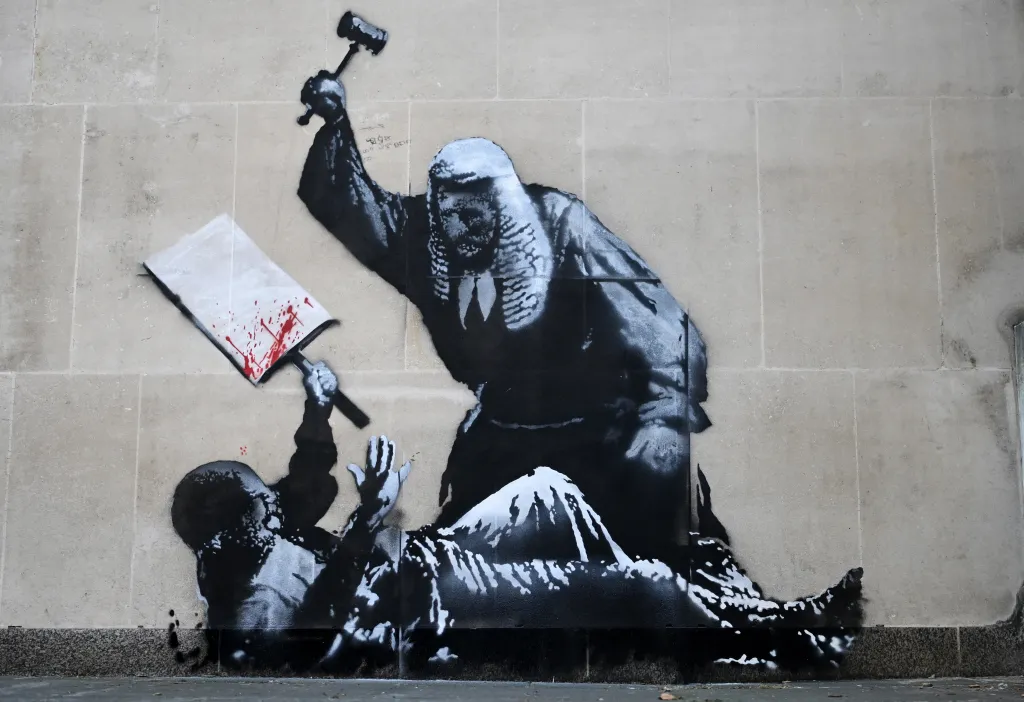
The work, depicting a judge in a wig striking a protester with a gavel, has cost Britain’s Ministry of Justice $67,000 in removal efforts so far, with another $48,000 spent on security and staff overtime while the work stayed up. Contractors now are using laser technology after initial cleaning attempts failed, and officials have said that replacing the affected stonework might be the next step if those efforts are unsuccessful.
The mural has reignited a familiar debate over whether Banksy’s modus operandi should be treated as criminal vandalism or culturally significant public art. Critics, including Britain’s Shadow Justice Secretary Nick Timothy, argued taxpayers should not bear the cost of cleaning what he described as damage to a national symbol of the rule of law. Others defended the work, saying Banksy’s murals attract visitors and make art accessible outside traditional museums and galleries.
The court mural is only the latest example.
In April, Westminster City Council said it spent nearly $81,000 on safety barriers, security, and administrative costs after Banksy secretly installed a statue in Waterloo Place near Trafalgar Square. The council, which became the legal owner of the sculpture because it sits on public land, said it is still considering what to do with the work.
Earlier, in August 2024, the City of London removed a police sentry box that Banksy had transformed with painted piranha fish at a cost of almost $3,000. Rather than being relegated to the scrap yard, the structure was placed into storage and is scheduled to go on public display when the London Museum reopens in November.
