


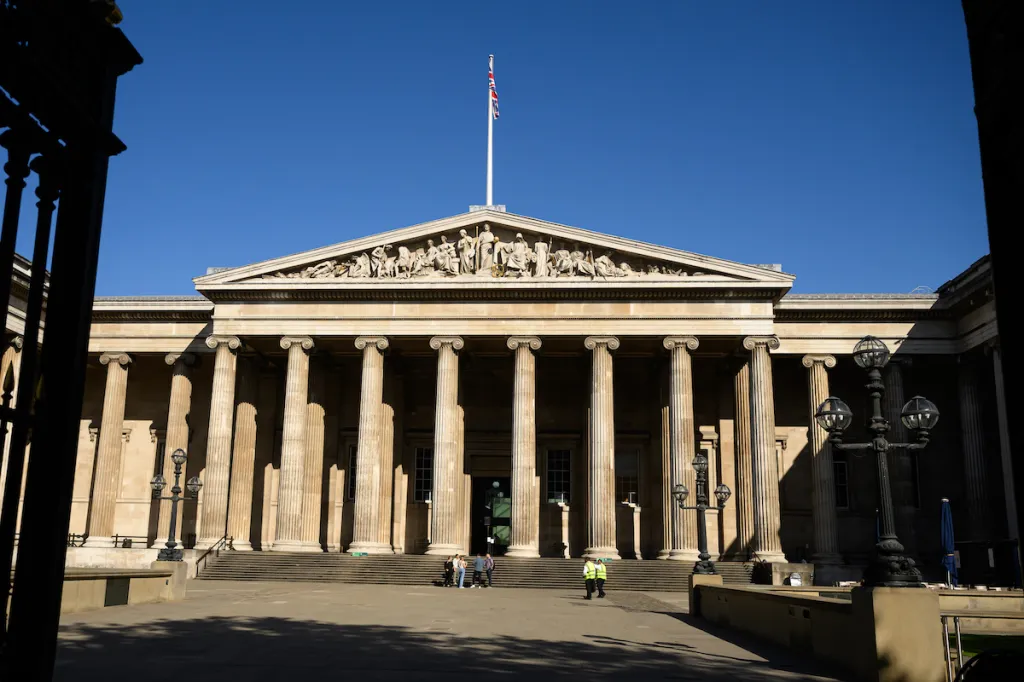
The Palestinian ambassador to the UK has called on the government to aid in getting the British Museum to reinstate the word “Palestinian” in its wall texts.
Husam Zomlot, the ambassador, raised his complaint to the Foreign & Commonwealth Office, a ministry of foreign affairs, according to the Guardian. In that Guardian report, Zomlot called the removal of “Palestinian” from the labels a form of “erasure.”
In February, the Telegraph reported that the group UK Lawyers for Israel had lobbied the museum to strip the word from its didactics, claiming that using the word “Palestinian” “erases historical changes and creates a false impression of continuity.” The word had appeared on maps of the Middle East at the museum.
“For the Middle East galleries for maps showing ancient cultural regions, the term ‘Canaan’ is relevant for the southern Levant in the later second millennium BC,” a museum spokesperson previously said. “We use the UN terminology on maps that show modern boundaries, for example Gaza, West Bank, Israel, Jordan, and refer to ‘Palestinian’ as a cultural or ethnographic identifier where appropriate.”
Speaking to the Guardian this week, the museum further denied that it had removed the word “Palestinian” from its wall texts and said that the term continues to appear elsewhere in the institution and on its website. The Guardian, however, noted that this statement “appeared to conflict with the photographic proof of changes.”
Zomlot told the Guardian that he had turned down with a tour of the British Museum with director Nicholas Cullinan because he believed it would not have led to concrete changes.
“For me, this is not only a political issue. This is not only a legal issue. This is not even just a historical issue. This is an existential issue,” Zomlot told the Guardian. “Because erasing our past is erasing our present.”
