


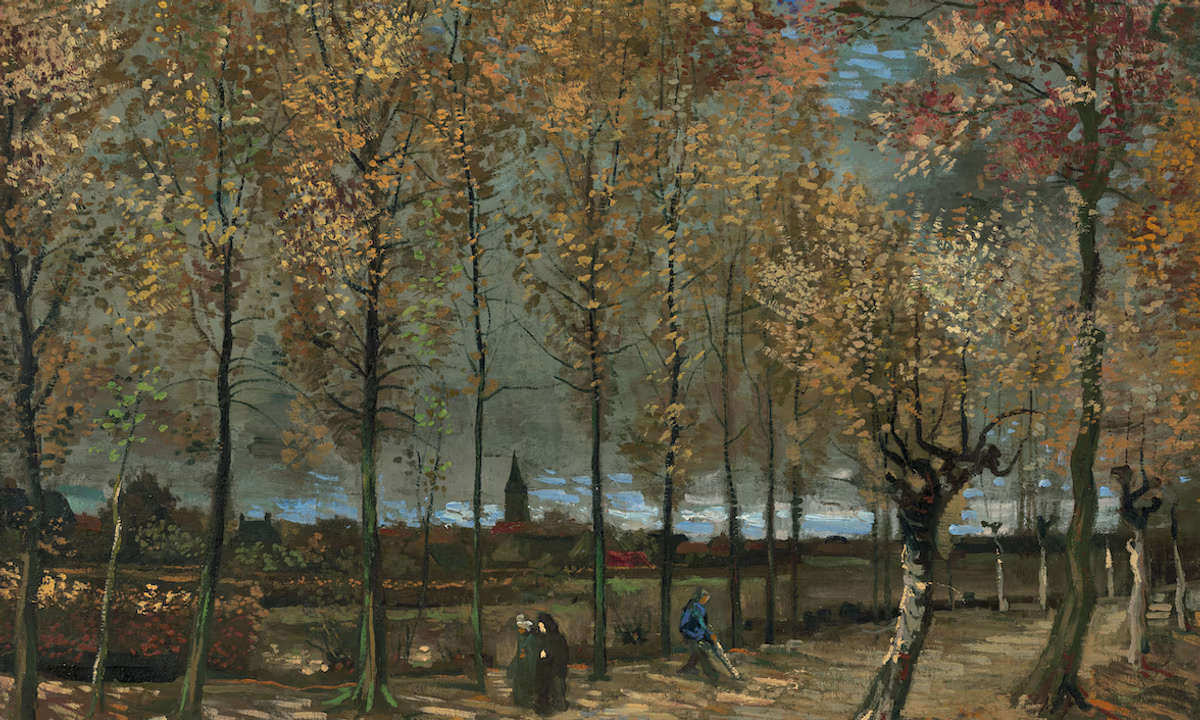
A Van Gogh autumn landscape was painted on top of an entirely different scene of a church tower, according to conservators at Rotterdam’s Boijmans Van Beuningen Museum. Then a year after painting Poplars near Nuenen above the church scene in November 1885, the artist extensively reworked the second picture, at the end of 1886, making this third image brighter and more in line with his later exuberant use of colour
The final version of Poplars near Nuenen goes on display tomorrow (7 February), after four years of research and conservation work. This was necessary because of the severely cracked and fragile paint surface and degraded varnish. The autumnal landscape now sings out in a way that it has not done for nearly a century.
Conservator Erika Smeenk-Metz working on Poplars near Nuenen
Museum Boijmans Van Beuningen, Rotterdam
The painting began life in July 1884 as quite a different composition, a moonlit view of the Protestant old church tower and graveyard in Nuenen, the village in the south of the Netherlands where Vincent was living with his family. The church was being demolished and all that was left by July was the tower (Van Gogh also made six surviving paintings of this scene).
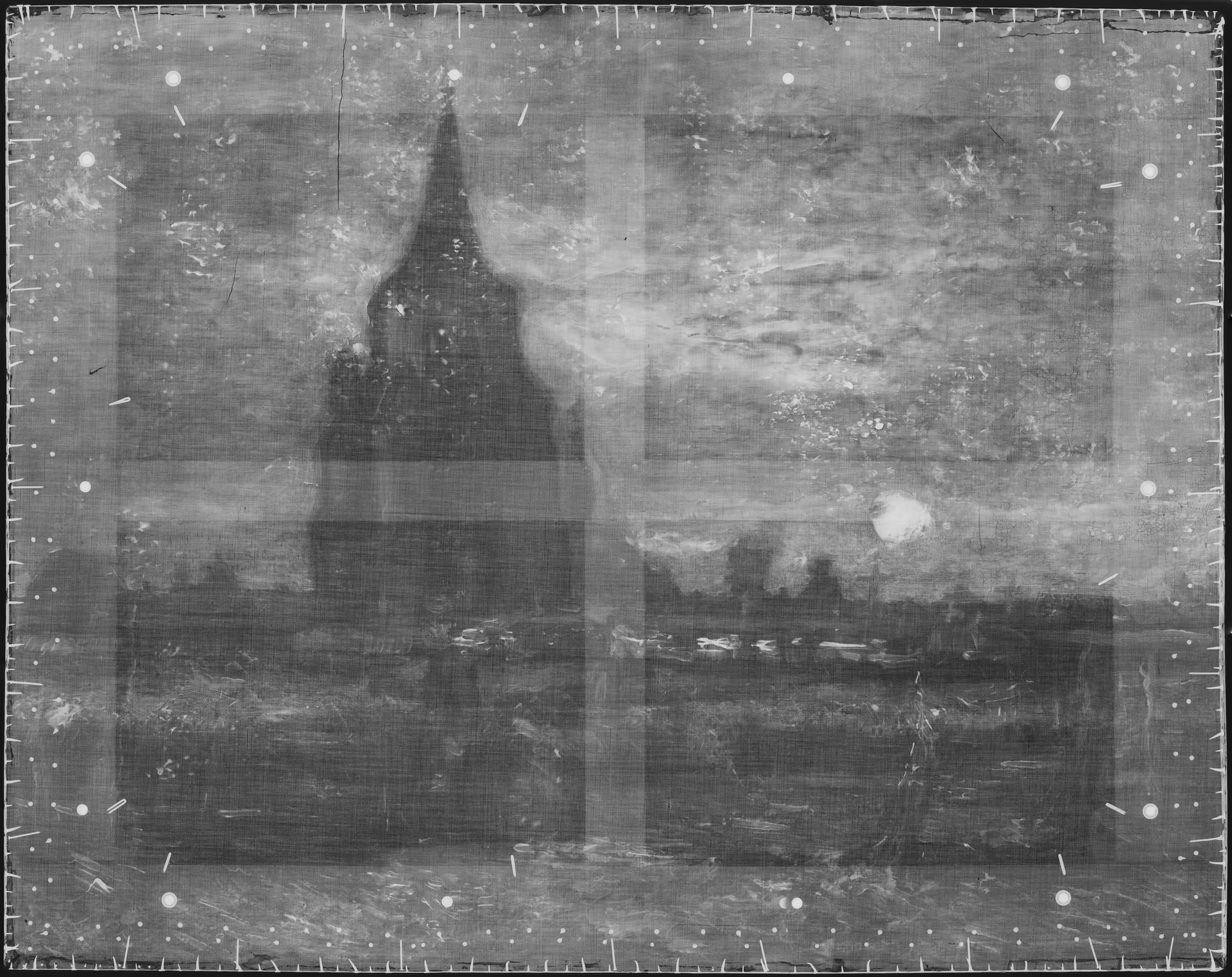
X-ray image of Poplars near Nuenen, revealing the original composition (July 1884) of the church tower and graveyard
The original composition can be seen in an x-ray image of Poplars near Nuenen. In this composition, the more distant tower of the Catholic church can just be made out further away, slightly to the right of the Protestant tower. This now makes it possible to identify the spot where Van Gogh set up his easel, south of the village.
Just over a year after creating the original picture, Van Gogh reused the canvas, by painting an autumnal scene of an avenue of trees with three figures. Occasionally the artist reused his canvases to save money, but it seems surprising that he did so in this case, since it appears to have been a successful original composition. It would later be singled out for praise by his artist friend Anton van Rappard, who wrote that the church tower scene ”struck me so deeply”.
One wonders whether a deep psychological issue lay behind Vincent’s decision to paint over the church tower and graveyard. This subject matter was deeply linked to his father Theodorus, with whom he had a very poor relationship. Theodorus, the Protestant pastor in Nuenen, died in March 1885, eight months after Van Gogh first painted the tower, and he was buried in the depicted churchyard. One can only speculate, but perhaps covering over the graveyard was an attempt to erase painful memories.
Whatever the reason, in November 1885 Vincent reused the canvas to paint the autumnal landscape. Writing to his brother Theo, he described it as “a view of the village behind a row of poplars with yellow leaves” and included a little sketch. In another letter he described the scene as “a symphony in yellow”.
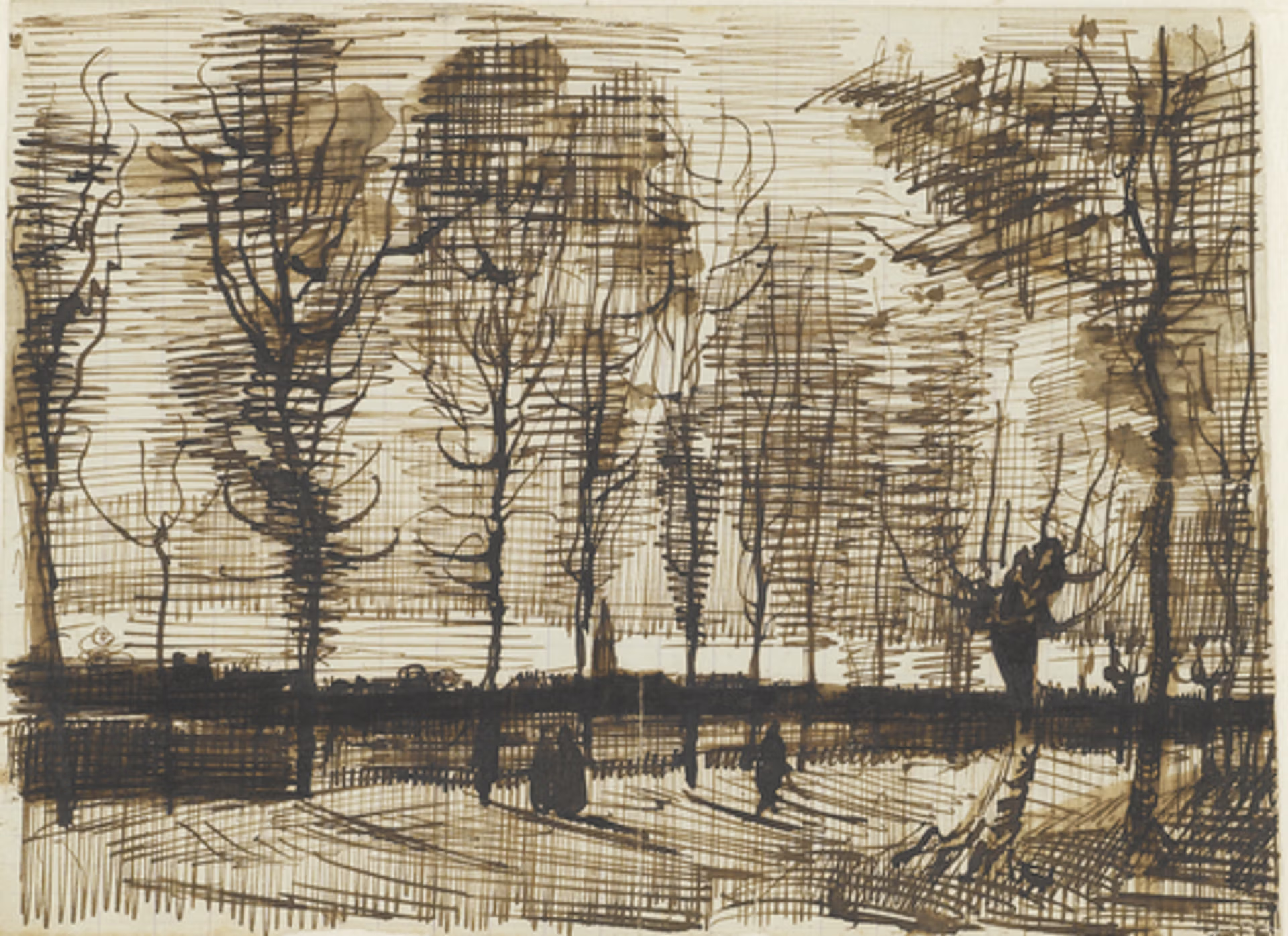
Van Gogh’s sketch of Poplars near Nuenen in his letter to Theo, around 17 November 1885
Van Gogh Museum, Amsterdam (Vincent van Gogh Foundation)
The third image
Later in November 1885 Van Gogh left his parents’ house in Nuenen, moving first to Antwerp and then in February 1886 to Paris, to stay with Theo. It was there, probably in September-December, that he reworked Poplars near Nuenen.
There was some early evidence to suggest that he might have reworked the painting in Paris, but this was largely ignored until very recently. Theo’s brother-in-law Andries Bonger had written in 1903 that Vincent “worked on it later in Paris” and “in the autumn glow, there is indeed more exaltation than you will find in the work from his time in Nuenen, which is usually melancholic and meditative”.
Despite Bonger’s letter, Van Gogh specialists long considered it unlikely that he would have reworked a painting done well over a year earlier. However, conservators have now discovered that Bonger was correct. They identified pigments which the artist used in Paris, but not (or hardly ever) in Nuenen: cerulean and cobalt blues, strontium chromate and cadmium yellows, emerald and viridian greens and two organic reds.
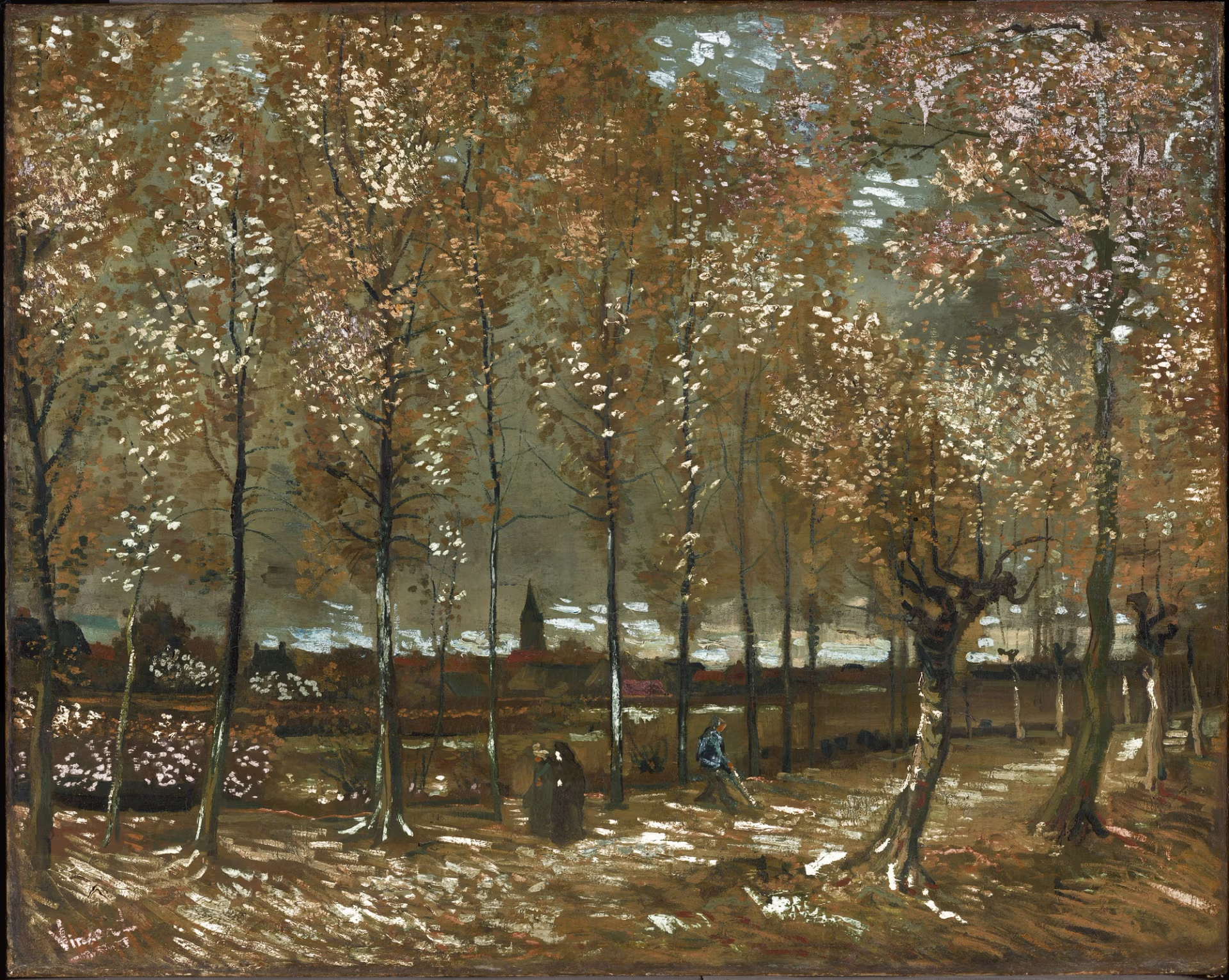
Poplars near Nuenen showing the areas of paint added in Paris in September-December 1886, mapped in white
Museum Boijmans Van Beuningen, Rotterdam
The areas of overpaint are mainly in the pathway beneath the trees, the leaves of the poplars and the sky just above the horizon and in the upper part between the trees. These changes lighten the composition and introduce thicker impasto paint. Van Gogh probably did this when he was beginning to be exposed to Impressionist art in Paris.
Sandra Kisters, director of collections and research, says that “the additions made in Paris in 1886 have turned out to be much more consequential than we thought.”
A mystery remains
Research and conservation of the painting was a slow process. The most delicate task was to remove old, discoloured varnish, and this now makes the picture much brighter and clearer.
One problem proved to be the result of unfortunate damage. The surface had suffered long ago from an unsightly series of drips, which had run down the picture. A scientific analysis revealed that this was almost certainly caused by linseed oil, but there seems to be no reason why this substance would have been used during earlier restoration efforts.
The vertical drips ran all the way across the entire width of the paint surface, which suggests that it was not the result of an accident (an accident would probably have been heavily concentrated in a single, smaller area). The drips were not present in the top few centimetres of the composition, presumably because this area had been protected by a frame, which was probably first put on the picture in 1903. Van Gogh was not the culprit for the drips.
Conservator Erika Smeenk-Metz admits that the cause of the drips remain a mystery. She has toned down some of the more obvious ones with reversible overpaint, so they are now hardly visible.
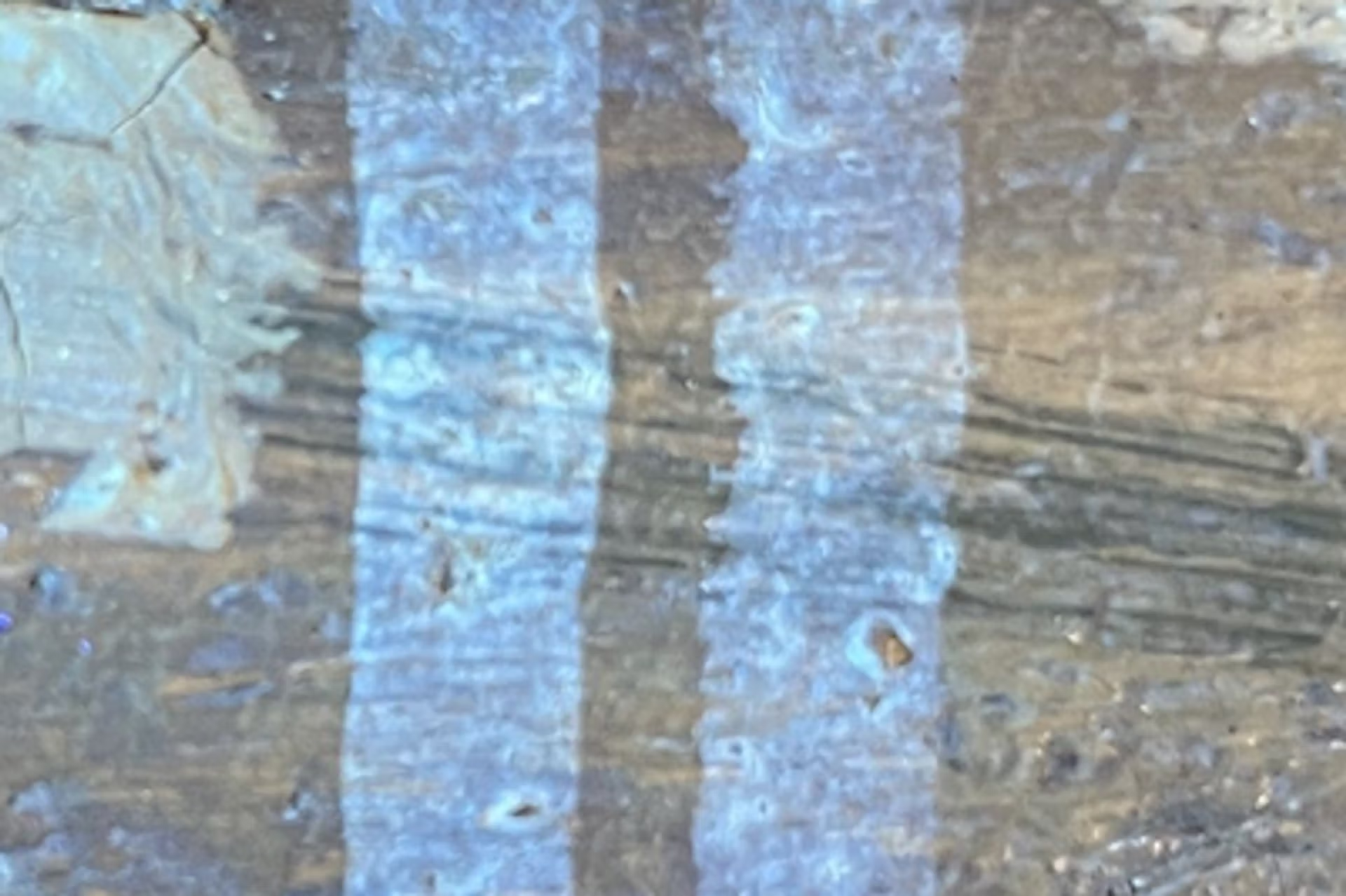
Drips, probably caused by linseed oil, which arehighlighted with ultraviolet light in a magnified segment of Poplars near Nuenen
Museum Boijmans Van Beuningen, Rotterdam
Into a Dutch museum
In 1903 Poplars near Nuenen became the first Van Gogh painting to be acquired by a Dutch museum, just 13 years after the artist’s death. The picture had always been fragile and it was lightly restored when it first arrived and more fundamentally, with relining, in the 1930s.
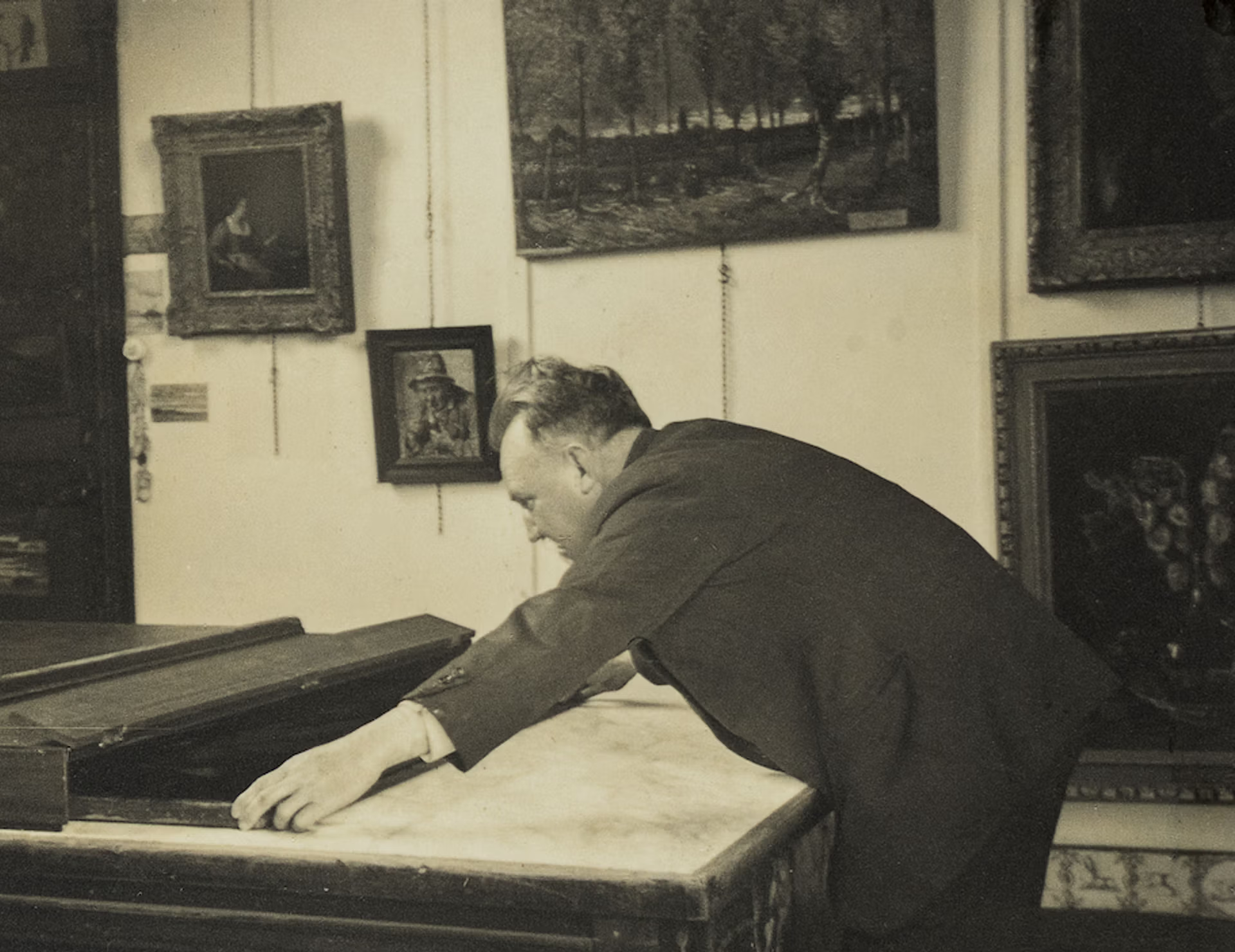
Restorer Hendrik Luitwieler with Poplars near Nuenen hanging on the wall (1930s)
The painting remained in Rotterdam until 1941. To protect it from bombing (which would soon devastate the city), it was first sent to a camouflaged wartime bunker in the sand dunes north of Amsterdam and a year later to a cave near Maastricht.
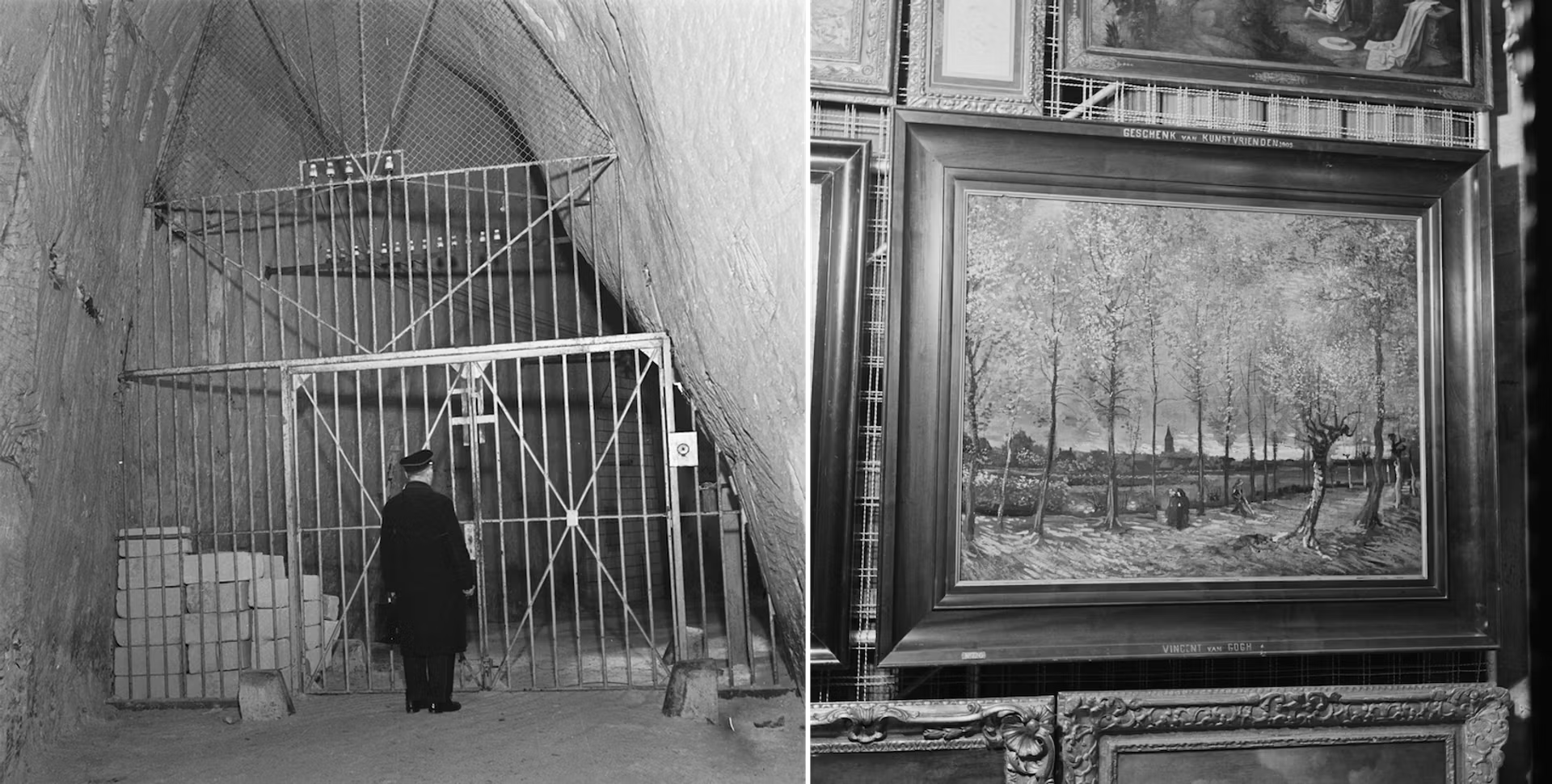
Left: the entrance to wartime storage at Mount Saint Pieter, Maastricht. Right: Poplars near Nuenen on a storage rack (1945)
Dutch National Archives/Anefo
In 1985 Poplars near Nuenen was lent to an exhibition in Japan, but a conservation problem was discovered. The museum’s conservators now report that “the painting unexpectedly had to be treated by a Japanese restorer under the watchful eye of the courier due to paint loss and to prevent the raised paint from flaking off”.
In view of its fragile condition, it comes as a surprise that Poplars near Nuenen was lent to nine further exhibitions after that. Most recently, in 2022, it was loaned for eight days to the Tefaf art fair in Maastricht (this was the occasion when armed robbers stole jewels reported to be worth over €35m), causing some concern to conservators. They now comment that Tefaf made “a daring request: they asked for the loan of the painting for the 2022 fair, and in spite of its extreme fragility the museum agreed.”
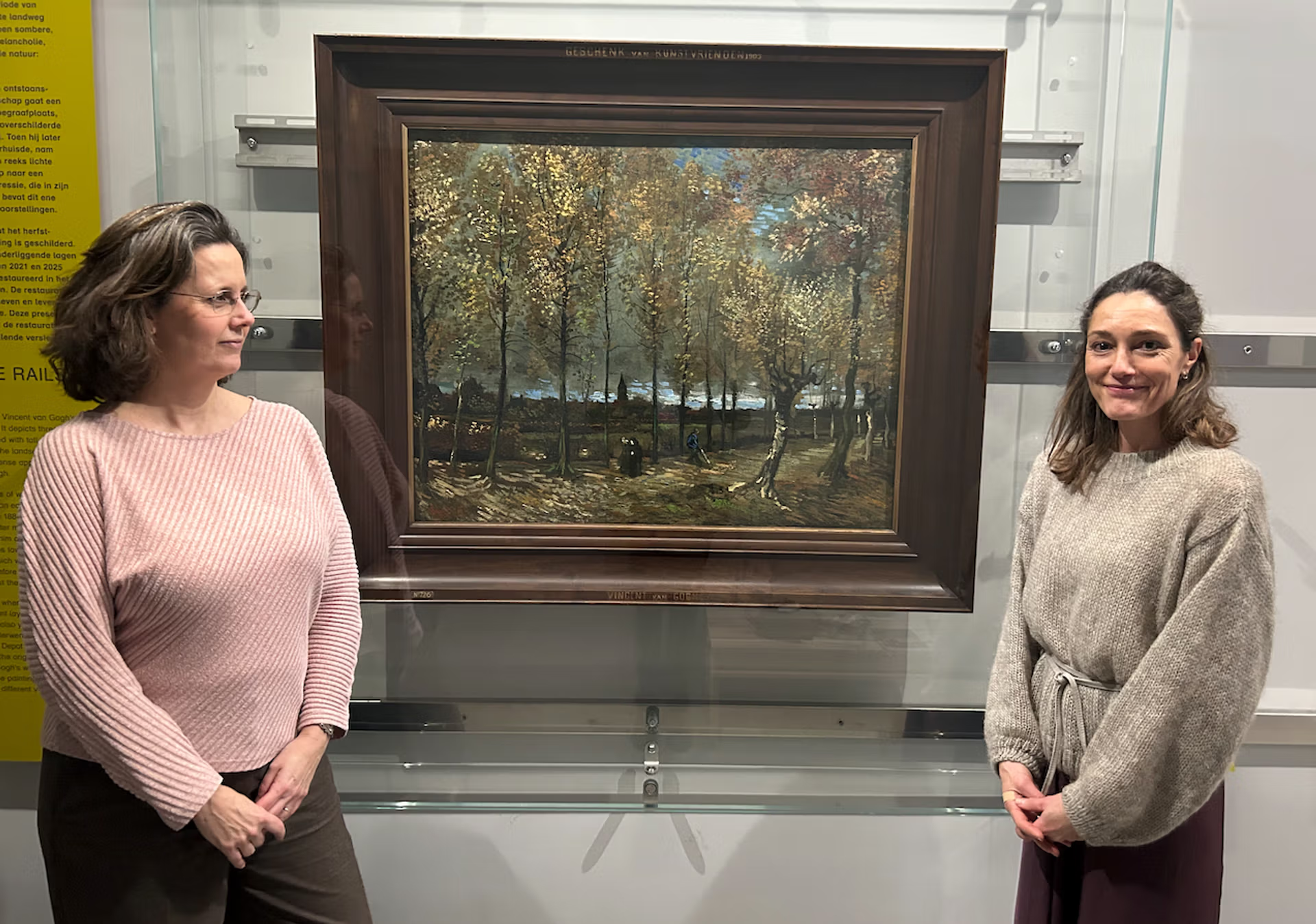
The newly conserved Poplars near Nuenen now on display at the Boijmans Van Beuningen Museum, with head of collections and research Sandra Kisters and conservator Erika Smeenk-Metz
The Art Newspaper
A display entitled Research on the Rail: Van Gogh’s Poplars near Nuenen is now opening to the public at the Depot of the Boijmans Van Beuningen Museum (until 7 February 2027). This display title reflects the Depot’s unconventional presentation, with Poplars near Nunen hung from a metal rail. It is accompanied by a catalogue, Symphony in Yellow, which details the research.
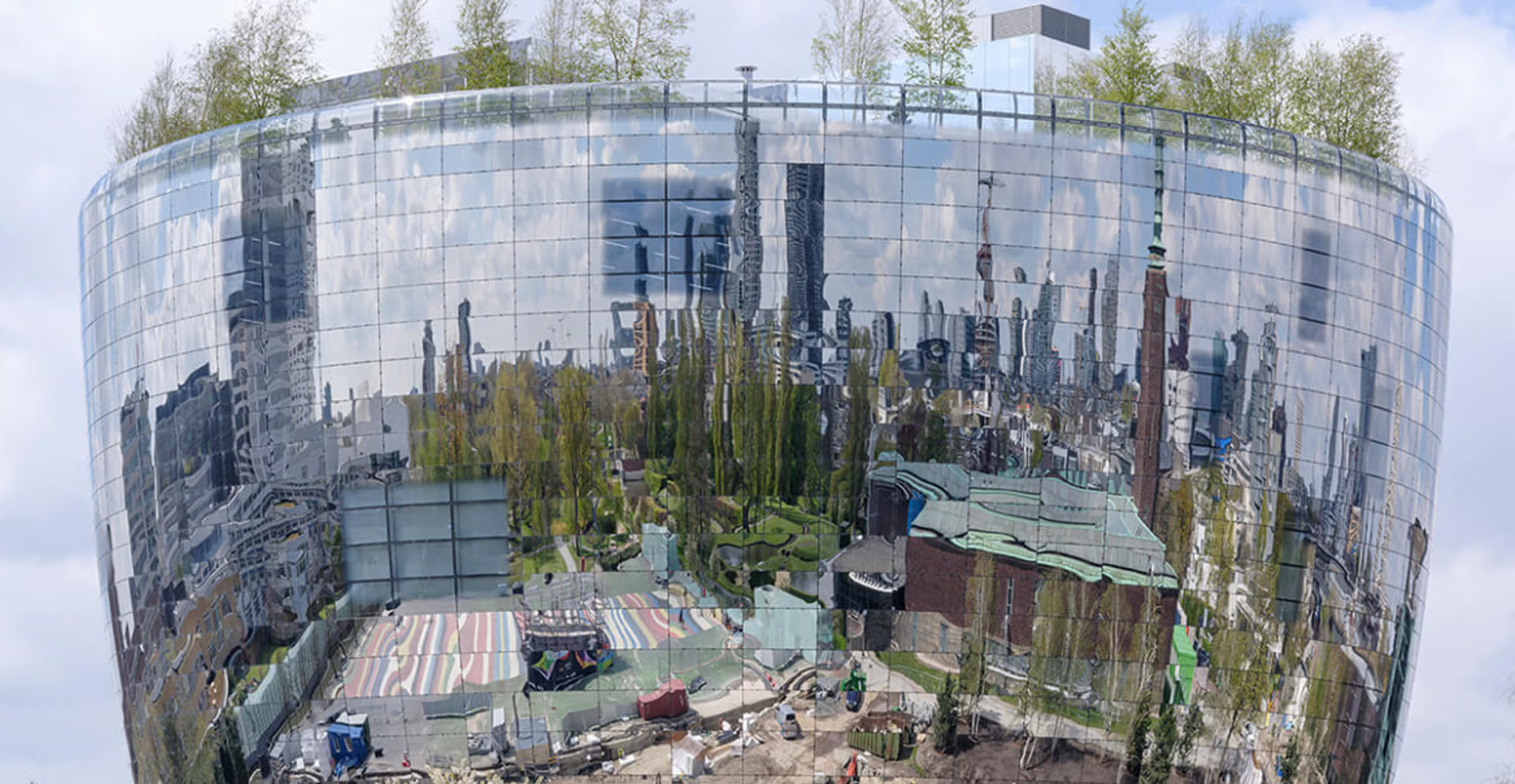
Exterior of the Depot of the Boijmans Van Beuningen Museum
Museum Boijmans Van Beuningen, Rotterdam
This current display includes two other Van Gogh paintings on loan: Autumn Landscape at Dusk (early 1885, Centraal Museum, Utrecht) and The Old Church Tower at Nueuen (May-June 1885, Van Gogh Museum, Amsterdam). There are also a few other relevant landscapes by other artists of the time.
Martin Bailey is a leading Van Gogh specialist and special correspondent for The Art Newspaper. He has curated exhibitions at the Barbican Art Gallery, Compton Verney/National Gallery of Scotland and Tate Britain.
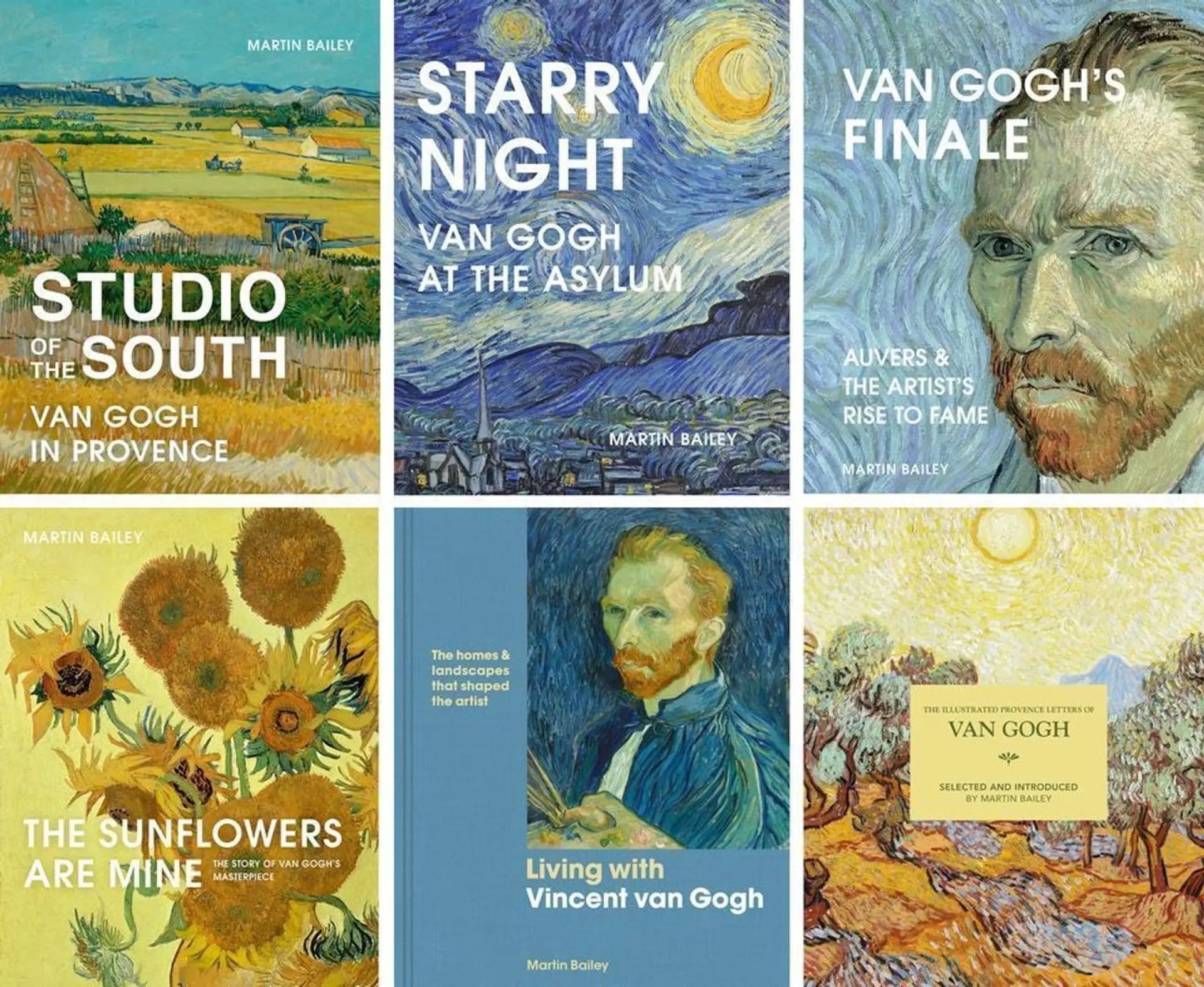
Martin Bailey’s recent Van Gogh books
Martin has written a number of bestselling books on Van Gogh’s years in France: The Sunflowers Are Mine: The Story of Van Gogh’s Masterpiece (Frances Lincoln 2013, UK and US), Studio of the South: Van Gogh in Provence (Frances Lincoln 2016, UK and US), Starry Night: Van Gogh at the Asylum (White Lion Publishing 2018, UK and US) and Van Gogh’s Finale: Auvers and the Artist’s Rise to Fame (Frances Lincoln 2021, UK and US). The Sunflowers are Mine (2024, UK and US) and Van Gogh’s Finale (2024, UK and US) are also now available in a more compact paperback format.
His other recent books include Living with Vincent van Gogh: The Homes & Landscapes that shaped the Artist (White Lion Publishing 2019, UK and US), which provides an overview of the artist’s life. The Illustrated Provence Letters of Van Gogh has been reissued (Batsford 2021, UK and US). My Friend Van Gogh/Emile Bernard provides the first English translation of Bernard’s writings on Van Gogh (David Zwirner Books 2023, UKand US).
To contact Martin Bailey, please email [email protected]
Please note that he does not undertake authentications.
Explore all of Martin’s adventures with Van Gogh here
