


In a historic military operation that flouted international law, the United States invaded the South American nation of Venezuela early Saturday morning, seizing the country’s leader, Nicolás Maduro, and his wife, Cilia Flores, who will face federal charges in New York. US President Donald Trump has openly said that his administration will “run” the country until a favored administration takes control, and said that the US will revive the crumbling petrochemical infrastructure in a nation that sits on some of the world’s largest oil reserves, even noting that he informed oil industry executives before the military strike, while not letting Congress know until the deed was done.
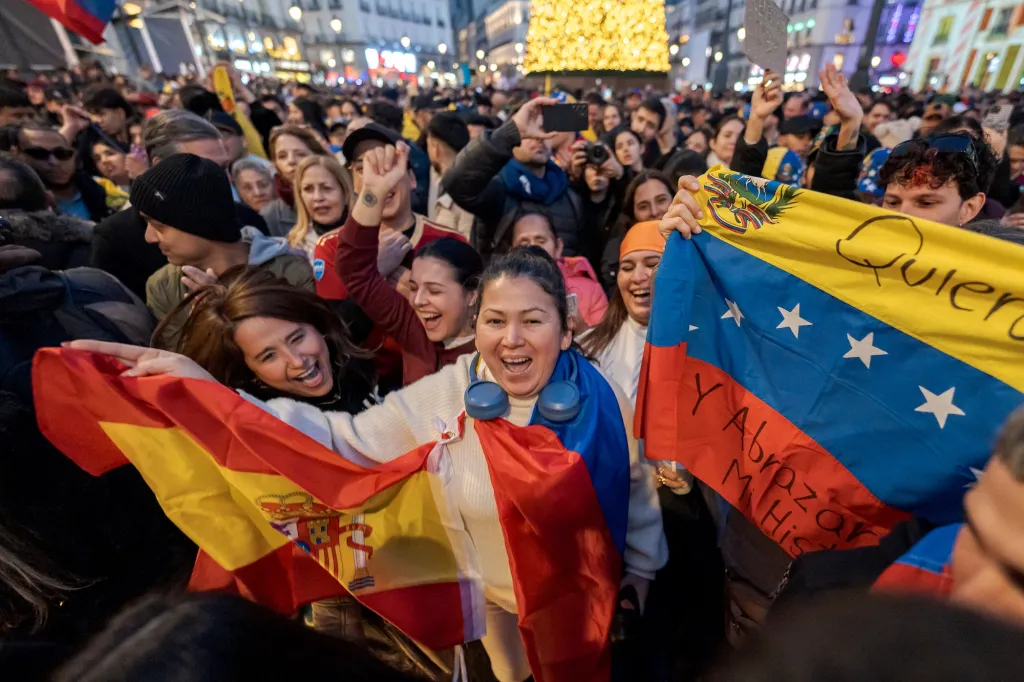
Millions have gathered throughout the world to protest the return of gunboat diplomacy and naked regime change, even as many Venezuelans globally have celebrated Maduro’s ouster. Vice President Delcy Rodriguez has been sworn in as interim President; questions remain as to whether her rule will differ substantially from that of Maduro, but Trump has openly threatened her with a worse fate than Maduro has met.
Venezuela has been ruled by murderous dictators for decades, and its cultural sector has suffered accordingly. Hugo Chávez took power in 1999 and crashed the nation’s economy. There have been deadly riots, coup attempts, shortages of food, severe poverty, and inflation that at one point reached 1.4 million percent. Millions have fled, with artists, dealers, and cultural leaders setting up shop in friendlier places, like New York, Paris, Mexico City, and Buenos Aires.
A cultural capital for much of the 20th century, Caracas has several notable museums, and the country historically robustly funded the arts. That has not been the case since Chávez took control. Contemporary artists are seen as enemies by the state because they are thought to be under the influence of capitalism.
Artists, art dealers, and arts administrators in Caracas and in cities from Miami to Madrid are closely watching the situation.
“Caracas was the capital of the cultural scene in Latin America. Not anymore,” said an arts administrator from Caracas, who could not speak publicly for fear of retaliation from the government, in a phone interview. “The country’s museums are in a terrible state. Lately, the cultural scene has had some movement but only from the private sector.” She named galleries that participate in international fairs, like GBG Arts (founded by Gabriela Benaim Ginnari and Mario Matos) and Beatríz Gil, both in Caracas, and galleries abroad founded by Venezuelans, such as Ascaso Gallery and Durban Segnini Gallery, both in Miami.
“Artists might sell one piece or two pieces, and this is their only income,” the arts administrator said. “The museums are not doing important exhibitions. I know there have been exhibitions at the museum of contemporary art of artists, big names like Picasso. But people doubt the authenticity of the work.
“We don’t like the way it was done, of course,” the administrator continued. “If you look at it objectively, this is completely crazy. But we need a change. On Saturday, some people called me saying we had to celebrate but I didn’t feel like celebrating. I want the country to grow and for people to have opportunities. Maybe things will get better but come on, another president says, ‘I’m going to run the country?’ What is this? But we need something radical. It’s going to be a transition. Let’s see how it’s managed.
“No one is in the streets protesting. It’s only the people who have to go to work. There are government forces with long guns in the streets. They’re stopping people and checking their phones.” People don’t know whether to carry their phones and risk having incriminating material found on them, she said, or leave their phones at home, which could arouse suspicion. “Maduro has gone,” writes the New York Times, “but repression in Venezuela has intensified.”
Artist José Antonio Hernández-Díez was born in Caracas and lives in Barcelona. After coming to prominence in the 1980s, he showed in the Venice Biennale (1993) and the Gwangju Biennale (1995), and had solo shows at the New Museum in New York (2003) and at MACBA in Barcelona (2016).
“It was almost seven in the morning when my son woke me up and gave me the news: ‘Dad, what I told you would happen is happening,’” Hernández-Díez said in an email. “I thought he was referring to something around the house, but then he abruptly told me about Maduro—that they had taken him away. For years, we thought that with his downfall, everything would end. Nothing could be further from the truth.
“Hours later, I heard an analyst describe it as a ‘headless snake,’ and Don Chaffey’s film Jason and the Argonauts came to mind. I watched it many times, and I was struck by the image of the hydra, with snakes biting one another and others without heads.
“That is exactly what seems to be happening in Venezuela: a Medusa with snakes that keep moving, biting each other, some without heads, but all equally dangerous. And so, we continue to wait and see what happens, while the situation becomes increasingly hairy.”
Luis Molina-Pantin, Best-sellers -Nacional- (Hugo Chavez), 2001-2004.
courtesy of the artist
Artist Luis Molina-Pantin lives in Mexico City and often travels to Venezuela; his work resides in a host of international institutions, from the Galeria de Arte Nacional in the Venezuelan capital to the Museum of Modern Art in New York. He will be included in the group show “Telenovela” at the Americas Society in New York this fall.
“It’s a very delicate situation,” he said in a phone interview.
“Countries like Cuba, Mexico, and Brazil have produced very good artists in quality and quantity. Then theres Argentina, or maybe Colombia is in fashion. Brazil is a phenomenon. São Paulo galleries are really well respected. In Caracas, there’s no art world. It’s been demolished.
“Chávez never recognized contemporary art. He said it was elitist. When Chávez came, the museums took out all the contemporary art and converted everything to folkloric art, for example. When the museums went down the private sector started creating spaces. That’s what actually is functioning. The most famous one is the Centro de Arte Los Galpones. The other is the Hacienda La Trinidad Parque Cultural.”

Supporters of the Communist Party of India and the Student Federation of India staged a protest rally outside the American embassy in Kolkata, India, on January 5, 2026, against the USA’s attack on Venezuela and the capture of Venezuela’s President Nicolas Maduro and his wife.
Debarchan Chatterjee/NurPhoto via Getty Images
Dealer Federico Luger lived in Venezuela in his early life and cofounded his eponymous gallery in 2005 in Milan; it was renamed Wizard Gallery in 2020. Representing an international roster of artists, the gallery has participated in fairs such as Artissima in Turin, Expo Chicago, Zona Maco in Mexico City, and Untitled in Miami and San Francisco.
“Venezuela was never a perfect country, but it was deeply social. People from different backgrounds and culture were part of everyday life,” said Luger in an email. Hugo Chávez fostered resentment toward foreigners and those with different ideas, which normalized hostility and contributed to rising crime and fear. Chávez came from the military and led with an authoritarian mindset. Yet under his successor, Nicolás Maduro, the situation worsened. Institutions collapsed, violence became systemic, democracy was hollowed out, and justice disappeared. These are dark years in our history.
“My family had lived in Venezuela for over fifty years and built a construction business there, but we were forced to leave. Corruption became overwhelming. Arbitrary detentions, kidnappings, and torture became part of daily life. This is not a political opinion—it is a reality witnessed by countless Venezuelans and documented by international observers.
“In 2024 we went to an election and Venezuelans voted Maduro out. Many governments—including the United States and European actors—refused to recognize his victory due to lack of transparency and electoral fairness. Maduro’s refusal to respect the will of voters meant he stayed in power as an authoritarian figure rather than as a democratically elected leader.
“As Venezuelans, it is difficult to fully explain what this moment feels like to those who are not from the country. There is a complex mix of emotions that can coexist. On one hand, there is relief—and even cautious hope—at seeing an authoritarian figure who usurped power and did so much damage out. At the same time, there is concern about what comes next, particularly when change involves the intervention of foreign actors. These conflicting emotions are not contradictory; they are both valid, and they reflect the deep trauma and uncertainty Venezuelans carry after decades of political and cultural devastation.
“The cultural damage has been immense. Venezuela once had serious collectors and a vibrant art ecosystem. Artists like Jesús Rafael Soto and Carlos Cruz-Diez were respected worldwide. Over time, collectors and creatives were forced into exile, and Venezuela’s artistic voice faded from the global stage. Independent cultural institutions disappeared and art magazines vanished.
“For more than two decades, Venezuelan artists lacked freedom, platforms, and communication. The world can easily name American or European artists, but Venezuelan names have become nearly invisible.
“What has happened in Venezuela is profoundly cruel and difficult to grasp from the outside. A society’s ability to dream, to create, and to be seen has been systematically eroded. Restoration of cultural life will require justice and the space for Venezuelans to reclaim their creative spirit.”
Adriana Cifuentes is an artist living in Caracas, who sent a statement which is quoted below in full.
“A deafening roar; deep, dry, and profound, wakes me with a start. I look towards the terrace of my room, which has a glass door that I always leave open, and on either side, a large window with a view of the hills of the White Rabbit Valley, where Fort Tiuna, a military zone and the residence of the president of the republic, is located.
“I see the sky turn into a tongue of red and scarlet fire, covering everything. I notice that the windows begin to shake, and I have the impression that they are going to break; but they hold. The bed begins to move and roll forward, a little, but forcefully; this is accompanied by a number of small white spheres of light, like flares, whose reflections move restlessly across the sky and the walls of my room, but I hear the noises and the racket they make when they hit the ground.
“I think the first one was a bomb, but then missiles or drones, or both, of course, given my ignorance. But all of that seemed to me a wonderful, confusing, and terrifying vision. I begin to hear all kinds of sounds that come together, becoming sharp and more continuous, filling the sky with beeps, whistles, explosions, and detonations. Lights like lightning bolts, taking their place in the sky at great speed. Immediately, I realize that it is finally happening; it was the attack by the unpredictable Trump, so longed for, so awaited, so desired.
“I begin to laugh uncontrollably, and I can’t contain my happiness. I quickly get out of bed and go out onto the terrace to get a better view of everything that is happening just 500 meters from me. With a feeling of fear and happiness that mixed and alternated successively within me, I begin to shout, ‘We are free! We are free!’
“Immediately afterward, helicopters pass overhead. Many of them. With black and distinct silhouettes, with blades cutting through the heavy air, like enormous birds of prey, each one searching for its prey, I feel all that immense power of fire and destruction that they bring, and it terrifies me; I shudder, and a state of divine justice, of vengeance and the hand of God, overwhelms me.
“Bursts of machine gun fire begin to sound, and all those jumbled noises, the red sky, full of black smoke, lights and fire, all at the same time. It reminded me of Dante’s Inferno, of the movie Apocalypse Now, dangerous, hallucinatory and unreal.
“At that moment, the bursts of shrapnel bring me back down to earth. Suddenly I realize that it is people who are receiving those shots, there is fighting, hand-to-hand combat, it is no longer impersonal war machinery, it is bursts of rapid gunfire. They are killing each other; they are dying, in a matter of minutes, I don’t know how many. The bombs destroy things, those things that they like so much; but the bursts of gunfire remind me of living human beings; one bullet for each man; each man with a bullet. Wounded people, dying people, it disturbs me. It’s too much, I thought. There are too many dead, I don’t like it, it scares me, and I go into the house, and what amazes me most is my happiness and how little I care that all those Chavistas are dying. Anyway, I’m not the one killing, nor am I the one committing any wrongdoing. But I am the one who wishes them ill.
“I am an ordinary person, a visual artist and a psychology professional, who has fought hard for my country, with my heart, with my words, and the pain of the struggle has reached my body. I have watched as they sank us into a sea of excrement, little by little, for years. Those satraps, evil-minded individuals, hungry for power, as compensation for their own shortcomings. Liars and cheats by nature; They flooded every aspect of Venezuelan life with vulgarity, baseness, mediocrity, the hatred they felt, the envy that gnawed at them, the greed they flaunted, and they called it ideology. Full of ill intentions, and many others ignorant, driven by vengeful votes, infected by their complexes and feelings of inferiority.
“At first foolish, ignorant, inexperienced, but eager to learn about power and control. Also about the refinements of evil, to degrade wills. From the spiritual to the material, from the inside out, applying finely tuned instruments, with the advice of other countries that were also quite disturbed, countries from other latitudes and other hemispheres, whose influence was already tried and tested, driven by the stench of money, whose intention was to take it from those brutes. But these brutes, at the same time not so foolish, and cunning as street rats, also intended to use them, perfectly understanding the power that money gives, which intoxicates everyone with greed, and they used it as a form of exchange, to buy everything that was for sale.
“Their wickedness gradually grew, becoming more refined and sophisticated, they learned under the gaze of the world, which didn’t care about them, while they became specialists in crude and indiscriminate brutality. They submerged the many into poverty, and in its superlative form, misery. We were the wretched of Victor Hugo, to the point of fighting with dogs over garbage. I saw it.
“Hopelessness about the future, transformed into escape and flight. Resignation to dying without a fight, due to lack of medicine and healthcare services, and almost most importantly; they exerted control through exemplary fear, torture, kidnappings, and imprisonment, culminating in paralyzing terror; which petrifies you, especially the ability to think. That’s where dignity is lost, and you’ll do anything.
“They corrupted every man, every soul, every spirit; some were stripped of the clarity of good and evil, others were infected with servility, stained with insatiable desires for money that only bring emptiness.
“A catalog of infinite evil that entailed a descent into Hades as a journey of the human soul, to the lowest and most abject depths, and full of dangers, for “some” of us, who tried to learn something, to engrave it in our memory and not carry it as a weight in our hearts.
“In their minds, there was never any room for others, or the common good. They were there to extract, suck, drain, and diminish everything, and everything means everything, with greed and desperation.
“I know this process is not over. For approximately six months, when the first ships from the United States began to arrive, the planes and aircraft carriers, we were truly hopeful. Would there really be a change at last? Would it really be possible? Just the possibility sends shivers down my spine and fills my eyes with tears.
“We have protested throughout these twenty-six years, we have left many of our hopes and ambitions on the asphalt of the streets, along with physical exhaustion and mental bewilderment. Massive marches where joy sometimes reigned, fueled by the hope that “This government will fall,” singing and waving flags vigorously, dancing to the deep rhythm of drums from the Black coast, with musicians who, with the beat of their palms, made their drums and taut skins resound, the powerful and dark rhythms of the sea, and all kinds of bodies moved, provoking and escaping and desiring and rejecting, and the women were free and the men too. Only sensuality, touches, rum, and rumba. As a backdrop, the flag waving, as a source of power, as a magic talisman and the promise of freedom.
“Sad and hopeless protests with heavy and slow steps, like processions or funerals, where no one spoke, because there was nothing to say, and you only carried the weight of years of your life, which vanished, wasted by the lack of opportunity.
“Other monumental marches, at night and with candles, inciting the shadows to express themselves and influence us, creating transcendent realities, and thanks, upon our desires.
“We chanted slogans like prayers, like mysterious and sacred chants; because a million people singing and chanting, on the narrow streets of Chacao, defied fear itself and the very belief that the most important thing was your own life. That was a shiver and light, it was a radiance that finally allowed you to breathe; it was a direct connection to the truth, whose echoes resounded in the walls of the small buildings, which, being so accommodating, transformed into true cathedrals; returning those echoes to us as expansive waves, imbued with holiness, that exploded over us like astonishing ecstasy, both Christian and pagan.
“It was a communion of the human with the divine, and what grew was a brotherhood.”
