


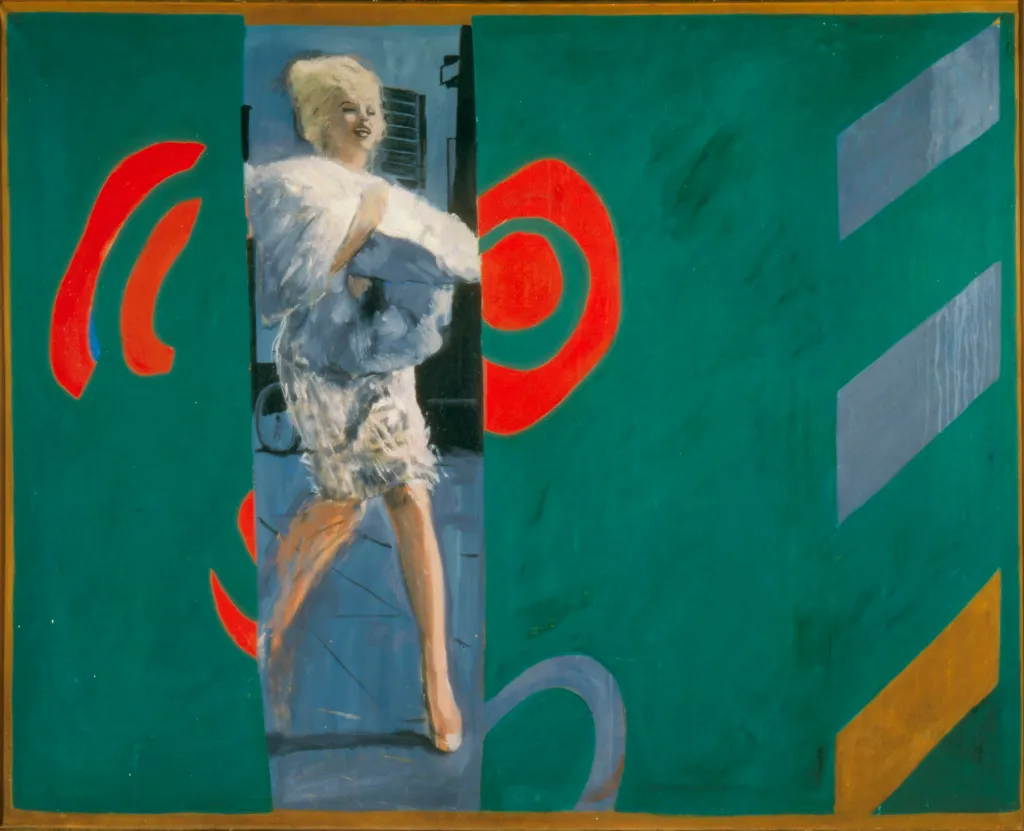
By all appearances, Pop art is the quintessential American genre, born of Hollywood, Madison Avenue, comic books, and a mid-century cornucopia of TVs, cars, and appliances. Its marquee names—Andy Warhol, Roy Lichtenstein, James Rosenquist, Claes Oldenburg (among a host of others, including female artists such as Rosalyn Drexler, Marisol Escobar, and Marjorie Strider)—were all based in New York City, the world’s art capital at the time. But while they became synonymous with Pop art, its origins weren’t in the United States.
Instead, Pop art was conceived in postwar Britain before spreading to the States, continental Europe, and other parts of the world throughout the 1960s. The spark came in April 1952 when a collection of artists calling themselves the Independent Group (IG) gathered at London’s Institute of Contemporary Arts (ICA) to discuss the efficacy of modern art in the age of consumerism.
The meeting included Richard Hamilton, William Turnbull, Nigel Henderson, John McHale, and Toni del Renzio, as well as art critic Lawrence Alloway. But one figure in particular, Eduardo Paolozzi, was its prime mover.
