


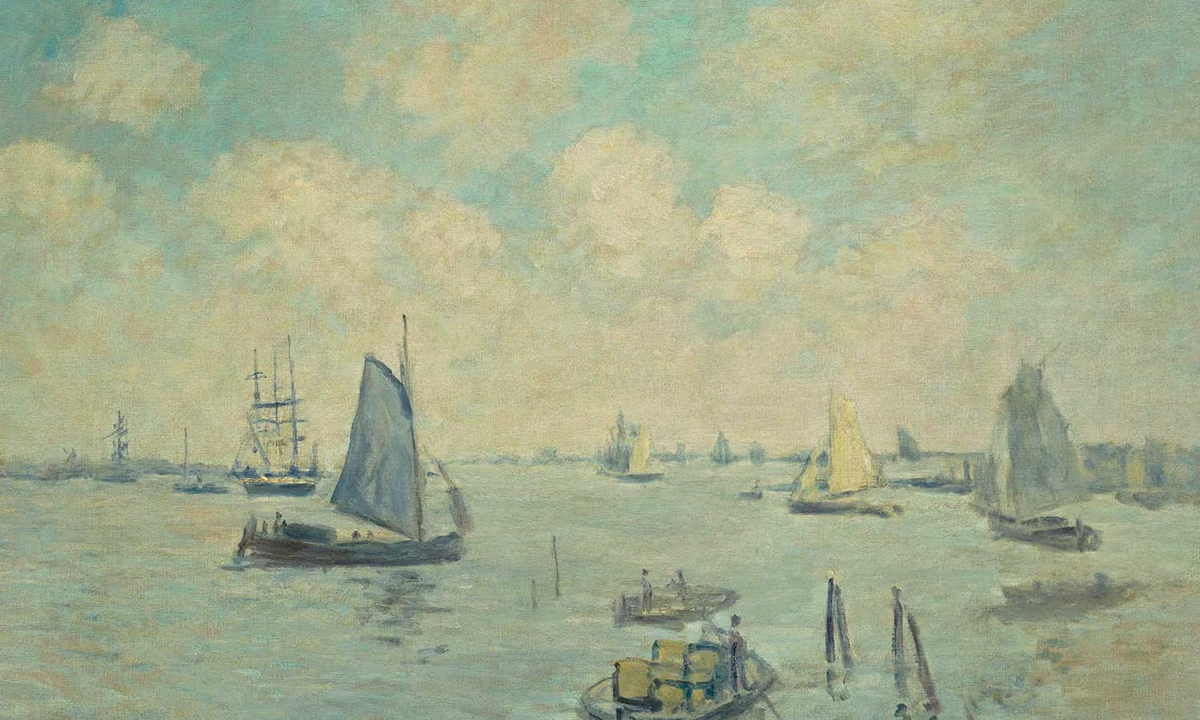
A long-running dispute involving the Wildenstein art dynasty has resurfaced, centring on a complex 2004 transaction tied to works by Claude Monet, and which raises broader questions about disclosure standards in the art market.
The case traces back to the 1980s, when the dealer Daniel Wildenstein identified Adolphe Monet Reading in a Garden (1867), a significant early work depicting the artist’s father and held by the family of Monet’s brother, Léon. After decades of unsuccessful efforts to acquire it, the painting was eventually secured in 2004 by the dealer’s son, Guy Wildenstein, through a €4.5m deal combining cash and works of art by Pierre Bonnard and Alfred Sisley, among others.
Among the exchanged works was Marine, Amsterdam (1874), also by Monet, which was later resold via Christie’s. Its attempted sale in 2020 triggered scrutiny after restoration revealed that the original canvas had been lost during a transfer process, significantly diminishing its value.
Conflicting expert opinions have followed. While Wildenstein’s advisers attributed the damage to post-sale handling, court-appointed specialists concluded in 2024 that the alteration predated the transaction and that the gallery was likely aware of the work’s compromised condition.
The sellers have since filed a claim alleging “vitiated consent” under French law, arguing they were misled on an essential characteristic of the painting. Proceedings are underway in Rouen with a court date set for 7 May.
Although the Wildenstein gallery is not accused of causing the damage, the case underscores persistent opacity in high-value art transactions. The disputed Monet has since been resold and reportedly belongs to Larry Ellison, the billionaire co-founder of Oracle.
