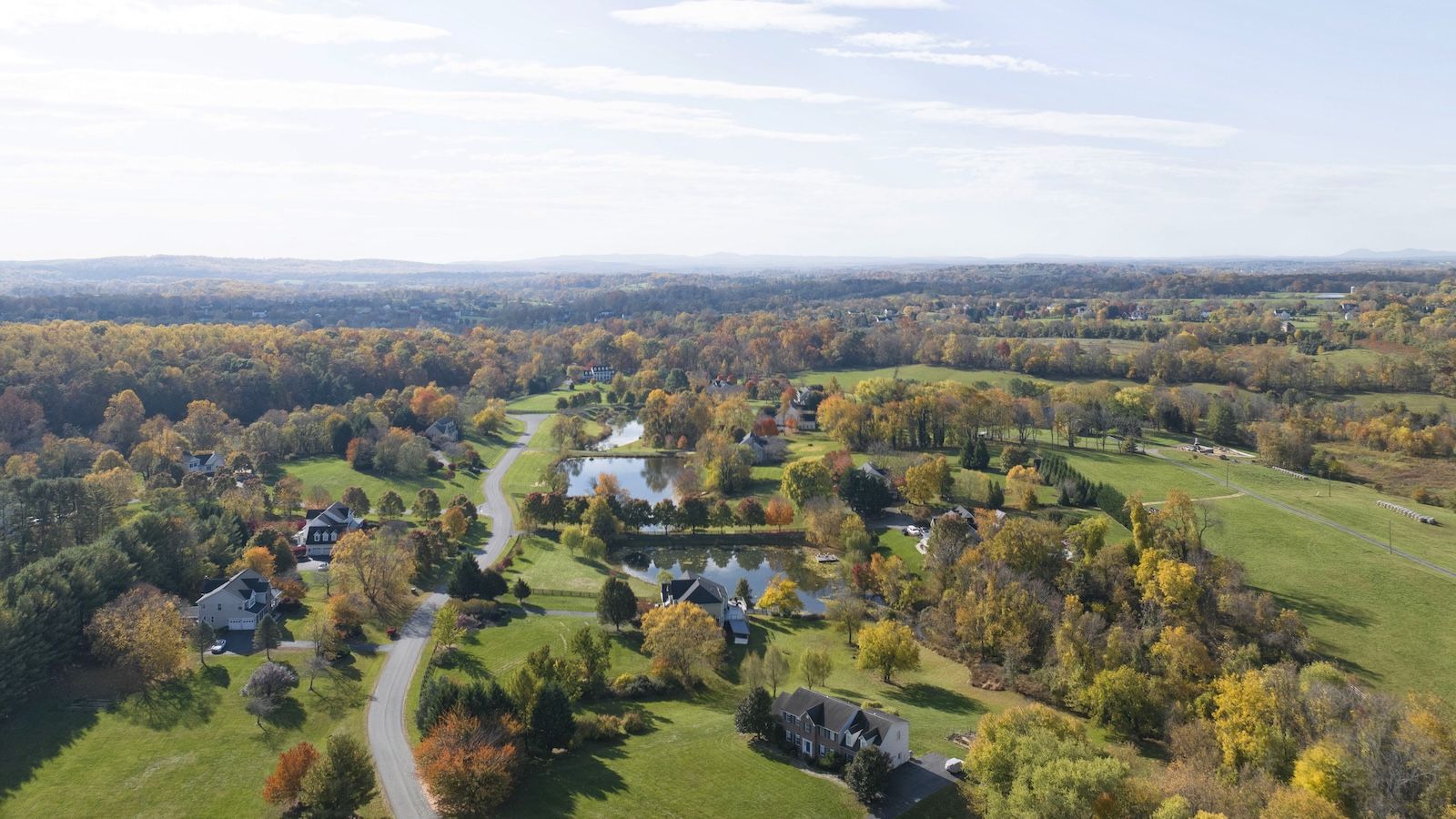
Driving the highways just west of Washington, D.C., you’ll see monuments and museums on one side, corporate offices and government buildings on the other. But after a short while, the offices become trees, the monuments become cascading mountains. You end up on a dirt road, among vines, views and stillness.
A wine weekend in Northern Virginia is one where you can do it all. That sounds like a big statement, but Northern Virginia has a distinct advantage over many other U.S. wine regions: geographical convenience. Flying into Dulles International Airport places visitors within a 20- to 30-minute drive of premium wineries in Loudoun County and the Middleburg AVA. This makes the region one of the most accessible wine destinations in the country.
The proximity to D.C., brings with it a level of flexibility for itineraries, especially for groups who want to intersperse wine tasting with other activities. Visitors can spend the morning tasting distinctive wines, enjoy a museum or nature in the afternoon and experience fine dining in the evening. This seamless partnership between rural agribusiness and urban nightlife makes for a weekend worth a trip.
Virginia wine and fine dining are big draws
In 2024, Virginia attracted nearly 45 million visitors who spent more than $35bn across the state, putting it in the top 10 of U.S. tourism economies. Food and beverage made up nearly 30% – nearly $10 billion – of total spending that year. Northern Virginia accounted for close to half of both the food and beverage spending (around $4.2bn) and total spending (about $16bn).
“For the most part, a traveler wants to know, ‘Where can I go drink wine, enjoy beautiful scenic views, and find fun things to do nearby?’ For us, it’s about selling the experience and why we’re different,” said Juliana Thomas, director of communications for the Virginia Tourism Corporation. She and her team build itineraries that give travellers a way to experience all of the things the state has to offer, even when wine is the main focus of the trip.
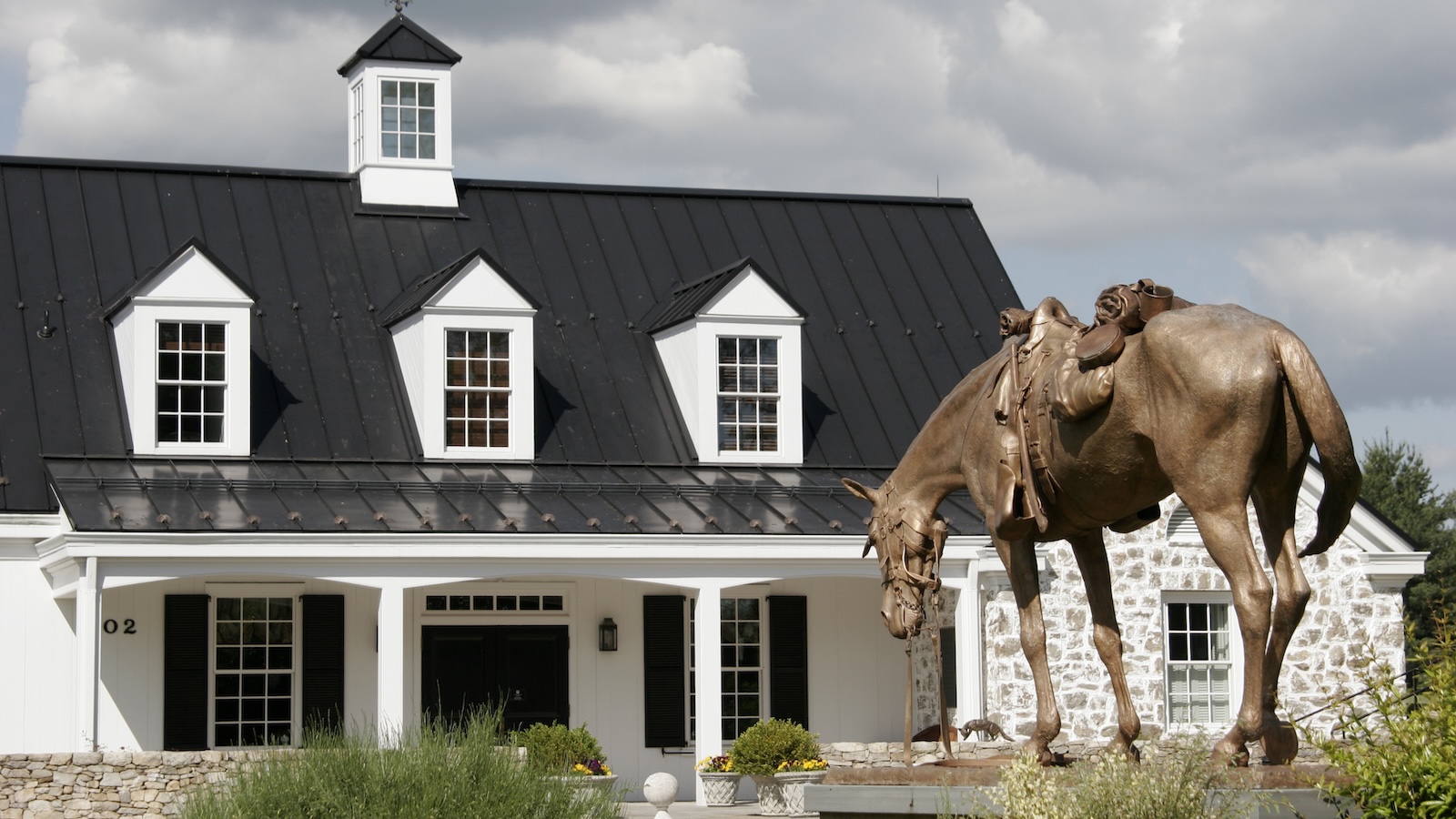
‘There are some really unique spots that pair beautifully with a sophisticated wine audience,‘ Thomas noted about Northern Virginia. ‘I think of the National Sporting Library and Museum in Middleburg, staying at the Goodstone Inn, or eating at the historic Red Fox Inn & Tavern or the nationally recognised Red Truck Bakery. There is so much to discover right next to the vineyards.‘
Wineries to suit many interests: from Bull Run to Stone Tower
Northern Virginia is now home to more than 110 wineries, accounting for more than a third of the state’s 300-plus wineries and encompassing some of its top names. The region spans the area from the Potomac River west to the Blue Ridge Mountains, including Loudoun and Fauquier Counties and beyond. The land is diverse, with elevations from 400 feet to 1,900 feet and soils ranging from greenstone and granite along the mountains to sand, silt and shale farther east.
Working together, winegrowers and producers have helped the area evolve. ‘Ten years ago, our focus was entirely on baseline quality, ensuring wines weren’t flawed or structurally reduced. Today, the shift is phenomenal,’ says Aimee Henkle, owner of Lost Creek Winery and treasurer of the Loudoun Wineries & Winegrowers Association. As Loudoun County expands to 50 wineries, the organization is now focused on telling a more nuanced story – one focused on subregional identity and a sense of place.
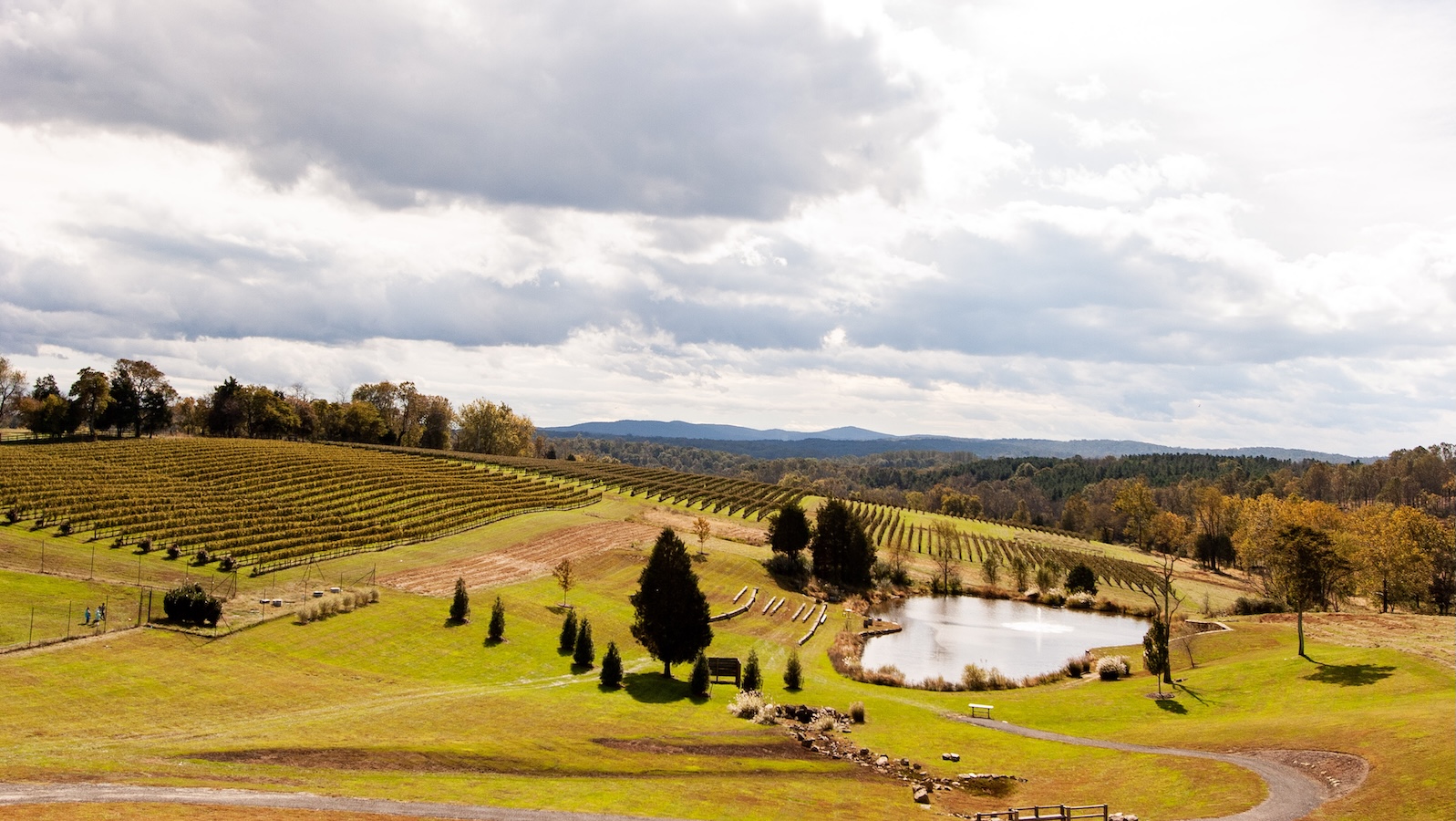
Wineries in Northern Virginia are as diverse as they are accessible, serving a range of interests. For the wine lover who is passionate about history, the Winery at Bull Run is perfect, sitting between a battle post and wartime hospitals from the two major Battles of Bull Run during the Civil War. The winery offers a wide array of varietal wines and blends, including Cabernet Franc and Norton, a hybrid grape first grown in Virginia.
A visit to Stone Tower winery feels like leaving D.C. for Napa Valley. Its unobstructed views of the Blue Ridge Mountains allow the 400-acre property to dazzle visitors. The views are matched only by the impressive hospitality of the friendly, knowledgeable staff, who host ‘somminar’ wine education events in the evening. Stop in for a tasting or grab a glass of their estate sparkling wine, Chardonnay or Nebbiolo.
Northern Virginia’s fine-wine history: Linden Vineyards
After Prohibition, Virginia didn’t begin to rebuild its wine industry until the mid-1970s. Pioneers like Italy-born Gabriele Rausse, who planted vitis vinifera to help launch Barboursville Vineyards near Charlottesville, and Burgundy-trained winemaker and consultant Michael Shaps, who also opened the first contract winemaking facility in the state in 2007, paved the way for the modern era in Northern Virginia.
When Linden Vineyards opened in 1988 in the Blue Ridge Mountains, it helped define the state’s style and chart a path forward. Founder and winemaker Jim Law is known as the architect of modern Virginia wine. He pushed the state away from casual, tourism-focused operations towards the terroir-driven, scientific standards that drive the state’s winemaking today, introducing site-specific viticulture and single-vineyard wines.
Law also mentored notable Northern Virginia winemakers, including Rutger de Vink of the famed RdV Vineyards (now under French ownership and renamed Lost Mountain) and Jeff White of Glen Manor.
Today, Linden boasts 72 acres under vine, spread across three properties. The space continues to focus more on quiet, educational, immersive experiences rather than entertainment and events. Check out their Hardscrabble Chardonnay, Petit Manseng and Bordeaux blends. The Chardonnay vines sit on well-drained, volcanic-based greenstone, which gives the wine a distinct minerality and the complexity and structure to age for a decade or more.
A new generation of winemakers: Walsh Family
The contributions of Law, Rausse and Shaps ushered in a new wave of winemakers, including Matthieu Finot of King Family Vineyards and Maya Hood White of Early Mountain Vineyards in the Charlottesville area. In Northern Virginia, this second generation is well represented by Nate Walsh of Walsh Family Wines.
Walsh Family clearly takes inspiration from Linden, focusing on expressing the local terroir and bringing it into the tasting room with side-by-side comparisons that make it clear why site-specific viticulture matters to the end result. ‘For example, we bottle our Sauvignon Blanc from different vineyard sites. When guests taste the wines and experience those differences firsthand, it’s a light-bulb moment. Terroir shifts from being an abstract wine term to something tangible and easy to understand,’ says Walsh Family founder Sarah Bryant Walsh and Nate’s wife.
For an intriguing tasting experience, compare the following two pairs at Walsh. For whites, look for the Sauvignon Blancs from the Bethany Ridge and Twin Notch Farm vineyards. Bethany Ridge sits on shallow, stony soils and its wines tend to be ripe and more textured, while Twin Notch’s silty loam results in a leaner, crisp and aromatic profile. For reds, try the mineral-driven, structured Cabernet Franc from Dutchman’s Creek against the softer, more fruit-forward version from Twin Notch Farm.
Going high-end and more exclusive: Crimson Lane
As the D.C. metro area consistently ranks as one of the wealthiest regions in the country, that has created a demand for luxury experiences and elevated tasting spaces. Wineries like Crimson Lane are working to meet this demand.
This winery is uphill from Linden Vineyards, with 160 acres of forest and views of the Blue Ridge Mountains. The tasting room is clean, sleek and modern, designed by Napa-based architects to distinguish itself from other wineries in the state.
Visiting Crimson Lane requires a reservation, with a maximum of six guests per reservation, ranging from $45 tastings to a $110 tasting of the full portfolio. The winery focuses on low-yield, high-elevation grape growing, only producing about 4,000 cases per year, which go to wine club members and special events. The winery is known for its rich, bold, red blends, Collina and Parral. Both boast concentrated dark fruit, with ripe tannins and acidity that provides a great balance.
Crimson Lane serves as a compelling example of the contrasts in Northern Virginia wine country, with its proximity to the big-city amenities of D.C. and the charms of small-town life near the Blue Ridge Mountains.
While wine lovers can spend hours exploring the area’s sense of place through the vineyards and in their glasses, they can also keep their whole family or group of friends happy enjoying Virginia hospitality, American historical and cultural sites, music, hiking and other nature activities. This combination turns a wine weekend into an unforgettable adventure for all.
About a two-hour drive from Middleburg, travellers can experience another part of Virginia wine country. Charlottesville – home to the University of Virginia, Thomas Jefferson’s Monticello estate and other historic and cultural attractions – is worth a weekend of its own, with more than 40 wineries in the area, but can also be visited as a day trip.
Barboursville Vineyards is the oldest active winery in the state, celebrating its 50th anniversary in 2026. The winery is well-known for its Bordeaux-style blend, Octagon, only produced in the best years. Dominated by Merlot and Cabernet Franc, Octagon showcases layers of complexity, dark fruit notes and tobacco. The wines age beautifully, and the winery has a library spanning more than 30 years of vintages. Founded by an Italian entrepreneur, Barboursville also highlights red and white Italian varieties such as Sangiovese and Vermentino.
Early Mountain Vineyards is an expansive property that also boasts a premier dining experience, led by chef Tim Moore who worked at famed The Inn at Little Washington. The winery earned a Gold Medal at the 2026 Decanter World Wine Awards with its 2022 Quaker Run Cabernet Franc, and its complex, structured Bordeaux-style blends Rise and Eluvium display rich fruit with spice and earth notes layered underneath. Vibrant acidity keeps these more intense reds fresh and lively. Also of note: Early Mountain takes an innovative approach to Petit Manseng, fermenting the variety from southwestern France in a “perpetual lees” barrel that contains the lees from a decade of vintages.
Wine region 101: Victoria
Panel tasting results: New Zealand Sauvignon Blanc on show