Five years ago in an article for Decanter I made a claim that Cinsault was the most underrated red grape variety in the world. I’ve held this belief for some time, and I stand by it still.
In 2021, I organised a blind tasting of Cinsaults from all over the world and it revealed countless brilliant examples of this wonderful grape.
So, five years later, it was time to repeat the exercise to see how Cinsault has progressed.
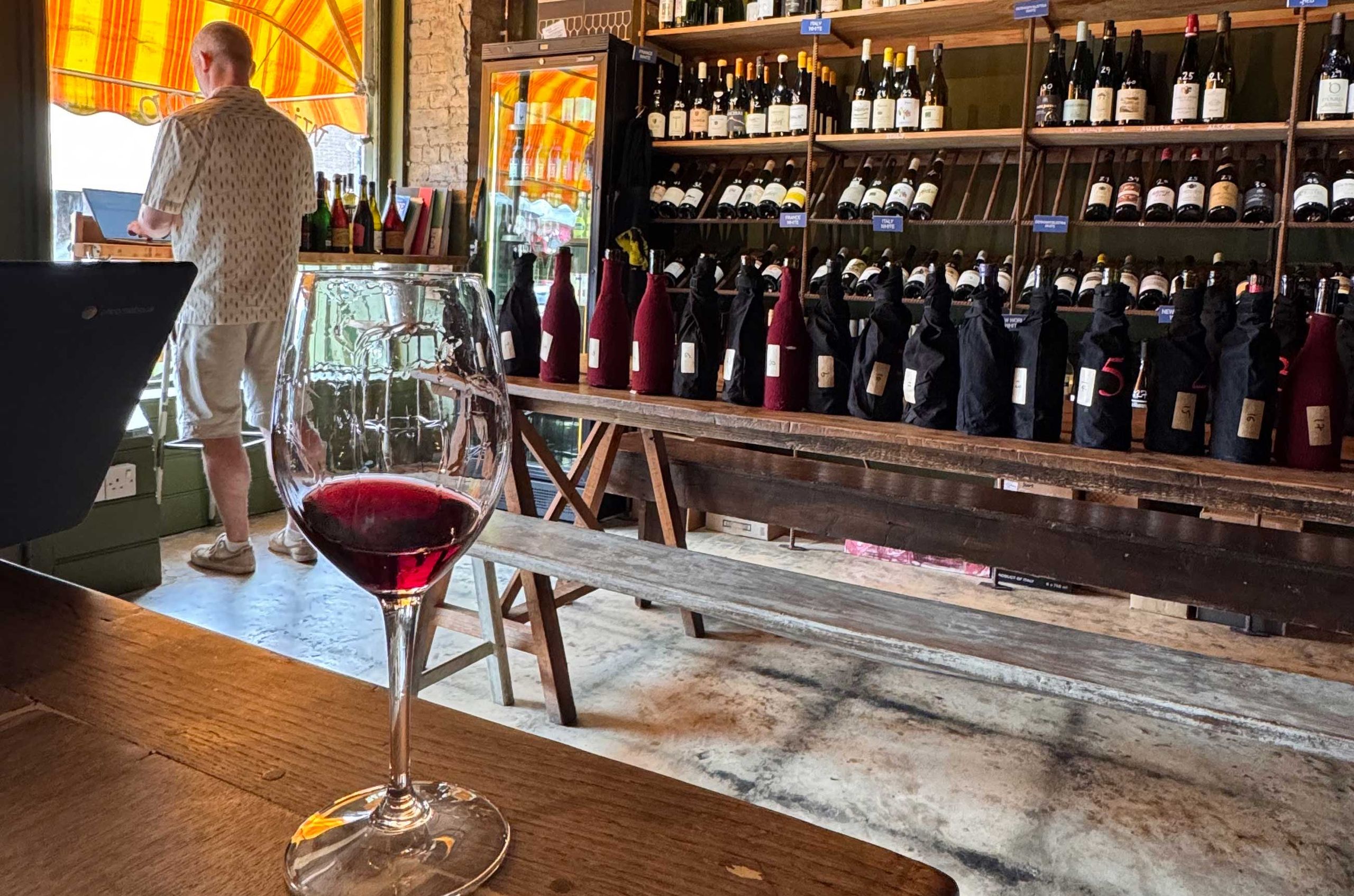
I was joined by two top tasters – Natalie Earl, Decanter’s regional editor for France, and author and podcaster Henry Jeffreys – and together we worked our way through 52 examples of this unsung grape.
A stellar variety
It turns out there has been an important development in the world of Cinsault since the last tasting. A group of like-minded winemakers has formed a body to promote this under-appreciated grape, called Les Cinsónautes.
One of the founders is Guillaume Baron of Clos de la Barthassade in Aniane, Languedoc. ‘I’ve always loved Cinsault,’ he says, ‘its drinkability, lightness, suppleness and its ability to translate terroir.’ He describes it as a cross between Gamay, Pinot Noir and Grenache.
He’s also part of Les Aligoteurs, a group formed in 2018 to promote another underrated grape – Aligoté. ‘I realised that Cinsault shared the same poor treatment that Aligoté suffered from in the past,’ says Baron, and so he wanted to help reverse its fortunes.
For too long, Cinsault has been widely considered a second-class grape variety, cropped highly to bulk out blends, make cheap rosé or basic vin de soif.
In fact, some believe the grape’s name comes from cinq sauts, meaning five buckets: if you crop it highly enough, one vine will give you that many grapes.
But with lower yields, gentle handling and appropriate care, Cinsault can make beautiful wines. What’s more, it ripens at just 11.5%-13.5% abv.
The tasting
Five years ago, it was South Africa that dominated the leaderboard. Since then, France has improved dramatically.
The top 10 this year contained five wines from each of these countries – but France took the top three places.
‘One of Cinsault’s real strengths is its beautiful soaring fragrance,’ says Earl, ‘and that was really on show in the French wines… Many examples felt extremely well handled and cared for.’
Some of the French bottlings felt clunky and over-extracted last time, but now the grape’s innate delicacy and tenderness is being embraced and celebrated.
‘The French are clearly doing something exciting, they’re rediscovering it,’ says Jeffreys.
South African examples don’t seem to have progressed quite so quickly, and are stylistically more varied.
‘The South Africans weren’t as strong as last time but there were some absolute stand-out wines, especially from Natte Valleij,’ says Jeffreys.
There were very good individual wines from Chile and the USA, too.
See the results of the previous global Cinsault tasting
Brightest stars
We all picked our top seven from the tasting, and occasionally our favourites overlapped. Four wines were chosen by two tasters:
– Domaine Allegria, Spirale, Pays d’Hérault, Languedoc, France 2024
– Mas Cal Demoura, Belle Fiolle, Vin de France, Languedoc, France 2024 (grown near Terrasses du Larzac)
– Leeu Passant, Old Vines Basson Cinsault, Wellington, South Africa 2023
– Domaine Sainte Marie de Crozes, L’Escapade, Vin de France, Languedoc, France 2024 (grown near Corbières)
Two wines were unanimously selected as favourites by all three tasters:
– Alain Chabanon, Cinq Saut, St Guilhem le Désert, Languedoc, France 2023
– Domaine du Pas de l’Escalette, Ze Cinsault, Pays Hérault, Languedoc, France 2024 (grown near Terrasses du Larzair
Oeillade (sometimes called Oeillade Noire) is an ancient, rare grape variety historically grown in Languedoc and Provence. Although it has no genetic relation to Cinsault, its characteristics are very similar. One example that snuck into this blind tasting was highly rated by the judges:
Domaine Le Clos du Serres, Œillade, Vin de France 2025
There was one main criticism however: the grape is prone to reduction, which caused certain bottles to show rubbery aromas on opening.
But there were fewer instances this time round, and usually a brief decant helps reduce this.
Cinsault doesn’t produce blockbusters or icon wines. Rather than structure, power and complexity, what it offers is freshness, aromatic precision, lacy tannins and a sense of purity and levity.
And it’s delicious on its own, lightly chilled.
‘They were incredibly drinkable, concentrated but not cumbersome or heavy, with refreshing acidity. A wine for modern times,’ says Earl.
The stars have aligned, and it’s Cinsault’s time to shine.
- Domaine Allegria, Spirale 2024
- Mas Cal Demoura, Belle Fiolle 2024
- Alain Chabanon, Cinq Saut 2023
- Frédéric Brouca, Samsó Seulle 2023
- Domaine du Pas de l’Escalette, Ze Cinsault 2024
- Domaine de Cambis, Barroco 2025
- Leeu Passant, Old Vines Basson Wellington Cinsault 2023
- Alain Chabanon, Cinq Saut 2023
- Natte Valleij, Single Vineyard Darling 2024
- Domaine Sainte Marie de Crozes, L’Escapade 2024
- Eight Gates, Cinsault 2024
- Wildeberg, Terroirs Cinsault 2024
- Domaine du Pas de l’Escalette, Ze Cinsault 2024
- Mas Cal Demoura, Belle Fiolle 2024
Click here for notes and scores for all 39 Cinsault that scored 90 points and above
Matt Walls 20 highest-scoring Cinsault
My seven favourite producers in Cairanne
Vacqueyras 2022 retasted in bottle: 25 top wines for southern Rhône lovers