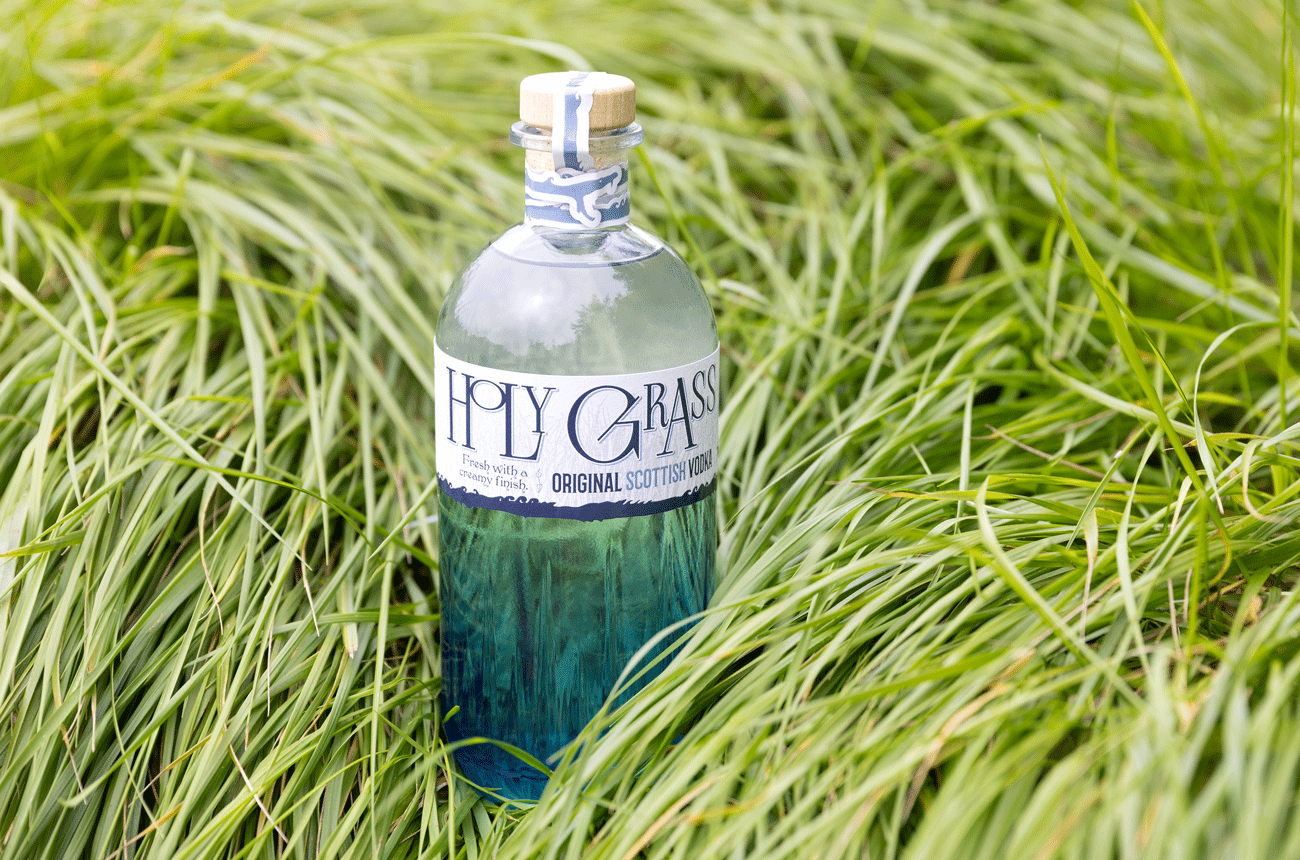
What do farm-to-table and your favourite spirit have in common? More than you think. Just as your favourite vegetable tastes better plucked straight from the garden, a spirit crafted with estate-grown ingredients, only a stone’s throw from the distillation room, is more artisanal and flavourful.
The concept isn’t new – origin and provenance have applied to wine for centuries – but a renewed awareness and interest in vertically integrated products is growing the category. So much so that it has its own term: seed-to-spirit.
‘Seed-to-spirit is a natural extension of farm-to-table [as] it brings that same transparency and connection to origin into the world of spirits,’ says Rico Dynan, global brand ambassador for Absolut Vodka.
Absolut’s One Source philosophy was a founding principle of the distillery which is based in Åhus, Sweden, and it’s still implemented today, to showcase the traceability of its core ingredients. The wheat and water are both sourced from the same southern Swedish community where the vodka is distilled.
Seed-to-spirit basics
Also called grain-to-glass or barn-to-barrel, the vertically integrated blueprint is attractive to both consumers and producers. The shorter supply chain is more environmentally responsible, there’s an appeal of quality control and it’s financially beneficial to both parties.
Proof that beyond market trends, seed-to-spirit holds the potential to change the future of how we produce, consume and view spirits.
First and foremost, the ethos of seed-to-spirit ‘reminds people that distillation begins in the soil, not in a factory,’ says Kirsty Black, Master Distiller at Arbikie Distillery in Montrose, Scotland.
Raw ingredients and regional identity

For vodka, this means shifting away from pigeon-holeing the spirit into the ‘neutral’ category – repositioning it from a blank canvas to a spirit with flavour, texture and even terroir. ‘That’s fundamentally changing how vodka is judged and enjoyed,’ says Black.
For gin, tequila and whisky, seed-to-spirit may seem more inherent, but the increased attention to sourcing repositions new opportunities for drinkers to consider every step of production before buying a bottle.
In agave spirits, this is a focus on cultivation and regional identity. In whisky, it applies to grain provenance and long-term agricultural unions. For gin, a pure base spirit allows the botanicals to become the primary focus of storytelling.
‘Because gin is built around layered aromatic ingredients, the seed-to-spirit movement allows distillers to showcase biodiversity and terroir in a uniquely creative way,’ says Guy Brennan, cofounder and CEO of Procera, a gin expressing African terroir. ‘It creates space for regional identity.’
Quality control

Traceability doesn’t just make for a better story, it results in better taste. Whether farming their own land or sourcing from farms within a limited radius, when distilleries are able to oversee every step from seed selection to maturation ‘flavour is considered right from the start, not engineered at the end,’ explains Black.
That control is what attracted Chris Pateman to the Lancaster Spirits Company, a self-titled grain-to-glass distillery in northern England specialising in craft batch single malt English whisky. ‘There’s no automation; we are doing everything by hand on a proper small scale,’ he shares.
Pateman comprises one of two team members who run the entire production process. Part of their quality assurance includes a weekly tracker of grain, water and wash used for resource management. ‘We can quite literally batch check everything we make from start to finish,’ says Pateman.
An important clarification, however, is that quality control doesn’t equate to uniformity. Instead, after decades of distilleries prioritising consistency, seed-to-spirit recognises that variation is part of the story, embracing character, seasonality and authenticity.
Price tag

Vertically integrated spirits are cost effective for producers as they eliminate the middle man; labour and subsequent costs such as gas and transport fees, which are often projected on to the consumer. In England’s Lake District, Grasmere Distillery sources wheat for its single malt whisky directly from farmers. It then passes on those savings to the consumer.
‘In the UK, grain-to-glass is usually the cheaper product – it’s better and more unique for a lower price,’ says Paul Abbott, founder and head distiller.
It’s viable not only for consumers, but also the bar industry. Jared Boller, cocktail specialist at Kilgore Hospitality Group, explains a bartender’s perspective: ‘It’s in our best interest to create tighter sourcing relationships, accepting smaller batch sizes.’ The bar programme may need to be flexible with what’s available, but at least staff and imbiber aren’t overpaying for monotony.
Environmental bonus
Not only does seed-to-spirit production decrease transport emissions, but when distilleries are in charge of their own crops, they have a vested interest in their land’s longevity. In Kentucky, Maker’s Mark is transitioning its corn and wheat to Regenified certification for regenerative agriculture to encourage long-term soil health.
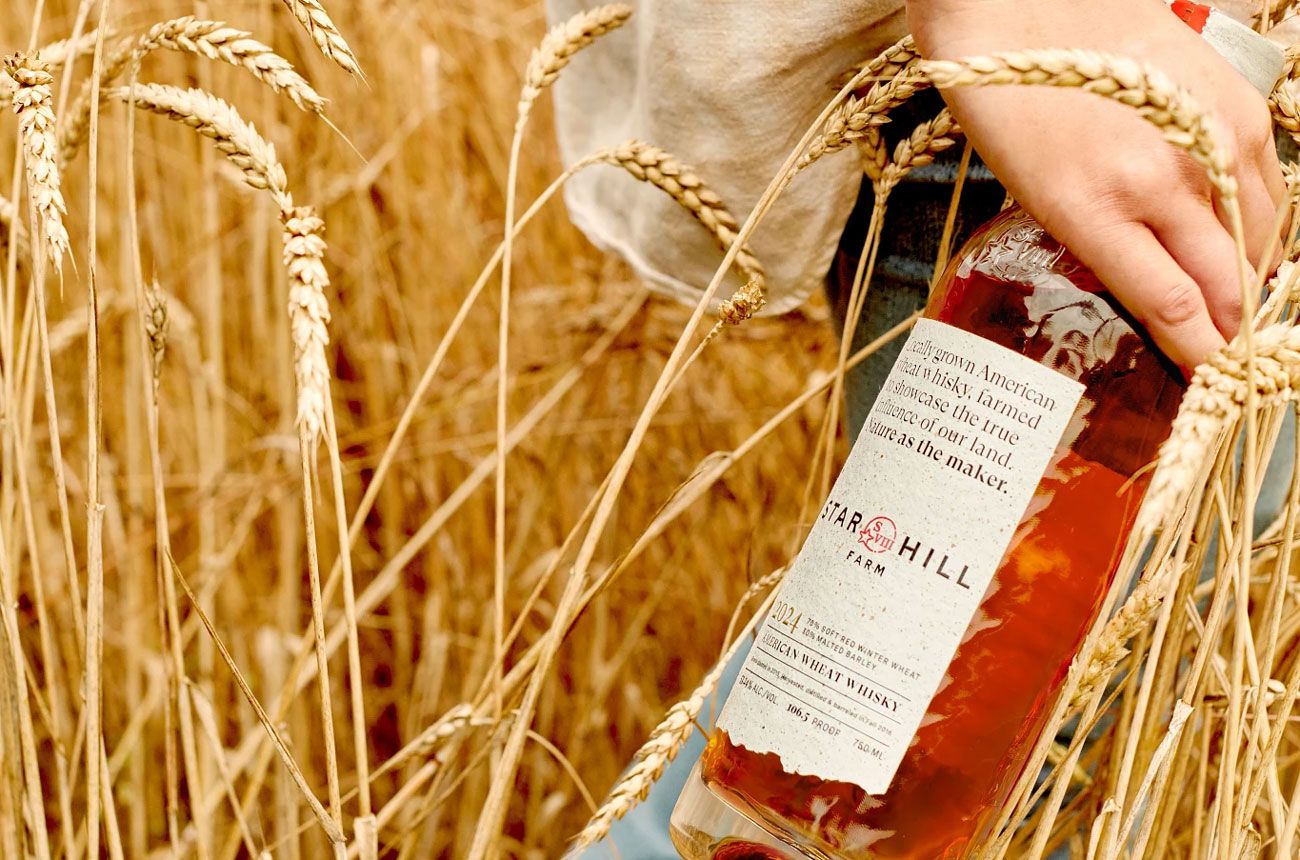
At its Star Hill Farm, Maker’s Mark focuses on treating the wheat types grown with regenerative farming practices ‘as a primary driver of complexity, not just an ingredient’, says Rob Samuels, managing director. The quality of flavour is a subsequent result of healthy soil.
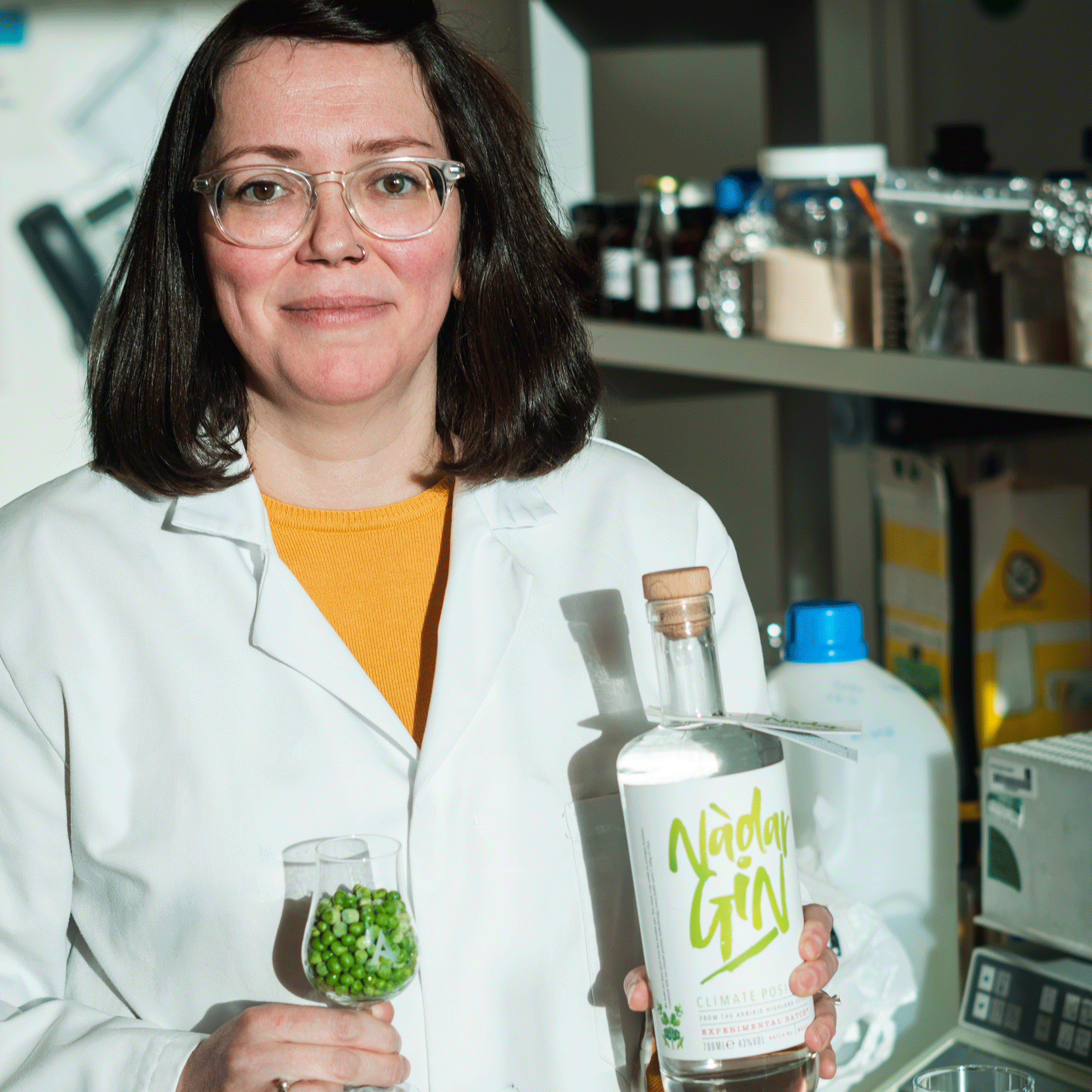
In Scotland, Arbikie uses alternative home-grown crops, such as peas, in its Nàdar Gin. The crop requires little or no nitrogen, which can result in a climate-positive spirit. The distillery itself was born from the need to find a home for its potatoes that didn’t meet retail specifications; Tattie Bogle Potato Vodka was its first release, ensuring a continuous process and less waste on the farm.
Back to nature

The shift in consumer preferences towards the priority of integrity, not only in flavour, but also in sourcing and impact, makes room in the market for more unique spirits that are ‘less about imitation and more about identity’, says Brennan. Ultimately, that identity reflects a specific destination’s ecosystem, ethos and culture that consumers can taste.
The shift ‘feels less like embracing a trend and more like returning to something fundamental’, he adds. Just as society did with the farm-to-table movement, we’ve realised things actually taste better when they are grown, harvested and treated as an agricultural product, not an industrial one.
Seed‑to‑spirit applies that mentality to what we’re drinking. Ultimately, it resonates because it ‘reconnects distillation with nature’, concludes Black.
Six tasty seed-to-spirit bottles to try

Absolut Vodka
Smooth and full-bodied with a fruity finish, Absolut brings a velvet-like texture to an Espresso Martini. Alcohol 40%
Arbikie 1794 Highland Rye Single Grain Scotch Whisky
Spiced pear aromas evolve into a dried fruit and nut cake in the mouth. Lighter-bodied yet ripe with flavour, try this single estate Scotch in a Rob Roy. Alc 48%
Oxbow Estate Rhum Louisiane
Layers of lemongrass, ripe plantain and dried mango define this single-barrel agricole rum that’s exclusively distilled once a year from the Louisiana-based Oxbow Distillery’s estate-grown sugarcane. It’s a strong base for a classic Daiquiri. Alc 45%
Procera Blue Dot Gin
A clean juniper backbone with notes of lime zest and fresh herbs, finishing with a lingering note of pink peppercorn. Incredibly smooth and medium-bodied, it’s the ideal Martini gin. Alc 44%
Solento Organic Tequila Extra Añejo
This single-estate tequila is aged for 40 months in American oak barrels for a sip that’s toffee-forward with hints of roasted almonds and candied-orange peel. Enjoy neat with an expressed orange peel. Alc 40%
Star Hill Farm Whisky
A nose that mimics freshly baked banana bread opens to a spiced honeycomb palate with warm cinnamon and a subtle oak finish. Crafted from three different types of wheat, the rich yet silky texture lends itself to a unique Manhattan. Alc 58.2%
Understanding organic whisky
Gins from around the world