


The foundation established by Robert Indiana to preserve his legacy is selling the artist’s longtime home on the Maine island of Vinalhaven, despite instructions in his will that the property be transformed into an art space open to the public.
The Star of Hope Foundation, as the foundation is called, listed this week Indiana’s former home, a rambling 19th-century Odd Fellows lodge known as the Star of Hope, for $1.4 million, according to the New York Times. A second building Indiana owned, a few doors away, is being offered for $210,000.
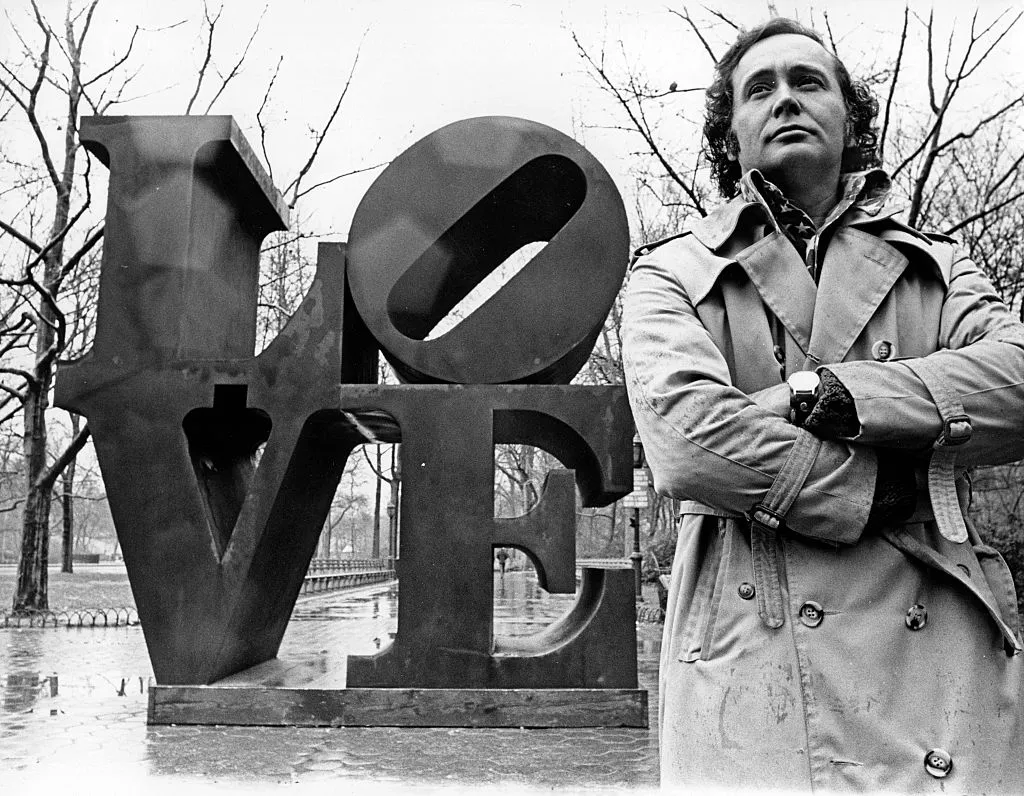
Indiana, best known for his “LOVE” series, with its iconic tilted O, moved to Vinalhaven in 1978 and spent the next 40 years living in the Star of Hope, a local landmark overlooking the island’s harbor. He died in 2018 at age 89.
Indiana had specific plans for the building after his death. His will directed that the Star of Hope be restored “to museum quality” and used as an art environment open to the public for visits, classes and lectures and for the preservation and exhibition of his collection, according to the Times. The artist had established the Star of Hope Foundation to preserve his legacy, and the organization inherited his estate after his death.
The foundation initially began working toward that goal, stabilizing and partly renovating the aging building. Now, however, it says its mission would be better served by getting out of the property-management business and putting its resources directly toward artists and arts organizations in Maine.
“These properties are not our purpose — supporting artists is,” Carole Martin, the foundation’s managing director, told the Times. “Selling these properties allows us to convert those assets into philanthropic capital and put resources directly into Maine’s arts community.”
The decision has drawn criticism from people who say selling Indiana’s home runs counter to the artist’s wishes. Kevin Lipson, a partner at Venable, the law firm that represented Indiana’s estate in litigation, called the decision “a remarkable repudiation of Robert Indiana’s testamentary intent” in an interview with the Times, adding that Indiana “wanted and expected a museum of some sort on Vinalhaven and that apparently is not in the cards.”
Marjorie Stratton, Vinalhaven’s town manager, who knew Indiana, also questioned the decision. Speaking in a personal capacity, she told the Times that Indiana had discussed using the building for art, education, and research and providing space where young people could work and learn about art.
“It just makes me sad that this foundation doesn’t seem to be following through with what he told me he wanted that to be,” Stratton said.
The Star of Hope was in rough shape by the time Indiana died. Its paint was peeling, clapboards were rotting, and a tarp covered a leaking roof, according to the Times. The foundation subsequently addressed some of these concerns, repairing its Mansard roof and restoring its windows and doors. But photographs accompanying the current listing show an interior still in various states of disrepair, including peeling paint, exposed framing and lath.
The foundation said the building continues to present structural and regulatory problems and described selling it as a practical way to redirect its resources.
“We are one of many organizations trying to solve a hard problem — how to bring new life to a building that has sat empty for years,” Martin told the Times, adding that selling the property while investing directly in local artists and organizations was “the most honest path forward.”
Not everyone on Vinalhaven opposes the move. Elaine Crossman, who also knew Indiana and owns a motel and art gallery on the town’s Main Street, told the Times that the renovation appeared to have become an expensive quagmire. She hopes a new owner might return the building to active use, including reopening its first-floor storefronts.
“I’m optimistic that this is actually a really positive move,” Crossman said. “My hope would be that this is a big step in the right direction for that group to be able to do some positive work in the community.”
