Italian cuisine has long been a world favourite for its authentic flavours and guileless recipes rooted in simplicity and quality.
In fact, the country’s cooking was officially granted Intangible Cultural Heritage of Humanity status by UNESCO last year.
While pasta is a mainstay of Italy’s mealtimes and a symbol of the country’s culinary traditions (54% of Italians eat pasta daily (Nextplora [2024]), it’s also a paragon of versatility and inclusion.
From celebrated fine dining restaurants to community kitchens run by volunteers, pasta always has a place on Italian tables.
One of the world’s top chefs, Massimo Bottura, who played an influential role in the UNESCO candidacy – which was conceived by Maddalena Fossati, editor of La Cucina Italiana magazine – runs the gamut, from his triple-Michelin-starred Osteria Francescana to the international Food for Soul network of refectories, where nourishing meals are created from surplus foods for those in need.
Just say pasta
Although it’s easy to just say pasta, when it comes to shapes, sauces, techniques and wine pairings, there is a universe of complexities.
Officially, over 300 pasta shapes exist, with more invented almost daily. Thanks to 3D printing, you can even order special occasion pasta to resemble anything from Easter bunnies to Christmas trees.
Ingredients for pasta are simple: flour and water. While in southern Italy durum wheat flour (semola or semolina) for dry pasta is most common, soft wheat is the typical flour of the north, where fresh pasta is more widespread; as it’s lower in gluten, egg is often added for greater structure.
For hand-rolled pasta, a board and rolling pin (preferably beechwood) are essential, while cutter rollers are handy for getting the dimensions right. Pasta machines use teflon or bronze dies, the latter preferable for porous pasta that catches more of whichever delicious sauce it’s served with.
Other tools include guitar-like frames for spaghetti alla chitarra, and gnocchi boards resembling butter pats for ridged pasta and gnocchi, again aimed at increasing sauce-clinging power.
Pasta heartlands
While every region has its must-try specialities, Emilia Romagna is considered the heartland of fresh egg pasta. Here, dishes are taken so seriously that official recipes are stored at Bologna’s Chamber of Commerce, along with a golden sample representing the perfect width of tagliatelle (8mm).
It’s hard to overstate the visceral attachment to certain specialities, and traditions are defended passionately: in a move to put a lid on one of the world’s (but not Bologna’s) favourite pasta dishes, the city mayor even led a 2019 campaign stating that ‘spaghetti bolognese does not exist’, in favour of authentic tagliatelle with ragout. Bolognese (beef and pork) ragout, that is.
Wherever you go you’ll find a variation on the ragout theme, from duck in Veneto (with thick spaghetti-like bigoli) to wild boar, popular with pappardelle (wide ribbon pasta) and Chianti Classico or Montefalco Sagrantino in Tuscany and Umbria.
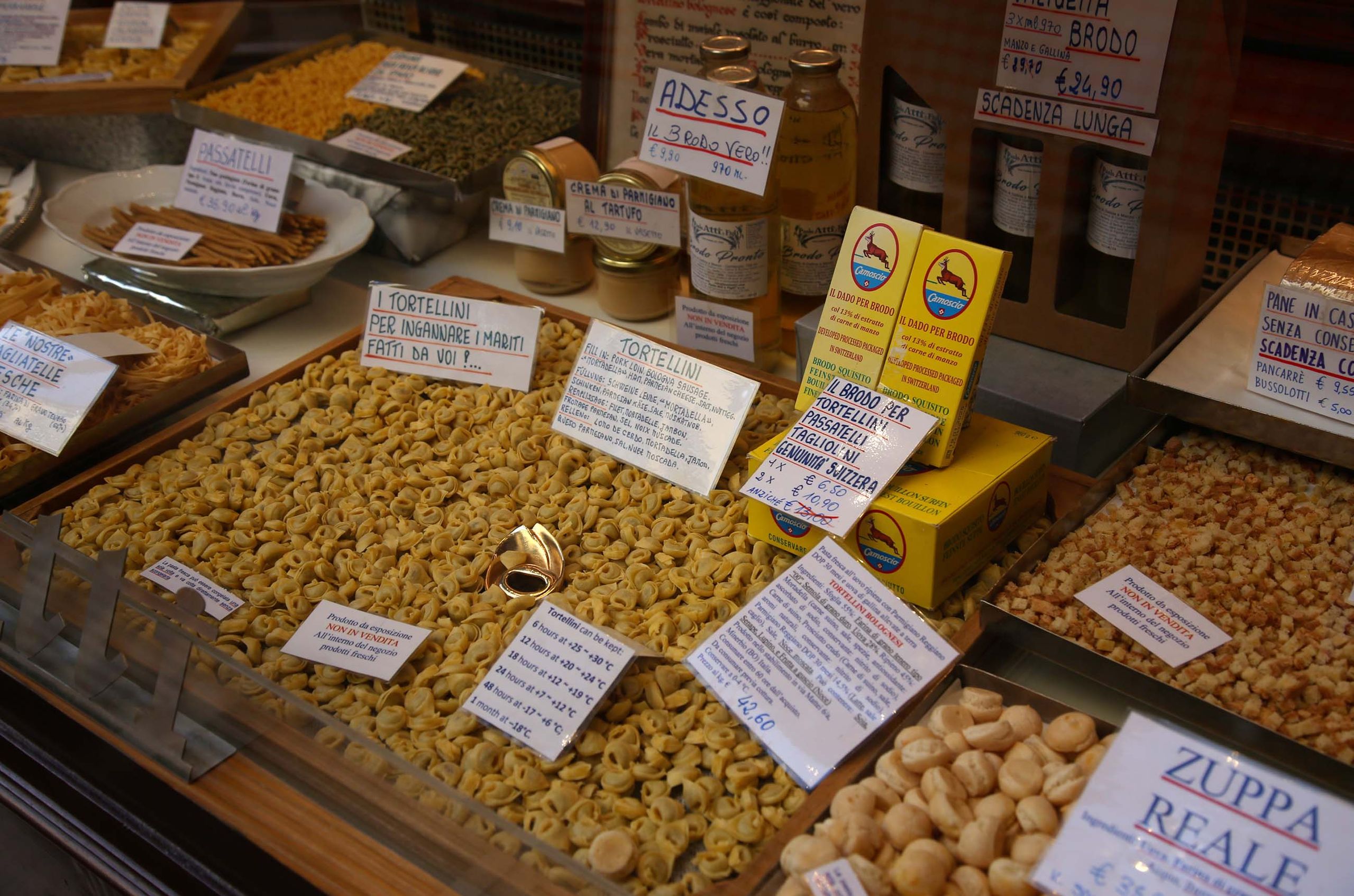
Emilia Romagna is most famous for its filled pasta. Dainty tortellini (weighing just 5g each, filled with mortadella, prosciutto, pork, Parmigiano Reggiano and nutmeg) are supposedly inspired by Venus’s perfect navel, and served in a steaming broth suitable for any celebration.
One of chef Bottura’s initiatives in his hometown, Modena, is Tortellante, a non-profit association centred on tortellini-making for people with autism (including his own son); the results are served at the on-site Bottega with Lambrusco that’s often added to the broth.
Neighbouring cities Bologna and Modena have long disputed paternity of tortellini but generally agree on Castelfranco Emilia, a half-way house with a dedicated festival each September.
Filled delights
Whether they recall hats, crescents or body parts, the various crimped-edged shapes of filled pasta are conceived with the aim of keeping what’s inside in.
In recent years pumpkin-filled pasta, originally from Mantua and Ferrara, has risen in popularity for its sweet and savoury flavours.
Exact recipes vary and are a closely guarded secret for cjarsons, another sweet-savoury pasta from Friuli in north-east Italy; common ingredients include dried fruit, herbs, spices, cocoa and jam with potato and ricotta. A structured Collio Bianco is ideal with such intense flavours.
In Sardinia, the closure of typical culurgiones (with potato, pecorino cheese, mint and garlic) is auspicious, resembling an ear of wheat for prosperity, while Piedmont speciality, agnolotti del plin (with roast meats) is purely practical, named after the pinching action used to seal them.
Curiously, agnolotti are sometimes served dry, in a linen napkin, and dunked into a cup of Barbera wine.
Long stories
Serving pasta in linen isn’t limited to Piedmont: Rome restaurant La Ciambella serves cacio e pepe pasta (with pecorino romano cheese and black pepper) in a napkin. It’s drier than usual, aimed at evoking the farmers of yesteryear who would eat while out in the fields.
Cacio e pepe is considered the mother of Rome’s most famous pasta specialities, pecorino cheese and pepper being common to all. Add guanciale for alla gricia, and egg too for carbonara, or tomato for amatriciana.
Each sauce has its appropriate long pasta: tonnarelli (square-sectioned) for cacio e pepe, bucatini (hollow) with amatriciana, and spaghetti for carbonara. All work well with a structured regional white such as Frascati Superiore or Bellone.
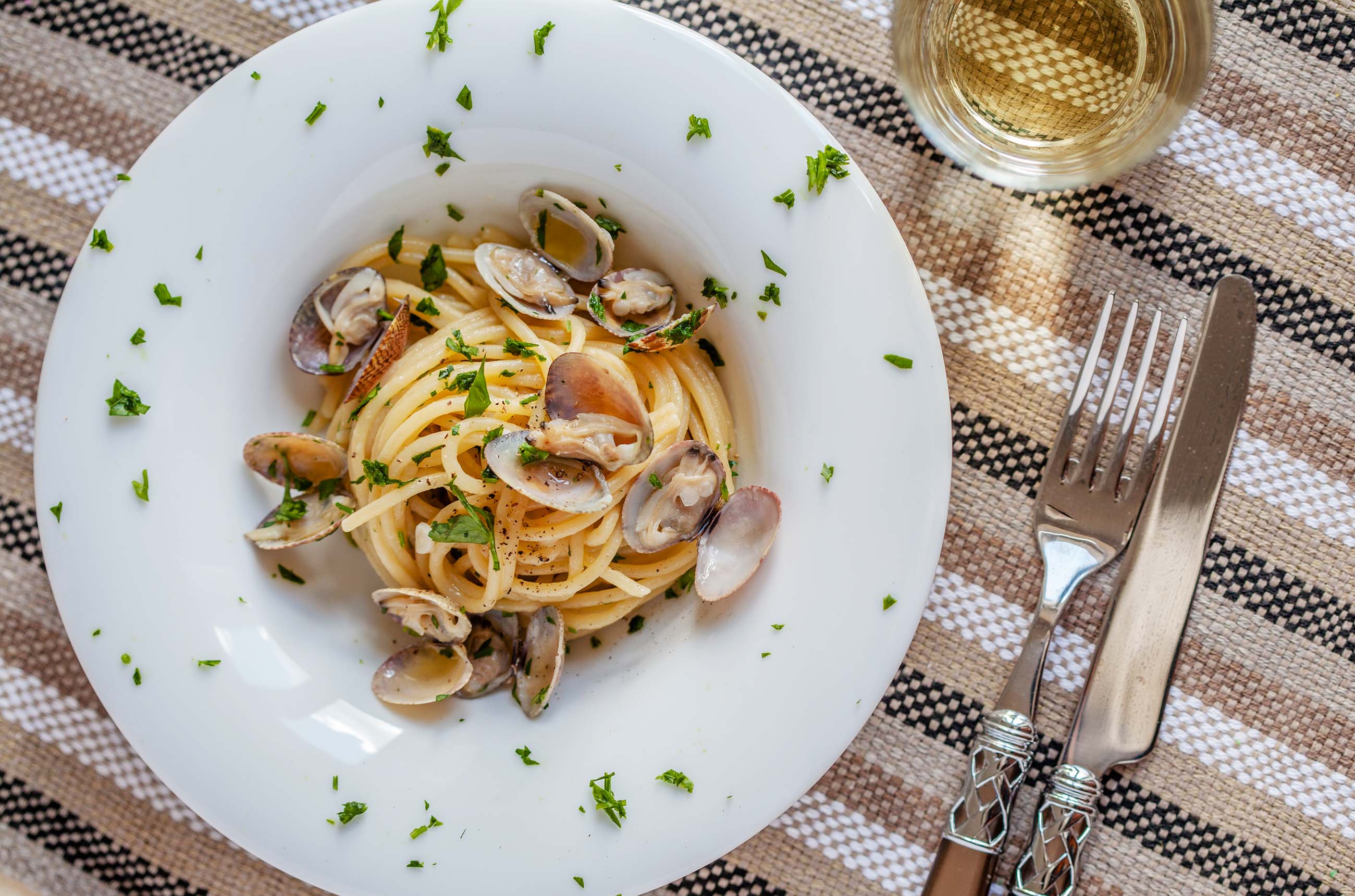
Spaghetti (from ‘spago’, meaning string) is the tasty choice for midnight feasts and impromptu gatherings throughout Italy. In Naples and around the coast it’s classically paired with clams; add mullet roe for a Sardinian favourite.
Spaghetti capital, Gragnano – the historic heart of dried pasta production south of Naples – is nowadays home to pasta-themed museums and experiences.
Pici and strangozzi are the preferred long pasta of central Italy, respectively round and square-sectioned, while Abruzzo on the east coast is home to fresh egg spaghetti alla chitarra, typically with delicious tiny meatballs.
Green pasta parties
Many Italian pasta recipes are vegetarian, incorporating pulses and seasonal vegetables. Another Abruzzo speciality, virtù teramane, traditionally eaten on 1 May, is like a culinary spring clean, with a huge variety of pulses, vegetables and pastas; whatever’s left in the larder after winter. A cherry-coloured Cerasuolo, the archetypical all-rounder wine, is ideal.
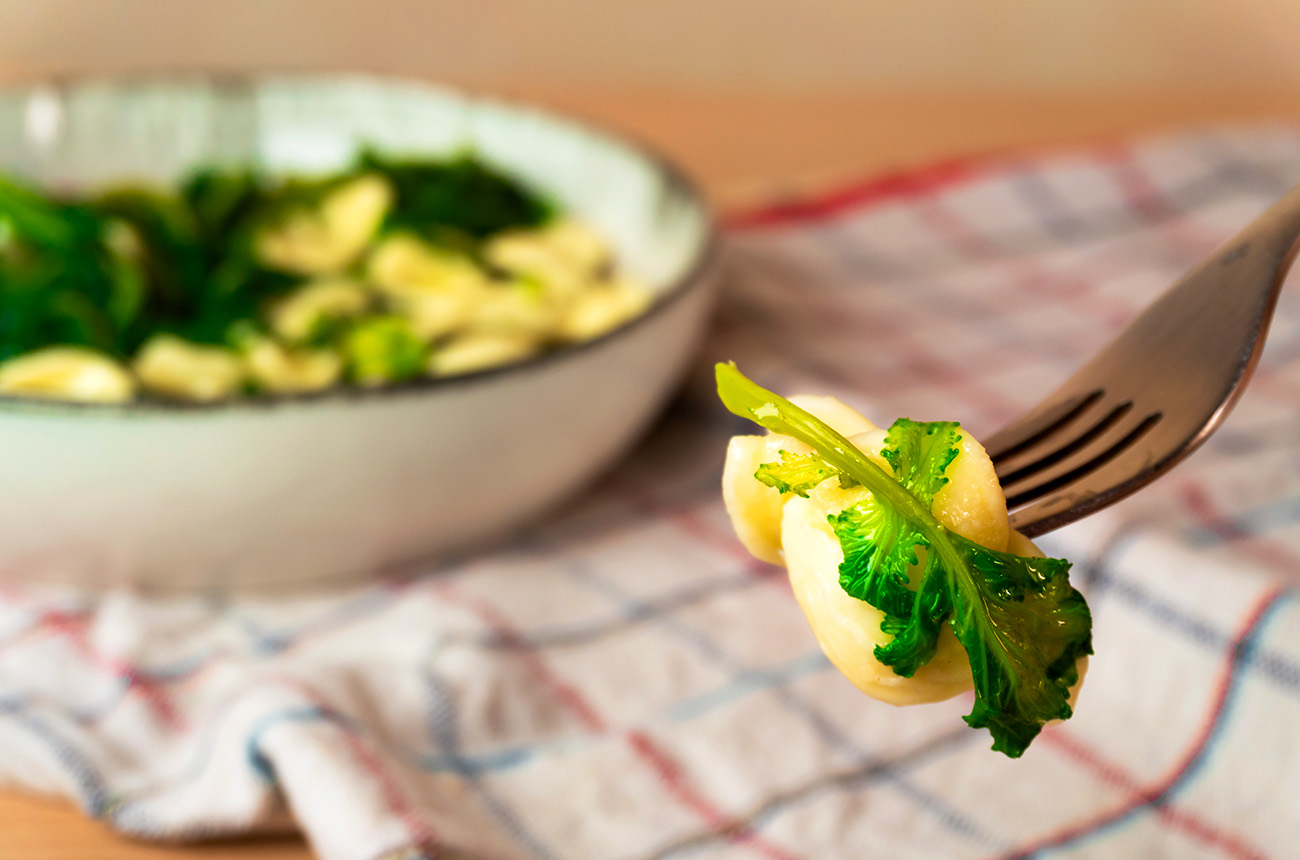
Travelling south to Puglia, orecchiette alle cime di rapa (ear-shaped pasta with turnip greens) is a firm favourite on Italy’s pasta map. Although turnips are a winter veg, the dish is a year-round mainstay here, as are Ligurian crowd-pleaser trofie al pesto and Sicily’s pasta alla Norma (tomato, aubergine, ricotta salata and basil) – named after the opera by Catania-born composer Vincenzo Bellini.
Ultimate comfort food
Scientific research (including Barilla’s 2025 study) has regularly found a correlation between pasta and emotional well-being, more so than other carbs.
There’s no denying that whether its lasagne, Italy’s traditional Sunday comfort food, or another of the many pasta dishes, it most certainly does have a built in feel-good factor – especially when enjoyed with a local wine.
Buon appetito!
Lucca – 10 must-visits for food and wine lovers
Savour Sicily: The essential food and wine pairings you must try