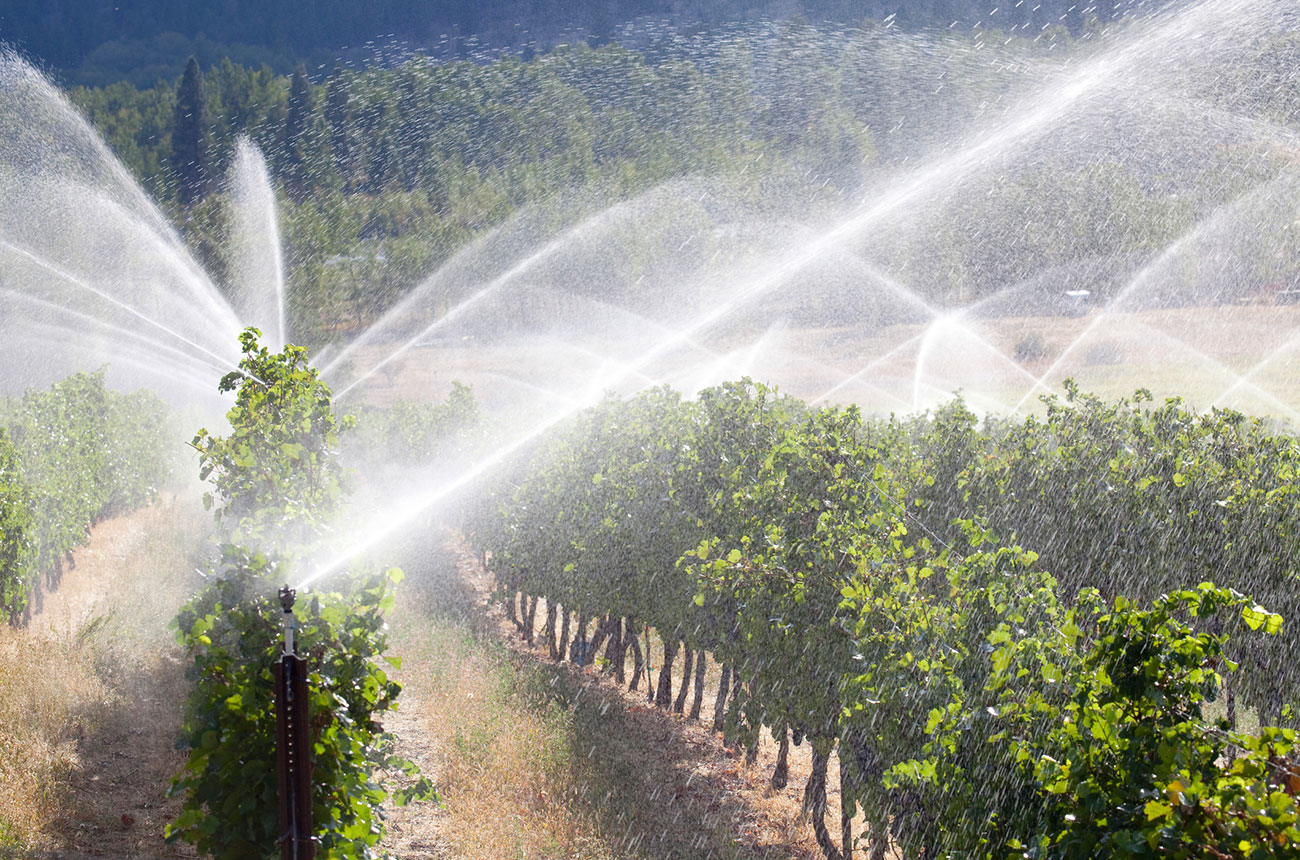
Many wineries have solar panels to offset some of their energy needs – but are still reliant on the grid. But how realistic is it for wineries to be completely off-grid, running their operations entirely on self-generated green energy?
It depends on many factors, including scale of production, but certainly helps if one of the business partners spent 20 years working in the renewable energy sector.
Gearóid Lane is a founding partner of Gredos producer Bodega El Reventón, alongside Catena Zapata’s Adrianna Catena and Argentinian winemaker Alejandro Vigil.
Lane is a mechanical engineer by training, and the former managing director of the British Gas sustainable energy division. In 2021, the three equal partners bought La Reina, a 6.2ha vineyard at 820m-860m in the Sierra de Gredos mountains in central Spain.
When they came to convert a derelict barn on the land into a working winery, they faced a problem. ‘The nearest three-phase grid was so far away, it would have cost us a lot to get a grid connection,’ says Lane – around €500,000, in fact. So they didn’t. Instead, Lane sat down with his spreadsheets.
Lane had been at the heart of the UK’s green energy transition while at British Gas. He left to set up his own business facilitating the roll-out of government-mandated home energy efficiency programs in low-income households, including community solar projects.
A lifelong wine lover, when he came to sell this business he decided to put his energy into the wine world. A chance meeting with Adrianna on a WSET course was the project’s spark.
He’s no sideline investor, though; Lane is fully immersed in the project, learning winemaking directly from Vigil and the Catena Zapata team, and doing harvests in both Mendoza and Gredos.
He slowly built up an understanding of the Gredos winery’s energy needs throughout the year. The most energy-intensive period is harvest: the destemmer, pneumatic press, pumps and pressure washers all need power.
Temperature management is also key: cooling tanks at the start of harvest to help with smooth fermentations, and gently warming them at the end of harvest as nights turn cold and fermentations risk getting stuck.
It turned out that twenty-four 550-watt solar panels mounted on the south-facing barn roof could supply what they needed, plus three battery units for energy storage. And it would cost €40,000, instead of half a million.
The sustainable choice and the financially rational choice were the same – for once.
They found that they could also be self-sufficient in water. Two wells, replenished by winter rainfall, supply their needs for cleaning and production (not irrigation – the vines are dry famed).
It didn’t all go smoothly. The power surge needed to start the heating and cooling system couldn’t be met by the solar supply. A fix was found – another €3,000.
One issue remains: the pressure washer still occasionally overtaxes the supply, and a small petrol generator had to be used during the last harvest. But 10 additional solar panels, planned for the roof of a building conversion currently awaiting permission, should solve it.
This is all happening in a region that barely existed on the wine map just 20 years ago.
Dani Landi and Fernando Garcia of Comando G built a movement here. They created a community, and are now nurturing and inspiring a new generation of growers to show the world what Gredos tastes like.
And now it has attracted interest and investment from far beyond Spain: it was Landi who sold the El Reventón vineyard to the trio, which they bought after La Reina, and which gave the project its name.
Gredos was built on the belief that this land, which was gradually being abandoned, was worth fighting for. Arguably, the El Reventón project, and its focus on self-sufficiency, is a vote of confidence, and reflects the values that made the region worth coming to in the first place.
Sip to make a difference
From a 1ha vineyard planted in the 1940s on slate and quartz soils at 950m, Bodega El Reventón’s El Reventón 2023 (91pts, £69.95 Uncorked) is generous and giving, with gorgeous aromatics of dried cranberry and black cherry.
Soft and delicate in texture, with deep-set acidity, very ripe fruit and spice. A little way to go before reaching the heights of Gredos finesse, but it’ll get there.
The ethical drinker: NoLo drinks need more scrutiny – and stories
The ethical drinker: Join the resistance and give hybrid grapes a chance