


It’s been quite a year for art in the Gulf area. In early February, the debut of Art Basel Qatar brought international art world attention to the region. A few weeks later, the U.S. attacks on Iran created turmoil across the Gulf and led airlines to cease operations to Qatar, the U.A.E., and nearby locales. The conflict has impacted plans for Art Dubai, which had to scale back its event to a smaller, more focused fair in mid-May.
Artists and galleries in the Gulf had to momentarily close their spaces and postpone exhibition openings. They are slowly resuming operations, with several participating in overseas events, including Frieze New York. Some might be wondering how the U.A.E., which has been described as a new center of the art world, will emerge from the crisis. Yet its achievements over the past couple of decades remain unchanged: Thanks in part to government support, creative activity has boomed across Dubai, Sharjah, and Abu Dhabi, with each emirate embracing its own cultural offering.
This boom is actually the result of decades of hard work. Since the 1980s, shortly after the country’s unification in 1971, the domestic art scene slowly developed thanks to the establishment of pioneering institutions such as Emirates Fine Arts Society in Sharjah and Abu Dhabi Cultural Foundation, which were established in 1980 and 1981, respectively. Such associations were crucial platforms for new ideas, arts education, and showcases for domestic talents.
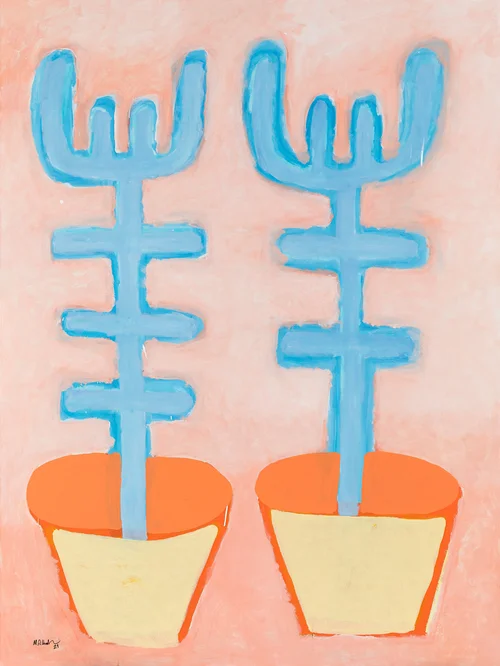
My Garden's Details, 2021
Mohammed Ahmed Ibrahim
Lawrie Shabibi
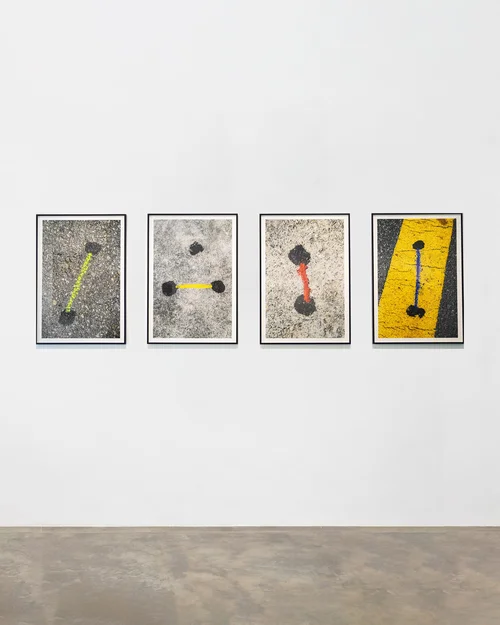
Kisses, 2023
Mohammed Kazem
Baró Galeria
This was also an era when forward-thinking artists who were educated abroad, such as Hassan Sharif, Mohammed Ahmed Ibrahim, Abdullah Al Saadi, Hussain Sharif, and Mohammed Kazem—collectively known as “The Group of Five”—broke free from traditional art and the canvas. They embraced more experimental modes of self-expression, including performance art, land art, and Conceptual art.
Such figures paved the way for today’s young, driven, and internationally visible Emirati artists. They observe their country’s rapid social changes as well as world events and universal concepts, which shape both their lives and art.
From up-and-coming talents to established names, here are 11 Emirati artists to keep an eye on.
Alia Zaal
B. 1989, Dubai. Lives and works in Abu Dhabi.
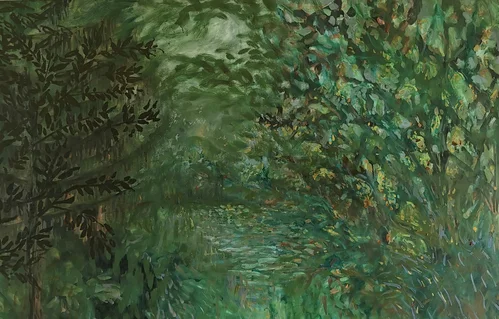
Vétheuil, 2021
Alia Zaal
Hunna Art
Alia Zaal is an award-winning artist who has also curated exhibitions that generate dialogues among the U.A.E.’s multigenerational artists. She earned her MA degree in art history and museum studies at Sorbonne University Abu Dhabi and has exhibited her nature-inspired paintings in the United Arab Emirates, Germany, Spain, and other locations.
Zaal’s mesmerizing, verdant canvases reflect her homeland’s natural landscape and often focus on one subject—a tree or a mangrove, for example—during different times of day. The results are often lush and green. The desert-grown ghaf, the U.A.E.’s national tree, is a recurring, particularly personal motif.
In 2022, the artist completed a residency at Maison Oscar-Claude Monet, a house in the French village of Vétheuil formerly occupied by Impressionist master and water-lily enthusiast Claude Monet. At the residency, Zaal researched light, color, neurological perception, and eyesight.
Afra Al Dhaheri
B. 1988, Abu Dhabi. Lives and works in Abu Dhabi.
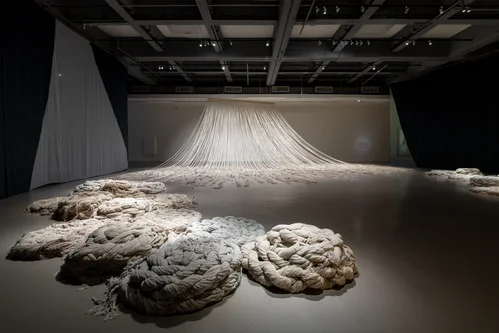
After Afra Al Dhaheri attended Rhode Island School of Design nearly a decade ago, she returned home to Abu Dhabi and has gradually earned international acclaim. Her work has appeared in the Aichi Triennale, Taipei Biennial, and Sharjah Art Foundation. Al Dhaheri recently participated in the third edition of the Diriyah Biennale in Riyadh, which closed in early May.
The artist takes inspiration from her own experiences of girlhood and womanhood in the U.A.E. The country has undergone rapid changes in infrastructure and social norms since her birth in the late 1980s. From delicate sculptures made of glass to large-scale, cotton rope installations, the artist’s meticulous, labor-intensive work quietly addresses time, repetition, fragility, and tension. Al Dhaheri is continually experimenting with new materials: Once, she even used her own hair in a piece.
Almaha Jaralla
B. 1996, Abu Dhabi. Lives and works in Abu Dhabi.
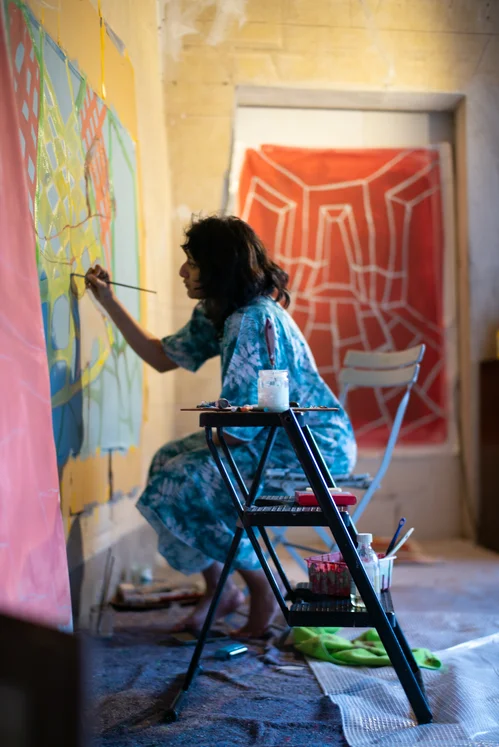
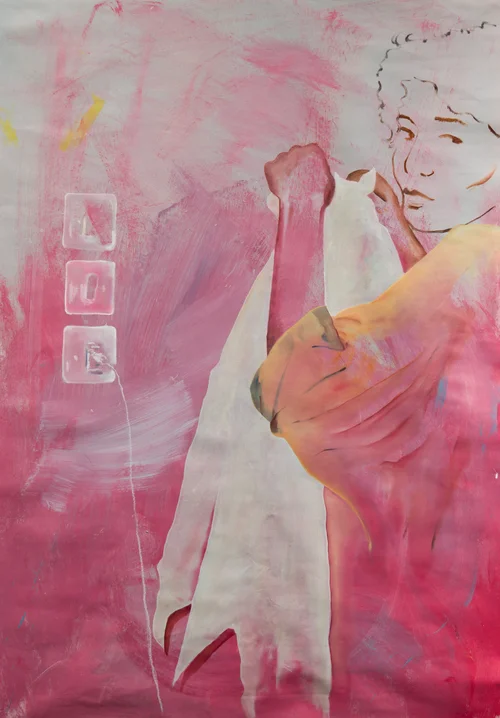
Almaha Jaralla often paints from old snapshots and her family’s archives in order to capture the intimacy of a slowly fading, close-knit community. Her compositions explore memory and belonging, pulling the viewer into hazy scenes of family beach outings and indoor gatherings. The subjects’ faces are mysteriously blurry, like fuzzy recollections. Jaralla’s preferred shades of sandy brown and cool blue evoke her youth in the Emirati capital. The urban landscape of Abu Dhabi, where she was born and raised, is another frequent motif. The artist creates quiet and isolated compositions of the city’s houses, some decades-old. Jaralla has exhibited her paintings at Abu Dhabi Art and Sotheby’s Dubai, as well as her representing gallery, Dubai’s Tabari Artspace.
Ammar Al Attar
B. 1981, Dubai. Lives and works in Abu Dhabi.
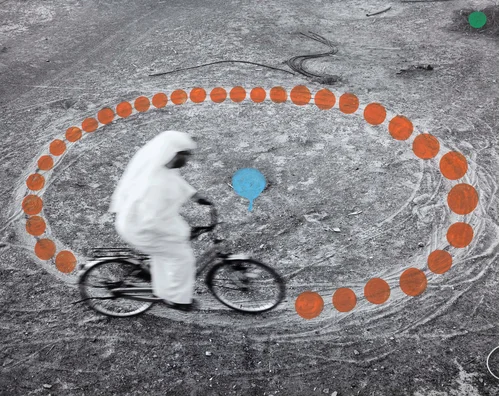
Untitled, 2025
Ammar Al Attar
IRIS PROJECTS
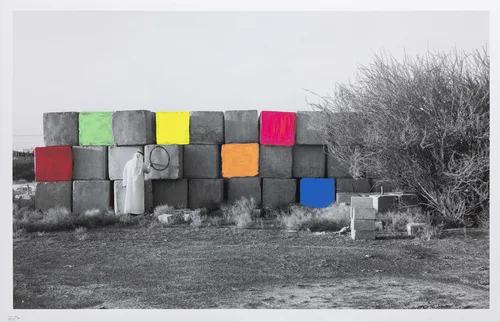
Ammar Al Attar is an Ajman-based photographer who captures images of daily life, Muslim prayer rooms, café culture, and various sites across the Gulf region. An element of experimentation is key to his recent photography: Al Attar manipulates predominantly black-and-white images marked by contrasting little spots of color that focus on repetition, routine, and the relationship between everyday objects and human action. One of his most recognizable images is Cycle of Circles (2025), in which he bicycles in circles. The artist aims to convey the importance of slowing down in a fast-paced world. Al Attar’s works have entered the collections of Sharjah Art Foundation, Barjeel Art Foundation, and the British Museum.
Hashel Al Lamki
B. 1986, Al Ain, U.A.E. Lives and works in Abu Dhabi.
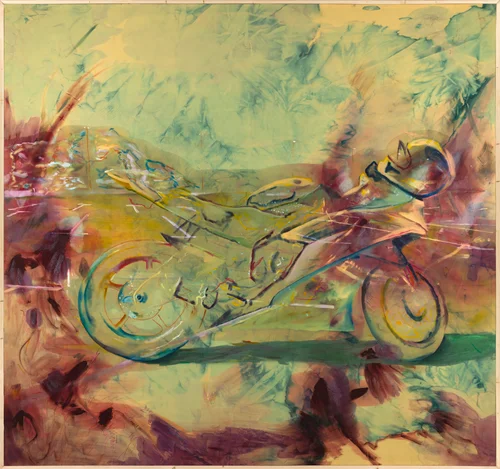
Lobster , 2022
Hashel Al Lamki
Tabari Artspace
New York–educated Hashel Al Lamki implements loose brushwork and mesmerizing washes of color across his large-scale canvases. They explore personal memory, migration, and the deep relationships between humans and their habitats. The Al Ain–born painter often injects images of modern, everyday objects into his dreamlike compositions, commenting on the world’s changing times. “There is this constant motion that I try to capture, and I think it’s important to be able to look at that and examine what is happening,” he previously said in a video interview produced by Dubai’s Tabari Artspace. “That’s what my practice is all about—looking with a critical eye as an outsider, but also someone from there, to be able to tell a story of the current time.” An emerging talent with a growing presence on the international art circuit, Al Lamki has participated in Gwangju Biennale, Biennale de Lyon, the African Biennale of Photography, and the Noor Riyadh festival.
Maitha Abdalla
B. 1989, Khor Fakkan, U.A.E. Lives and works in Abu Dhabi.
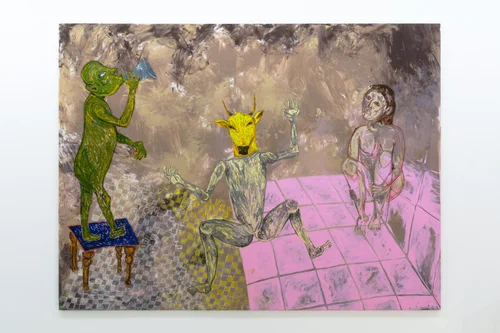
The Silence in Carnivals, 2021
Maitha Abdalla
Baró Galeria
Abu Dhabi–based painter, sculptor, and performance artist Maitha Abdalla creates theatrical scenes and narratives throughout her work. Myths from the U.A.E. and the wider region are at the heart of her practice and include the stories the artist’s grandmother told her as a child. Abdalla paints distorted figures who often feature both human and animal parts and serve as vessels for emotions and metaphors for human nature. Her bold, passionate style infuses her characters and landscapes with a scribbly, smoky effect. Over the last decade, Abdalla has been included in over 15 group exhibitions at regional and international venues such as Palazzo Franchetti in Venice, Fine Arts Society in Sharjah, and the European Parliament in Brussels. She recently showed a number of her pieces, including photography, at the “Proximities” exhibition at the Seoul Museum of Art. The show brought together over 40 U.A.E.-based artists.
Mohammed Ahmed Ibrahim
B. 1962, Khor Fakkan, U.A.E. Lives and works in Khor Fakkan.
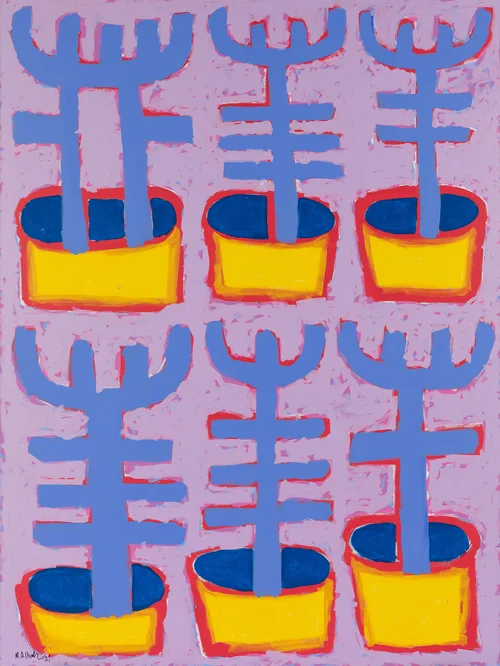
My Garden's Details, 2021
Mohammed Ahmed Ibrahim
Lawrie Shabibi
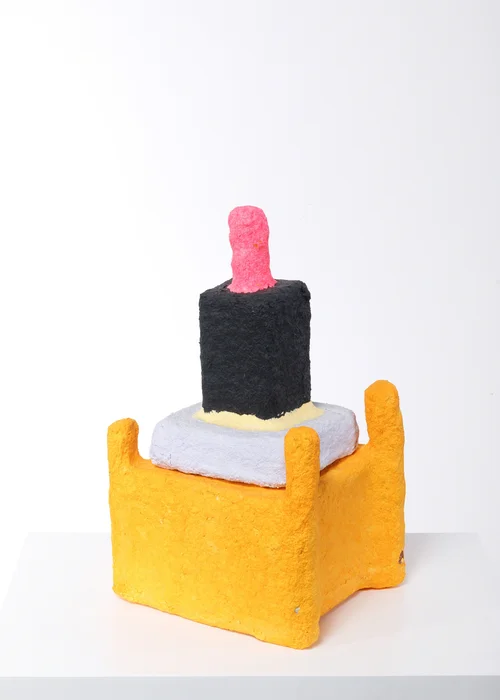
One Pink Flower in a Vase , 2018
Mohammed Ahmed Ibrahim
Lawrie Shabibi
Mohammed Ahmed Ibrahim has become one of the U.A.E.’s most established artists and has witnessed the remarkable rise of the country’s art scene. Ibrahim has been painting since the 1980s. He’s inspired by his mountainous hometown of Khor Fakkan, which informs his vibrant canvases, filled with symbols that derive from nature.
Ibrahim, who notably represented the U.A.E. at the Venice Biennale in 2022, is also known for his experimental papier-mâché sculptures that take on a variety of eclectic, playful, creature-like forms, such as One Pink Flower in a Vase (2018) and Dancer Contessa (2020). A landmark retrospective of Ibrahim’s career, entitled “Two Clouds in the Night Sky,” was on view at the Cultural Foundation in Abu Dhabi through last February. Curated by Noor AlMehairbi and Medyyah AlTamimi, it showcased a wide selection of the artist’s sculptures and paintings—including one of the very first artworks he made back in 1989, which featured his first experimentation with ciphers—an intriguing visual language that lives on in his canvases today.
Mohammed Kazem
B. 1969, Dubai. Lives and works in Dubai.
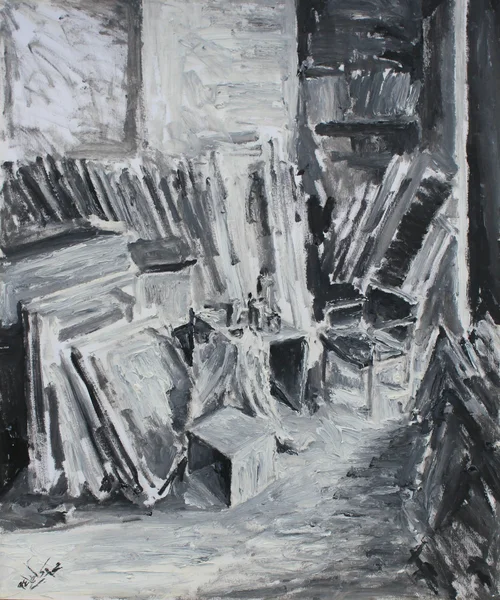
My Studio, 1994
Mohammed Kazem
Salwa Zeidan Gallery
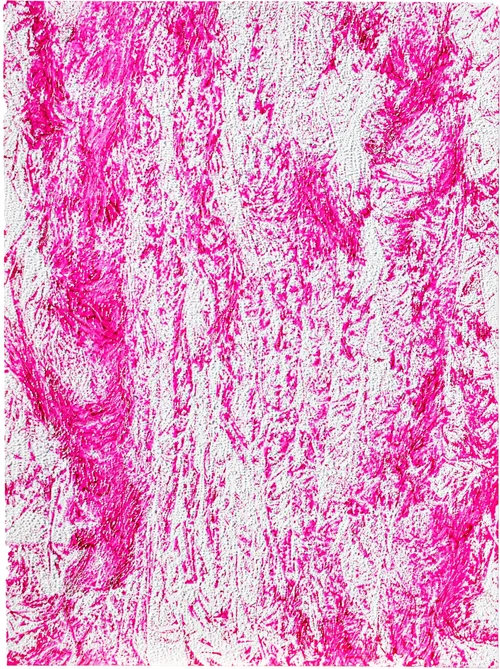
Coordinates-N° DR 1 (Pink), 2021
Mohammed Kazem
Samuelis Baumgarte
Along with his contemporary Mohammed Ahmed Ibrahim, Mohammed Kazem was a prominent member of the so-called “Group of Five,” pioneering artists who shaped culture in the 1980s. Over the course of his career, Kazem has experimented with film, video, and performance, reflecting on personal experiences and his close surroundings.
One of Kazem’s most compelling, multi-year series is “Window,” which he began in 2023. These paintings thoughtfully depict snapshots of the U.A.E.’s migrant laborers, whether working outside in the heat or resting in their intimate quarters. Thanks to this delicate subject matter, Kazem’s series was once described by the Emirati art patron and founder of Barjeel Art Foundation, Sultan Sooud Al-Qassemi, as one of the most important works to come out of the country.
Mohamed Al Mazrouei
B. 1962, Tanta, Egypt. Lives and works in Abu Dhabi.
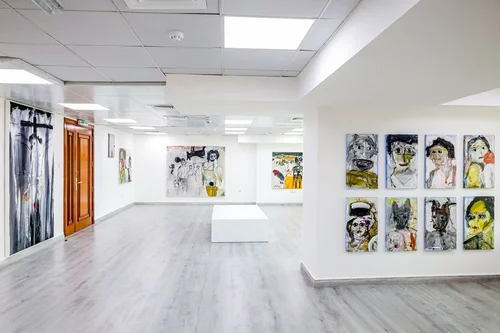
Born and raised in Egypt, Mohamed Al Mazrouei is a longtime writer, photographer, and painter. He was a student of ancient languages and philosophy at Al Azhar University in Cairo, which fed his poetry and short stories, as well as his visual work. His intense, expressionistic paintings of humans and animals feature thick lines, dark eyes, and unusual shades of color. His figures’ facial features are also inspired by art history, particularly Coptic and Fayum portraiture from ancient Egypt. Sometimes, there’s a captivating chaos in his smudged style and facial arrangements. Holy figures of Christianity are also recurring motifs; his late mother, who passed away young, owned an image of the Virgin Mary that still haunts him. In recent years, Al Mazrouei has exhibited at Aisha Al Abbar Gallery (Dubai), Iyad Qanazea Gallery (Abu Dhabi), and New York University Abu Dhabi.
Sarah Almehairi
B. 1998, Abu Dhabi. Lives and works in Abu Dhabi.
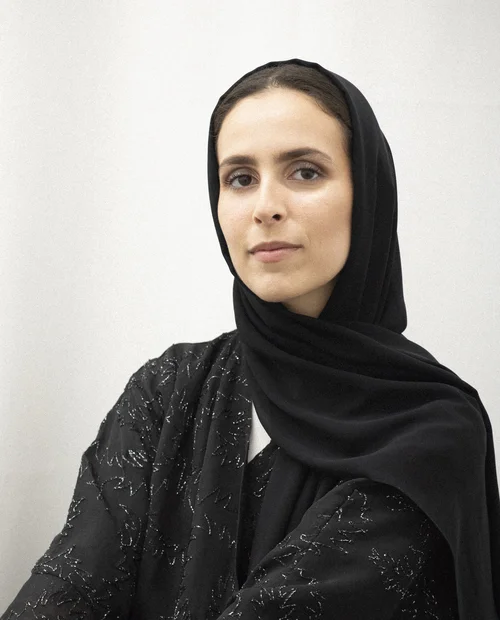
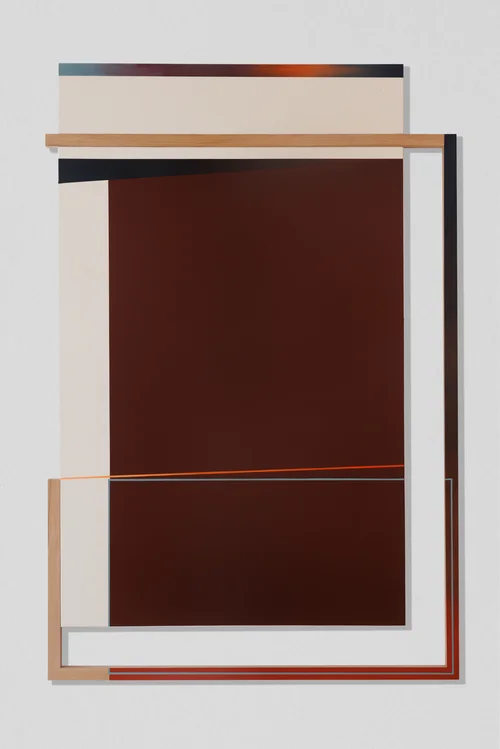
An arts graduate of New York University Abu Dhabi, the emerging artist Sarah Almehairi has worked in fiber art, sculpture, drawing, collage, and other media. Her mother’s craft shop in Abu Dhabi exposed her to creativity as a child. Almehairi is now inspired by Cubism and Abstract Expressionism; her clean-cut, geometric works combine painting and sculpture as they examine themes of materiality, systems, and correlations. Almehairi has hosted art workshops at Expo 2025 Osaka and displayed a public installation at Louvre Abu Dhabi as part of the Richard Mille Art Prize. In February 2026, she showcased her work in a solo presentation with Dubai-based gallery Carbon 12 at Art Basel Qatar.
Shaikha Al Mazrou
B. 1988, Sharjah, U.A.E. Lives and works in Dubai.
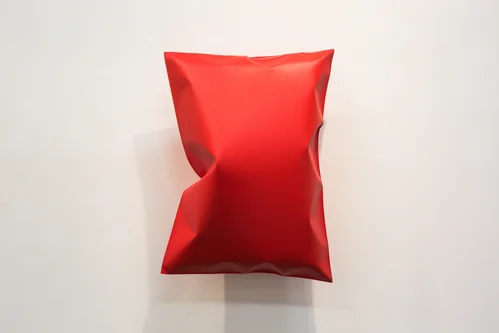
Expand, 2018
Shaikha Al Mazrou
Lawrie Shabibi
There is more than meets the eye in Shaikha Al Mazrou’s sculptures, which appear to be inflated plastic but are in fact made of metal. While they look simple in form, they make the viewer question what they know of the physical world. Educated in London, Al Mazrou is inspired by Minimalism, Conceptual art, and the Bauhaus movement. Through her signature pillow-shaped pieces, usually made of wet-coated steel, Al Mazrou explores color theory, materiality, and geometric abstraction. Al Mazrou has mounted public art installations at Expo 2020 Dubai, Frieze Sculpture London, and Desert X AlUla. Her most recent project, a calming, rippling light installation—“The Contingent Object”—was featured at Manar Abu Dhabi, an open-air light art festival that takes place in the Emirati capital.
