


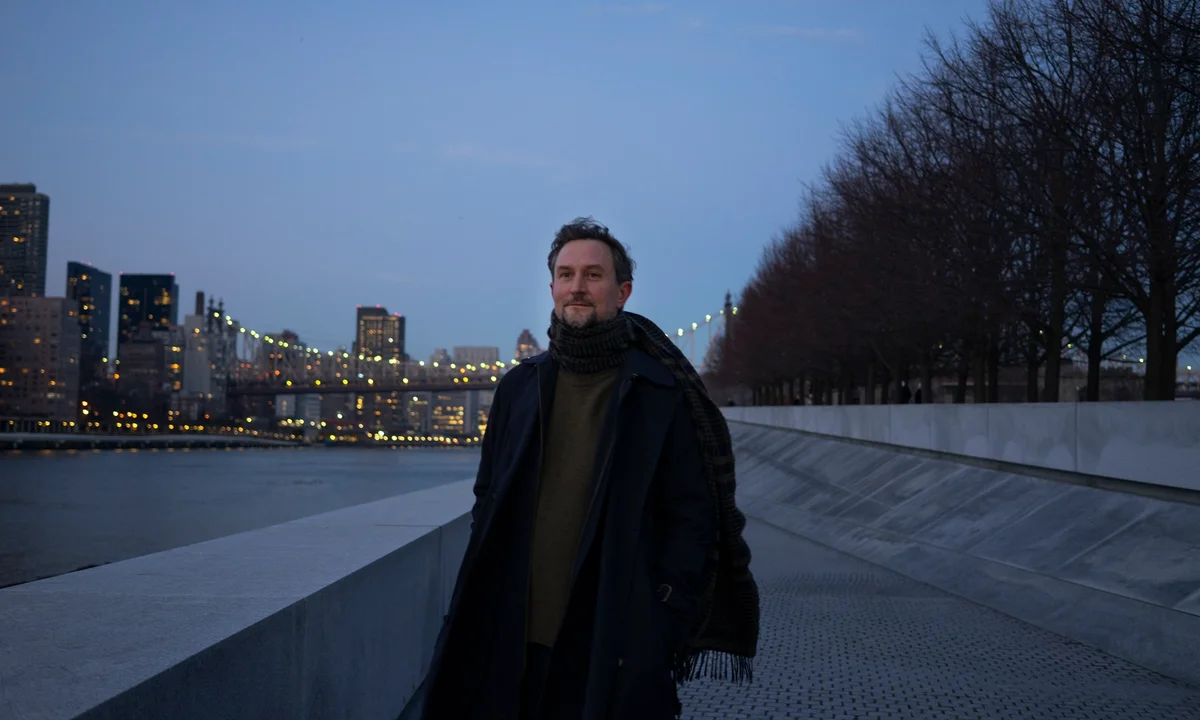
The sound artist Hans Rosenström could not have known that the US would be at war by the time his project, Out of Silence, launched at Four Freedoms Park in New York (until 21 June). But Franklin D. Roosevelt’s warnings to humanity on the importance of freedom of speech and worship, and from want and fear—articulated in a 1941 speech in support of the US joining the Second World War—are all the more potent for it.
Rosenström envisioned his project as an homage to the act of speech rather than to patriotic rhetoric. His multi-speaker, site-specific sound installation was “partly inspired by the Four Freedoms speech, and partly inspired by my relationship to how I think about human voices as means or a medium to travel between people”, the Finnish artist explains.
Known in his native Nordic territories for sculpting space with sound, including in last year’s Helsinki Biennial, Rosenström has rarely had the opportunity to exhibit in the US. He hails from Helsinki, lives in Stockholm and spent six months in New York in 2024 on an International Studio & Curatorial Program residency, which is how Out of Silence began to come together. When the Latvian curator Alina Girshovich approached him about a public art commission to mark the 90th birthday of the Estonian composer Arvo Pärt last year, Rosenström jumped at the chance. “I’m not an expert in his music or his compositions,” he says. “I don’t know how to write music, but I’m sensitive to sound—as we all are.”
Rosenström continues: “We are constantly surrounded by voices; they very much affect the way we experience the present and our relationship with our surroundings.” Out of Silence, curated by Girshovich, is a sonic composition of layered, recorded voices sung by the Estonian choir Vox Clamantis, staggered across Four Freedoms Park as four sections rooted in four sites within the park, using the human voice as a building block to impact the environment they are presented in. The park’s marble-stelae-lined memorial to FDR was designed by the architect Louis Kahn, who was born in Estonia and benefited from New Deal programmes when he was starting out in the US—affording him first-hand experience of FDR’s humanitarian ideals in practice.
“Roosevelt said these four freedoms he speaks about are not some future dream but something to manifest during our lifetime,” Rosenström says. “Through our own voices, we shape the surroundings where we live.”
