


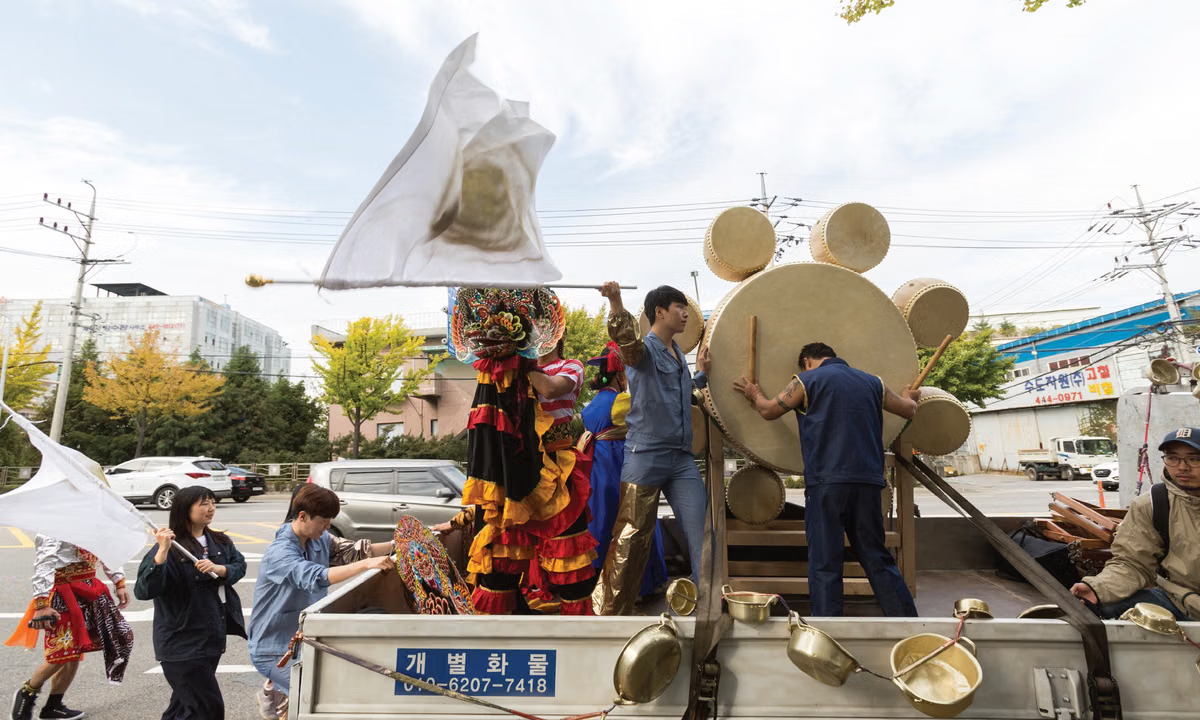
Korea’s two most acclaimed biennials again this year bookend Seoul art week, and both are not shying away from topicality. The just-opened Busan Biennale (until 1 November) explores cultures of resistance in Dissident Chorus, while the Gwangju Biennale (5 September to 15 November) embraces upheaval with You Must Change Your Life.
Evelyn Simons, Busan’s artistic co-director with Amal Khalaf, says they worked extensively with artists to research Korea’s rich context of protest, including democracy movements, student uprisings and labour activism. “Korea’s modern history and current affairs are punctuated with incredibly inspiring stories of dissidence, civilian disobedience and people-led solidarity movements,” she says, “but these are also intertwined with ongoing injustices and collective trauma.”
They involve artists “who are adjacent to or part of these movements”, says Simons, such as The House of Korean Protest Songs. Eunji Cho “draws directly from Busan’s labour history” through a collective, improvisational communal fishing song. Sungsil Ryu examines the “pressures of national development, education and productivity that have shaped generations of Koreans, and the almost compulsory demand to keep dreaming, producing and moving forward”. The Busan native Heaven Baek utilises the oral histories of the Joseon Women’s Volunteer Labour Corps. Thailand’s Tanat Teeradakorn considers the afterlives of protest songs, including Korea’s March for the Beloved, as a signifier of collective memory.
The Gwangju Biennale features the May Mothers’ House, a painting project honouring women affected by the city’s 1980 uprising Courtesy of May Mothers’ House
The show’s 46 artists and collectives also include the late science-fiction writer Ursula K. Le Guin. Khalaf says the presentation includes personal drawings, watercolours and maps from Le Guin’s family’s collection: “Many have never been shown.” They come as part of a project by the collective 5D, in co-operation with the Le Guin estate. Le Guin, Khalaf says, “reached for the map before language, as a tool for building a world, which feels particularly poignant in this time of uncertainty”.
Literary inspiration
Across the country, the Gwangju Biennale also has a literary inspiration: the 1908 poem by Rainer Maria Rilke, Archaic Torso of Apollo, the last line of which gives the biennial its title: “You must change your life”. But what change is it advocating?
“I would hesitate to speak of a single meaning of change for either Korea or Asia,” says artistic director Ho Tzu Nyen. “Asia is far too large and heterogeneous for that, and Korea itself contains many different histories and velocities of change. But Korea is a particularly intense place from which to think about transformation, with immense changes compressed into a few generations. The Biennale asks how we sense these different scales of change—and when to participate, shape, resist or refuse. Change, after all, is not always good.”
Ho, who is also a renowned video artist, joined with the curators Che Kyongfa, Park Gahee and Brian Kuan Wood to organise 43 artists and groups, including Matthew Barney, Wang Tuo, Nam Hwayeon and the performance art trailblazers Tehching Hsieh and Amanda Heng. In addition to the central exhibition, the Gwangju Biennale will this year expand to include 27 national and other independent pavilions.
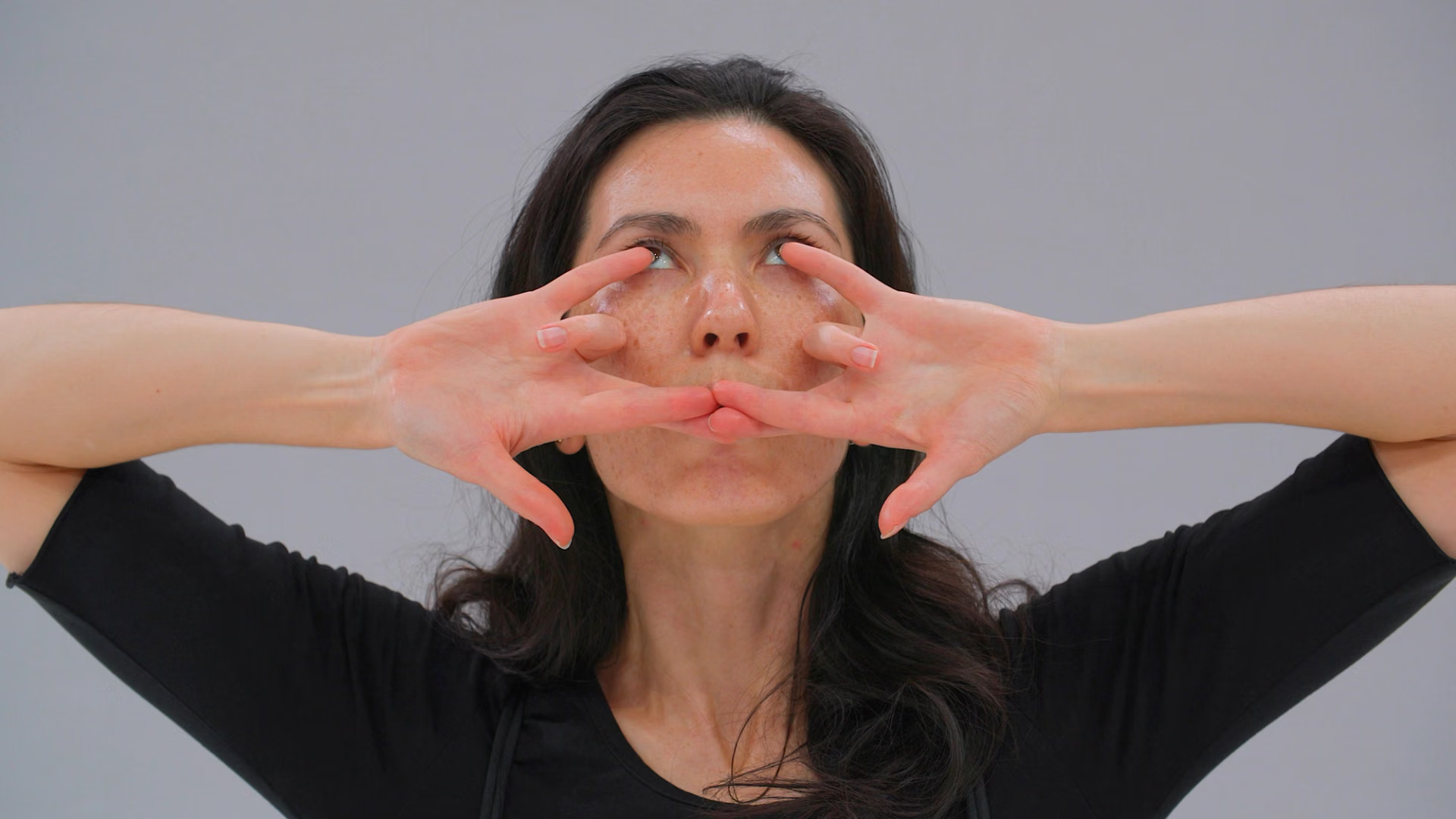
The Gwangju Biennale includes Angela Goh’s performance Sky Blue Mythic (2021) Courtesy of the artist and Fine Arts, Sydney
Rather than a snapshot of Korean contemporary art, Ho says, “what interests us instead is to think with this unevenness and multiplicity—to compose a layered field of change within the exhibition. In Gwangju, for example, we bring together very different trajectories: Heo Baekryeon’s experiments [with traditional Chinese] painting, agriculture, education and collective life; the legacy of the Gwangju Citizens’ Art School and Minjung culture; and the May Mothers’ House [which honours women affected by the 1980 democratic uprising in Gwangju], with 322 paintings made since 2022. We leave these histories with their differences while listening for the resonances between them—and for how intensely local histories might enter new relations with the wider world.”
• Busan Biennale, until 1 November
• Gwangju Biennale, 5 September-15 November
