






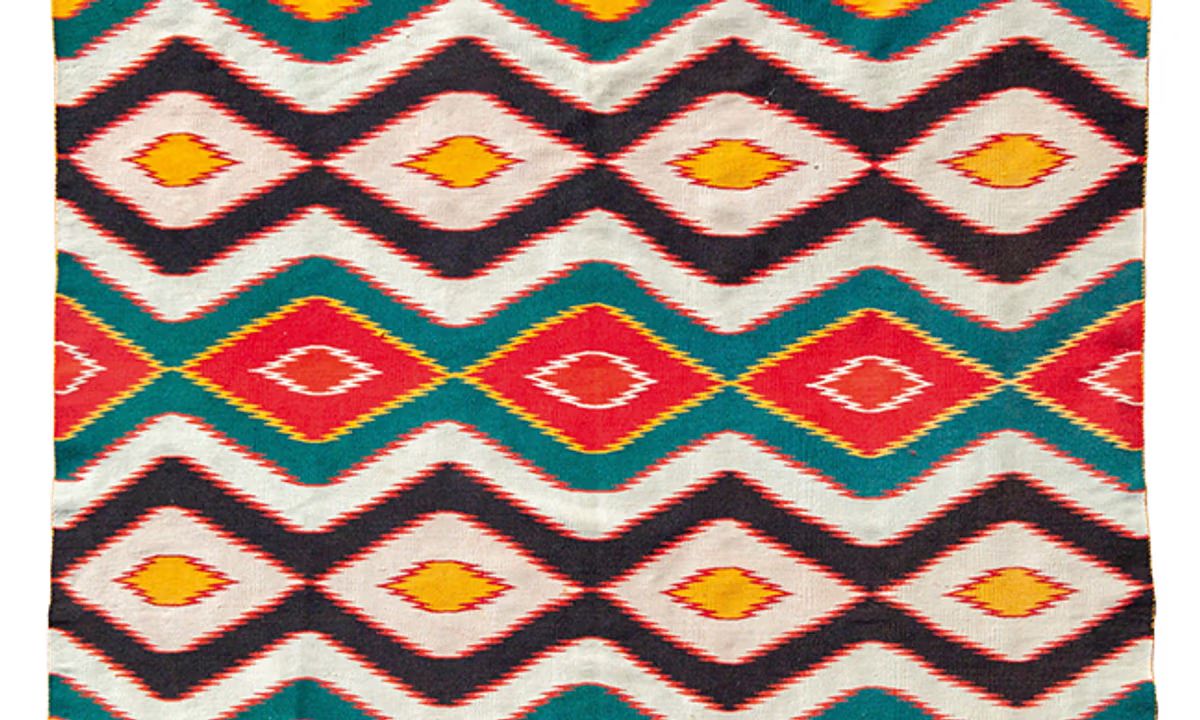
An exhibition of Navajo (Diné) weavings from the collection of the US artist Frank Stella (1936-2024) opens on 15 May at Peter Pap Rugs at Arader Galleries in New York City, marking the first time the collection has been shown publicly (until 10 June). Stella acquired a trove of Navajo rugs and blankets over the course of four decades, drawn to their striking optical effects and resonance with his own work.
The exhibition features 40 weavings from the 19th and early 20th centuries. It has been organised by the New Hampshire-based art dealer Peter Pap, who specialises in textiles and worked with Stella’s widow, Harriet McGurk, to catalogue the collection and conserve the weavings as needed.
Pap calls Stella’s collection “highly personal” rather than encyclopaedic. “Most collectors buy what they like and what moves them, for whatever the reason,” he says. “I don’t think Frank formed his collection from an academic or even a particularly ethnographic interest. It was much more based on visual impact.”
Artists who collected Navajo art
Figurative Textile, Tsé Bit’a’í (Shiprock), around 1920 Peter Pap Rugs
Stella acquired most of his collection from the art dealer and curator Tony Berlant, who included a work from the artist’s collection in the groundbreaking show The Navajo Blanket at the Los Angeles County Museum of Art (Lacma) in 1972. Stella lent a loosely woven 19th-century blanket with a banded design within a backdrop of natural white wool yarn. The exhibition positioned Stella among a lineage of artists who avidly collected Navajo weavings and included works from the collections of Donald Judd, Andy Warhol, Georgia O’Keeffe, Kenneth Noland and Jasper Johns.
While that is the only documented loan from Stella in Lacma’s exhibition catalogue, Pap believes that additional pieces from his collection were shown when the exhibition travelled to the Brooklyn Museum (where it received a glowing review in The New York Times from critic Hilton Kramer) and other cities nationwide.
“We are engaged in ongoing research to determine which ones those might be,” Pap says. “Several of the weavings in the collection have tags with what appear to be museum numbers and some are prepared for hanging with Velcro, which only would have been in preparation for an exhibition.”
Tibetan tiger rugs and Afghan nomad weavings

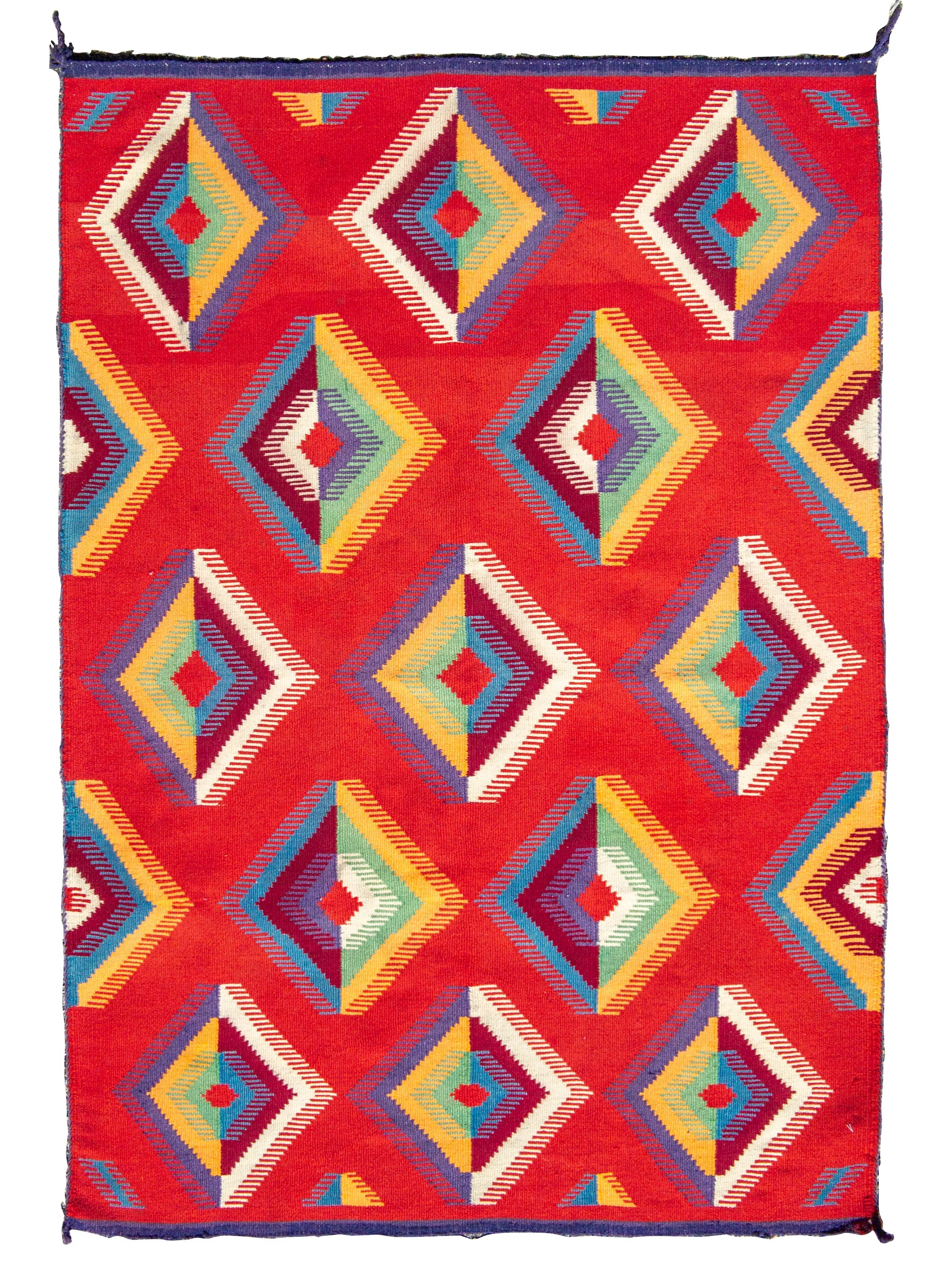
Germantown Textile, around 1885 Peter Pap Rugs
Pap adds that Stella’s appreciation for woven art was not limited to Navajo weavings. “He collected Turkish kilims, Tibetan tiger rugs, Indian textiles and nomadic weavings from Afghanistan just to name a few,” he says. “There is a language of geometry and colour in weaving that is carried across many nomadic and village cultures throughout the world, and he probably found it fascinating how some designs were universal.”
While there is currently a strong demand for Navajo weavings, no single style consistently commands a higher premium. “Weavings at opposite ends of the spectrum can command higher prices,” Pap says. “On the one hand extremely colourful weavings with very dense lively designs, like eye dazzlers, and then more monochromatic minimalist pieces with great negative space.”
Pap adds that “over half of the Diné weavings sold are not going to collectors, but to individuals who recognise their beauty and the fact that they are undervalued relative to other art forms. Very serious collectors are looking for the oldest examples with the greatest ethnographic relevance, and I do not think this was a criteria for Frank.”
In addition to his collection of textiles, the exhibition in New York will include geometric drawings Stella made in the 1960s, around the same time he became interested in the Navajo weavings. While the textiles are for sale, the drawings are on loan from Frank Stella Estate.


