


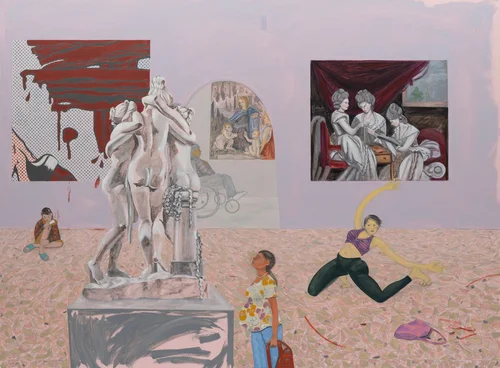
Trios, 2024
Elizabeth Tremante
Spinello Projects
A new study by the University College London published this week demonstrates that people who engage with art have a tendency to age at a slower pace, with benefits similar to those of physical activity. The research shows that both participating in art as well as observing it leads to people staying younger on a biological level. It is the first study to provide evidence of this kind. The findings were published by Oxford University Press in the journal Innovation in Aging on behalf of the Gerontological Society of America.
The study was led by professor Daisy Fancourt and members of the University’s department of behavior science and health as well as its division of psychiatry. They conducted their research by analyzing blood samples gathered from 3,556 adults in the United Kingdom, assessing their biological ages against their chronological ones. The accompanying survey evaluated participants’ level of engagement with the arts across four categories that include participating in art (activities like painting, singing, or dancing); receiving art (attending exhibitions or events); visiting heritage sites (historic buildings or monuments); or other cultural activities (visiting archives or a library). They also studied the frequency of these activities, as well as the diversity of activities, and found that the variety of ways in which people engaged with art was just as important.
In one of the tests, researchers found that the biological ages of those who engaged with art on a weekly basis had a biological age that was 1.02 years lower than those who only engaged with art once or twice a year. Those who engaged monthly had an age that was 0.8 years lower. However, the research cautions that it only examines the biological process of ageing, not whether engaging with art can lead people to live longer.
“Our study found that it’s not just about doing arts regularly, but also about doing a range of different arts activities,” said Fancourt in an interview with The Art Newspaper. “Each type of arts activity—reading, making music, going to cultural performances, visiting heritage sites etc—has different effects on us cognitively, emotionally and physiologically. So engaging in a diverse range of activities—just like having lots of different plants in our diets—is most beneficial for our health.”
