


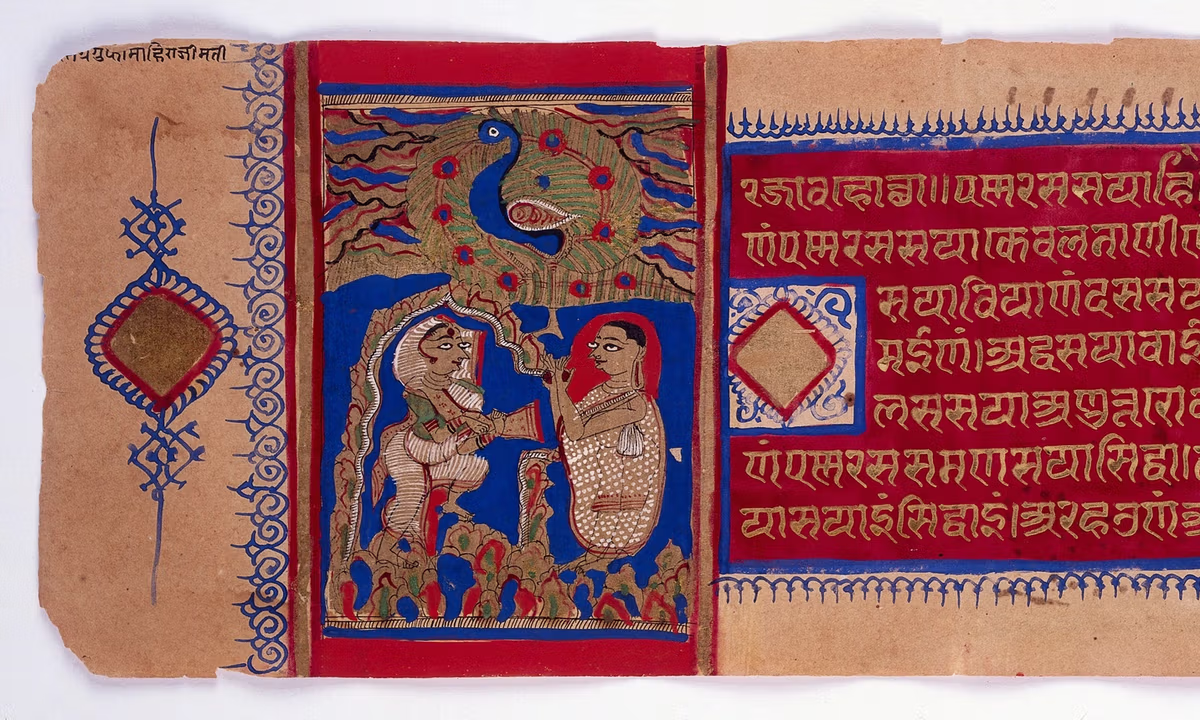
London’s Wellcome Collection is to restitute 2,000 manuscripts that had been acquired in 1919 at “a low price” from a Jain temple in what is now Pakistan. This represents the largest group of Jain manuscripts outside South Asia. A Memorandum of Understanding on the formal transfer is being signed at the House of Commons this evening.
In an unusual arrangement, the restitution will not be to the country of origin, but to a UK body, the Institute of Jainology, for deposit at the University of Birmingham. This may come as a surprise, since there are only 60,000 Jains in the UK and six million in India, but the situation in South Asia became very difficult for the Jain community after the partition of India in 1947.
Jainism is an ancient religion that emphasises spiritual purity and non-violence towards all living creatures. The area where the manuscripts came from became part of Pakistan at partition. With an overwhelmingly Muslim population in Pakistan, nearly all Jains who survived the turmoil were forced to flee to India.
Today there are virtually no Jains left in Pakistan—and therefore no suitable depository there for the Wellcome manuscripts. The Jains in India are a fragmented community, with no obvious single institution to care for the collection.
How did the Jain manuscripts arrive at the Wellcome?
The Jain manuscripts in London had been acquired in 1919 by Henry Wellcome, who had made a fortune from his pharmaceutical business. He collected an enormous quantity of objects and documents relating to health and medicine from all around the world. Most of the objects were later dispersed to the Science Museum, but the Wellcome Collection in London’s Euston Road retains the archival material and artworks, where they are available for study.
Of the Wellcome’s 2,000 Jain manuscripts, around 1,200 came from an unidentified temple in the Punjab area, in a place named in the acquisition documents as Patli or Pattli. The are several villages or towns with this name, but no Jain temple could be tracked down there. The remaining 800 manuscripts came from a variety of unidentified sources in what is today Pakistan. Some of the manuscripts are still wrapped in the 1919 newspapers in which they were enclosed for protection during the transport.
A 1919 newspaper wrapper holding one of the Jain manuscripts Image: Courtesy of the Wellcome Collection, London
Wellcome’s Indian agent in 1919, Paira Mall, gave few details about the acquisition, but the Wellcome Collection’s head of collections, Adrian Plau, admits that the manuscripts were bought at “a low price and against the best interests of their original owners”. Correspondence of the time suggests that they were bought for 5 rupees each (15 rupees was then equivalent to £1, although obviously inflation means that was worth much more than it would be today).
Mehool Sanghrajka, a trustee of the UK Institute of Jainology who has helped to arrange the transfer of the Wellcome material, admits that “some of these manuscripts would not have survived the turmoil” at the time of partition. Much of the Jains material culture was lost or destroyed in the traumatic events that followed partition in 1947. Sanghrajka is therefore “grateful to the Wellcome for the care and respect they have shown these texts”.
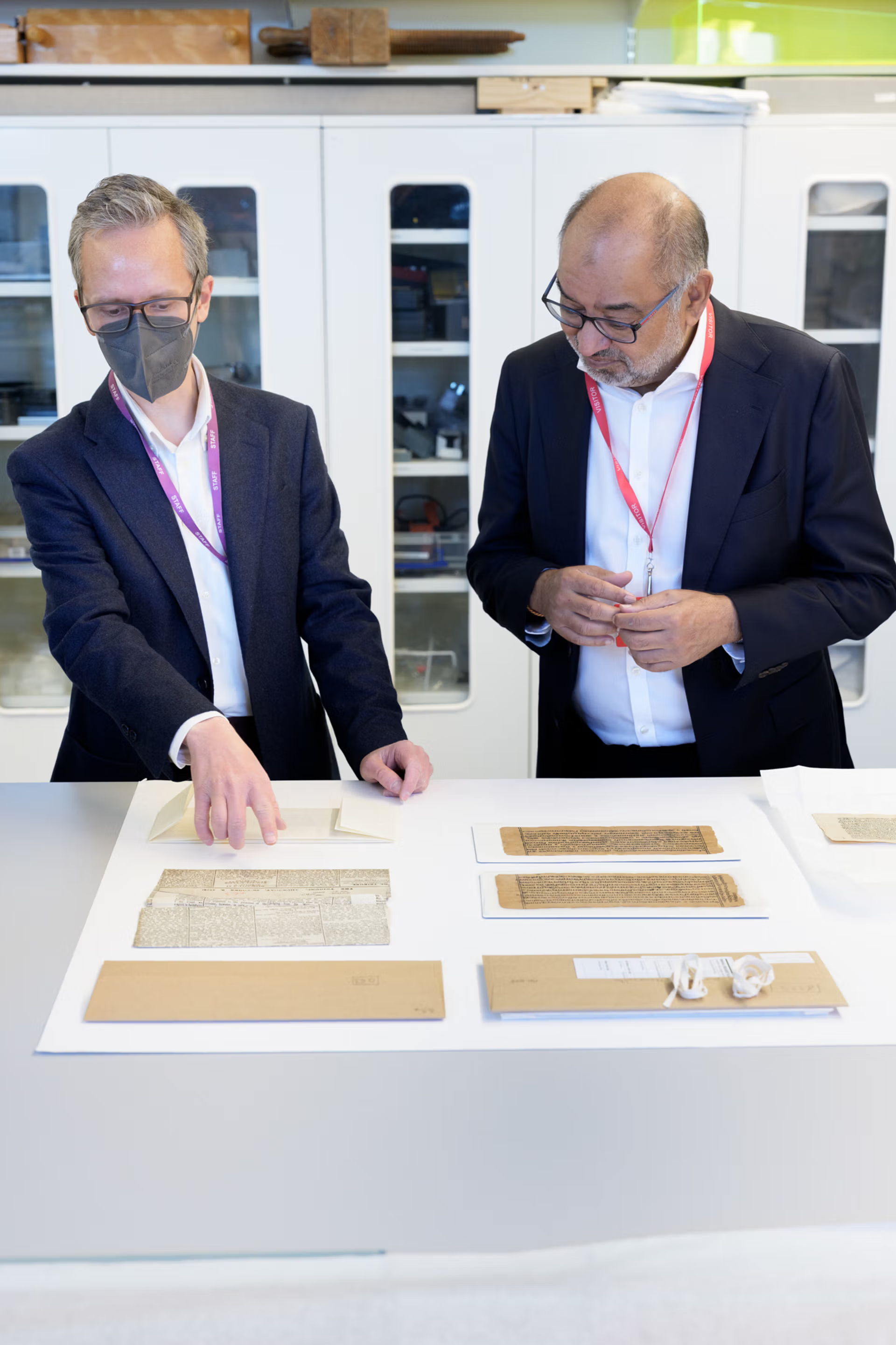
Adrian Plau (Wellcome Collection) and Mehool Sanghrajka (Institute of Jainology) examining the Jain manuscripts Image: Courtesy of the Wellcome Collection, London
Of the 2,000 manuscripts, around half have a health connection. They range from an early 16th century illustrated text of an important Jain scripture, the Kalpasutra, to 19th century documents. The collection also includes what is possibly the earliest surviving copy of the first medical treatise in early Hindi, dating from 1592. Documents are mainly written in Prakrit, but some in other South Asian languages. They are currently stored in over one hundred archive boxes.
The manuscripts will go to the Birmingham Centre of Jain Studies, which was established in 2023 at the University of Birmingham. A Wellcome spokesperson says this is “the most appropriate place to maximise community access, deepen research opportunities and safeguard the future of this significant collection.”
The formalities will now proceed, with permission to deaccession being sought from the Wellcome Collection’s governors and the Charity Commission. The physical transfer is beginning this year and may take several years.
The Wellcome Collection has an enormous holding of manuscripts from other cultures, around 265,000 items. Plau says that private discussions are underway with a few other institutions about possible transfers of material.
Sanghrajka also sees the Jain acquisition as a possible model: “Returning objects is always fraught with difficulties, but it is important to look how this can have a positive impact with communities and academia.”
