


New to this edition of Frieze Seoul is the Spotlight section, featuring 12 solo presentations of 20th-century artists from countries including India, Germany, Serbia and Nepal, as well as South Korea. The selection focuses on figures from outside the dominant Western canon, rediscovering overlooked artists and spotlighting those working away from the traditional art centres. The curator of the section, Wonseok Koh, the director of Line Cultural Foundation, told us about some of the highlights.
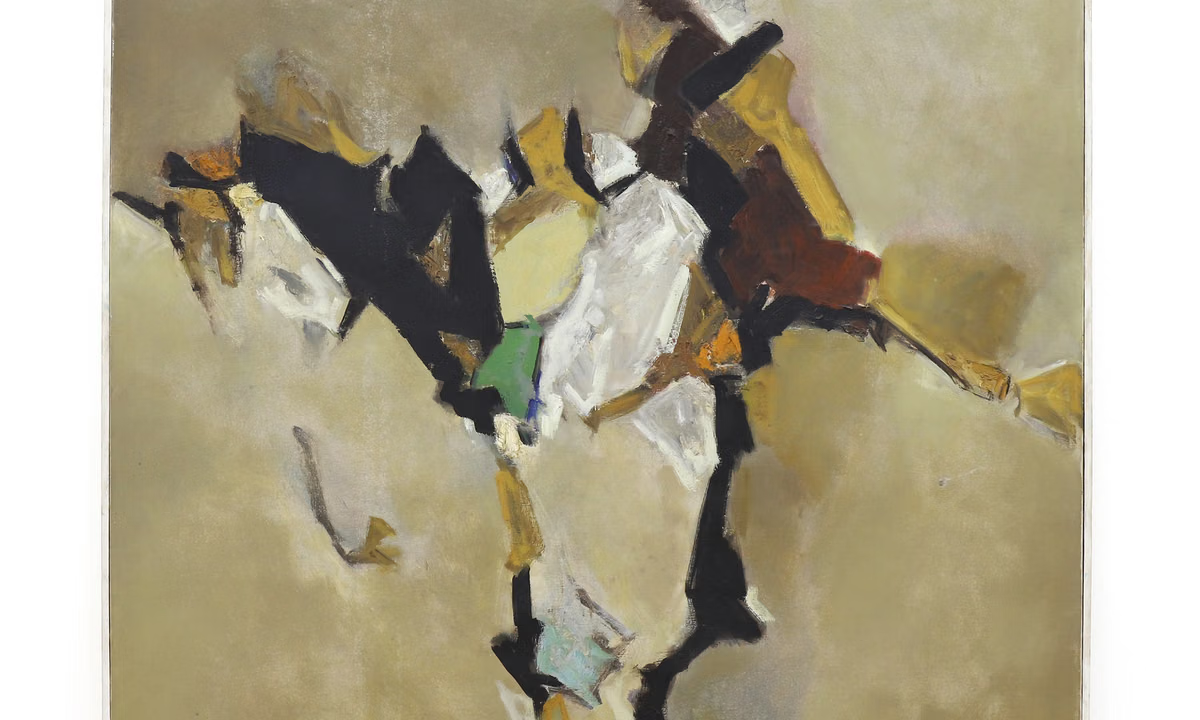
Lain Singh Bangdel, Echo of the Mountain (1972), Tansbao Gallery (above)
Born in 1919 to a family of Nepali immigrants in India, Lain Singh Bangdel received his art education in Kolkata before encountering new artistic currents in Paris during the rise of post-war abstract art. Seeking harmony between the international Modernist language, the cultural memory of Nepal, and the Himalayan landscapes of his homeland, Bangdel is a pivotal figure who pioneered Nepali modern art based on his transnational experiences. This work, whose title evokes his background, is a representative piece that clearly demonstrates Bangdel’s signature approach: foregrounding abstract interpretations of Himalayan landscapes spanning from the 1950s to the 70s.
Karl Otto Götz, Foss (1960), Die Galerie
Götz, one of the most important German artists of the late 20th century, profoundly reflects the artistic currents of the post-Second World War era in Europe, which sought new ideas by dismantling traditional concepts of form. This painting represents the period when Götz successfully transitioned from his CoBrA group phase into Informel art, establishing his own innovative approach. While retaining traces of monotypes from his early CoBrA period, the work intentionally rejects classical forms through a process of delicate analysis and preparation. Instead, it expresses an image formed by the traces of movement and the controlled speed of colour application. Götz’s immense influence can be inferred from the names of the renowned students he taught, such as Gerhard Richter and Sigmar Polke. However, considering that his practice has not yet received sufficient spotlight, this presentation holds significant meaning.
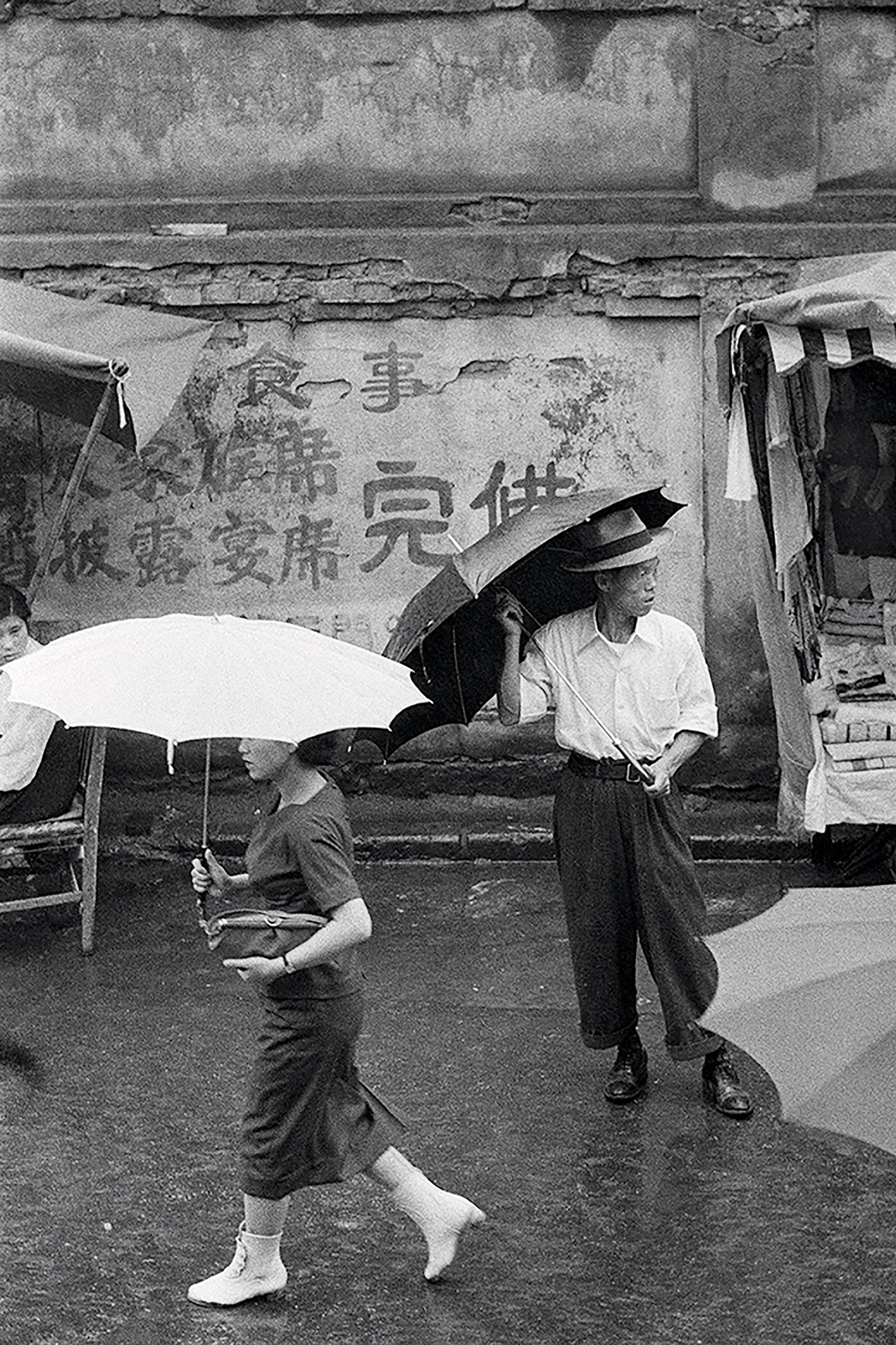
Han Youngsoo, Myeongdong, Seoul, Korea (1956-63), Baik Art
The ruins and famine immediately following the Korean War serve as the stereotyped images representing Korea at the time. Han Youngsoo, who fully embodied the distinctiveness and artistry that photography could express, acutely shatters our rigid preconceptions of that era through photographs composed with his unique perspective and sensibility. This photograph captures all of Han’s favoured subjects in a single frame: the gleaming surface of a rain-slicked street, the will to live superimposed over the shabby remnants of war, and a subject in chic attire who holds their own even by today’s standards. By applying an artistic gaze to photography as a documentary medium, Han stands as a representative artist of Korean photographic aesthetics who warrants a re-evaluation.
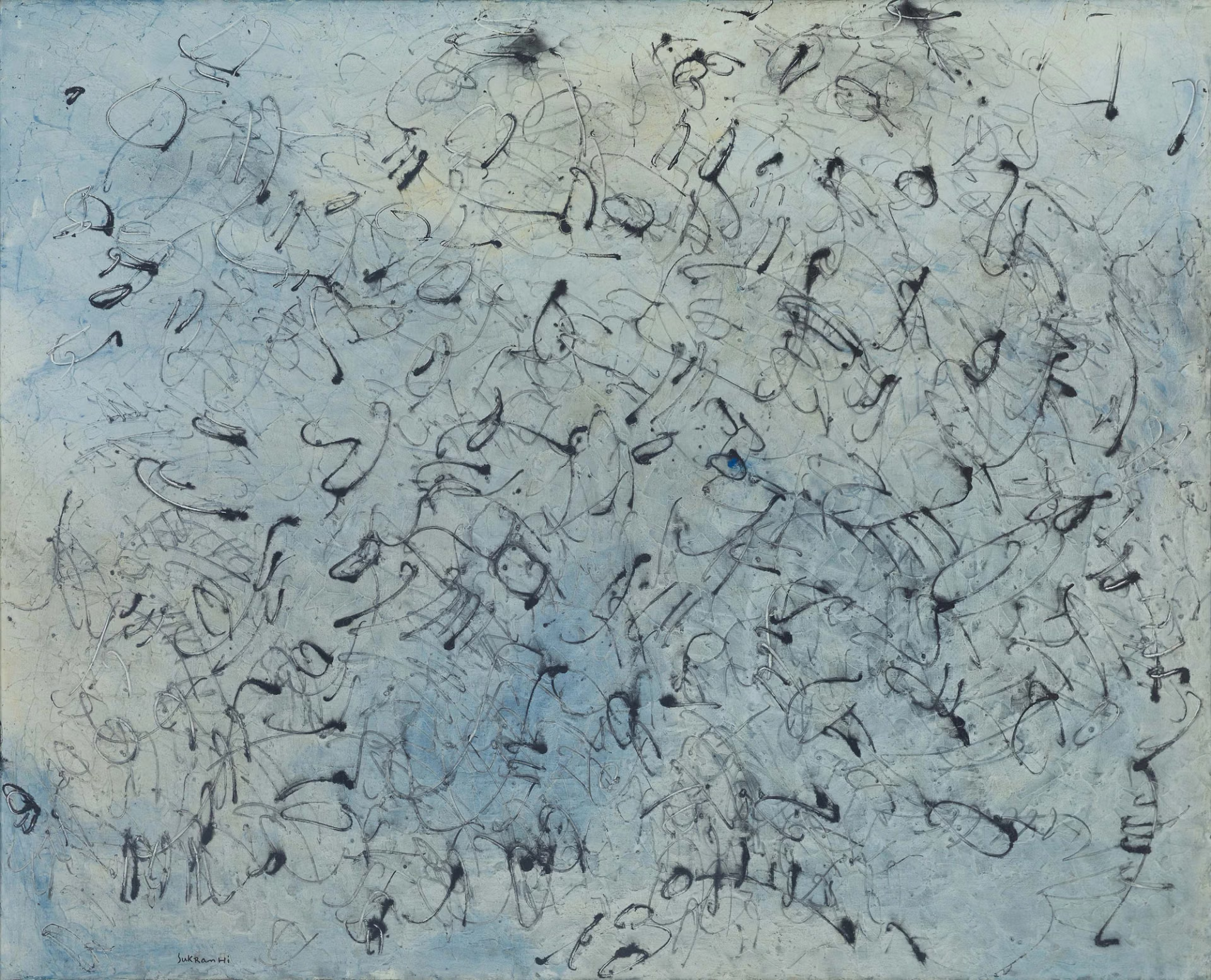
Suk Ranhi, Nature 87-22 (1987), Sun Gallery
Born in 1939, Suk Ranhi has long approached nature not as a subject for representation, but as a multi-layered rhythm expressed abstractly through line, movement, colour and material. In particular, after encountering the works of Lee Ungno and the East Asian ink painting tradition in Paris in the late 1960s, Suk moved from lithography to make paintings that involved a rigorous process of carving, layering, scraping and repainting using various tools. Nature 87-22, which best embodies this trajectory, is a work that clearly reveals the artist’s independent painterly world rooted in her unique sensory experiences.
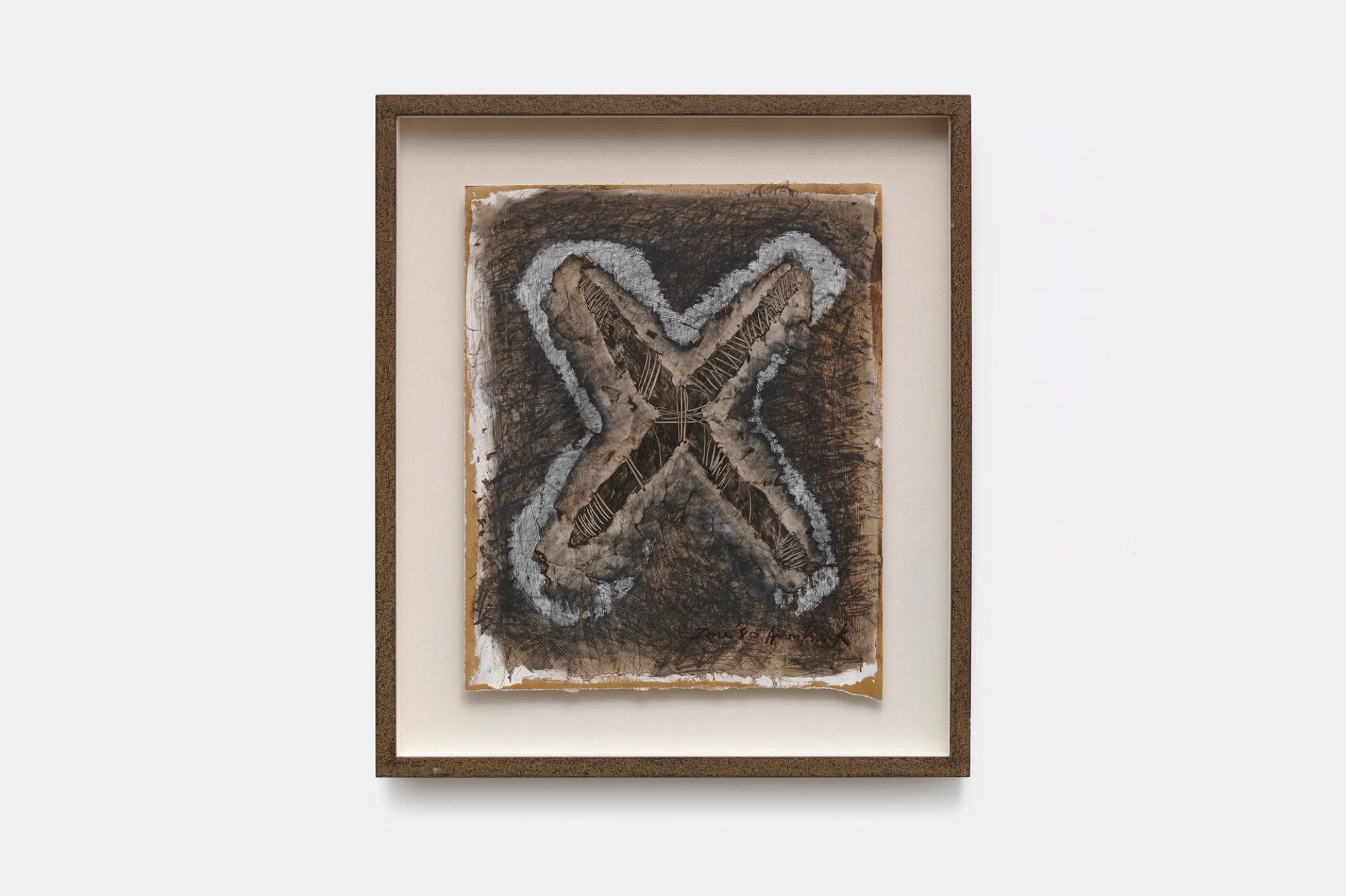
Hoon Kwak, Incantations VIII (1980), PNC Gallery
Born in 1941, Hoon Kwak was active in Daegu during the late 1960s and early 70s—a period of radical experimentation in Korean contemporary art—before moving to the US in 1975 to continue his practice. Among the exhibited works, which focus on his major early series, Incantations VIII—created with gesso, oil and graphite on kraft paper—is particularly noteworthy. This piece is from a series of paintings that expand and transform the shapes of everyday objects from new angles, turning them into surreal forms that culminate in incantatory gestures. It perfectly represents the artist’s oeuvre, which addresses the attributes of memory and existence through spiritual images, driven by a free-spirited temperament unbound by specific schools or formal characteristics.
Courtesy of Wellside Gallery
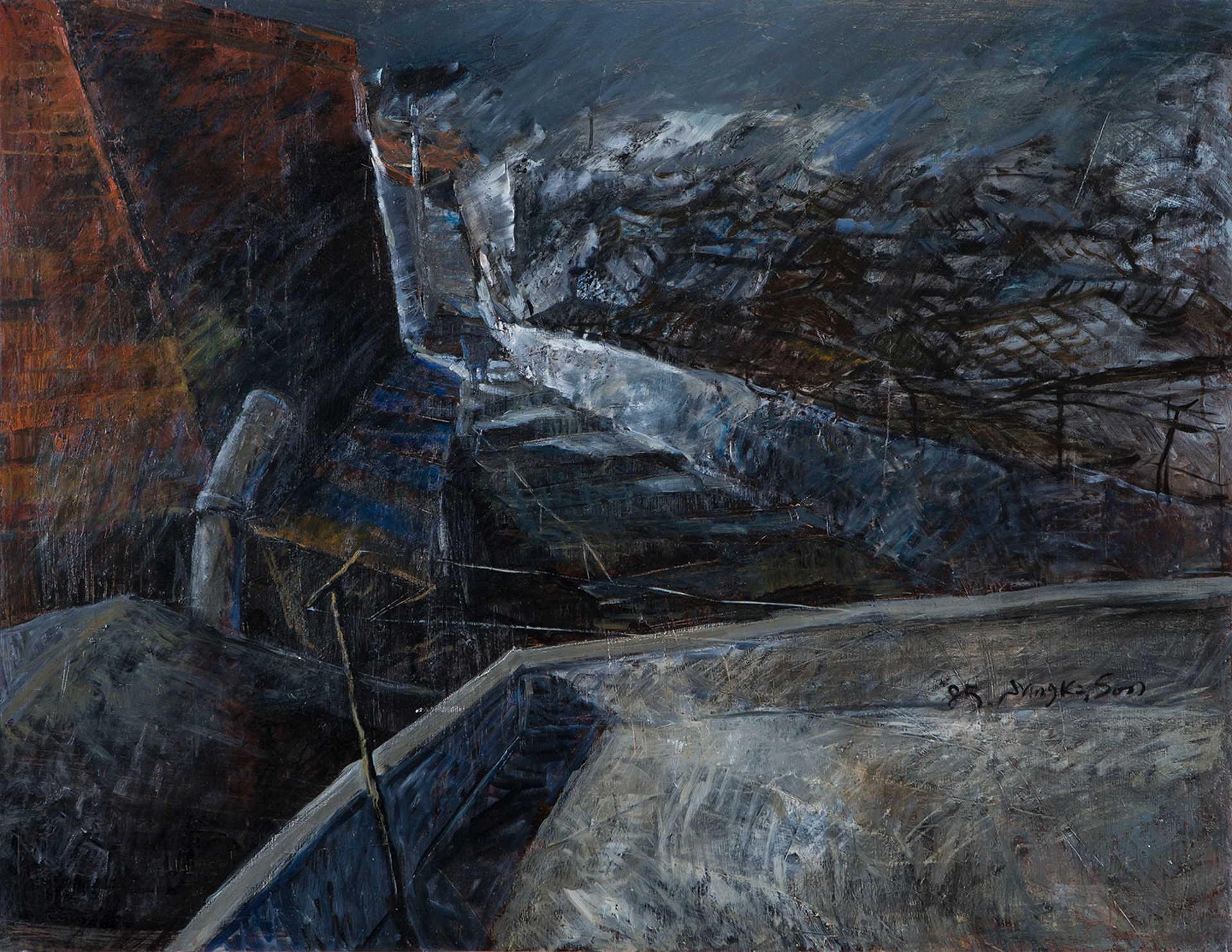
Son Sangki, Artificial City–Ahyeon-dong–Homecoming (1985), Wellside Gallery
Suffering from rickets and a spinal disability throughout his life, Son Sangki died prematurely before reaching the age of 40. He was an artist who unleashed a fierce artistic spirit while battling the prejudice against his disability, as well as illness, poverty and loneliness. After barely managing to graduate from art college, he moved to Seoul, where he confronted the dismal landscape of the city’s slums. He transformed these scenes into grotesque, surreal and semi-abstract paintings, creating a unique and irreplaceable body of work. Artificial City–Ahyeon-dong–Homecoming is part of a series that highlights the spaces left in the shadows of South Korea’s rapid industrialisation. It is a masterpiece that captures the harsh landscapes and the traces of fierce survival with an intense yet affectionate gaze.
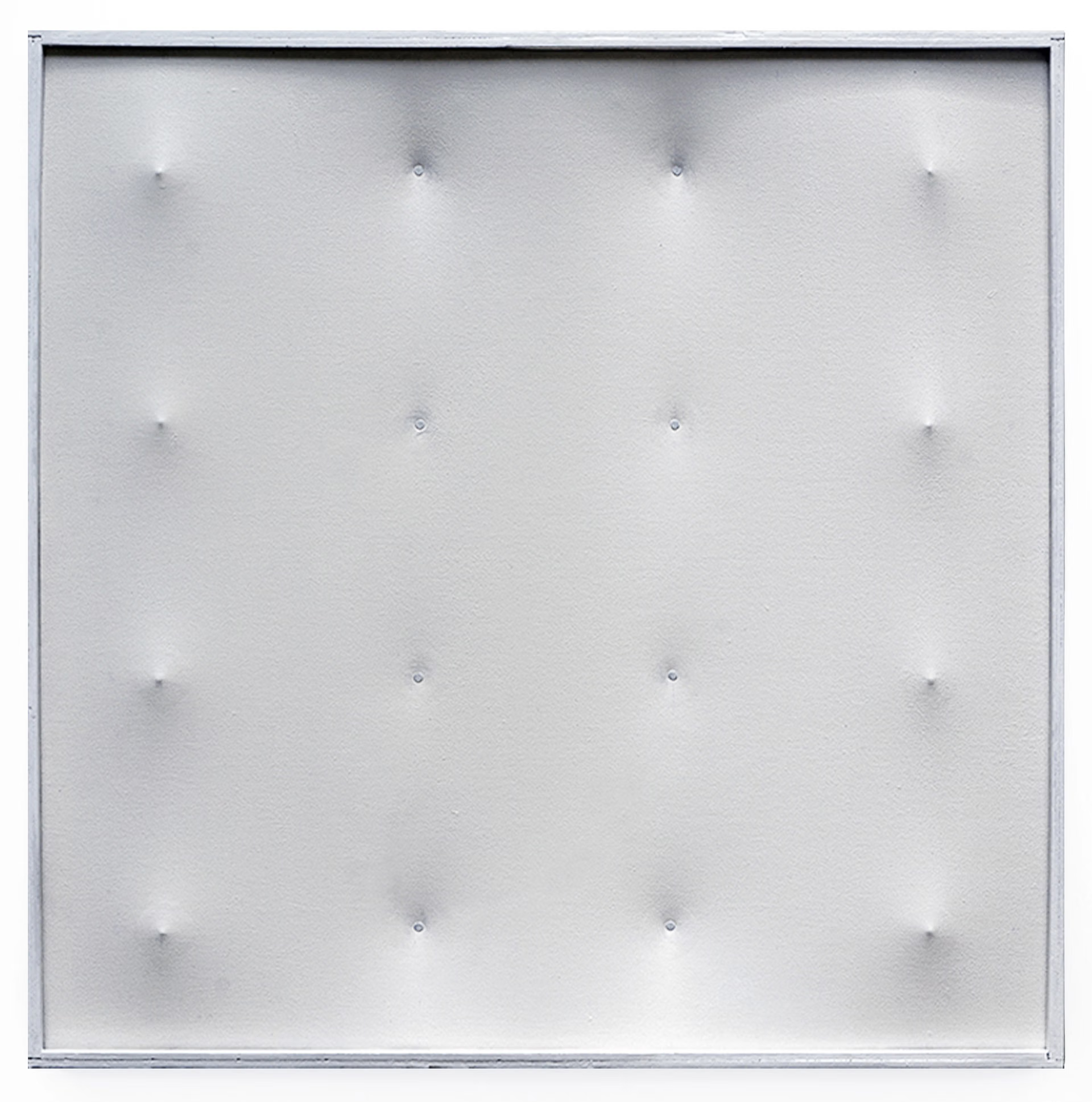
Po Po, Painting for the Blind #9 (1986-2015), Ames Yavuz
During a visit to Yangon, Myanmar, in 2015, I had the opportunity to visit Po Po’s studio. Set against a landscape somewhat detached from the typical environment of contemporary art, the experimental works in his studio instantly revealed how fragile the preconceived notion of a “time lag” truly was. Despite the hardships of living long-term under a dictatorship and the resulting isolation, Po Po never lost sight of the innovativeness of contemporary art. He fearlessly broke through various boundaries and prejudices, traversing from painting to assemblage, from monotypes to installation, from design to architecture, and from materiality to action. This work, which highlights the artist’s experimental nature, freely crosses the realms of sight and touch, as well as painterly imagery and design arrangement, ultimately proposing a renewed perspective on the artist.
• Frieze Seoul, 2-5 September
