


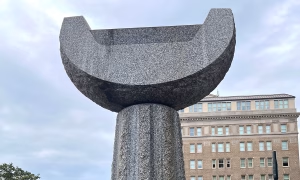





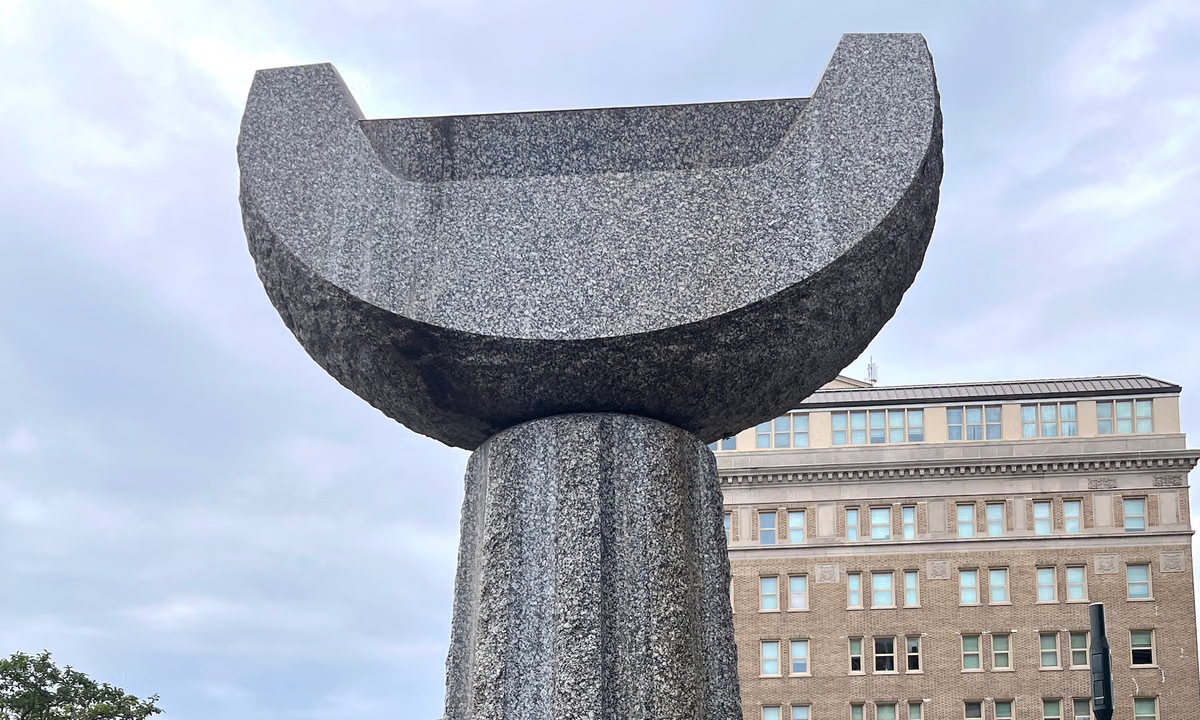
Isamu Noguchi’s sculpture Mississippi Fountain (also known as The Mississippi, 1961-62) will soon be installed at the Beaux Arts entrance to the New Orleans Museum of Art (Noma). There, its water feature will be restored to functionality after years of non-operation. Travelling from the city’s Central Business District to City Park, the roughly 40-ton granite sculpture will be lifted around 40ft into the air by crane, housed in a custom steel “cage”, and transported on a large truck to the museum this autumn.
The public sculpture was created as part of a nearly 20-year collaboration between Noguchi and the architect Gordon Bunshaft (of Skidmore, Owings & Merrill). Between 1951 and 1968, the two worked on several projects together including The Garden (Pyramid, Sun, and Cube) (1960-64) at Yale University’s Beinecke Rare Book and Manuscript Library, and Sunken Garden (1964) at 28 Liberty Street in Manhattan.
Mississippi Fountain—a minimalist sculpture of a large granite column topped by a crescent capital—was designed for a building that originally housed the John Hancock Mutual Life Insurance Company, located at Harmony Circle in downtown New Orleans. The sculpture’s title alludes to the city’s enmeshment with the Mississippi River, which flows several blocks to the east.
The local drugstore chain K&B (Katz & Besthoff) purchased the property at 1055 St. Charles Avenue from its original owners in 1973. But K&B’s repurposed corporate headquarters closed after the company was sold to Rite Aid in 1997. The John Hancock Mutual Life Insurance Building (also known as K&B Plaza) was listed on the National Register of Historic Places in 2017. In October 2025, it was listed for sale.
For a time, the building held much of Sydney and Walda Besthoff’s art collection. Many of their sculptures were later donated to Noma, where some reside in the Sydney and Walda Besthoff Sculpture Garden. The Besthoff family has now donated Mississippi Fountain to the museum as well—in honour of Sydney Besthoff III, who spearheaded the development and expansion of the museum’s garden.
An archival photo of Mississippi Fountain in front of the John Hancock Mutual Life Insurance Building, New Orleans © The Isamu Noguchi Foundation and Garden Museum, New York / Artists Rights Society (ARS), New York
Mississippi Fountain’s relocation to Noma follows only one other case of the splitting up of Noguchi and Bunshaft’s sculptural and architectural collaboration’s.
The Family (1956-57)—a triad of granite sculptures originally situated in Bloomfield, Connecticut—was designed for viewing from the Wilde Building at the Connecticut General Life Insurance Company headquarters. Unfortunately, the work was left “adrift and isolated from its intended relationship with the campus buildings”, writes the Noguchi Museum’s Matthew Kirsch, when developers razed the neighbouring Emhart Building to repurpose the grounds as a golf course and housing development in 2003.
Although Cigna, the insurance company responsible for the disruption, initially pledged that it would not sell The Family, the work made its way to Sotheby’s in 2023. It sold for $12.3m at auction, setting a new record for the artist.
Noguchi understood the relationship between sculpture and architecture to be both irrevocable and holistic. In an essay published in the magazine Studio International in 1968, he argued that “the sculptor is not merely a decorator of buildings but a serious collaborator with the architect in the creation of significant space and of significant shapes which define this space”.

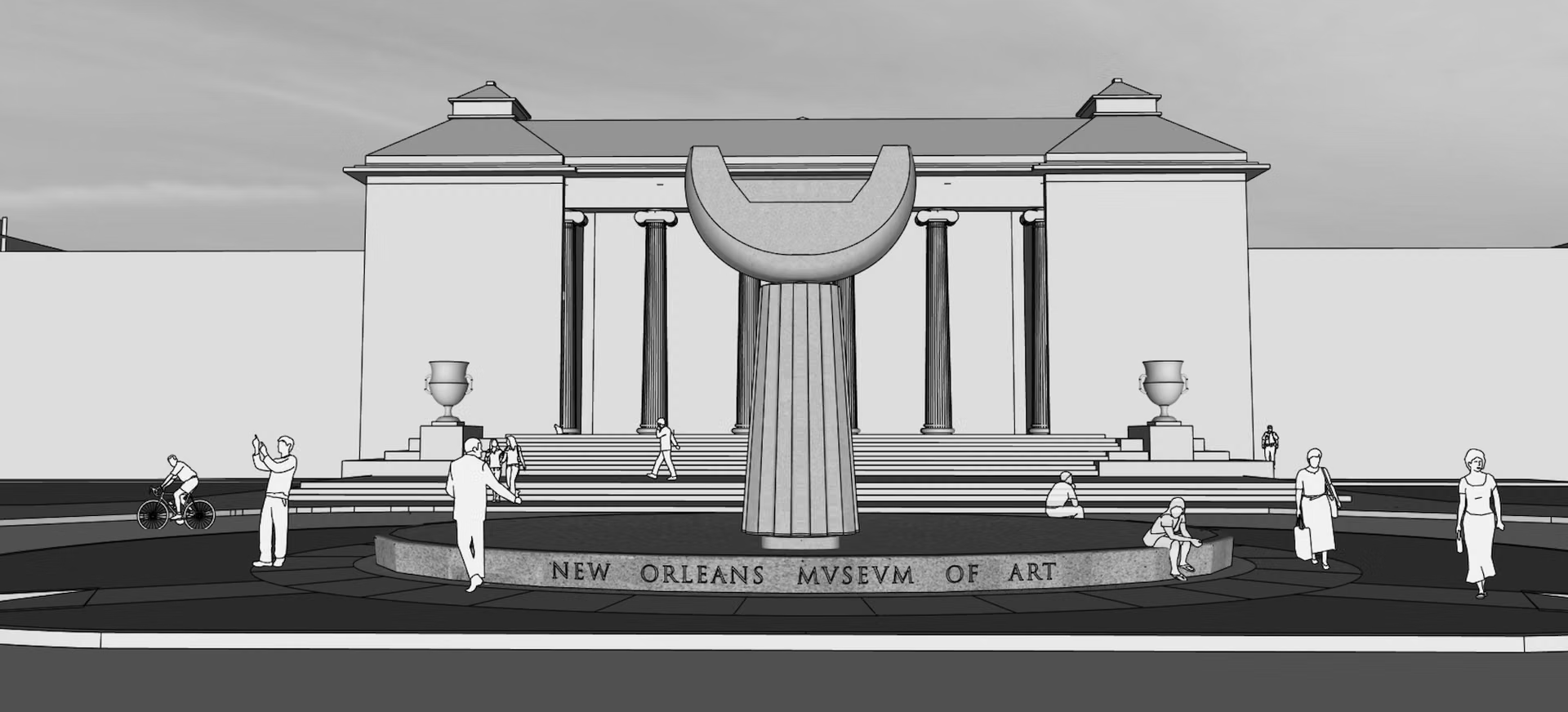
A rendering of what the sculpture will look like at its new home Sculpture installation design: Lee Ledbetter & Associates, courtesy the architects and the New Orleans Museum of Art
After the removal of a later work, Shinto (1974-75), from the lobby of the Bank of Tokyo in 1980, Noguchi was incensed. Speaking with the collector who acquired the work, he complained that “removed from its intended setting, Shinto had lost its intended function and meaning, rendering it purposeless”.
The connection between Mississippi Fountain and the John Hancock Mutual Life Insurance Building is “impossible to replicate elsewhere, and there is certainly something to mourn in the loss of its original context”, says Amy Hau, the Noguchi Museum’s director.
But she concedes that “at the same time, in its new home at the New Orleans Museum of Art, Mississippi Fountain will be reactivated as Noguchi intended. While its original architectural context has been lost, its accessibility and long-term stewardship have been significantly strengthened, and an essential aspect of the work, its relationship to flowing water, will once again be experienced.”
At Noma, Mississippi Fountain will replace the Roy Lichtenstein sculpture Five Brushstrokes (1983-84), which has welcomed visitors at the entrance of the museum since 2013. Five Brushstrokes will move to the Sydney and Walda Besthoff Sculpture Garden, where Noguchi’s Rain Mountain (1982) is also on view.
“Our hope is that Mississippi Fountain becomes an iconic element in the cultural landscape of New Orleans,” says Noma director Susan M. Taylor. “It transcends one architectural component, and it will be beautifully sited.”


