


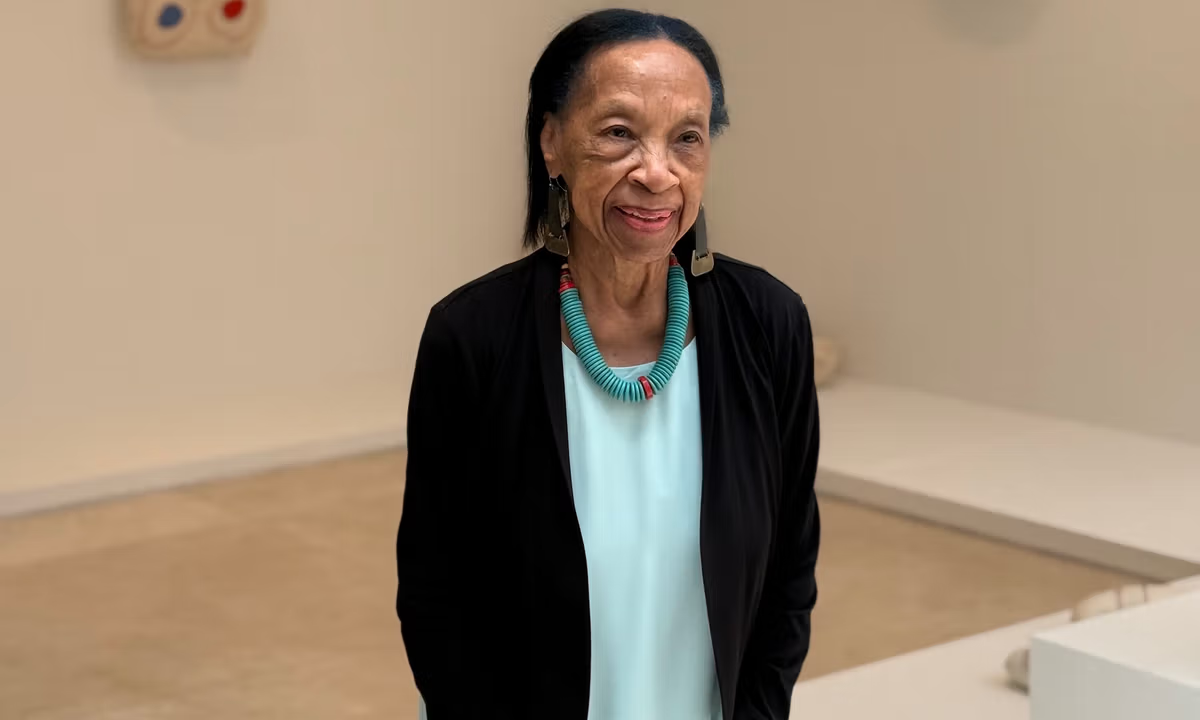
“The only thing that drives me is life,” the artist Valerie Brathwaite once said, reflecting the vitality that permeates her artistic practice.
Known for her sensuous, organic abstract sculptures, Brathwaite died on 6 July at age 87 in her home-studio in Caracas, Venezuela. Over six decades, the Trinidadian-born artist developed a singular artistic language, experimenting across media and materials from clay and fabric to concrete and medium-density fibreboard. With colour, nature and experience as her compass, Brathwaite’s work defies labels, leaving a lasting mark on both Venezuelan and Caribbean art.
Born in 1938 in San Fernando, Trinidad and Tobago, Brathwaite trained in London—at Hornsey College of Art and the Royal College of Art—and later at the École des Beaux-Arts in Paris. Early on, she incorporated colour into her sculptures, defying both prevailing conventions and her own teachers. “Colour was a subversive expression for a rebellious artist like Valerie,” says Jesús Fuenmayor, the curator of the exhibition Vital and Veiled: Valerie Brathwaite and José Gabriel Fernández, which closed in March at the American University Museum in Washington, DC.
Colour always remained central to Brathwaite’s practice. “In Valerie’s work, colour shapes form itself,” Cecilia Fajardo-Hill, the author of a landmark 2021 essay on Brathwaite, tells The Art Newspaper. “It departs from traditional notions, becoming sensuous, pop, dynamic and unexpected.”
Installation view of Valerie Brathwaite: A Flowing Path of Her Own at Malba Photo: Santiago Ortiz, courtesy Henrique Faria Fine Art, New York
Drawing was equally essential to the artist. “Rather than treating drawing as a means to another end, she saw it as a mutation of forms, alternating between the two-dimensional and the volumetric,” Fuenmayor says.
After returning to Trinidad following her studies, Brathwaite relocated to Caracas in 1969 at the invitation of her lifelong friend, the artist Gego. Kinetic and conceptual art were Venezuela’s reigning expressions, yet Brathwaite developed a parallel practice engaging with her generation. “Valerie represents an expanded and cosmopolitan notion of the Caribbean between Trinidad and Venezuela,” Fajardo-Hill says. “She bridges modern and contemporary art with a sculptural language entirely her own.”
Brathwaite exhibited extensively in Venezuela. Her first institutional solo show, Valerie Brathwaite: Esculturas, was held in 1975 at the Museo de Bellas Artes de Caracas, where she exhibited horizontal, sinuous sculptures made with experimental materials—including concrete placed directly on the museum floor. Prominent cultural critics like Marta Traba, Miguel Arroyo and Juan Calzadilla championed her work.
Brathwaite was always reluctant to discuss her art, offering only clues—often in the form of memories of nature in Trinidad—that permeate her works. Plants, rocks and mountains become sinuous suggestions. The human body also captivated Brathwaite, with some of her works exuding eroticism. “Valerie’s fascination with colour, sensual volumes and the Caribbean allowed her to reproduce a particular beauty, which at times relates to the masculine and feminine,” says Freddy Castro, Brathwaite’s studio manager since 2015.
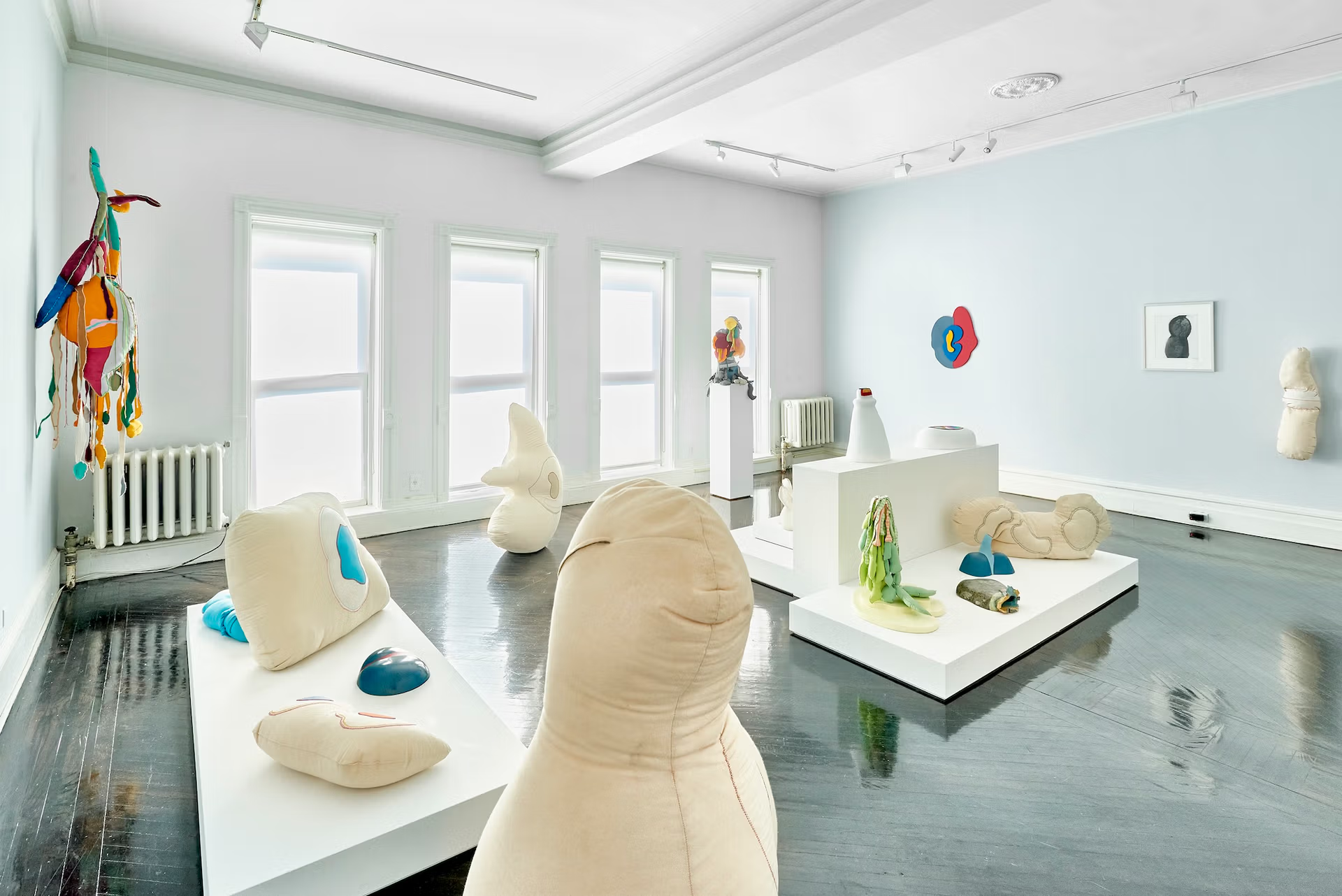
Installation view of Valerie Brathwaite: Where Have All The Flowers Gone? (2021) at Henrique Faria Fine Art, New York Photo: Arturo Sáchez, courtesy Henrique Faria Fine Art
Time spent in Sweden, where Brathwaite studied at the Royal Swedish Academy of Fine Arts in Stockholm in the 1970s, also influenced her practice. Inspired by watching cacti grow, she shifted to a vertical format—while also synthesising movement. This is evident in her 1980s Dancing Vegetables series, with some of the works suggesting succulents and other plants. Yet abstraction prevailed.
Brathwaite shifted between established and experimental formats and techniques, adapting to her circumstances. These included textiles and stitching. Series like Soft Body from the 2000s hint at both organ fragments and mysterious ecosystems. Regardless of the technique she chose, Brathwaite always intervened directly in her work. She driven by the need to touch it, Fuenmayor says.
Music was important for Brathwaite as well. She began DJing in the 1990s and was invited by the Museo Reina Sofía to perform during Arco Madrid 2024. “The bridge between her sculpture practice and music oscillates between the musicality of movement in her work and the ambiguity of forms,” says Ken Pérez, Brathwaite’s assistant since 2020. Series like Fingerprints of the Dance (2002), in which she imprinted her body on ceramic plates during a performance, blend the two.
Brathwaite leaves an extensive archive of documents, photographs and art dating from 1958 to 2026. “The hope is to establish a foundation, as Valerie envisioned, opening the archive for research,” says Pérez, who registered the archive.
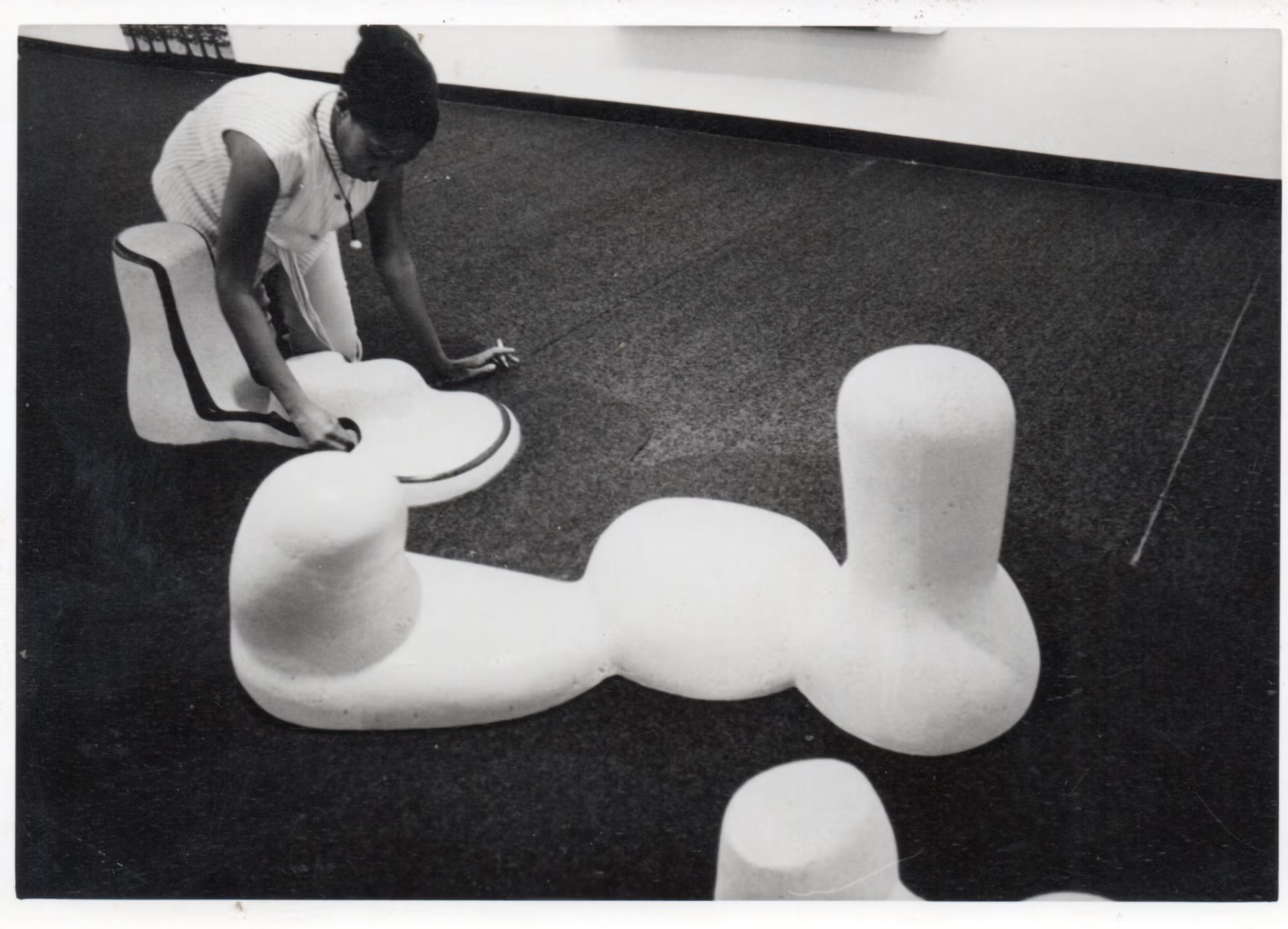
Brathwaite at Sala Mendoza in Caracas, 1973 Photo: Rudy Stejskal, courtesy Jesús Fuenmayor
Although well-known in Venezuela, Brathwaite only recently gained international recognition. “Sadly, women artists often have to wait until their 70s or 80s to be fully recognised,” Fajardo-Hill says. “Valerie was a migrant, and because her work did not fit Venezuela’s dominant artistic narratives, international recognition came late. Her discipline, originality and consistency ultimately earned her that recognition.”
Brathwaite’s first solo museum exhibition outside of Venezuela, A Flowing Path of Her Own, closed in February at Argentina’s Museo de Arte Latinoamericano de Buenos Aires (Malba). In 2025, she participated in Brazil’s Mercosul Biennial.
“Interest in her work from museums in Europe and the US is growing,” says Henrique Faria, the founder of the eponymous New York gallery that represents Brathwaite. He adds that the Solomon R. Guggenheim Museum recently acquired a work from her Soft Series.
A retrospective of her work is planned for the end of this year at Caracas’s Sala Mendoza. “There is still a debt to Brathwaite’s legacy,” Fuenmayor says.
Brathwaite remained active well into her later years. “She was drawing and playing with clay until the very end,” Castro says. “That was when I realised that a true artist never retires.”
