


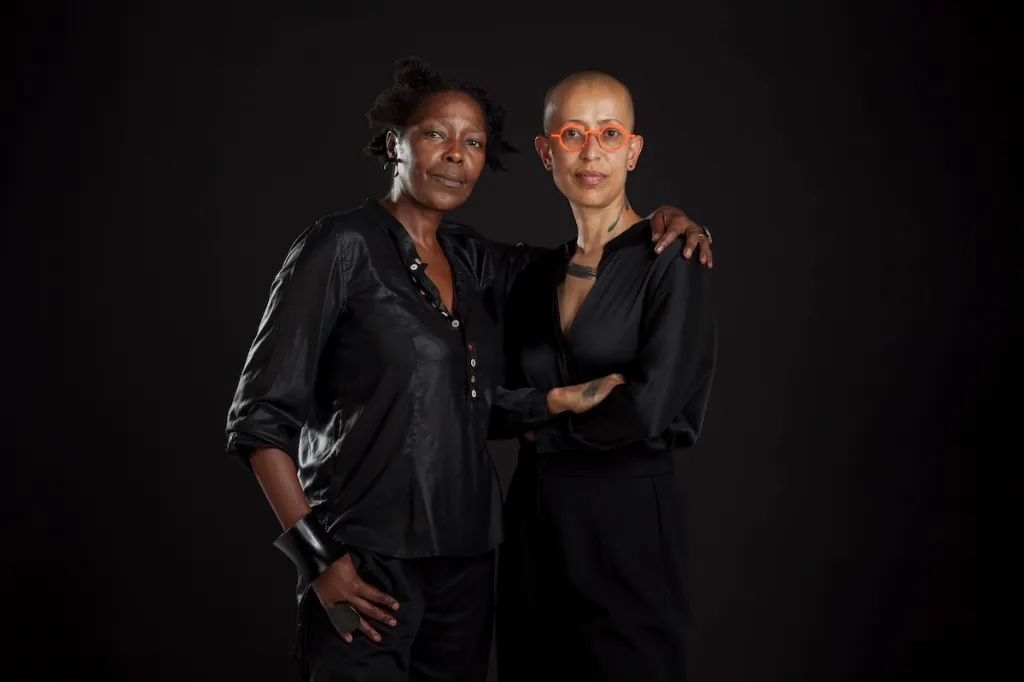
South Africa’s contribution to this year’s Venice Biennale will be both absent and impossible to ignore. Months after the government abruptly canceled a planned pavilion by artist Gabrielle Goliath, the work at the center of the dispute is now set to appear in Venice anyway, just not inside the Biennale proper.
Instead, according to The Guardian, Goliath’s Elegy will be installed nearby at the Chiesa di Sant’Antonin, where it will run for three months beginning in May. The official South African pavilion, meanwhile, will sit empty.
The unusual arrangement caps a controversy that has been simmering since January, when that country’s culture minister Gayton McKenzie pulled the plug on Goliath’s presentation just days before the Biennale deadline. The work, part of her long-running Elegy series, was deemed “highly divisive” by the ministry because it included references to Palestinians killed in Gaza, including a tribute to poet Hiba Abu Nada, who died in an Israeli airstrike in 2023.
Goliath has pushed back with force, arguing that the issue was not the content itself but the refusal to alter it. The cancellation, she said, set “a dangerous precedent,” particularly given that Elegy is rooted in mourning victims of racialized and gendered violence across geographies, from South Africa to Namibia to Gaza.
The fallout was immediate. Goliath and curator Ingrid Masondo challenged the decision in court, framing it as a violation of artistic freedom, but their case was dismissed in mid-February. South Africa ultimately declined to name a replacement, opting instead to withdraw from the exhibition entirely, leaving its pavilion vacant.
What remains is a split-screen version of national representation. Inside the Biennale, nothing. And just outside it, a work that has already become one of the most talked-about absences of the exhibition.
The “Elegy” series itself is restrained: In its video form, seven singers emerge one by one from darkness, each holding a single sustained note before giving way to the next. The effect is meant to mimic the slow accumulation of grief.
As ARTnews‘s Alex Greenberger wrote in January, the new “Elegy” work “was set to explore the killings of women and queer people in South Africa, as well as the killings of women in Namibia by German forces during a genocide in the early 20th century, but it was one section in particular that reportedly raised concern at the culture ministry. That section was to feature words by the Palestinian poet Hiba Abu Nada, who was killed, along with her son, during an Israeli airstrike in October 2023.”
For supporters, the episode reads as a clear case of political interference in an independent curatorial process. For the government, it reflects a line drawn around what a national pavilion should represent, and how far it should wade into ongoing geopolitical conflict.
